
What are the environmental benefits of professional cleaning for concrete and paving slabs?
Professional cleaning can extend the service life of concrete and paving slabs, reducing the need for replacement materials, transport and construction waste. Controlled use of pressure, steam and suitable treatments can also limit water consumption and prevent harmful oils, chemicals, algae and silt from being washed into drains or surrounding ground.
Professional cleaning of concrete and paving slabs can reduce environmental impact by extending the life of the surface, reducing replacement waste and controlling the water, detergents, oils, silt and biological growth removed during the work. The main benefit comes from using a suitable method for the surface and managing run-off responsibly, rather than simply applying the highest possible pressure.
Extending the service life of existing surfaces
Regular removal of contaminants helps concrete and paving slabs remain usable for longer. Algae, moss, weeds, oil, de-icing residues and accumulated dirt can retain moisture, increase slipperiness and contribute to surface deterioration. Cleaning does not repair structural defects, but it can help prevent avoidable damage and make it easier to identify cracked, loose or failing areas before they require extensive work.
Keeping an existing car park, yard, pathway or hard-standing in service avoids the environmental impacts associated with replacement. New materials require raw material extraction, manufacturing, delivery and installation. Removing the old surface also creates waste, while construction equipment and transport add further emissions. Where cleaning is an appropriate maintenance measure, preserving the existing surface is generally preferable to premature replacement.
Reducing construction and disposal waste
Cleaning can remove surface contamination without breaking out sound concrete or lifting serviceable paving slabs. This reduces the amount of rubble sent for recycling or disposal and limits the need for new aggregates, bedding materials and replacement paving. It can also reduce packaging waste and the vehicle movements associated with supplying and removing materials.
Professional assessment is important because cleaning should not be used to disguise extensive deterioration. Severely damaged concrete, unstable paving or contaminated materials may still need repair or removal. A responsible approach is to clean only where it is technically suitable and to separate reusable or recyclable material when replacement is unavoidable.
Using water more efficiently
Professional equipment allows the cleaning method to be matched to the contamination and surface. Pressure washing can remove loose dirt efficiently, while steam or lower-volume techniques may be more suitable for delicate areas, light biological growth or situations where run-off needs to be limited. Pre-treatment, targeted cleaning and mechanical removal of loose debris can also reduce the amount of water needed.
Water efficiency depends on the equipment, pressure, flow rate, cleaning pattern and condition of the surface. More water does not necessarily produce a better result. Experienced operatives avoid repeatedly cleaning areas that do not require it and adjust the process where practical to prevent unnecessary consumption.
Controlling dirty water and pollutants
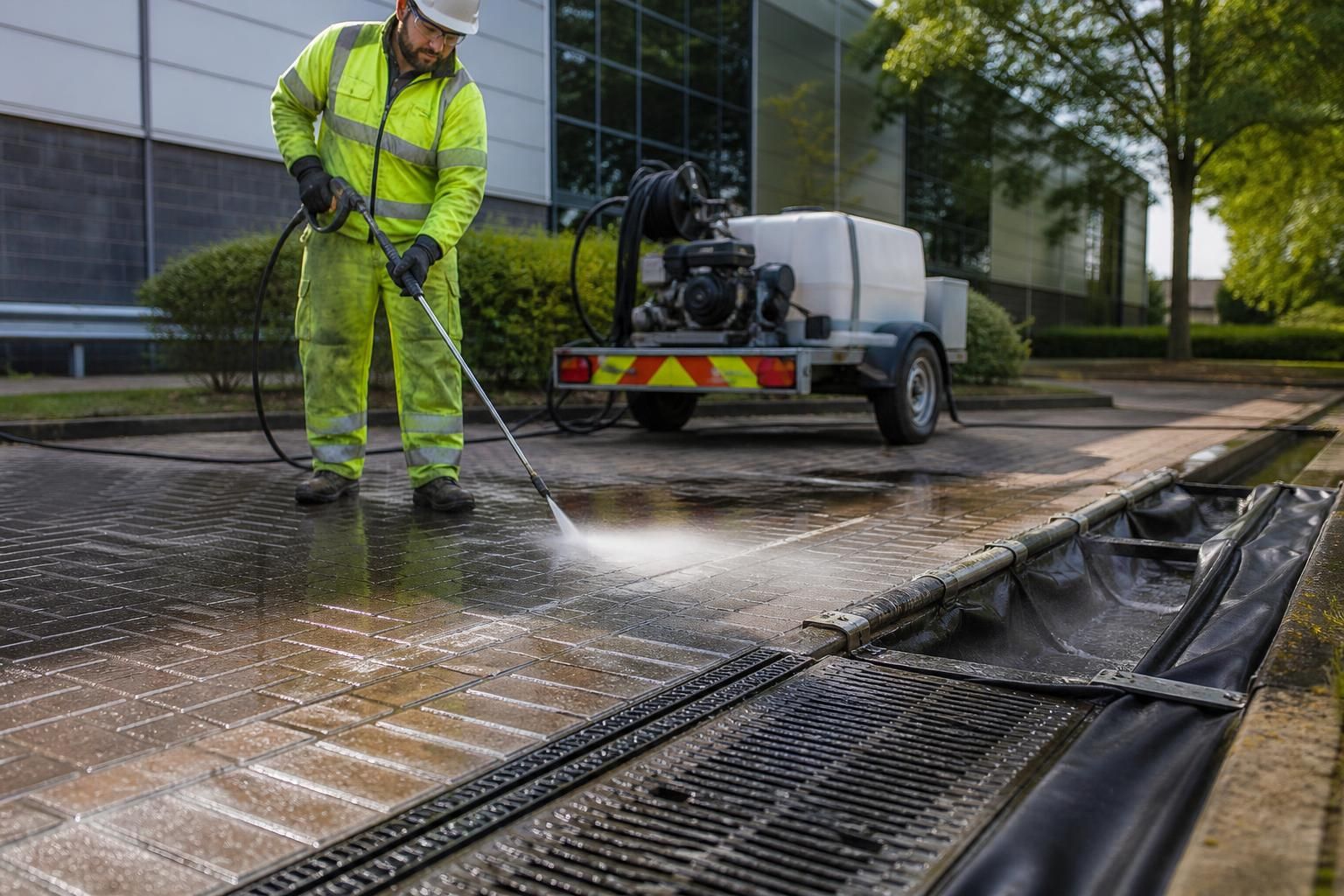
One of the most important environmental benefits of professional cleaning is controlled management of the material washed from the surface. Run-off from commercial and industrial areas may contain oil, fuel residues, detergents, heavy sediment, tyre deposits, algae or other contaminants. If this water enters surface-water drains, nearby ground or a watercourse without suitable control, it can cause pollution.
A planned cleaning operation considers drainage, gradients, weather conditions and the nature of the contamination before work starts. Measures may include blocking or protecting vulnerable drains, containing run-off, recovering wastewater, removing solids and using appropriate treatment or disposal arrangements. Wastewater should not be allowed to enter a surface-water system simply because the surface appears clean afterwards. The correct procedure depends on the site, the substances present and applicable local requirements.
Limiting the use of chemicals
Concrete and paving do not always require strong chemical products. Water pressure, steam, brushing and careful dwell times can often deal with general dirt or biological deposits. Where a treatment is necessary, selecting a product for the specific stain and applying only the required amount helps reduce chemical use and the risk of residues entering the drainage system.
Cleaning products must be stored, diluted, applied and removed in accordance with their instructions and relevant site controls. Oil, paint, algae and chewing gum may require different treatments, so using one aggressive chemical for every problem can be both ineffective and environmentally unsuitable. A professional method should balance cleaning performance with surface compatibility and run-off control.
Reducing algae, moss and weed-related impacts
Removing algae and moss can improve surface safety and reduce the conditions that allow biological growth to spread. Physical cleaning may reduce the need for repeated biocide applications, particularly when drainage, shade, trapped soil and overhanging vegetation are also addressed. Where a biocidal treatment is justified, it should be selected and used carefully to avoid unnecessary exposure of surrounding planting, soil and aquatic environments.
Cleaning alone may not prevent regrowth where water continually collects or organic matter builds up. Clearing relevant debris, improving housekeeping and identifying drainage issues can produce a more durable result without relying on repeated chemical treatment.
Supporting more efficient ongoing maintenance
A planned maintenance programme can be more resource-efficient than infrequent intensive restoration. Regular inspections and proportionate cleaning allow contamination to be dealt with before it becomes deeply embedded or contributes to deterioration. This may reduce the need for abrasive methods, heavy chemical treatments, extensive repairs and replacement materials later.
Maintenance should still be based on the site’s use, exposure, drainage and contamination risk. High-traffic yards, loading areas and car parks may need different arrangements from pedestrian paving or decorative concrete. Cleaning only when necessary, rather than following an unsuitable fixed schedule, avoids using water and products where they provide little benefit.
Choosing a lower-impact cleaning approach
- Inspect the concrete or paving, jointing, coatings and drainage before selecting equipment or treatments.
- Remove loose litter, leaves and sediment mechanically where possible before washing.
- Use the lowest effective pressure, temperature, flow and chemical strength for the required result.
- Protect vulnerable drains and prevent contaminated run-off from spreading across the site.
- Recover, contain or dispose of wastewater and solid residues through suitable procedures.
- Plan work for conditions that support safe containment, avoiding heavy rain that could disperse pollutants.
- Record areas requiring repair so cleaning is not mistaken for a solution to structural failure.
Professional cleaning is not automatically environmentally preferable: excessive pressure, unnecessary chemical use, uncontrolled run-off and repeated washing can increase environmental impact. The benefit comes from a risk-assessed process that preserves sound surfaces, uses resources carefully and keeps pollutants out of drains and surrounding ground. For commercial and industrial sites, the cleaning method should therefore be selected alongside a clear plan for water use, wastewater handling, waste removal and future maintenance.
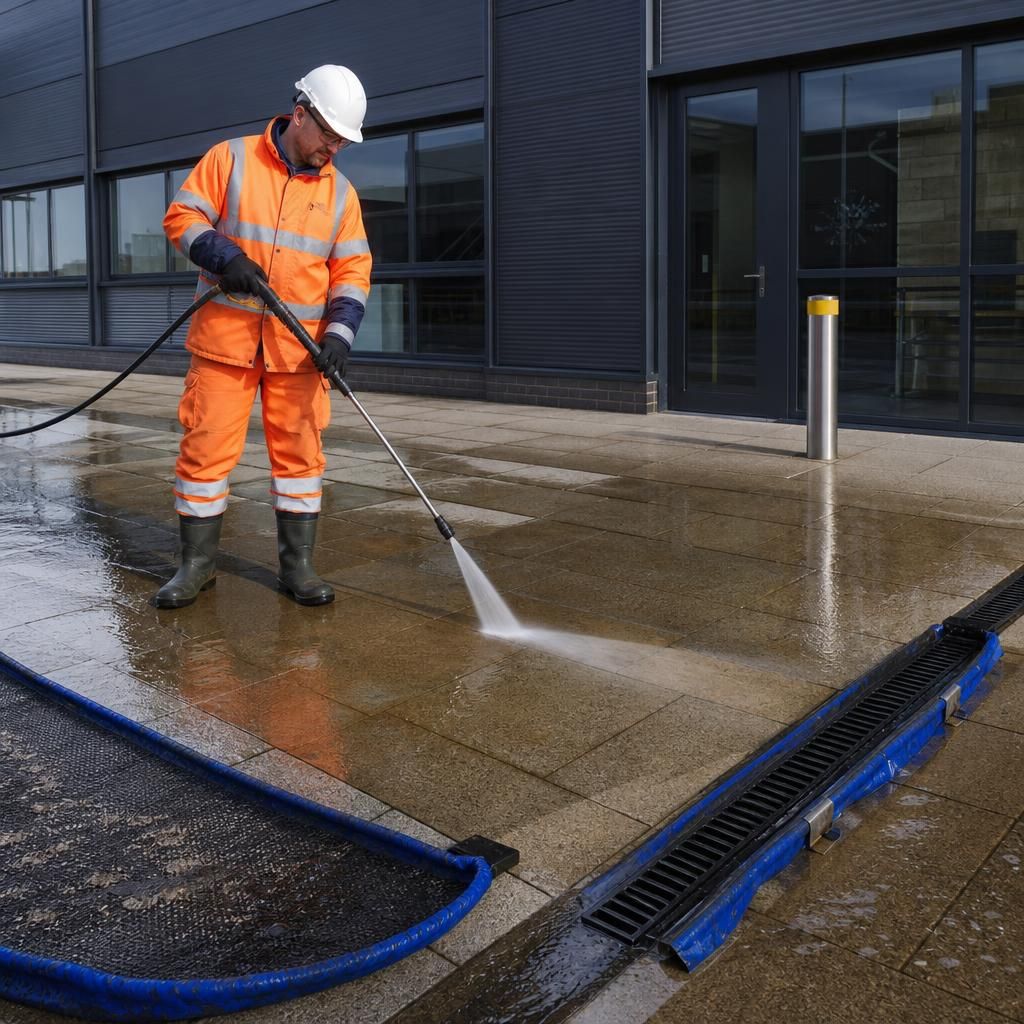
One of the main environmental benefits of professional concrete and paving slab cleaning is the controlled management of dirty water. Run-off can contain oil, fuel residues, detergents, silt, tyre deposits, algae and other pollutants that should not enter surface-water drains, surrounding soil or nearby watercourses.
Before cleaning, the drainage layout, surface gradient, weather conditions and type of contamination should be assessed. Where necessary, vulnerable drains can be protected, loose solids removed first, and wastewater contained or recovered for suitable treatment and disposal. This prevents the site from appearing clean while pollutants are simply transferred into the wider environment.
Professional control also helps reduce unnecessary chemical use. Water pressure, steam, brushing and targeted treatments can often remove contamination without applying strong products across the whole surface. Using the lowest effective pressure, flow and treatment strength protects the paving while limiting water consumption, chemical residues and repeat cleaning.
Plan a Lower-Impact Concrete and Paving Cleaning Service
Ask Encanto Exterior Cleaning to assess your concrete or paving slabs and plan a lower-impact cleaning service tailored to the surface, contamination and drainage arrangements. We can help you manage water, chemicals and run-off responsibly while preserving sound hard-standing.