
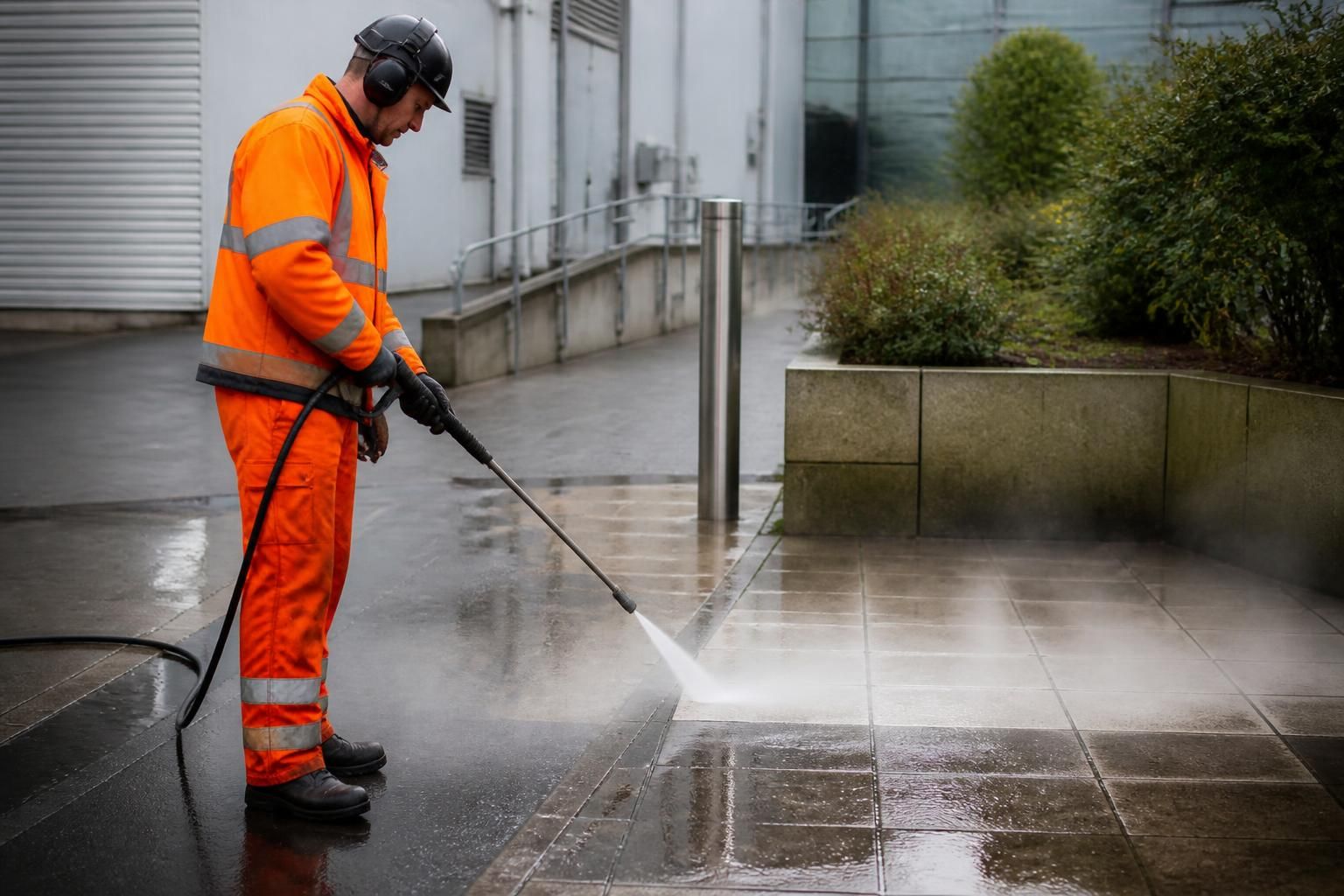
How can regular cleaning of concrete and paving slabs improve safety and reduce long-term maintenance costs?
Regular cleaning of concrete and paving slabs removes algae, moss, oil, grime and other contaminants that can create slippery surfaces and trip hazards. It also helps prevent staining, surface deterioration and blocked drainage, reducing the need for costly repairs, treatments or premature replacement over time.
Regular cleaning improves the safety and service life of concrete and paving slabs by removing contaminants that make surfaces slippery, obscure defects and accelerate deterioration. Algae, moss, oil, organic debris, silt and embedded grime can all affect how a surface performs. Removing them as part of a planned maintenance programme helps keep pedestrian routes, access roads, yards, car parks and loading areas safer while reducing the likelihood of avoidable repairs or premature replacement.
How cleaning improves safety
Moisture-retaining growth such as moss and algae can form a slippery film on concrete and paving, particularly in shaded areas and places with poor drainage. Oil, food residues, mud and decomposing leaves can create similar slip risks. Regular cleaning removes these deposits before they become heavily established and helps restore the surface’s normal texture and grip.
Cleaning also improves visibility. Dirt and organic growth can conceal cracked slabs, damaged joints, raised edges, potholes and changes in level. Once the surface is clear, defects are easier to identify, record and repair. This is important for sites used by pedestrians, vehicles, delivery teams and people with limited mobility, where an unnoticed defect may increase the risk of a slip, trip or vehicle incident.
In commercial environments, clean paving and concrete can also support better site control. Clearly visible walkways, marked areas, loading zones and entrances are easier to inspect and maintain. Removing loose debris from these areas can reduce obstructions and help prevent contaminants being tracked into buildings.
How cleaning reduces long-term maintenance costs
Concrete and paving slabs are durable, but surface contamination can contribute to avoidable wear. Moss and weeds can establish in joints, retain moisture and gradually disturb the paving. Organic matter can also collect around drainage points, allowing water to remain on the surface or flow through areas that are already damaged. Removing this material helps the surface dry more effectively and makes drainage problems easier to detect.
Oil, chemical residues and other staining should be addressed promptly where possible. Some contaminants can penetrate porous concrete or paving and become increasingly difficult to remove. Early treatment may reduce the need for stronger cleaning methods, extensive stain removal or localised replacement. It also helps prevent a small contaminated area from becoming a wider housekeeping and safety issue.
Planned cleaning can therefore help defer more disruptive work, including repointing, joint repairs, slab replacement, drainage corrections and extensive surface restoration. It does not prevent normal ageing or correct structural defects, but it can limit the effects of neglect and provide a better basis for deciding when repairs are genuinely required.
Why the cleaning method matters
Effective maintenance is not simply a matter of using the highest water pressure. The appropriate method depends on the surface type, age, condition, jointing material, contamination and surrounding drainage arrangements. Concrete may tolerate a different treatment from decorative paving, aged slabs or surfaces with loose jointing.
A professional approach normally includes a site inspection before work begins. This should identify fragile areas, failed joints, cracks, oil contamination, drainage points, nearby walls or doors and any risk of dirty water entering sensitive areas. Water pressure, temperature, cleaning products, agitation and surface-cleaning equipment can then be selected to remove contamination without eroding the surface or displacing jointing material.
Where algae or moss is present, physical cleaning may be followed by a suitable treatment to slow regrowth. Any treatment should be appropriate for the surface and used in accordance with its instructions. Run-off must also be controlled so that sediment, oil and cleaning residues do not enter drains, watercourses or neighbouring areas.
Maintenance benefits beyond the surface
- Cleaner entrances and walkways reduce the risk of contaminants being carried indoors.
- Visible joints, edges and drainage channels make routine inspections more effective.
- Removing loose debris helps prevent blockages and standing water.
- Early identification of defects allows repairs to be planned rather than treated as an emergency.
- A consistently maintained surface is less likely to require aggressive cleaning that could cause damage.
- Clean, even paving supports safer movement for pedestrians, visitors, staff and vehicles.
Cleaning should be combined with practical site maintenance. Repairs to cracked or rocking slabs, replacement of failed jointing, removal of invasive weeds and correction of drainage issues may be necessary where inspection identifies a defect. Cleaning alone cannot resolve movement, subsidence, poor falls or damaged concrete.
For larger commercial and industrial sites, a planned schedule is generally more effective than occasional reactive cleaning. The appropriate interval depends on footfall, vehicle use, tree cover, shade, exposure to oil or food residues, drainage and the speed at which organic growth returns. High-use areas and locations where contamination presents a particular safety risk may need more frequent inspection and cleaning than lightly used paving.
After cleaning, the surface should be allowed to dry and inspected for remaining staining, displaced jointing, cracks, uneven levels and drainage performance. Any defects should be documented and prioritised according to their safety and operational impact. This creates a practical maintenance record and helps ensure that cleaning contributes to a wider programme of building and grounds care.
Regular, correctly specified cleaning is therefore a preventative measure rather than just a cosmetic service. By removing slip-producing contamination, exposing defects and limiting the build-up of damaging debris, it helps maintain safer concrete and paving surfaces and can reduce the frequency and cost of major remedial work over the life of the site.
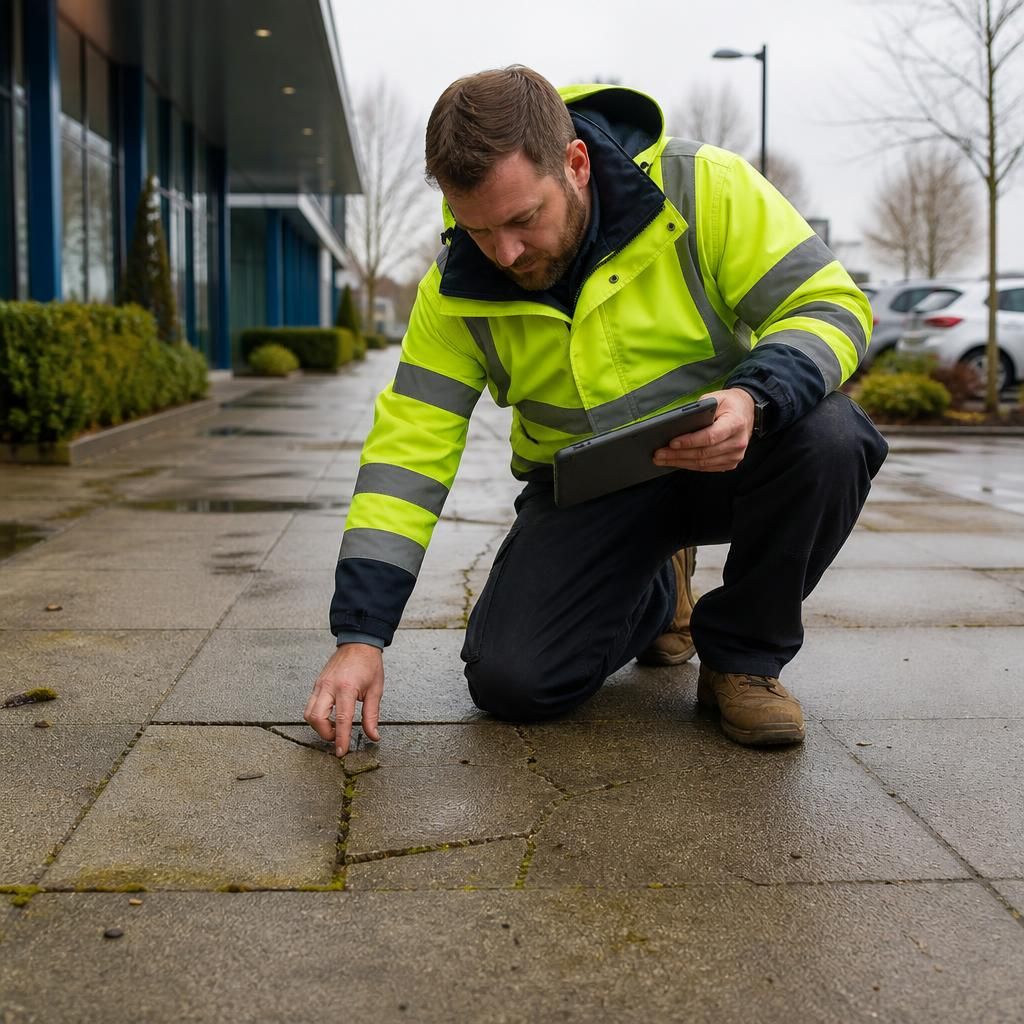
Regular cleaning helps reduce long-term maintenance costs by making defects in concrete and paving slabs easier to identify before they become more serious. Removing moss, algae, oil, silt and embedded grime exposes cracked slabs, failed joints, raised edges, surface wear and blocked drainage points during routine inspections.
This allows repairs such as repointing, replacing damaged slabs or clearing drainage to be planned rather than carried out as urgent remedial work. Cleaning does not correct subsidence, structural cracking or poor drainage, but it helps distinguish these defects from surface contamination and reduces the build-up of moisture-retaining debris that can accelerate deterioration.
Book a Concrete and Paving Slab Cleaning Assessment
Arrange a concrete and paving slab cleaning assessment to identify contamination, surface defects, drainage concerns and the most suitable cleaning method for your site. Contact Encanto Exterior Cleaning to discuss a planned maintenance approach for your commercial or industrial premises.