
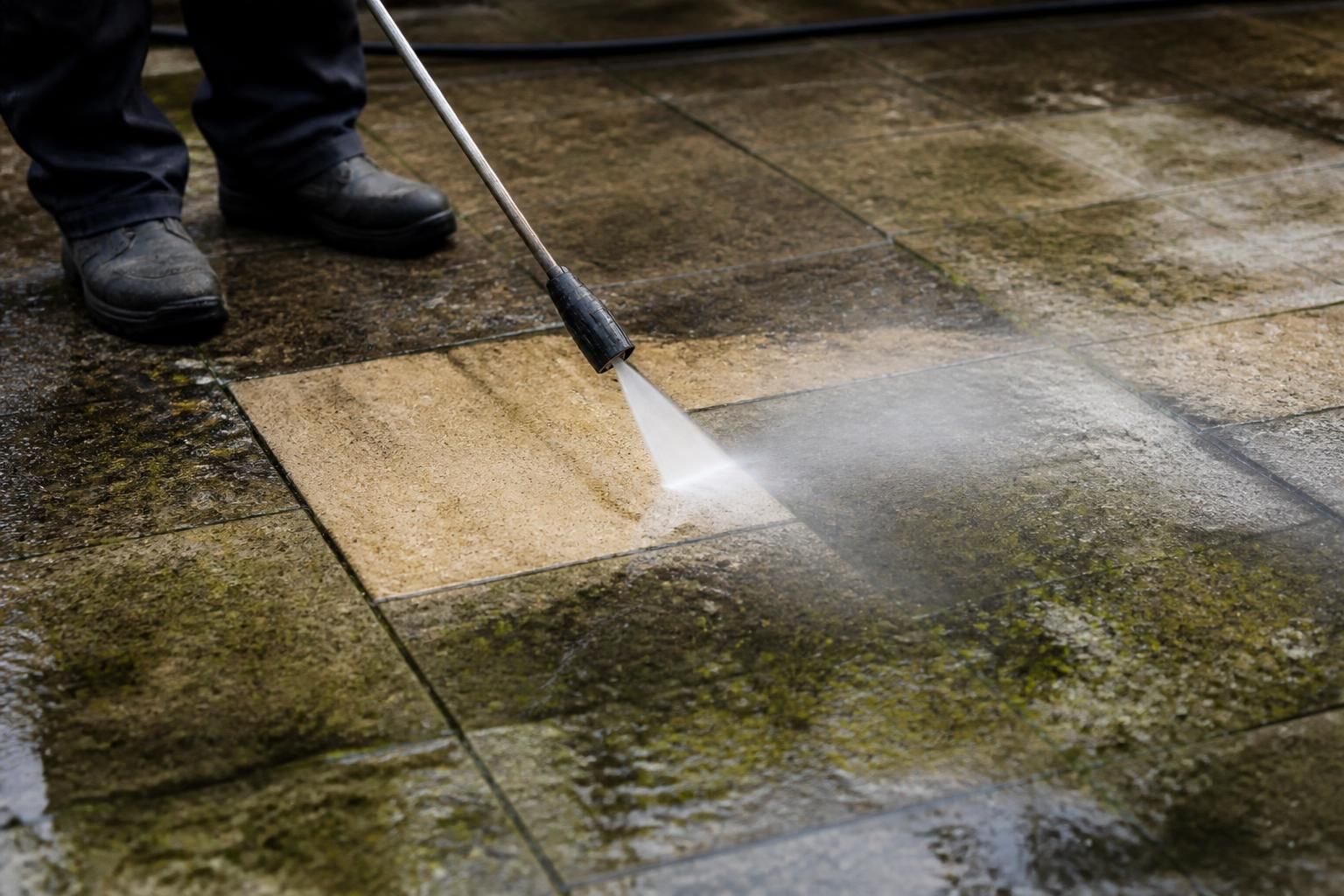
Can pressure washing damage concrete and paving slabs?
Yes, pressure washing can damage concrete and paving slabs if excessive pressure, an unsuitable nozzle or poor technique removes the surface finish, widens cracks or dislodges jointing material. Using the correct pressure, distance and cleaning method for the surface helps remove dirt, algae and stains without causing avoidable damage.
Yes, pressure washing can damage concrete and paving slabs when the equipment or technique is unsuitable for the surface. Excessive pressure can strip the cement-rich surface layer from concrete, expose aggregate, leave visible nozzle marks, widen existing cracks and remove jointing material between slabs. Used correctly, however, pressure washing is an effective way to remove soil, algae, moss, traffic film and some stains without causing avoidable deterioration.
The main risk is not pressure alone. The result depends on the surface condition, the type of paving, the cleaning head and nozzle, the distance from the surface, the angle of cleaning, the operator’s movement and how wastewater is managed. A powerful machine used with a wide, controlled spray at an appropriate distance may be safer than a lower-powered machine held too close to the surface.
Concrete is relatively durable, but it is not indestructible. Weathering, frost, de-icing salt, chemical contamination and repeated vehicle use can weaken the surface. Concrete that has already lost its smooth finish may be vulnerable to further surface erosion. Pressure washing can then remove loose cement paste, leaving a rougher appearance or exposing small stones in the mix. It can also make existing defects more noticeable rather than creating them from new.
Paving slabs require additional care because their condition varies considerably. Natural stone, concrete flags, textured paving, porcelain and older manufactured slabs do not respond in the same way to water pressure. Some surfaces have a delicate finish, while others have open pores that retain dirt and moisture. Cracked or poorly supported slabs may move under cleaning, and water directed into joints can dislodge sand or other jointing materials. Once joints are emptied, slabs may become less stable and weeds can establish more easily.
Damage is more likely in the following circumstances:
- The nozzle is held too close to the surface or moved too slowly.
- A narrow jet or rotary attachment is used without testing its effect first.
- The operator cleans unevenly, creating stripes, rings or patches of surface wear.
- Water is forced into cracks, open joints, slab edges or areas of failed pointing.
- The concrete is deteriorated, delaminated, poorly cured or already affected by frost damage.
- A surface coating, sealer or painted finish is removed unintentionally.
- Strong chemicals are applied without checking their compatibility with the paving, surrounding materials or drainage system.
Jointing is a particular concern on block paving and slabbed areas. Pressure washing can remove accumulated dirt from the joints, but it may also wash out the sand or mortar that supports the edges of the paving. Cleaning should therefore be followed by an assessment of the joints and, where appropriate, careful replacement of compatible jointing material after the surface has dried. Simply increasing the pressure to remove weeds or compacted debris can create a larger maintenance problem.
A safe cleaning process begins with an inspection. The surface should be checked for cracks, loose slabs, hollow-sounding areas, failed joints, previous coatings, oil contamination and drainage limitations. It is also important to identify the paving material and establish whether water or cleaning products could affect nearby brickwork, render, painted surfaces, planting, vehicles or drainage channels.
A small test area should be cleaned before the main work starts. This confirms whether the selected pressure, nozzle, cleaning solution and working distance are appropriate. The test should be allowed to dry where possible, because some marks and changes in appearance are easier to identify once the surface is no longer wet. Cleaning should proceed with the least aggressive method that achieves the required result, rather than using maximum pressure as a default.
For broad concrete areas, a suitable surface-cleaning attachment can help distribute water more evenly than a concentrated lance. The equipment still needs to be matched to the surface and operated at a controlled pace. Edges, joints, corners and damaged areas generally require lower-impact treatment than sound, open concrete. A lance should not be used to chase dirt into cracks or direct water beneath slabs.
Pressure washing is not always the best treatment for every mark. Oil, rust, paint, chewing gum, organic growth and mineral deposits have different causes and may need targeted pre-treatment, steam cleaning, gentle agitation or another specialist method. Using pressure alone may spread the contamination, drive it deeper into porous concrete or damage the surface while failing to remove the stain. Biocidal treatments for algae and moss should also be selected and controlled carefully, with appropriate protection for people, plants and drainage.
After cleaning, the area should be inspected for exposed aggregate, disturbed joints, loose slabs and remaining contamination. Wastewater and loosened sediment must be controlled so that pollutants do not enter unsuitable drains or adjacent areas. Where a sealer is being considered, the paving must be sufficiently clean and dry, and the product must be suitable for the specific material. Sealing will not repair structural cracks or unstable slabs, and applying it over trapped moisture can lead to clouding or premature failure.
Professional cleaning reduces the risk of damage by combining surface assessment, controlled equipment use and appropriate stain treatment. It cannot make defective concrete or unstable paving structurally sound, so serious cracking, movement, subsidence or extensive surface failure should be addressed separately. If a test area shows etching, colour loss, surface softness or joint failure, the method should be stopped and reassessed rather than continued across the whole site.
In practical terms, sound concrete and paving slabs can usually be pressure washed safely when the method is tailored to their material and condition. The safest approach is controlled cleaning at the lowest effective intensity, with particular care around joints, cracks, edges, coatings and already weathered surfaces.
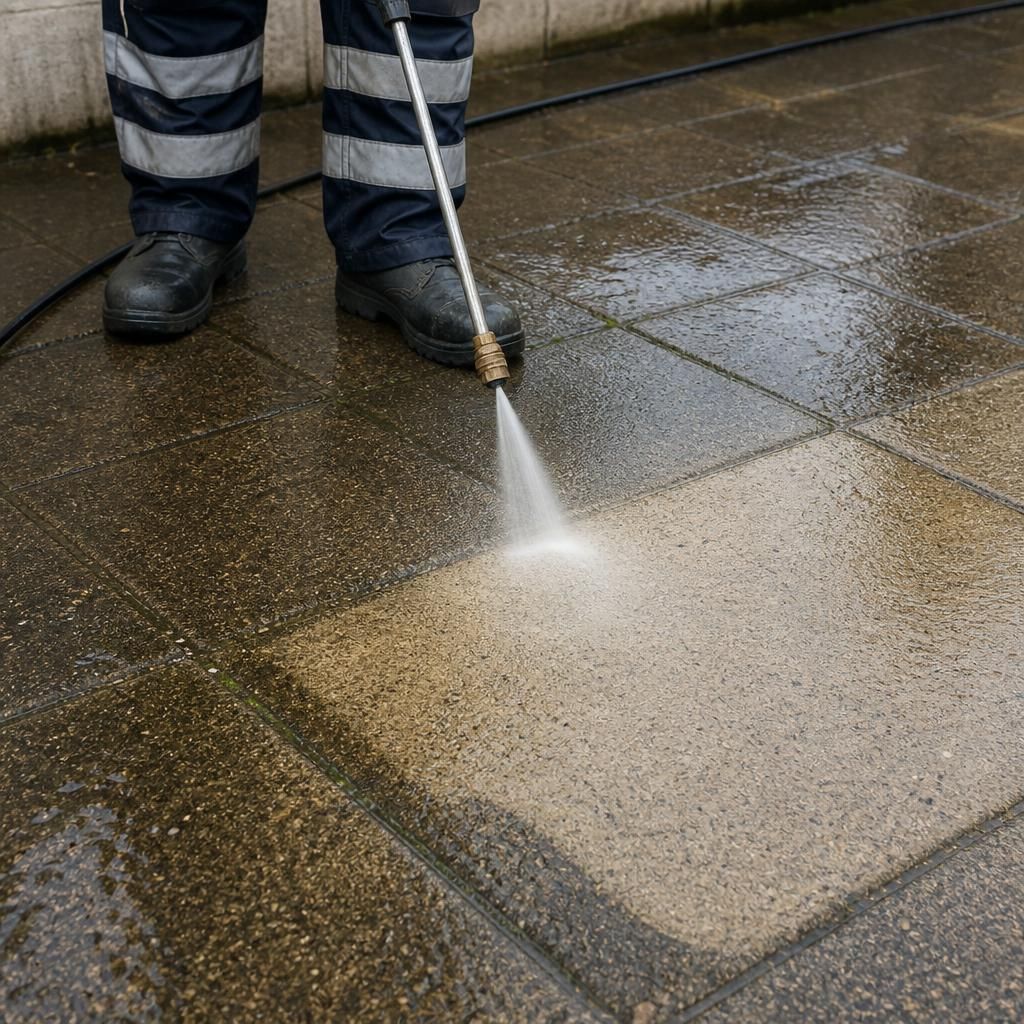
Pressure washing is safest when the method is tested on a small, inconspicuous area before cleaning the full surface. This helps confirm that the pressure, nozzle, cleaning solution and working distance will not mark the concrete, strip a coating or disturb paving joints.
The test area should be checked while wet and again after it has dried, as surface whitening, etching and uneven cleaning may be more noticeable once the water has evaporated. Begin with the lowest effective pressure and a wide, controlled spray, keeping the lance moving evenly. Use extra care around cracks, slab edges, open joints and weathered concrete, where concentrated water can cause avoidable damage.