
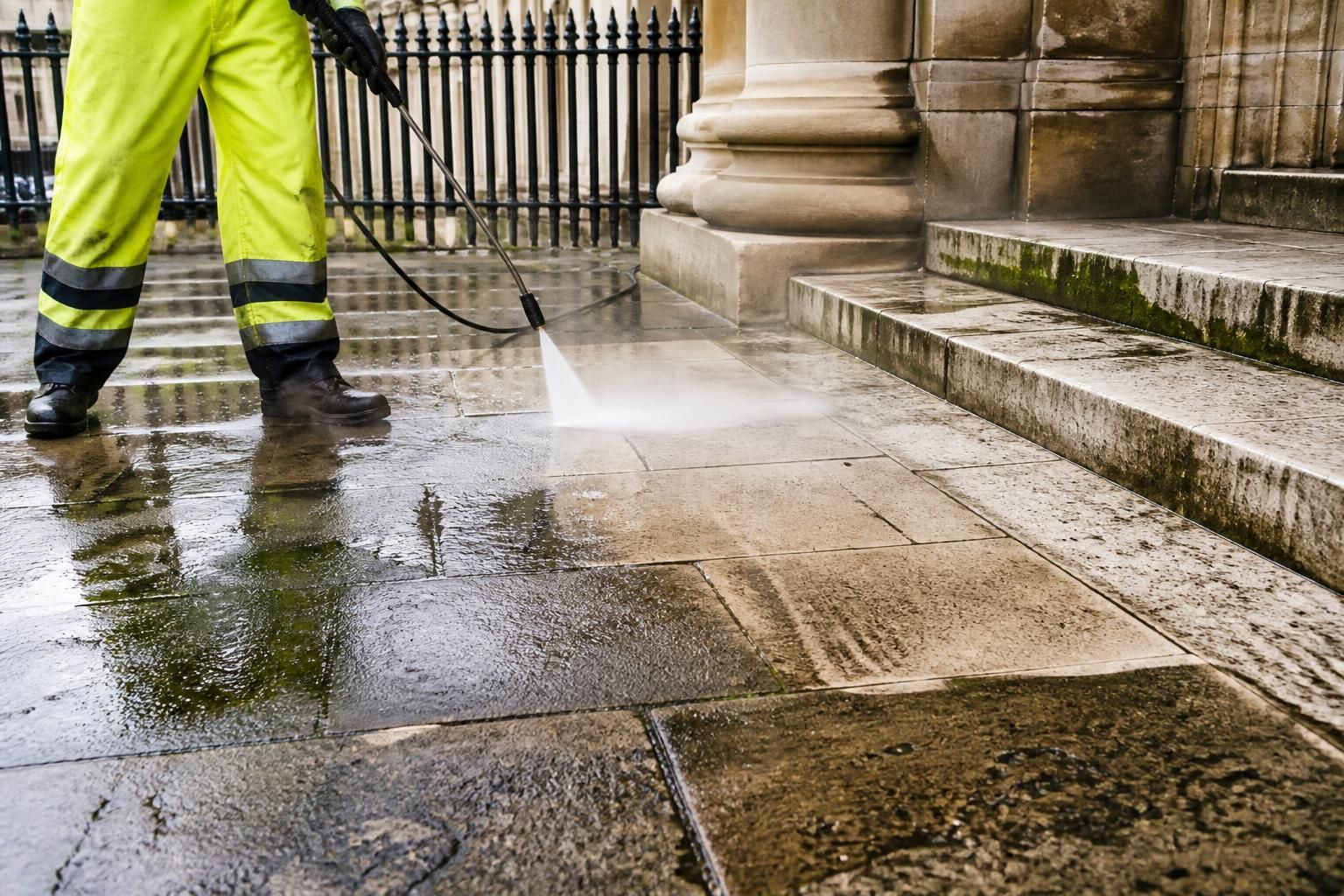
Can pressure washing cause damage to masonry and paving surfaces?
Yes, pressure washing can damage masonry and paving if excessive pressure, the wrong nozzle, or unsuitable techniques are used. Correct pressure settings, appropriate equipment and a surface assessment help remove dirt without causing etching, surface erosion, cracked joints or damage to delicate materials such as sandstone and old brick.
Yes, pressure washing can damage masonry and paving when excessive pressure, an unsuitable nozzle, incorrect technique or inappropriate detergents are used. Potential damage includes surface erosion, etching, dislodged pointing, opened paving joints, chipped edges and water penetration. However, pressure washing is not inherently harmful: when the surface is assessed first and the equipment is adjusted correctly, it can remove dirt, algae, moss and staining without causing avoidable damage.
The main risk is that a concentrated jet can remove more than the surface contamination. On brickwork, high pressure may erode the relatively soft face of the brick, expose the inner material or loosen deteriorated mortar. Older brick, handmade brick and historic masonry are particularly vulnerable because their surfaces may already have weathered or become friable. Repeated aggressive cleaning can leave visible jet marks and reduce the masonry’s ability to shed water.
Sandstone, limestone and other natural stones also require care. Some are porous or comparatively soft, so a powerful jet can roughen the surface, remove naturally weathered detail or drive water further into the material. Pressure can also disturb weak bedding planes or existing cracks. A surface may look cleaner immediately after washing but still have been damaged if the cleaning method has removed sound material along with the dirt.
Paving can be affected in different ways. Block paving may lose jointing sand, allowing blocks to move or encouraging weeds to return. Water forced beneath paving can also expose weak areas or wash out poorly bonded joints. Concrete and paving slabs can suffer from surface etching, aggregate exposure or damage around cracked and lifted edges. Pressure applied too closely to the surface may create stripes or circular marks that are difficult to blend in.
Damage is more likely where the surface already has defects. Loose pointing, cracked slabs, hollow-sounding tiles, flaking coatings, open joints and unstable blocks should be identified before cleaning. Previous sealing treatments can also react poorly to pressure or detergents. Oil, rust, paint, efflorescence and organic growth may each require a different treatment, so increasing pressure is not always the safest or most effective solution.
A suitable cleaning approach normally begins with a site assessment. The material, age, condition, porosity, jointing, previous repairs and type of contamination are considered before equipment is selected. A small inconspicuous test area can help establish whether the surface responds safely to the proposed method. The test should be checked for changes in colour, texture, pointing and water absorption rather than judged only by how clean it looks.
To reduce the risk of damage, the operative may use a wider spray pattern, maintain an appropriate distance, keep the lance moving and work at the lowest effective pressure. The nozzle should not be held close to edges, joints, cracks or fragile details. Sensitive areas may be cleaned with a lower-pressure approach, controlled steam, soft washing or a suitable chemical treatment instead. These methods can loosen contamination so that less mechanical force is needed.
Pressure washing is often appropriate for sound concrete, robust paving and well-maintained hard surfaces, but the exact settings must still be matched to the material. Delicate sandstone, old brick, weak mortar, decorative masonry and deteriorated paving may need a gentler method or a combination of techniques. Steam cleaning can be useful where heat and lower mechanical impact are preferable, while carefully selected treatments can address moss, algae, oil or efflorescence without relying solely on pressure.
Protecting the surrounding property is also part of preventing damage. Drainage points, door thresholds, vents, electrical fittings, planted areas and nearby finishes should be considered before work starts. Run-off and removed contaminants need to be controlled so they do not stain adjoining surfaces or enter unsuitable drainage systems. Any loose material identified during preparation should be reported rather than concealed by cleaning.
After cleaning, joints and damaged areas may require attention before the surface is returned to service. Block paving may need re-sanding once it is fully suitable for this work, while loose pointing or cracked slabs should be repaired separately. Sealers should only be applied where appropriate for the material and after the surface has dried sufficiently; sealing does not correct damage caused by unsuitable cleaning.
In practical terms, pressure washing is safest when it is treated as a surface-specific cleaning process rather than a single standard setting for every area. Professional assessment, controlled equipment, appropriate detergents and a test clean help remove contamination while preserving the masonry, paving and surrounding property. If there is uncertainty about a delicate or ageing surface, a lower-impact method should be considered before conventional pressure washing.
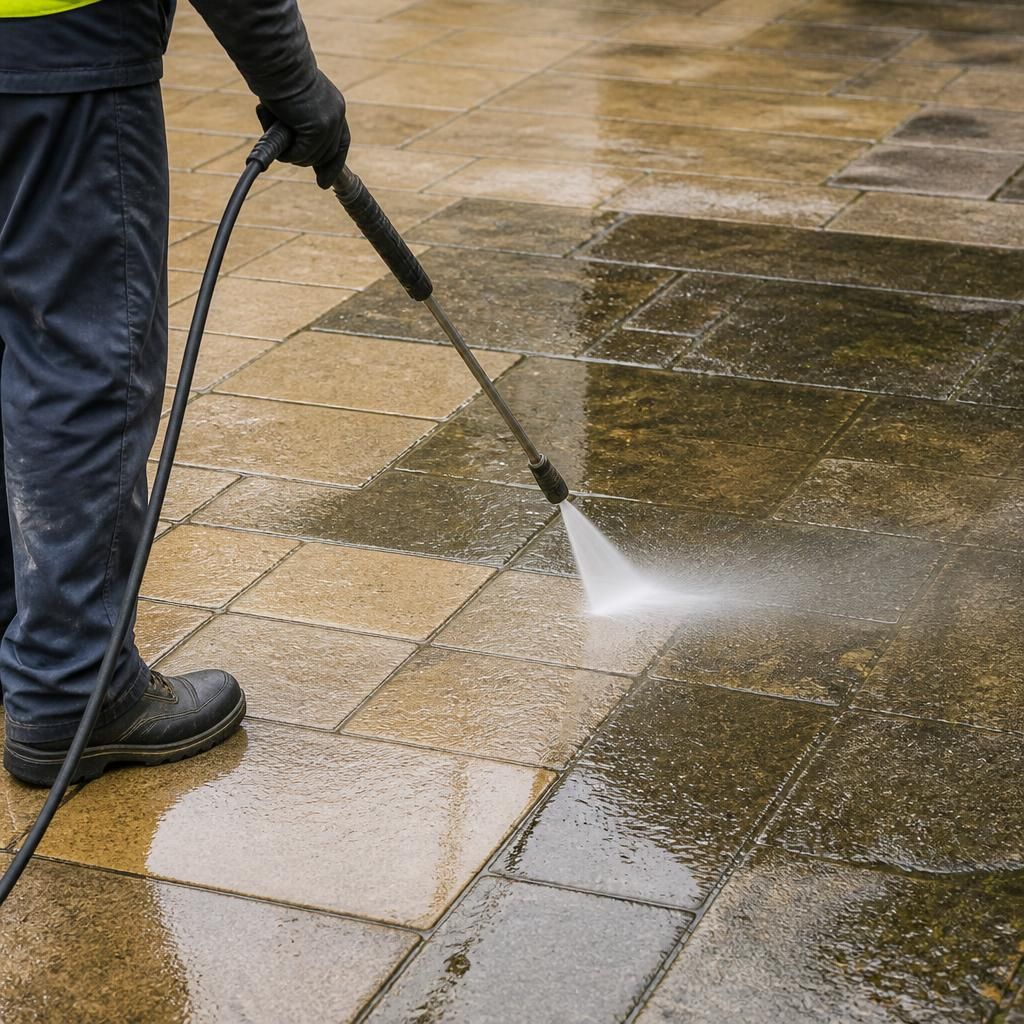
Pressure washing causes damage when the cleaning force is greater than the masonry or paving can safely withstand. Before work begins, the surface should be assessed for its material, age, porosity, joint condition, existing cracks and previous repairs.
A small test area helps confirm the safest approach. The operative can then adjust the pressure, nozzle, working distance and spray pattern, using the lowest effective force and keeping the lance moving. Delicate sandstone, old brick, weak pointing and worn paving may be better suited to controlled steam cleaning, soft washing or a suitable treatment than conventional pressure washing.