
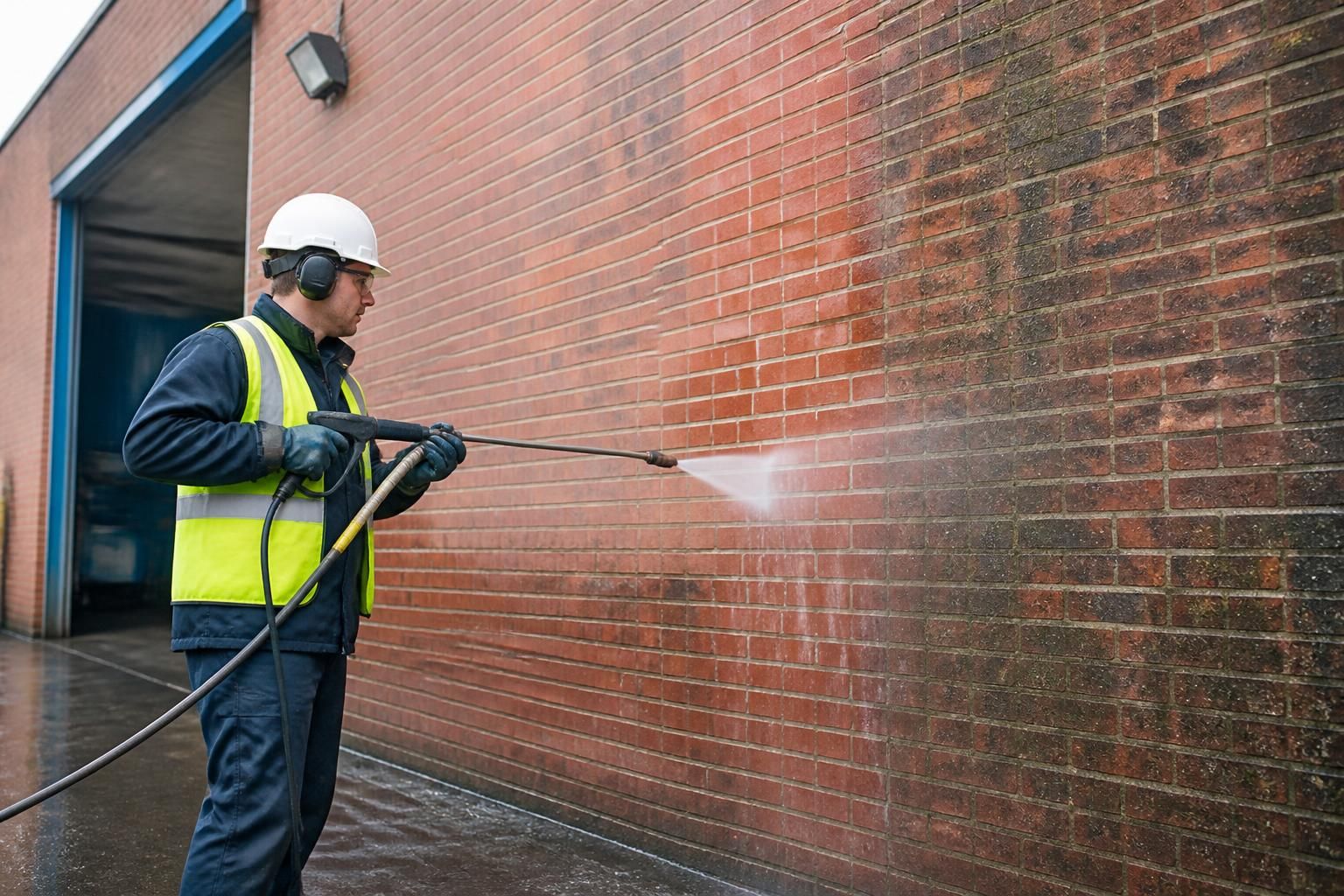
What specific cleaning technique is most suitable for the type of bricks and contaminants on my property?
The most suitable technique depends on the brick’s age, hardness, porosity and condition, as well as the contaminant present. In practice, steam cleaning or controlled low-pressure washing is often safest for general dirt and organic growth, while specialist chemical treatment may be needed for carbon deposits, paint, mortar stains or efflorescence; the surface should always be tested first.
The most suitable brick cleaning technique is determined by the brick’s age, hardness, porosity and condition, together with the type of contamination present. Steam cleaning or carefully controlled low-pressure washing is generally appropriate for loose dirt, algae and moss on sound brickwork, while carbon deposits, paint, mortar staining, efflorescence and deeply embedded contamination may require a specialist chemical treatment. The method should always be selected following an inspection and a test clean on an inconspicuous area.
Using the strongest available cleaning method is not a reliable way to achieve a better result. Excessive pressure, unsuitable chemicals or aggressive abrasion can remove the fired surface of the brick, widen existing defects, damage mortar joints and force water into the building fabric. A suitable method removes the contaminant while preserving the brick, joints, surrounding materials and any historic finish.
How the brick itself affects the choice of method
- Hard, dense modern brick: Sound engineering or dense facing bricks may tolerate controlled washing, but pressure must still be matched to the condition of the face and mortar. Dense surfaces can also show streaking or chemical residues if rinsing is incomplete.
- Soft, porous or handmade brick: Older, handmade, under-fired and weathered bricks are more vulnerable to surface loss, saturation and frost-related damage. Steam cleaning, gentle rinsing or a carefully selected non-aggressive chemical process is normally preferable to abrasive cleaning or high-pressure washing.
- Historic or listed brickwork: The cleaning approach should be particularly conservative. Existing coatings, patina, lime mortar and fragile brick faces may form part of the building’s character. A written method statement, small test panel and appropriate consultation may be required before work begins.
- Damaged or previously repaired brickwork: Cracks, spalled faces, open joints, failed pointing and displaced bricks must be identified before cleaning. Cleaning can expose defects, but it should not be used to compensate for underlying structural or moisture problems.
- Painted, coated or sealed brick: The coating must be identified before treatment. A method that is suitable for bare brick may cause patching, staining or chemical reactions on painted, sealed or previously treated surfaces.
Matching the technique to the contaminant
- General dust, soil and traffic film: Low-pressure washing with a suitable detergent or warm-water cleaning can remove loose surface dirt. Where access, water use or the condition of the brick makes washing unsuitable, steam cleaning can provide controlled cleaning with less mechanical force.
- Algae, moss and other organic growth: Steam or gentle low-pressure cleaning can remove the visible growth. A compatible biocidal treatment may be considered to address remaining biological contamination, but it must be used in accordance with its instructions and prevented from entering drains, soil or watercourses.
- Carbon, soot and atmospheric deposits: Steam cleaning may be effective on some carbon deposits, particularly where heat helps soften the contamination. More established staining may need a specialist detergent or chemical treatment. The product must be compatible with the brick and mortar, followed by controlled rinsing and residue removal.
- Mortar smears and cement staining: Fresh or light mortar residue may sometimes be removed mechanically with great care or with a suitable specialist cleaner. Acidic products can etch certain bricks, attack joints and damage nearby metal, glass or stone, so they should not be applied without testing and proper surface protection.
- Efflorescence: White, powdery salt deposits should first be assessed to establish whether moisture is still entering or moving through the wall. Dry brushing may remove light deposits. Repeated wet cleaning without resolving the moisture source can make the problem return and may drive salts further into the brickwork.
- Paint and coatings: Paint removal is usually a separate specialist process. Steam, a carefully selected poultice, a controlled chemical system or gentle mechanical removal may be appropriate depending on the coating and brick. Abrasive blasting can permanently alter the face of soft or historic bricks.
- Oil, grease and vehicle-related contamination: A compatible degreasing product, dwell time and controlled rinsing may be needed. Run-off must be contained and managed correctly, particularly on car parks, loading areas and sites connected to surface-water drainage.
- Graffiti: The removal system depends on the paint, marker or coating used and the porosity of the brick. Specialist graffiti-removal products, steam or controlled low-pressure cleaning may be combined, with a sacrificial protective treatment considered afterwards where appropriate.
Steam cleaning and low-pressure washing
Steam cleaning uses heated water and controlled delivery to soften and lift many organic and atmospheric deposits without relying solely on mechanical force. It can be useful for delicate brick faces, detailed façades and areas where reducing water volume is important. Steam is not automatically risk-free: heat can affect coatings, sealants and vulnerable repairs, and moisture can still enter open joints or porous masonry.
Low-pressure washing is suitable where the brick and mortar are sound and the contamination is mainly loose or surface-bound. The operator should use the lowest effective pressure, an appropriate nozzle and a controlled working distance, rather than directing a concentrated jet at close range. Washing should proceed from cleaner areas towards dirtier areas where practical, with thorough but controlled rinsing to prevent runs and residues.
When chemical cleaning is appropriate
Chemical treatment can be the most effective option for contamination that water alone cannot dissolve, including some carbon deposits, paint, mortar staining and oil residues. The chemical must be chosen for the specific contaminant and substrate. Brick type, mortar composition, temperature, dwell time, dilution, nearby materials and run-off controls all affect the result.
Products should never be mixed unless the manufacturer expressly permits it. Acidic cleaners are especially unsuitable for some bricks, lime mortar, natural stone, glazed surfaces and metalwork. Alkali-based products can also damage adjacent finishes if left in contact for too long. After treatment, residues must be removed in a controlled manner, and the surface should be checked for colour change, etching, staining or loss of the brick face.
The importance of a test panel
A test panel is an essential part of selecting the method. It allows the cleaning team to compare techniques, establish the lowest effective pressure or chemical strength, confirm the expected finish and identify hidden problems such as friable brick faces, inconsistent repairs or colour variation. The test area should include representative brickwork, mortar joints and any adjacent materials likely to be affected.
The test should be allowed to dry before the result is judged. Wet brick can appear darker and cleaner than it will after drying, while residues or patchiness may only become visible later. The agreed method should then be recorded in the project documentation, including equipment settings, products, dwell times, protection measures and rinsing requirements.
Precautions before and during cleaning
- Inspect the façade for cracks, spalled brick, open joints, failed pointing, damp-related defects and unstable areas before applying water or chemicals.
- Identify the brick, mortar and any previous coatings or repairs where possible. A method suitable for hard cement mortar may be unsuitable for softer lime mortar.
- Protect windows, doors, sealants, vents, painted surfaces, landscaping, vehicles and vulnerable metalwork from spray, heat and chemical contact.
- Control run-off and collect contaminated water where required, particularly when removing oil, paint, biocides, cement residue or chemical products.
- Use appropriate access equipment and exclusion zones so that operators can maintain a consistent distance and avoid uncontrolled spray from height.
- Stop and reassess if the brick face begins to flake, the joints start to erode, staining spreads or the surface reacts unexpectedly.
Cleaning alone may not resolve staining caused by defective gutters, leaking downpipes, failed flashings, rising damp, penetrating damp or persistent condensation. These sources should be investigated and addressed, otherwise newly cleaned brickwork may become contaminated again. Repointing, brick replacement or localised repairs may also be necessary before or after cleaning, depending on the condition identified during the inspection.
For a commercial or industrial property, the final selection should be based on a documented survey, representative test clean, agreed appearance and suitable controls for people, property and the environment. Providing details of the brick’s age or type, the areas affected, the likely source of the contamination and any previous treatments helps the cleaning team select a safe and effective process from the outset.
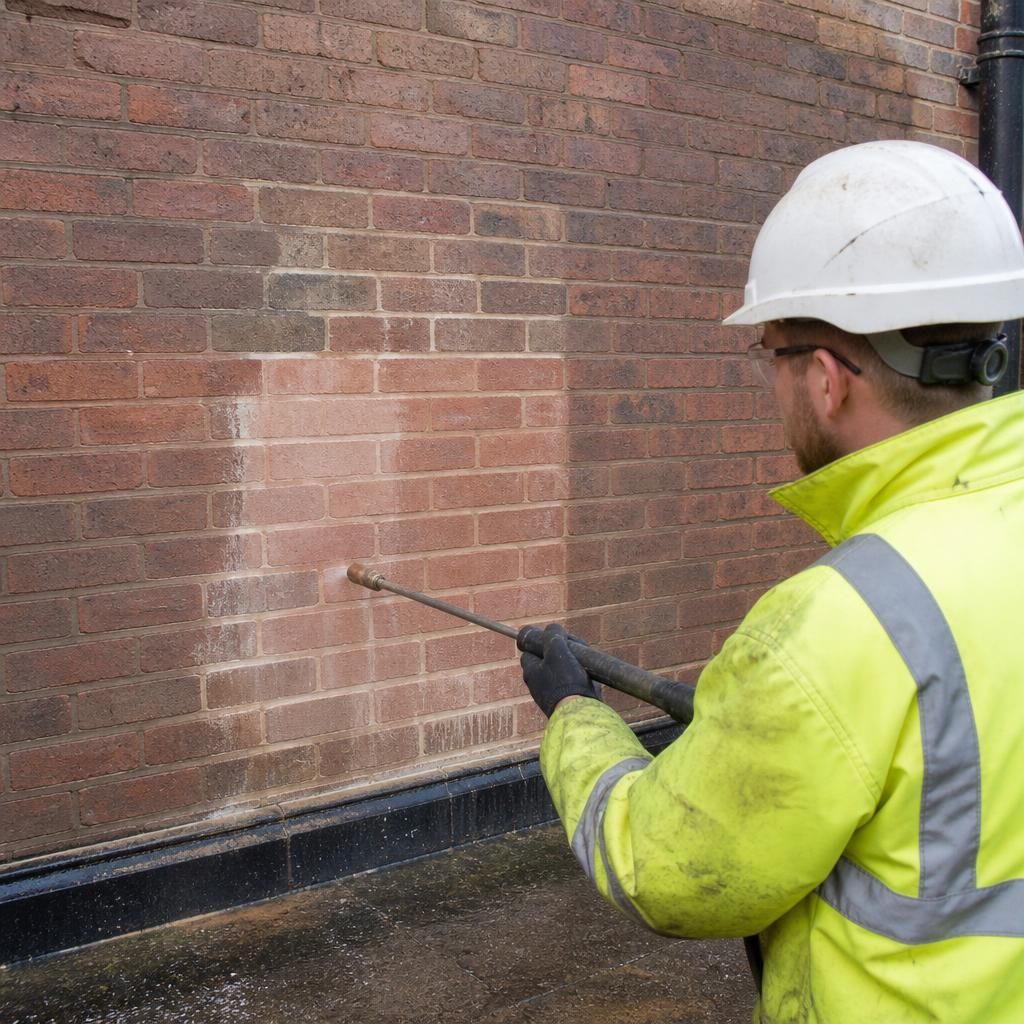
A representative test panel is the safest way to identify the most suitable cleaning technique for your brickwork. It allows the cleaning team to compare steam, low-pressure washing and specialist chemical treatments without committing the entire façade to an unproven method.
The test area should include the brick face, mortar joints, repairs and nearby materials. Once dry, it can be checked for colour change, patching, residue, etching, surface loss or joint erosion. The agreed process can then be recorded, including pressure, temperature, product dilution, dwell time, protection and rinsing requirements.