
What safety measures and insurance coverages are in place during brickwork cleaning and restoration?
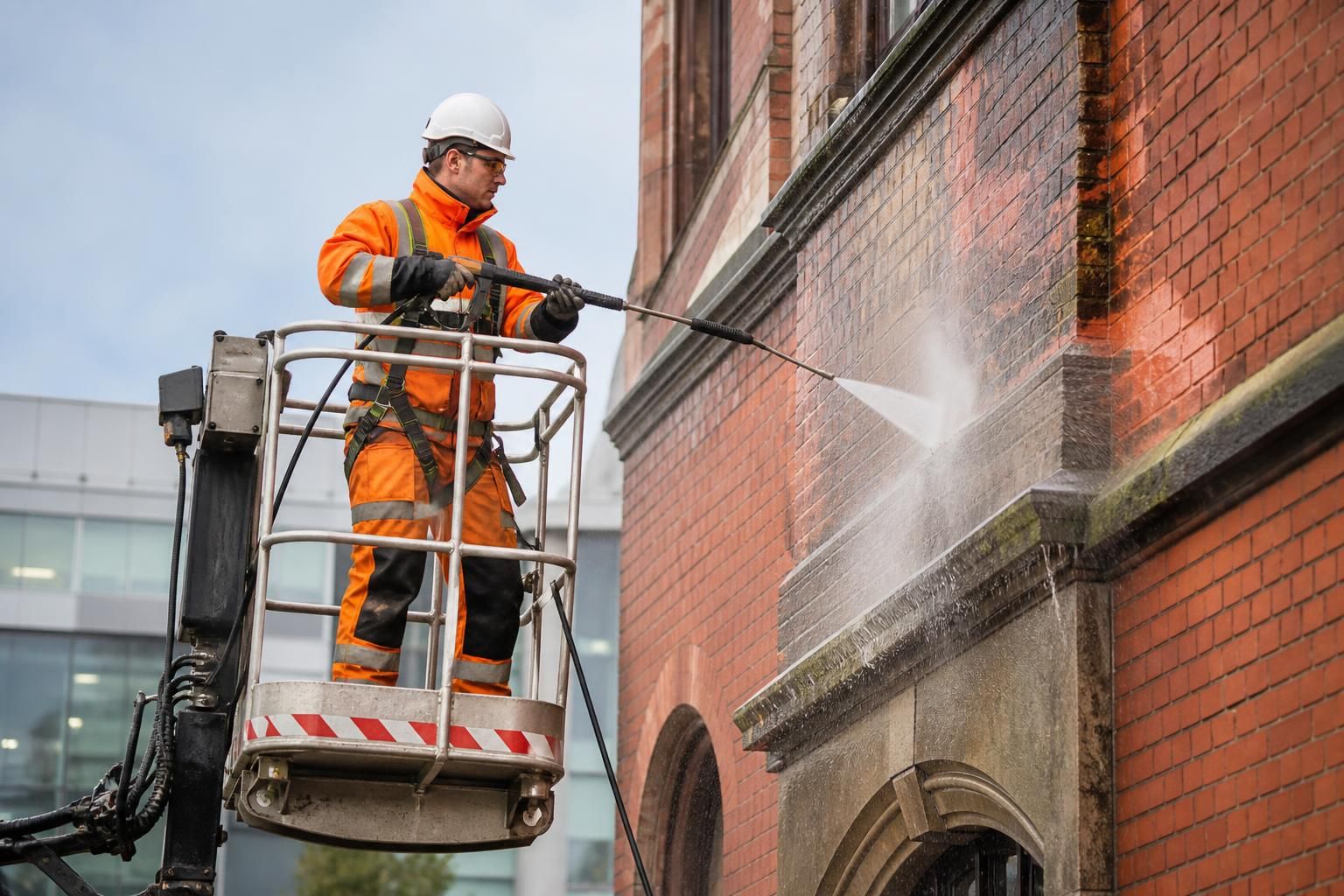
Brickwork cleaning and restoration is managed through site-specific risk assessments, method statements, trained operatives, suitable PPE, controlled work areas, safe access equipment, and measures to protect occupants, adjoining surfaces and drainage systems. Encanto Exterior Cleaning maintains appropriate commercial insurance, including public liability and employers’ liability cover, with additional plant, vehicle or contract-specific protection arranged where the project requires it; relevant documentation can be confirmed before work begins.
Safety during brickwork cleaning and restoration is controlled through a documented, site-specific system covering risk assessment, work methods, trained operatives, access equipment, protective measures and emergency arrangements. Insurance provides financial protection if an unforeseen incident causes injury, property damage or another covered loss, but it does not replace competent planning or safe working practices.
Pre-start assessment and method statement
Before work begins, the site is assessed for the brick type, mortar condition, contamination, surrounding materials and the risks created by the building’s location. The assessment considers pedestrian routes, occupied areas, traffic, overhead services, fragile surfaces, drainage, nearby glazing and the possibility of falling debris or contaminated run-off.
A written method statement then sets out the proposed cleaning or restoration sequence. This normally covers preparation, test panels, equipment and pressures, cleaning chemicals where applicable, access arrangements, exclusion zones, waste and water management, inspection points and completion checks. The method is adjusted if the test area shows that the brick or mortar is more vulnerable than expected.
Where the project falls within relevant construction health and safety requirements, responsibilities are coordinated with the client, principal contractor, building manager and other contractors. Site rules, permits, inductions and emergency procedures are followed where they apply.
Protection for people and property
- Work areas are segregated with suitable barriers, signs and controlled access to prevent unauthorised entry.
- Occupants, visitors and other trades are protected from spray, dust, debris, equipment and falling materials.
- Windows, doors, vents, signage, lighting, cables, vehicles and vulnerable adjoining surfaces are covered or otherwise protected before cleaning.
- Water, slurry and cleaning residues are controlled so that they do not enter unsuitable drains, affect neighbouring property or create slip hazards.
- Noise, spray drift and access disruption are considered when planning working times and the cleaning sequence.
- Plant and materials are positioned to maintain clear escape routes and avoid overloading roofs, scaffolds, pavements or other surfaces.
Cleaning is not automatically carried out at the highest available pressure. The pressure, nozzle, temperature, distance and technique are selected for the masonry and the contaminant. Lower-pressure washing, steam cleaning, controlled chemical treatment or a combination of methods may be more appropriate where brick faces, aged mortar or historic features could be damaged. Test cleaning helps identify problems such as surface friability, colour variation, salt movement or mortar loss before the main area is treated.
Operatives, PPE and access equipment
Operatives should be trained and competent for the equipment, cleaning products and access methods involved. Personal protective equipment is selected following the risk assessment and may include eye and face protection, gloves, protective clothing, suitable footwear, hearing protection and respiratory protection where dust, vapour or spray creates a relevant risk. PPE is used alongside, rather than instead of, safer equipment choices, isolation, ventilation and controlled work methods.
Work at height is planned to avoid unnecessary exposure. Depending on the building and access constraints, this may involve ground-based equipment, mobile access platforms, scaffold, towers or other suitable systems. Access equipment must be appropriate for the ground, weather, reach and working load, and must be used, inspected and maintained in line with the manufacturer’s instructions and applicable requirements. Harnesses, lanyards and other fall-protection equipment are used where the assessment identifies a need, with suitable arrangements for rescue rather than relying solely on personal protection.
Pressure washers, steam systems, pumps, hoses and electrical equipment are checked before use. Operators control hose routes, connection points, recoil, hot surfaces and electrical risks. Equipment is isolated before maintenance or clearing blockages, and defective items are removed from service.
Chemical, dust and environmental controls
Where chemical cleaners, biocides or paint-removal products are required, the relevant product information and control measures are reviewed before use. COSHH assessments address storage, dilution, handling, ventilation, PPE, accidental release and first aid. Products are not mixed unless the manufacturer’s instructions expressly permit it. Suitable rinsing and containment procedures help prevent chemical residues from affecting masonry, landscaping, drainage or watercourses.
Dust and airborne particles are reduced through appropriate wet methods, controlled application, local protection and suitable respiratory controls where necessary. Run-off and removed material are collected, contained or directed through an agreed disposal route. Waste is handled in accordance with its characteristics and the site’s environmental requirements rather than being discharged indiscriminately.
Inspection, supervision and emergency arrangements
Supervision continues throughout the work, particularly during initial testing, changes in weather, changes to access arrangements and transitions between cleaning and restoration. The work area and equipment are checked regularly, and the method is stopped or revised if unexpected damage, unstable masonry, hazardous materials, excessive spray or unsafe conditions are identified.
Emergency planning covers incidents such as injury, chemical contact, equipment failure, falling debris, sudden weather deterioration and damage to services. The site should have appropriate first-aid arrangements, communication methods, access for emergency services and a clear process for reporting and investigating incidents. Where a building contains suspected asbestos, lead paint, unstable elements or other hazardous materials outside the agreed scope, work should not proceed until the hazard has been assessed and suitable controls are in place.
Insurance cover
For commercial brickwork cleaning and restoration, the key protection normally includes public liability insurance for claims involving injury to members of the public or damage to third-party property arising from the work. Employers’ liability insurance is also required for eligible employees and protects against claims connected with workplace injury or illness. The precise terms, exclusions and limits depend on the policy and the project.
Additional protection may be relevant where the contract involves hired access equipment, owned or hired plant, company vehicles, specialist operations, work on listed or particularly valuable buildings, pollution risks or damage to property being worked on. These extensions should never be assumed: they need to be checked against the scope, contract conditions and insurer’s requirements before mobilisation.
Encanto Exterior Cleaning maintains appropriate commercial insurance, including public liability and employers’ liability cover. Where a project requires additional plant, vehicle, contract-specific or other protection, this can be reviewed and arranged subject to the applicable policy terms. Current insurance documentation and the relevant level of cover can be confirmed before work begins. A certificate alone is not a guarantee that every possible loss is insured, so the agreed scope, exclusions, excesses and notification requirements should be reviewed for higher-risk or unusual projects.
For a particular site, the most useful pre-start checks are to confirm the agreed method statement, risk assessment, access plan, COSHH controls where relevant, waste and drainage arrangements, emergency contacts, insurance certificates and any client or principal-contractor requirements. This gives the cleaning and restoration work a clear safety basis while ensuring that the insurance position matches the actual activities being undertaken.
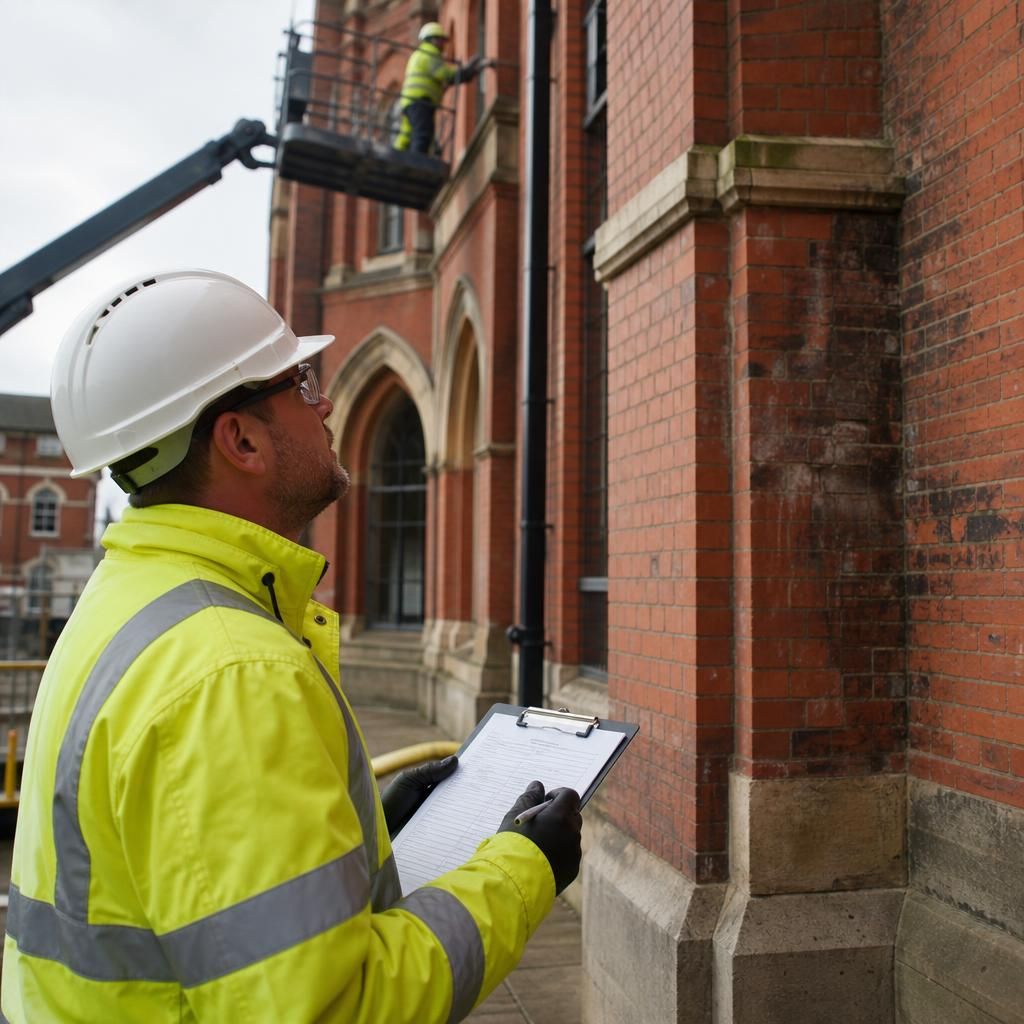
Brickwork cleaning and restoration should begin with a site-specific risk assessment and method statement, supported by suitable insurance for the work being carried out. These documents confirm how the masonry, occupants, adjoining surfaces, access equipment, chemicals and run-off will be managed before cleaning starts.
Before mobilisation, the agreed controls should cover test cleaning, exclusion zones, PPE, work at height, equipment checks, emergency arrangements and waste handling. Public liability and employers’ liability insurance provide important protection, while plant, vehicle, pollution or property-being-worked-on cover may need to be checked separately for higher-risk projects. Encanto Exterior Cleaning can confirm relevant insurance documentation and project requirements before work begins.