
What precautions should be taken when pressure washing brickwork?
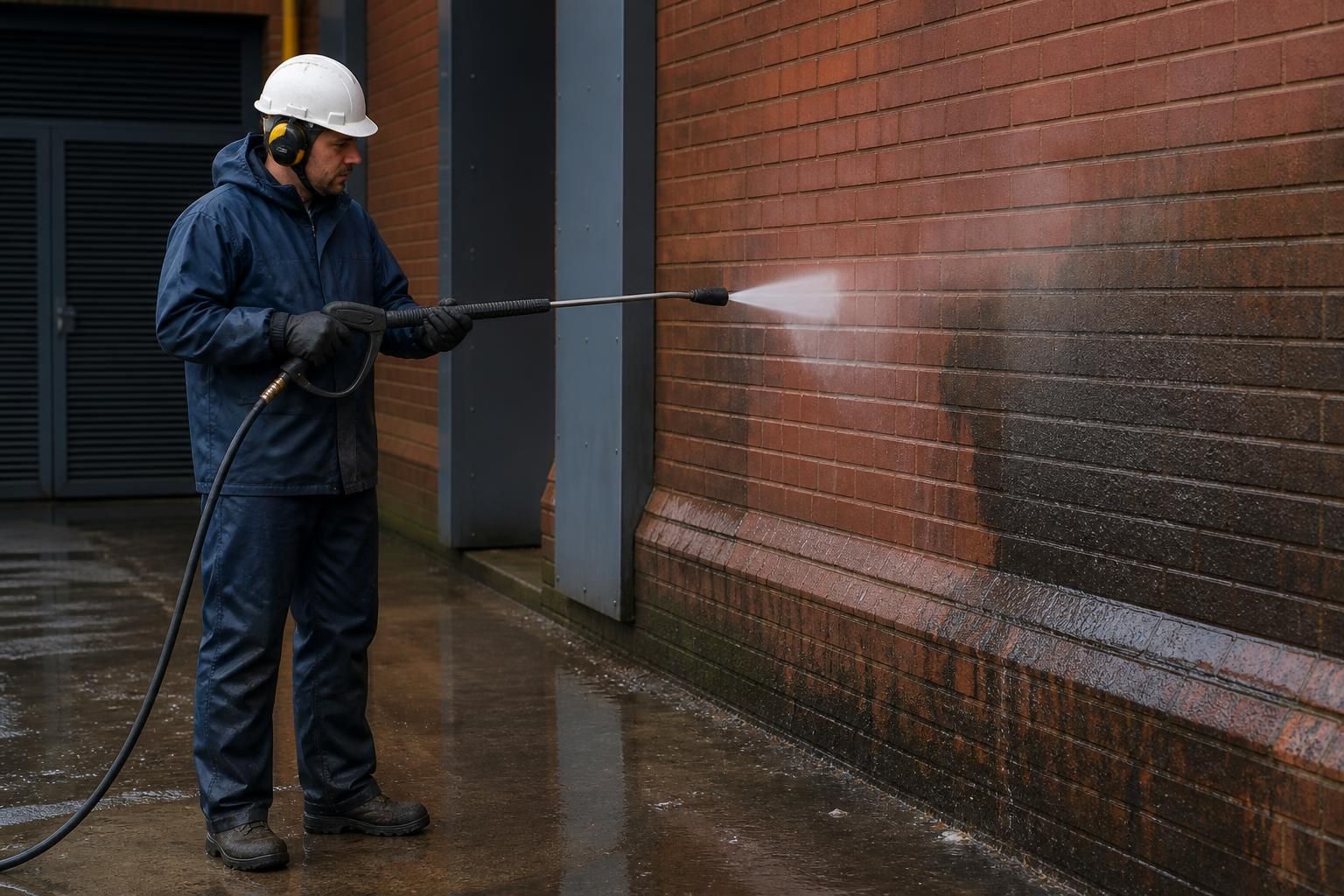
When pressure washing brickwork, use the lowest effective pressure, keep the nozzle at a safe distance, and test a small inconspicuous area first to avoid eroding the brick face or forcing water into joints. Protect nearby people, windows and surfaces, control runoff, and use suitable personal protective equipment while checking the masonry for damage or fragile mortar before cleaning.
Pressure washing brickwork safely requires a controlled, low-impact approach that protects the brick face, mortar joints, surrounding property and people nearby. Before cleaning, assess the condition and type of masonry, select the lowest effective pressure and suitable nozzle, test an inconspicuous area, maintain a safe working distance, and manage water, access and runoff throughout the work.
Inspect the brickwork before starting
Pressure washing should not begin until the wall has been checked for defects and vulnerable areas. Look for cracked or spalled bricks, loose faces, open joints, failed repointing, movement cracks, previous repairs and areas where water may enter the building. Soft, handmade, historic or weathered bricks can be damaged by pressure more easily than dense modern brickwork, so the cleaning method must be adapted to the masonry rather than selected solely for speed.
Check whether the wall has already been treated with paint, render, sealant or other coatings. These materials may conceal defects or require a different removal process. Where mortar is friable or missing, pressure washing can enlarge the joints and dislodge sound-looking material. Defective areas should be repaired, protected or excluded from cleaning as appropriate.
Use the lowest effective pressure
High pressure is not automatically more effective and can permanently erode the brick surface, expose the softer core, remove the face of the brick or damage mortar. Start with the gentlest suitable setting and increase it only when testing confirms that the brick and joints are tolerating the treatment. A fan spray is generally less aggressive than a concentrated jet, while rotary or pencil-style nozzles require particular caution because they can create visible marks and localised erosion.
Keep the lance moving in a controlled pattern and avoid holding the jet on one spot. Directing water at an angle rather than squarely into the wall can reduce the force entering joints, but the angle and technique must still be tested on the specific surface. Do not use pressure to compensate for an unsuitable detergent, an incorrect nozzle or insufficient dwell time.
Test an inconspicuous area
A small test area should be cleaned and allowed to dry before the main work proceeds. Assess whether the brick colour, surface texture, mortar and any existing coating have changed. Check the result in different light because etching, striping and uneven cleaning may not be obvious while the surface is wet. A test should also confirm that the proposed method removes the contaminant without spreading it across cleaner areas or driving it deeper into the masonry.
If the test exposes loose material, causes colour variation, produces surface marks or results in water entering the building, stop and revise the method. Historic, listed or particularly delicate brickwork may need specialist non-abrasive cleaning rather than pressure washing.
Protect joints, openings and vulnerable surfaces
Keep the spray away from damaged mortar, window and door seals, vents, air bricks, electrical fittings, roof edges and service penetrations. Water forced behind seals or into cavities can cause damp problems that are not visible immediately. Windows, doors, painted surfaces, signage, lighting, cameras and nearby finishes should be covered or otherwise protected, provided that protection does not create a hazard or trap water against the building.
Close windows and doors, notify occupants and identify any internal areas that could be affected by water ingress. Particular care is needed around older buildings, cavity wall details and walls with internal finishes that may be sensitive to damp. Do not block essential ventilation without arranging a safe alternative.
Control access and working at height
The operator should establish an exclusion zone around the work area to protect pedestrians, vehicles, occupants and other contractors from spray, debris and equipment. Warning signs and a suitable work plan are required where cleaning takes place in shared or public areas. Never direct a lance towards people, animals, traffic or unprotected glazing.
Access equipment must be selected for the surface, height, ground conditions and reach required. Ladders should not be used as a substitute for a stable working platform when the operator needs both hands to control the equipment or when reaction forces could affect balance. Inspect hoses and connections, keep walkways clear, and route equipment so that it does not create trip or vehicle hazards. Operatives should be trained in both pressure-washing equipment and the access system being used.
Wear appropriate protective equipment
Personal protective equipment should reflect the equipment, detergent and contaminant involved. This commonly includes waterproof protective clothing, suitable gloves, eye or face protection, slip-resistant safety footwear and hearing protection where noise levels require it. Respiratory protection may be necessary when cleaning products, biological growth or contaminated deposits could generate harmful mist or particles; its selection should follow a proper risk assessment.
Protective equipment does not replace safe operating distances, ventilation, exclusion zones or chemical controls. Where detergents or biocides are used, read the product information, follow the required handling instructions and prevent contact with skin, eyes and unprotected surfaces.
Manage water, chemicals and runoff
Plan where wash water will travel before cleaning begins. Runoff can carry dirt, paint residues, oils, biocides and cleaning chemicals into drains, soil, watercourses or neighbouring property. Use suitable collection, diversion or filtration measures and follow the site’s drainage requirements. Do not allow contaminated water to enter surface-water drainage unless it is permitted and appropriately controlled.
Use only the amount and type of cleaning product required for the contaminant and the brickwork. Never mix products unless the manufacturer specifically permits it, and take additional care around plants, soft landscaping, metals, painted finishes and sensitive paving. Any residue should be rinsed or removed using a method that does not spread contamination or force it into the wall.
Consider weather and building conditions
Wind can carry spray and loosened deposits beyond the work area, while freezing conditions can leave water in the masonry and increase the risk of frost damage. Very hot, sunny or rapidly drying conditions can cause uneven results and make detergents dry on the surface. Cleaning should be postponed where weather conditions prevent safe access, effective rinsing or proper control of overspray.
Brickwork should be allowed to dry naturally after cleaning, with ventilation maintained where appropriate. Do not apply sealants, coatings or repairs until the substrate has been assessed and is sufficiently dry for the proposed treatment.
Inspect the finished work
After cleaning, check the brick faces, joints, openings, surrounding surfaces and drainage routes. Look for exposed brick cores, displaced mortar, streaking, trapped debris, damaged seals or signs of water ingress. Remove temporary protection carefully and confirm that the area is safe for occupants and the public before reopening it.
For commercial, industrial and occupied premises, record the pre-cleaning condition, test results, method used, areas excluded, products applied and any defects identified. This provides a clear maintenance record and helps determine whether repointing, brick replacement, sealing or a gentler future cleaning method is required.
Where brickwork is historic, structurally defective, heavily contaminated or difficult to access, professional assessment is particularly important. Pressure washing may be suitable for sound, robust masonry, but the safest outcome comes from matching the equipment and technique to the brick, mortar, contaminant and building condition.
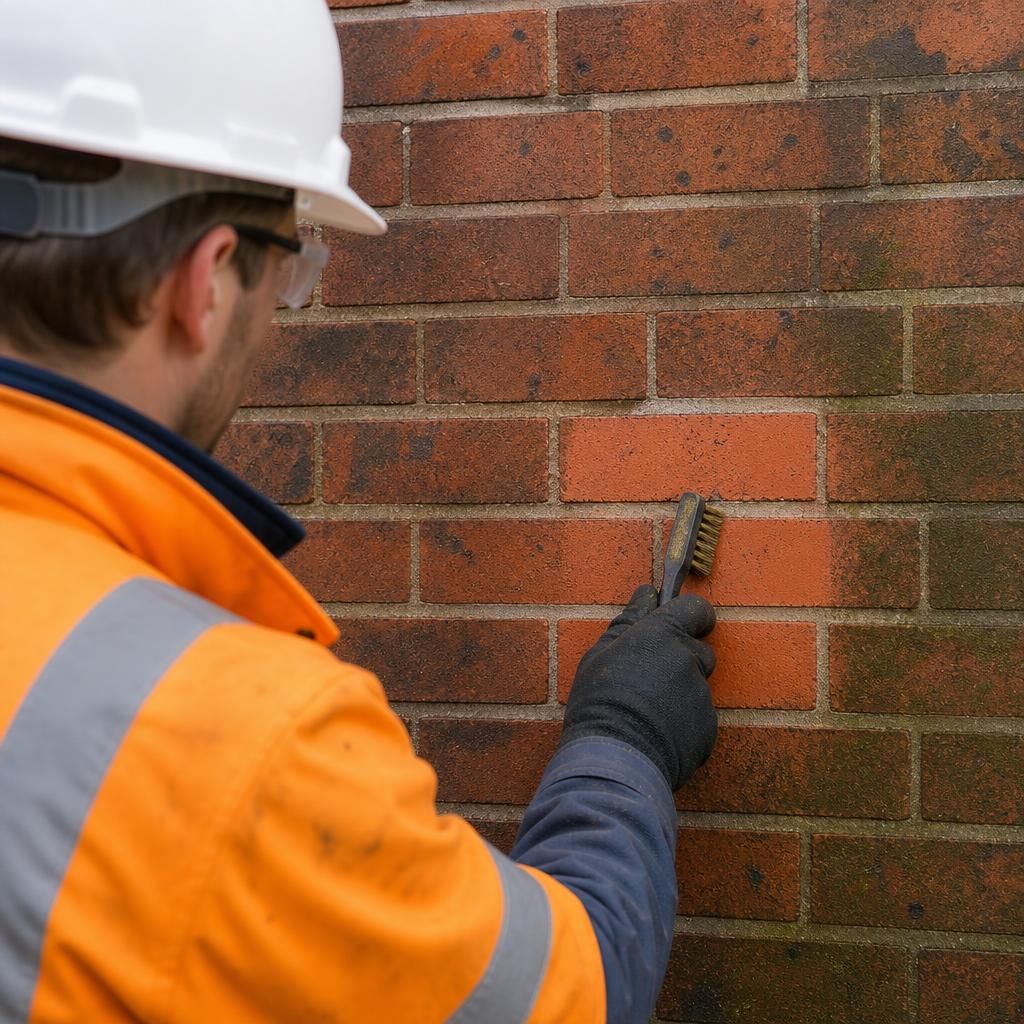
Testing an inconspicuous area is an essential precaution before pressure washing the full brick surface. It confirms that the selected pressure, nozzle, spray distance and cleaning product will remove the contaminant without eroding the brick face, loosening mortar or causing uneven colour.
Allow the test area to dry fully and inspect it in different light. If you see etching, striping, exposed brick core, displaced joints or water entering the building, stop and revise the method before proceeding. Historic, soft or weathered brickwork may require a gentler cleaning technique instead of pressure washing.