
What methods are used for cleaning graffiti from brick surfaces?
Graffiti is removed from brick surfaces using a carefully selected combination of low- to medium-pressure washing, steam cleaning and specialist graffiti-removal treatments. The method depends on the brick type, paint or marker used, surface condition and surrounding areas, with a small test patch completed first to prevent damage or staining.
Graffiti is removed from brick surfaces by combining a carefully controlled cleaning method with a suitable graffiti-removal treatment. The correct approach depends on the brick’s porosity and condition, the type of paint or marker, how deeply the graffiti has penetrated, and the location of the affected area. In most cases, the work begins with a small test patch before the selected method is applied across the full elevation.
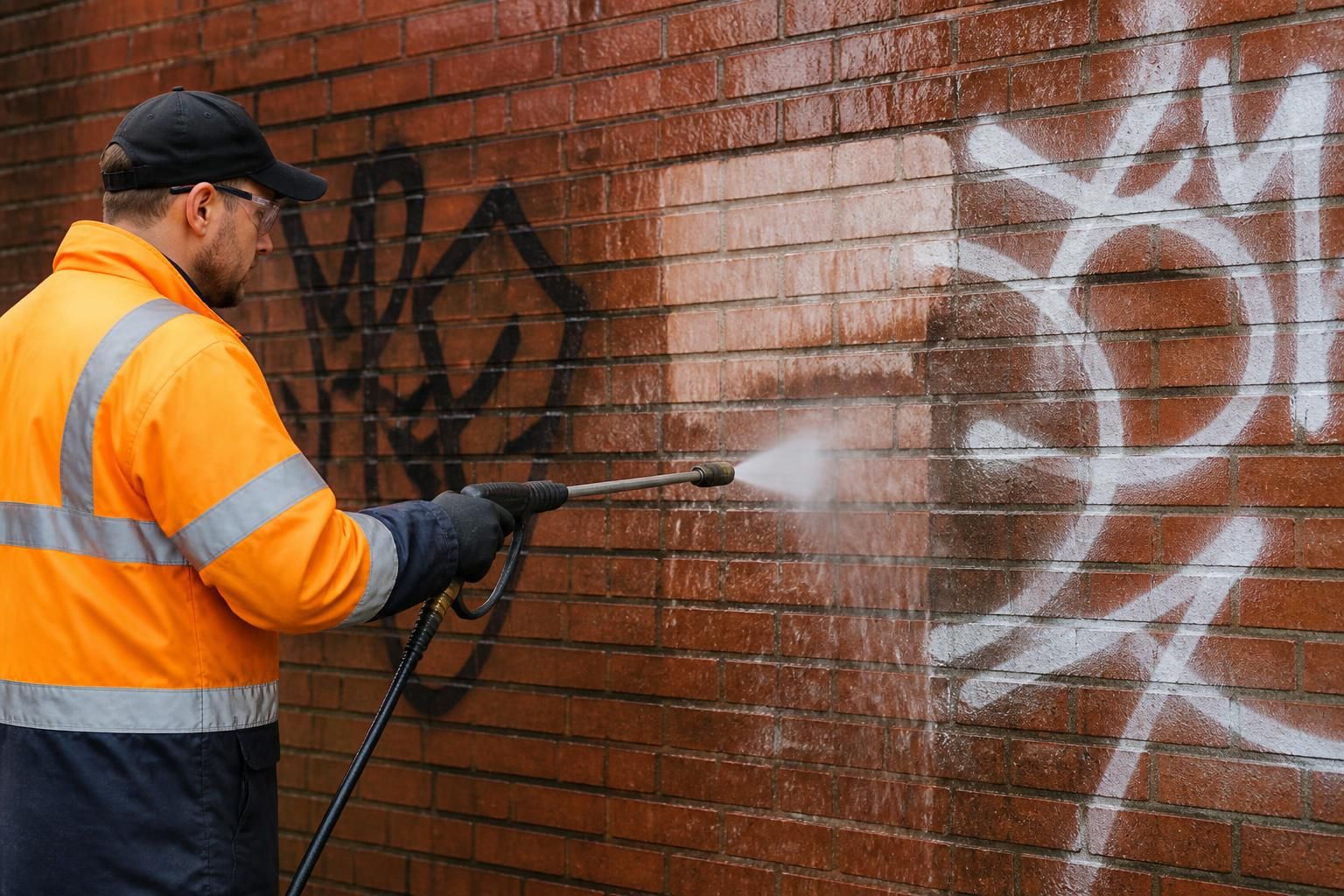
Low-pressure washing is commonly used where the graffiti is relatively fresh or has been applied to a robust, non-damaged brick surface. Water, sometimes heated, is applied at a controlled pressure to lift softened paint and loosen surface deposits without unnecessarily eroding the brick face or mortar joints. The pressure, nozzle, distance and water temperature must be adjusted to the masonry rather than treated as fixed settings.
Steam cleaning uses heated water vapour to soften paint, marker residue, adhesive and grime. It is particularly useful on older or more delicate brickwork because it can clean effectively with less mechanical force and limited water use. Steam may remove light graffiti on its own, although a specialist treatment is often needed where paint has soaked into porous brick.
Specialist graffiti-removal chemicals are selected according to the coating being removed. Water-based paints, solvent-based paints, aerosol coatings and permanent markers do not all respond to the same product. Gel or paste treatments can be useful on vertical walls because they remain in contact with the graffiti rather than running quickly over the surface. The softened residue is then removed by controlled rinsing or low-pressure cleaning.
Solvent-based treatments can help with marker ink and certain durable coatings, while alkaline or water-based products may be more appropriate for other paint types. These products must be used carefully: an unsuitable chemical can spread the stain, alter the colour of the brick, damage mortar, or leave a visible tide mark. Specialist products should therefore be applied for the shortest effective dwell time, prevented from drying on the surface, and thoroughly rinsed from the masonry.
Absorbent poultices may be used when graffiti has penetrated deeply into porous or historic brick. A poultice draws dissolved paint or pigment towards the surface as it dries, reducing the need for aggressive pressure or abrasive action. This method can require repeated applications and is normally considered where ordinary washing and chemical treatment cannot remove the remaining staining safely.
Very gentle abrasive cleaning is sometimes suitable for robust brickwork with heavily bonded coatings, but it is not a default graffiti-removal method. Abrasive media can remove the fired surface of the brick, expose a different colour beneath it, roughen the face and accelerate future water penetration. It should only be considered after less aggressive options have been assessed, with the media, pressure and application technique selected through testing.
The usual cleaning process includes:
- Inspecting the brick, mortar, joints, previous repairs and nearby materials.
- Identifying the likely graffiti type and checking whether it has penetrated the brick.
- Protecting windows, doors, signage, painted surfaces, planting, drainage points and pedestrian areas.
- Carrying out a discreet test patch to compare treatments and check for colour change, etching or staining.
- Applying the least aggressive effective method, often with a specialist treatment followed by steam or controlled low-pressure rinsing.
- Collecting or controlling contaminated wash water where required, rather than allowing paint residue and chemicals to enter surface-water drains.
- Rinsing and inspecting the area progressively so that remaining marks can be treated without repeatedly cleaning unaffected brickwork.
- Allowing the surface to dry before assessing any residual shadowing or deciding whether further treatment is appropriate.
Brick type is a key factor in method selection. Dense, well-fired engineering brick generally tolerates more controlled mechanical cleaning than soft handmade brick, limewashed brick or weathered historic masonry. Repointed areas can also be vulnerable, particularly where mortar is still curing or has already become friable. Cleaning too aggressively may remove joint material, expose open gaps or create a patchy appearance between the brick and mortar.
Graffiti shadows can remain after the visible paint has been removed because pigment has entered the brick’s pores. Increasing pressure is not always the answer and can cause more damage than benefit. A further specialist treatment, poultice or carefully controlled repeat clean may reduce the shadow, but complete removal cannot always be guaranteed where the substrate has been permanently stained or chemically altered.
After cleaning, the brickwork should be checked for residual paint, damage, loose mortar and areas requiring repair. Any repointing or brick replacement should be completed using materials compatible with the existing masonry. A breathable protective coating may be considered in some commercial settings to make future graffiti removal easier, but it must be suitable for the brick and must not trap moisture within the wall.
Graffiti on brick should not normally be tackled with an untested pressure washer, household solvents or harsh abrasive products. These approaches can drive paint deeper into porous masonry, strip the brick face, damage pointing and spread contamination to adjoining areas. A controlled test-led process provides the best balance between removing the graffiti and preserving the appearance, strength and weather resistance of the brickwork.
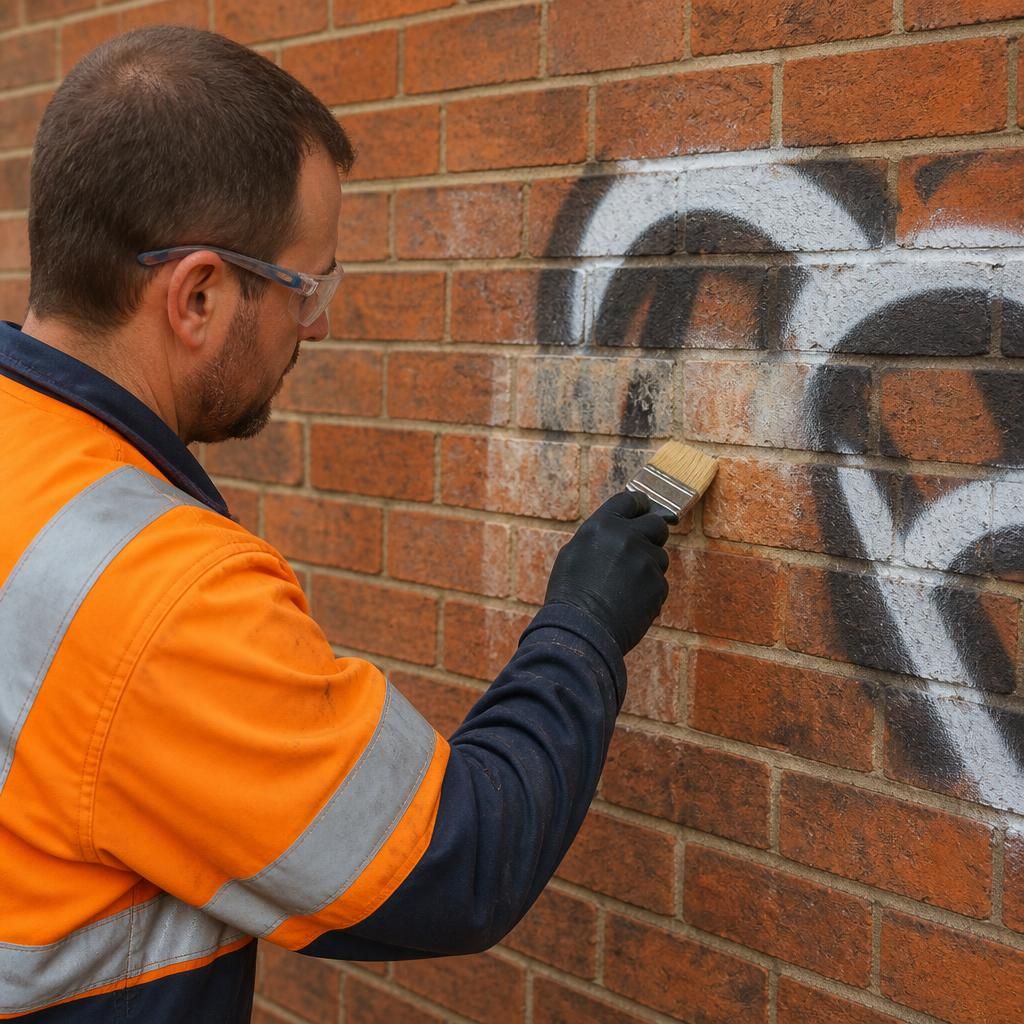
A discreet test patch is essential before removing graffiti from brickwork because porous masonry can react differently to pressure, heat and cleaning chemicals. It shows whether the selected treatment will remove the paint without etching the brick, lightening its colour, damaging the mortar or leaving a tide mark.
The test should be carried out in an inconspicuous area using the intended product, dwell time, rinsing method and pressure. Once the brick has dried, the result can be assessed properly. The least aggressive method that achieves an acceptable result should then be used across the affected surface, rather than increasing pressure and risking permanent damage.