
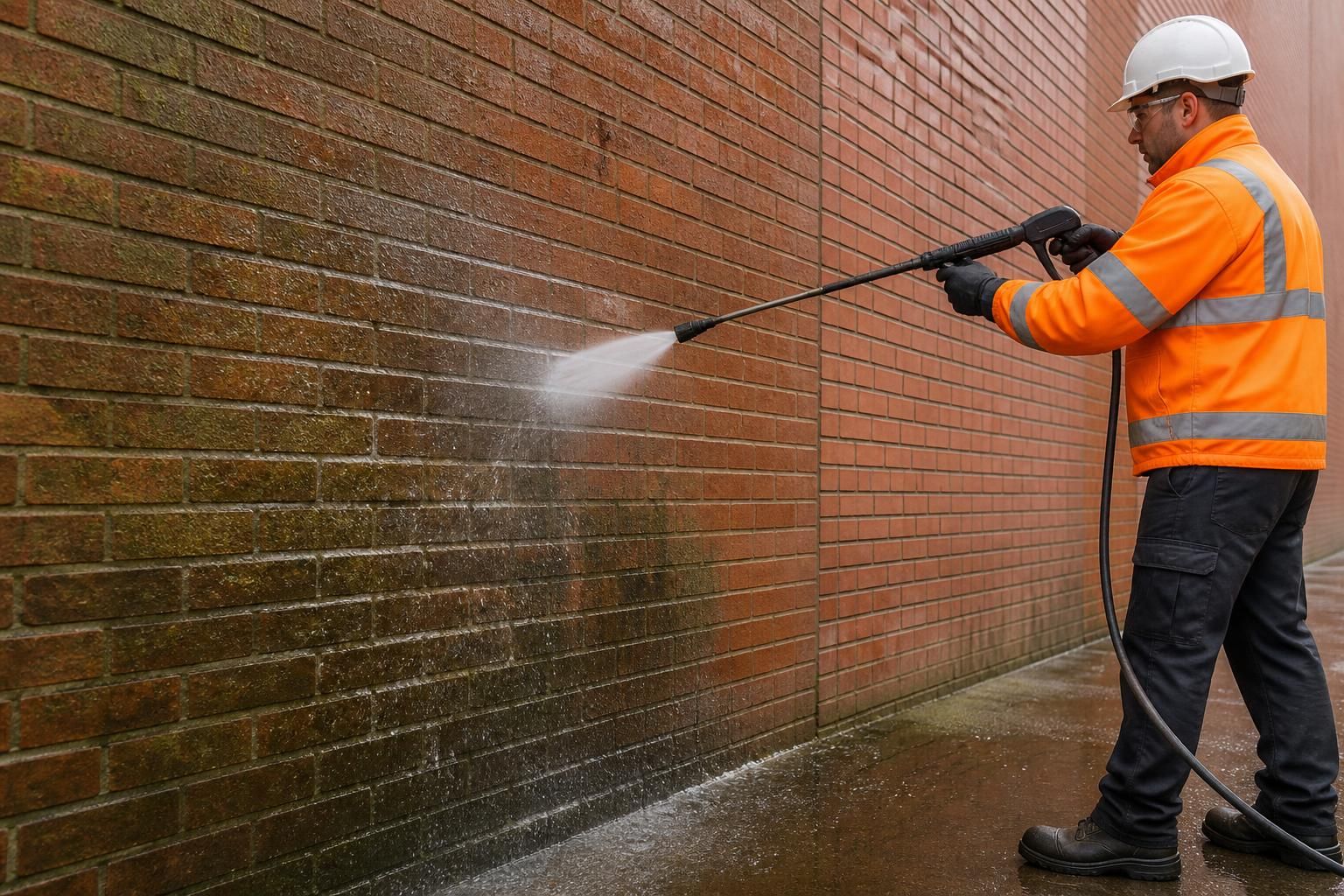
What are the potential risks and precautions associated with using high-pressure cleaning techniques on brickwork?
High-pressure cleaning can remove dirt, coatings and biological growth from brickwork, but excessive pressure or incorrect technique may erode the brick face, damage soft mortar, drive water into the wall or worsen existing defects. Precautions include assessing the brick and mortar first, testing a small area, using the lowest effective pressure with suitable equipment, controlling spray distance and angle, protecting adjacent surfaces, and managing wastewater safely.
High-pressure cleaning can damage brickwork when the pressure, nozzle, water volume or technique is unsuitable for the brick, mortar or existing defects. The main risks are erosion of the brick face, loss of joint material, water penetration, surface staining and the aggravation of cracks or frost damage. Safe results depend on a condition survey, a small test area, the lowest effective pressure and careful control of the water and wastewater.
Brick and mortar erosion
Strong jets can remove the fired surface of bricks, particularly where the brick is soft, weathered, handmade or already spalled. This may expose a more porous inner layer, alter the appearance of the façade and increase its vulnerability to future moisture and frost. The mortar can be more vulnerable than the brick, especially where joints are old, friable, recessed or made with a weak lime-based mix. Directing a jet along the joints may widen them, wash out the surface or dislodge loose material.
Damage is not always immediately obvious. A wall may look clean after washing but later show roughened brick faces, enlarged joints, cracking or accelerated deterioration. Cleaning should therefore remove the contaminant without treating sound masonry as though it were a hard, non-porous surface.
Water penetration and hidden defects
High-pressure water can be driven into open joints, cracks, cavities, porous brick and areas around windows, doors, vents and service penetrations. Moisture trapped within the wall can contribute to damp patches, staining, mould growth and corrosion of embedded metalwork. Where the building has internal finishes, insulation or occupied areas close to the façade, unintended water ingress may cause damage that is not visible from outside.
Pressure washing can also reveal or worsen pre-existing defects, including loose bricks, failed pointing, defective flashings, open copings and unstable render or coatings. It should not be used to compensate for a façade that first requires repair or repointing.
Frost, salts and staining
Water absorbed into masonry can freeze and expand during cold weather, worsening spalling and cracking. Work should be planned to allow the wall to dry and should not proceed where weather conditions create an avoidable risk of freezing or prolonged saturation.
Washing can mobilise salts within the wall. As the masonry dries, these may migrate to the surface as efflorescence or, where contaminants and metals are present, produce persistent staining. Run-off from corroded fixings, roofs, signs or adjoining materials can also mark the brickwork. Cleaning the source of the staining and controlling the run-off is often more effective than increasing pressure.
Damage to adjoining materials
A high-pressure jet can mark or break glass, dislodge sealants, damage painted surfaces, remove protective coatings and force water behind cladding, render or pointing. Particular care is needed around timber, electrical fittings, vents, signage, alarms, roof coverings, membranes and decorative features. Rebound from the wall can spread contaminated water and loosened particles onto nearby vehicles, pedestrians and finished surfaces.
Any adjacent area that is not being cleaned should be identified and protected before work starts. Protection must not obstruct ventilation, conceal defects or create a hazard, and it should be checked during the operation rather than assumed to remain secure.
Risks from contaminants and run-off
Brickwork may contain algae, bird fouling, oils, soot, paint, chemical residues or biological growth. High-pressure cleaning can aerosolise contaminated water and spread debris beyond the work area. Where coatings or older painted surfaces are present, the composition should be considered before washing; some materials may require specific controls for hazardous dust, particles or wastewater.
Wastewater should be contained or directed in accordance with the site’s drainage arrangements and applicable environmental requirements. It must not be allowed to enter surface-water drains, watercourses or neighbouring property carrying silt, detergents, paint, oils or other contaminants. The cleaning method should use the least aggressive treatment that will remove the contaminant and should avoid unnecessary chemical use.
Precautions before cleaning
- Inspect the brick type, age, condition, porosity and previous repairs, including the condition and composition of the mortar.
- Identify cracks, spalled faces, loose bricks, hollow areas, failed pointing, open joints, unstable coatings and signs of damp or salt movement.
- Check whether the proposed work could affect internal rooms, neighbouring properties, roof spaces, electrical equipment, access routes or sensitive building contents.
- Determine what is causing the soiling. Oils, biological growth, paint, carbon deposits and efflorescence may require different treatments, and pressure alone may be unsuitable.
- Carry out a controlled test patch in an inconspicuous location. Allow it to dry and assess both the immediate appearance and the condition of the brick and mortar before proceeding.
- Agree the acceptable result with the client where a façade has weathering, colour variation, historic fabric or areas that should not be cleaned.
Controlling the cleaning technique
Use the lowest effective pressure and water volume rather than starting with a powerful setting and reducing it only after damage occurs. The correct setting depends on the masonry and equipment; pressure at the pump is not the only relevant factor. Nozzle type, spray pattern, flow rate, distance from the wall, angle of application and operator movement all affect the force reaching the surface.
- Keep the nozzle moving and avoid holding the jet in one place.
- Maintain a consistent working distance and use a suitable fan or low-impact nozzle where appropriate.
- Do not direct the jet into joints, cracks, vents, seals or openings.
- Use a controlled angle rather than driving water directly into the masonry.
- Work in manageable sections, reviewing the surface as dirt is removed.
- Stop if the brick face begins to roughen, the mortar starts to wash out, water enters the building or the test result differs from the agreed standard.
Pressure should not be increased simply to remove staining that is embedded, chemically bonded or caused by the brick itself. A softer approach, such as low-pressure washing, steam cleaning, a suitable non-abrasive treatment or localised manual work, may be safer. Abrasive methods require particular caution because they can permanently alter the brick face.
Repairs and sequencing
Loose bricks, defective pointing and open cracks should be assessed before cleaning. In some cases, cleaning first can expose the full extent of the defect; in others, washing before necessary repairs may drive water into the wall or remove material that needs to remain in place. The sequence should be agreed following inspection. After cleaning, allow the masonry to dry before final assessment and any repointing, replacement or protective treatment.
Newly repaired or repointed areas may need additional curing time and protection from forceful washing. Cleaning should not remove the surface of fresh mortar or saturate repairs before they have developed suitable strength.
Site and operator safety
High-pressure equipment can cause injection injuries, slips, falls, eye injuries and hearing damage. The work area should be segregated, warning signs used where necessary, and access equipment selected for the height and layout of the building. Operators should use appropriate protective clothing, gloves, eye and hearing protection, and suitable respiratory protection where the task or contaminant requires it.
Hoses and electrical equipment should be arranged to prevent trip hazards, and equipment should be checked before use. Work at height, traffic management, public access and water near electrical installations require a task-specific risk assessment and method statement. Operators should also understand the equipment’s limitations and the building’s particular defects rather than relying on pressure alone.
How the work should be verified
After cleaning, inspect the brick faces, joints, openings and adjoining materials for erosion, dislodged pointing, water ingress and unexpected colour change. Check drainage routes and remove settled silt or debris in accordance with the agreed environmental controls. Record the test area, method used, areas excluded and any defects identified before or during the work. This provides a clear basis for deciding whether further cleaning is appropriate and helps protect the fabric of the building.
For older, listed or architecturally significant buildings, unusually soft brick, extensive deterioration or suspected hazardous coatings, obtain appropriate specialist advice before selecting a high-pressure method. A professional assessment should determine whether pressure washing is suitable at all, or whether a gentler technique and staged restoration approach will provide the safer outcome.
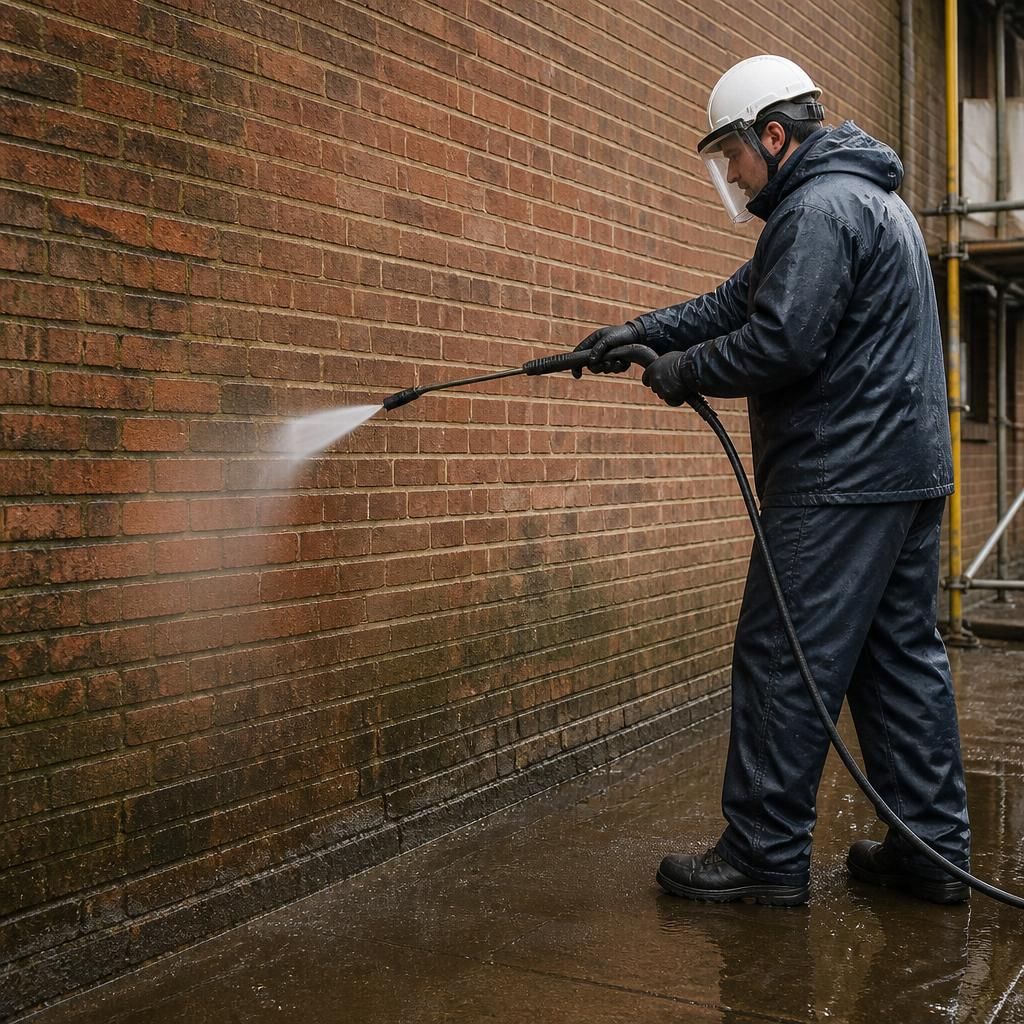
High-pressure cleaning should only be used on brickwork after the masonry and mortar have been assessed, because excessive force can erode the brick face, wash out joints and drive water into cracks or open areas. A small test patch in an inconspicuous location helps confirm whether the selected pressure, nozzle, distance and spray angle are suitable.
The operator should use the lowest effective pressure, keep the nozzle moving and review the surface as contamination is removed. Cleaning should stop if the brick becomes roughened, mortar is displaced, water enters the building or the result differs from the agreed finish. Softer methods, such as steam cleaning or controlled low-pressure washing, may be more appropriate for weathered, historic or soft brickwork.
Arrange a Professional Brickwork Cleaning Assessment
Arrange a professional brickwork cleaning assessment to confirm whether high-pressure cleaning is suitable for your masonry and identify the safest method for the required result. We will assess the brick and mortar condition, surrounding risks and any necessary precautions before work begins.