
What are the benefits of using different brick cleaning methods?
Different brick cleaning methods offer distinct benefits depending on the brick type, surface condition and contaminant involved. Pressure washing is effective for robust, weathered brickwork, while steam cleaning provides a gentler option for delicate or historic surfaces and specialist treatments can target paint, mortar staining or biological growth with greater control.
Different brick cleaning methods provide different benefits because they vary in pressure, temperature, moisture, abrasion and chemical action. The most suitable method depends on the brick’s age, hardness, porosity and condition, as well as whether the surface is affected by dirt, mortar staining, paint, algae, oil or graffiti. Choosing the least aggressive method that can remove the contaminant effectively helps preserve the brickwork and its existing joints.
A professional assessment should take place before cleaning begins. This normally includes identifying the brick type, checking for cracks, spalling, loose faces and defective pointing, and carrying out a small test area. The test confirms whether the proposed method removes the soiling without altering the colour, texture or appearance of the brick.
Pressure washing
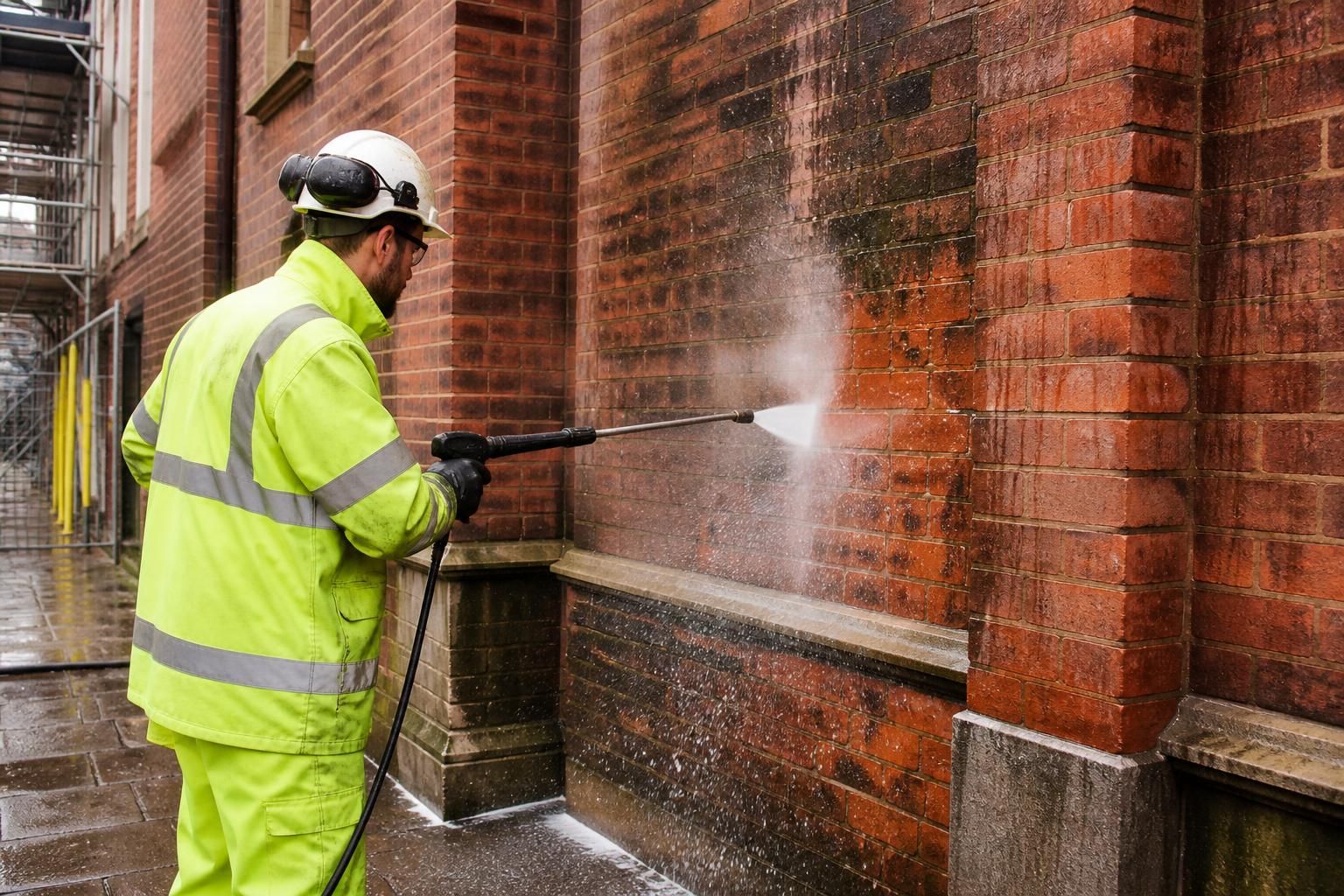
Controlled pressure washing uses water to dislodge surface dirt, dust, traffic film, moss and other loosely bonded deposits. Its main benefits are speed, broad coverage and the ability to clean large façades, boundary walls, loading areas and other extensive brick surfaces efficiently. It can be particularly useful on sound, modern brickwork and robust engineering brick where the surface and mortar are in good condition.
Pressure washing also avoids the use of strong cleaning chemicals in situations where water alone is sufficient. However, pressure must be adjusted to the brick and joint condition. Excessive pressure or an unsuitable nozzle can drive water into porous masonry, remove the weathered face of a brick, widen defects or erode mortar. For that reason, pressure washing is not automatically suitable for soft, handmade, historic or already damaged brickwork.
Low-pressure washing and soft washing
Low-pressure washing applies water at a gentler force, often with a suitable cleaning solution, dwell time and controlled rinsing. This approach reduces the mechanical impact on the surface while still loosening organic growth, atmospheric dirt and some staining. It is beneficial where the brick is porous, the pointing is relatively soft or the surface contains delicate architectural details.
Soft washing can provide more even results than relying on high water pressure alone. The cleaning solution breaks down the contaminant, allowing it to be rinsed away with less force. Any chemical used must be compatible with the brick, surrounding materials and drainage arrangements. It should not be allowed to dry on the surface, and nearby glass, metalwork, plants and painted finishes require suitable protection.
Steam cleaning
Steam cleaning uses heated water, usually at comparatively low pressure, to soften and lift dirt, grease, biological growth and some surface coatings. Its principal benefit is that heat improves the cleaning action without requiring aggressive pressure. This makes it useful for older, delicate or visually important brickwork where retaining the original surface is a priority.
Steam can also reduce the need for detergents and may help clean intricate brick detailing, recessed joints and areas where deposits have become embedded. It is often effective for soot and general atmospheric soiling, although stubborn paint, cement deposits and deeply absorbed oil may require a different treatment. Moisture-sensitive areas, defective roofs, open joints and vulnerable internal finishes must be considered before steam is used.
Hot-water cleaning
Hot-water pressure cleaning combines heat with controlled water pressure. The heat helps soften grease, oil, chewing gum residue and some organic deposits, while reducing the amount of mechanical force needed. This can make it a practical option for commercial brickwork exposed to vehicles, food waste or heavy urban pollution.
As with any water-based method, the operator must control run-off and prevent contaminated water from entering surface water drains. Hot water can also affect sensitive coatings, sealants and adjacent materials, so testing and protection remain important.
Specialist chemical cleaning
Brick-cleaning chemicals are formulated for specific contaminants rather than general dirt. Acidic products may help remove mortar smears, cement staining and some mineral deposits, while alkaline or solvent-based treatments may be considered for particular oils, paints or coatings. Their benefit is targeted action: a suitable product can dissolve or loosen a contaminant that water and steam cannot remove effectively.
Chemical cleaning requires careful product selection, dilution, dwell-time control and thorough rinsing. An unsuitable acid can etch brick, alter its colour, damage pointing or leave salts behind. Chemical treatments can also harm glass, metals, stone, render, plants and drainage systems. They should therefore be used only after a test patch and with appropriate containment and neutralisation procedures where necessary.
Paint, coating and graffiti removal
Paint and graffiti often need a combination of techniques rather than one standard process. A controlled chemical poultice or graffiti-removal treatment can soften the coating, after which low-pressure rinsing, steam or gentle agitation removes the residue. The benefit of this staged approach is greater control over the depth and direction of cleaning, reducing the likelihood of spreading pigment or damaging the brick face.
Highly absorbent bricks may retain paint beneath the visible surface. Removing every trace may not be possible without affecting the original brick, so the objective should be agreed according to the condition and appearance required. Abrasive methods can remove coatings quickly, but they may also change the texture of the brick and should be reserved for carefully assessed situations.
Abrasive and micro-abrasive cleaning
Abrasive cleaning uses a fine medium, air or water to remove tightly bonded deposits and coatings. Its benefit is its ability to treat contaminants that resist ordinary washing, including some heavy paint, carbon deposits and hard surface staining. Fine, controlled systems can be more precise than conventional blasting.
Nevertheless, abrasive cleaning carries a higher risk of removing the brick’s fired surface, exposing a softer layer or creating an uneven finish. It is generally unsuitable for fragile, historic or highly porous brick unless a specialist assessment confirms that the method can be controlled safely. The abrasive medium, pressure, distance and angle all affect the result.
Manual cleaning and localised treatments
Hand tools, non-metallic brushes and localised applications are useful for small areas, fragile details and contaminants that need close control. Manual cleaning can complement steam or chemical treatment by removing softened deposits from joints, carvings and recessed features. It produces less spray and run-off than some machine-based methods, which can be helpful in occupied or restricted areas.
It is slower on large elevations and excessive scrubbing can still mark softer brick. The method is therefore most effective as part of a broader cleaning plan or for sensitive sections that cannot be treated in the same way as the main façade.
How the benefits are assessed in practice
- Brick condition: Sound, dense brick may tolerate controlled pressure, while soft, friable or weathered brick usually benefits from lower-pressure or steam-based cleaning.
- Contaminant: Loose dirt may need only water; grease may respond better to hot water; mortar staining may require a suitable specialist treatment; and paint or graffiti may need staged removal.
- Mortar and pointing: Open, weak or recently repaired joints can allow water penetration and may be damaged by excessive pressure or aggressive chemicals.
- Building age and significance: Historic or listed brickwork often requires a conservation-led approach that prioritises retaining the original surface over achieving an artificially uniform finish.
- Surrounding materials: Windows, stone, render, roofing, cables, signage and landscaping must be protected from pressure, heat, chemicals and contaminated run-off.
- Required finish: A façade requiring general presentation cleaning may need a different process from brickwork being prepared for repainting, repointing or further restoration.
The best results usually come from a combination of methods rather than maximum pressure. For example, steam or a suitable detergent may loosen the deposit, followed by gentle rinsing and localised hand treatment. A competent contractor should explain the proposed method, identify foreseeable risks, complete a representative test area and confirm how waste water and residues will be managed before progressing across the full elevation.
Cleaning should not be used to conceal underlying defects. Spalled bricks, failed pointing, trapped moisture, leaking gutters and damaged copings may continue to cause staining or deterioration after the surface has been cleaned. Where these issues are present, brick cleaning should be coordinated with the necessary repair and restoration work.
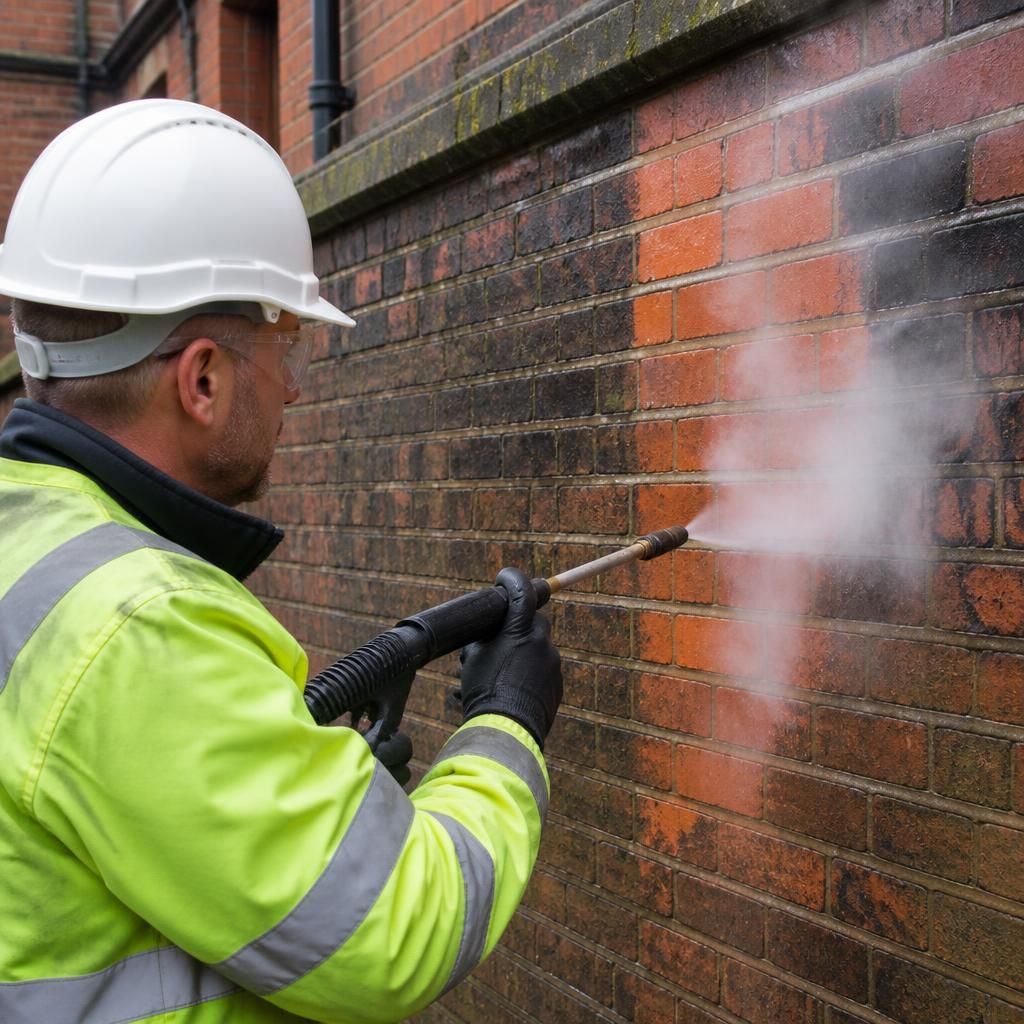
The main benefit of selecting the right brick cleaning method is that it removes the contaminant while preserving the brick face and mortar joints. A controlled test area helps establish whether pressure washing, steam, hot water or a specialist treatment provides the required finish without causing colour change, surface erosion or water penetration. In many cases, combining methods—such as softening deposits with steam or a compatible solution before gentle rinsing—achieves a cleaner result with less stress on the brickwork than using high pressure alone.