
How do you safely remove paint from brick surfaces?
Safely removing paint from brick surfaces requires identifying the paint and brick type first, then using the least aggressive suitable method, such as a controlled paint remover, steam cleaning or low-pressure washing. Test a small inconspicuous area, protect surrounding surfaces and avoid excessive pressure or harsh chemicals that can erode the brick face and mortar.
Paint should be removed from brick surfaces by starting with the least aggressive method that will soften or lift the coating without damaging the brick face or mortar. The correct approach depends on the type and age of the paint, the condition and porosity of the brickwork, and whether the coating is bonded to sound masonry or already flaking. Controlled paint-removing products, steam cleaning and carefully managed low-pressure rinsing may all be suitable, but high pressure, abrasive blasting and unsuitable chemicals can cause permanent damage.
Assess the brickwork and paint first
Before any cleaning begins, inspect the wall closely. Identify whether the paint is water-based, oil-based, masonry paint, textured coating or part of a multi-layered finish. Older coatings may contain hazardous substances, so they should not be scraped, sanded or disturbed until the risks have been considered. Check for cracked or spalled bricks, open joints, previous repairs, damp areas and loose material. Soft, handmade, historic or heavily weathered bricks require a more conservative method than hard modern engineering bricks.
It is also important to establish whether the paint is covering a sound surface. Removing a coating can expose failed pointing, frost-damaged bricks or previous repairs that need attention. A survey helps determine whether the work is suitable for cleaning alone or should be combined with brickwork restoration.
Test a small area before full-scale removal
A discreet test area should be cleaned using the proposed method and allowed to dry before the wider work is approved. The test should assess whether the paint is being removed without pulling out the brick face, opening the mortar joints, changing the brick colour or spreading the coating across adjacent areas. It should also show how much rinsing is required and whether the underlying masonry remains sound.
Several test areas may be needed where the building contains different brick types or layers of paint. A method that is safe on dense, modern brick may be too aggressive for porous or historic masonry.
Use controlled chemical paint removal where appropriate
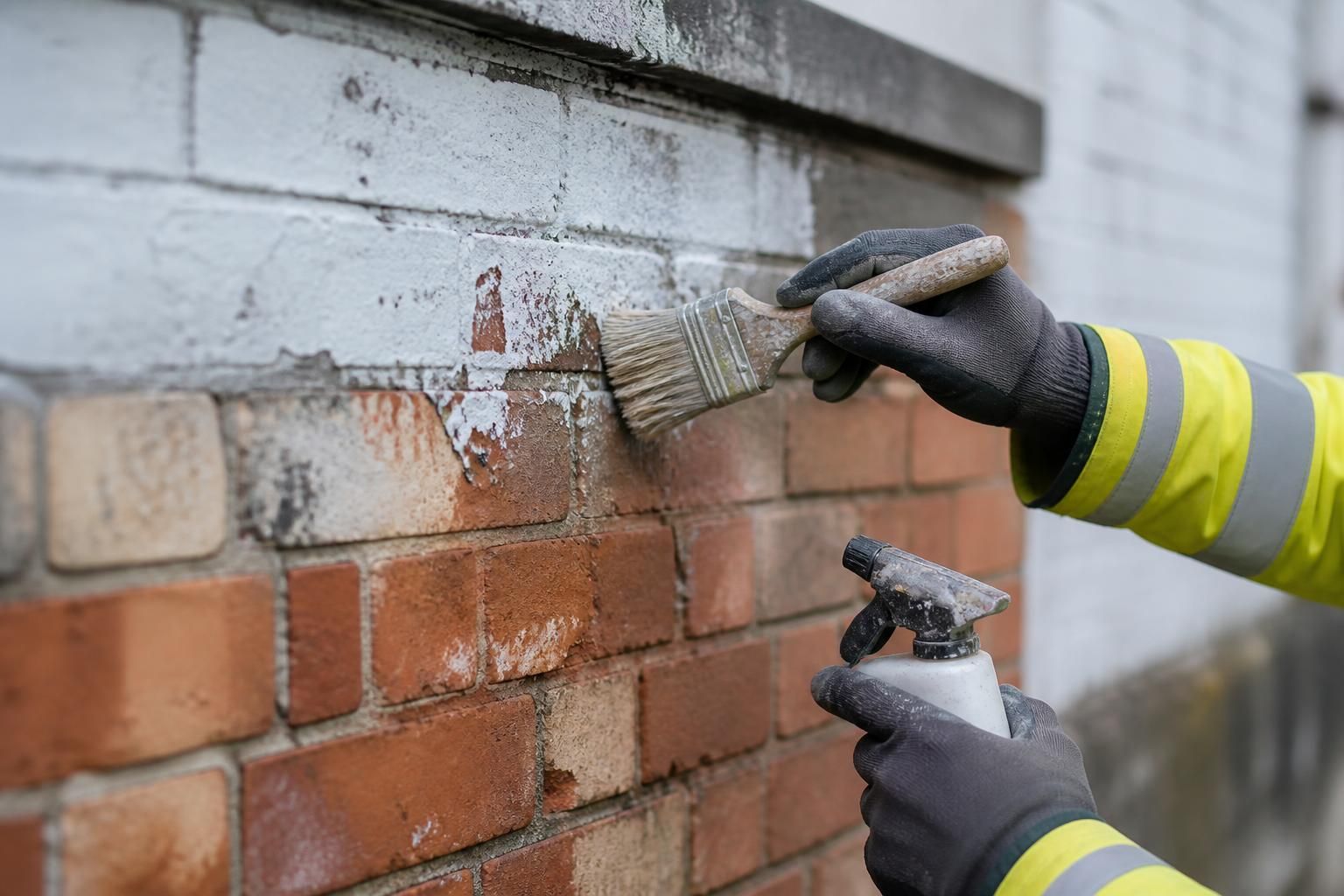
A suitable masonry paint remover can soften the coating so it can be lifted with a scraper or brush rather than forcibly blasted from the wall. The product must be compatible with the brick and mortar, and it should be applied only to the required area. Follow the manufacturer’s instructions for dwell time, application thickness, removal and rinsing.
Do not assume that a strong solvent is more effective or safer. Highly caustic, acidic or solvent-based products can stain brick, attack lime mortar, damage nearby metalwork and increase the risk of harmful run-off. A small test should confirm that the product does not dissolve or discolour the masonry. Protect windows, render, paving, planting, vehicles and drainage points before application, and prevent the product from drying on the surface.
Paint softened by a remover should be collected rather than washed indiscriminately into drains or onto surrounding ground. The waste, rinse water and contaminated coverings must be handled in accordance with applicable environmental and waste requirements.
Consider steam cleaning for sensitive masonry
Steam cleaning uses controlled heat and moisture to soften paint and loosen surface contamination, often with less mechanical impact than conventional pressure washing. It can be useful on older or more delicate brickwork when the paint responds to heat. The operator must still control the temperature, application time and moisture levels, as excessive heat or water can affect vulnerable bricks, lime mortar and concealed defects.
Steam may not remove every coating in a single pass, particularly where paint has penetrated porous brick or several layers have been applied. It is often combined with careful scraping or an approved poultice or paint-removal product, subject to testing.
Use pressure washing only with tight controls
Pressure washing should not be the first response to paint on brick. Incorrect pressure, a narrow nozzle, close working distance or prolonged washing can erode the fired face of the brick, widen joints and drive water into the wall. Once the brick face has been removed, the masonry may become more porous and vulnerable to frost and further staining.
Where testing confirms that rinsing or low-pressure washing is appropriate, use a broad spray pattern, keep the lance moving and maintain a controlled distance from the surface. Avoid directing water into open joints, cracks, vents, seals or areas where water could enter the building. Never use pressure to compensate for an unsuitable paint-removal method.
Avoid abrasive blasting unless the masonry has been specifically assessed
Sand, grit and other abrasive media can strip paint quickly, but they can also remove the brick’s protective surface and leave an uneven texture. Abrasive blasting is generally unsuitable for soft, historic, glazed, painted or highly porous brickwork unless a specialist assessment and carefully controlled trial demonstrate that it is safe. Even less abrasive media can cause irreversible loss of the brick face when used incorrectly.
Protect people, property and the surrounding environment
Paint removal can create dust, flakes, vapour, contaminated water and falling debris. Establish an exclusion zone, use suitable access equipment and protect occupants, pedestrians, vehicles and neighbouring surfaces. Operatives should use appropriate personal protective equipment, including eye and respiratory protection where the risk assessment requires it. Good ventilation is essential when chemical products are used, and the work area should be managed to prevent debris or run-off entering drainage systems.
If the building is old or the coating is of uncertain composition, obtain appropriate hazardous-material advice before disturbing it. Suspected lead-containing paint, for example, requires controlled handling and disposal rather than routine scraping or high-pressure washing.
Finish and inspect the exposed brick
After the paint has been removed, rinse only as much as necessary and allow the brickwork to dry naturally. Inspect for paint residue, trapped salts, staining, damaged bricks and failed pointing. Small remaining deposits may be removed by a more precise method rather than repeating aggressive cleaning across the whole wall. Avoid sealing or coating the brick until it is clean, dry and confirmed to be suitable for the proposed finish.
Any open joints or damaged masonry should be repaired with a compatible mortar. On older buildings, this may mean using a lime-based mortar rather than a hard cement-rich mix. Repointing before cleaning is complete can also make it more difficult to remove paint from the edges of the joints, so the order of work should be agreed after the initial assessment.
When professional removal is the safer option
Specialist help is advisable where paint covers a large façade, the brickwork is historic or fragile, the coating is heavily bonded, access is difficult, or hazardous paint is suspected. A competent contractor should explain the proposed method, carry out a representative test, identify how run-off and waste will be controlled, and record any pre-existing defects. The safest result is not necessarily the removal of every trace of paint; preserving the brick and mortar is the priority where complete removal would cause more damage than the coating itself.
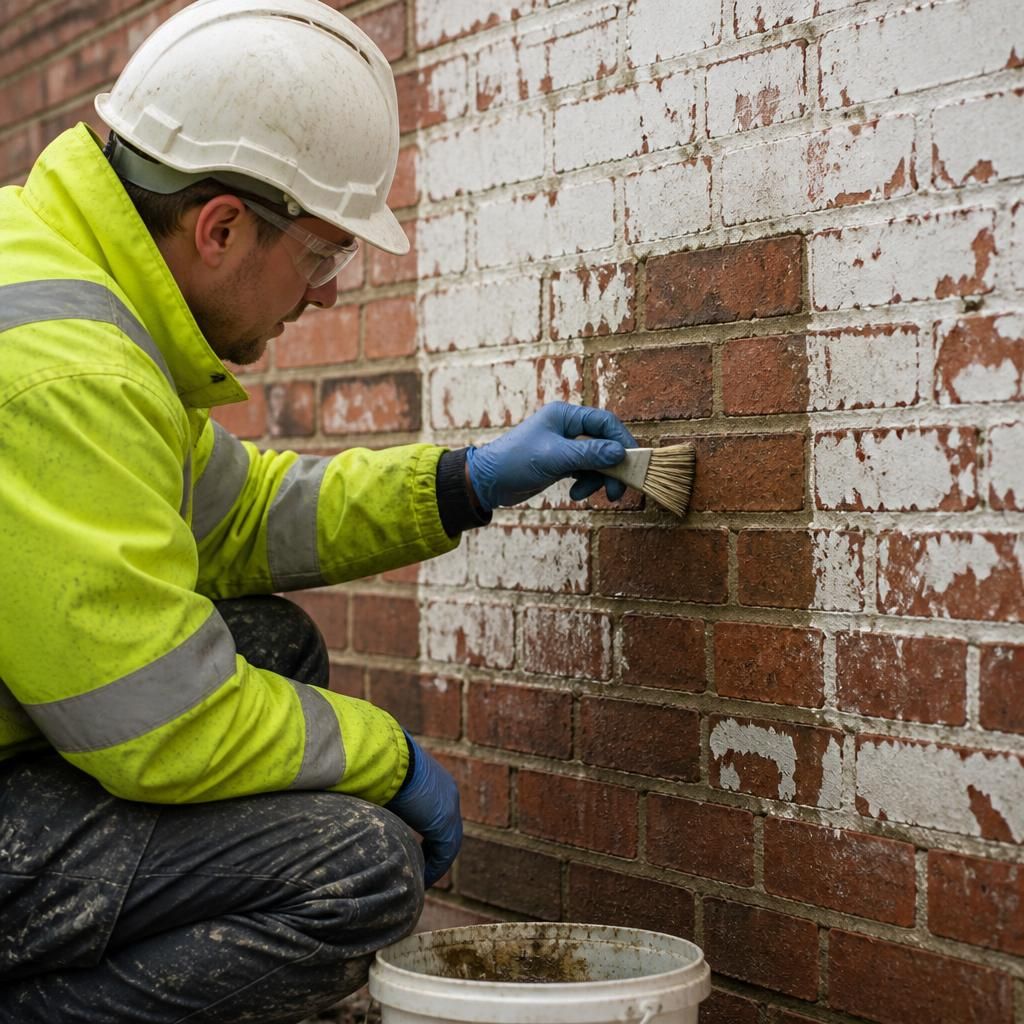
Safely removing paint from brick starts with a small, discreet test area rather than full-scale pressure washing. The test should compare the least aggressive suitable method—such as a compatible paint remover, controlled steam or gentle rinsing—and be allowed to dry before the wider work begins. This confirms whether the coating can be lifted without eroding the brick face, opening mortar joints or causing discolouration. Different brick types and paint layers may require separate tests, particularly on older or porous masonry.