
How do I ensure environmentally responsible practices are followed during the brickwork cleaning process?
Ensure environmentally responsible brickwork cleaning by selecting the least aggressive effective method, controlling water use, containing cleaning residues and preventing contaminated runoff from entering drains, soil or local waterways. A competent contractor should also use suitable products, recover wastewater where necessary, minimise waste and dispose of residues in accordance with applicable environmental requirements.
Environmentally responsible brickwork cleaning means removing the contamination with the least aggressive effective method while controlling water, cleaning chemicals, dust and waste throughout the work. The process should protect the brickwork and surrounding materials, prevent polluted water from entering drains, soil or watercourses, and ensure that residues are collected, treated and disposed of in accordance with applicable environmental requirements.
Start with a site and materials assessment. Before cleaning begins, the contractor should identify the brick type, mortar condition, surface coatings and contaminants present. The assessment should also consider nearby drains, planted areas, watercourses, occupied premises and sensitive surfaces such as glass, painted metal and architectural details. This allows the cleaning method to be selected for the actual condition of the building rather than applying unnecessary pressure, heat or chemicals.
A small test area should be cleaned first and inspected after drying. Testing confirms whether the proposed method is effective and helps reveal risks such as brick face failure, mortar erosion, staining or colour variation. If a gentler technique achieves the required result, there is no environmental or practical justification for using a more aggressive one.
Use the least intensive suitable cleaning method. Depending on the brick and contaminant, this may involve controlled low-pressure washing, steam cleaning, nebulous misting, soft brushing or a carefully selected cleaning product. Pressure, temperature, dwell time and water volume should be adjusted to the surface. High pressure can damage friable bricks and joints, while excessive heat or unsuitable chemicals can alter the appearance of the masonry and create additional waste through remedial repairs.
Cleaning products should be selected for compatibility with the brick, mortar and surrounding materials. The contractor should follow the product safety and application instructions, use only the quantity required, and avoid mixing products unless this is specifically permitted. Where a chemical treatment is necessary, controls should be put in place to prevent splashes, vapour, overspray and residues affecting people, vegetation, adjacent properties or drainage systems.
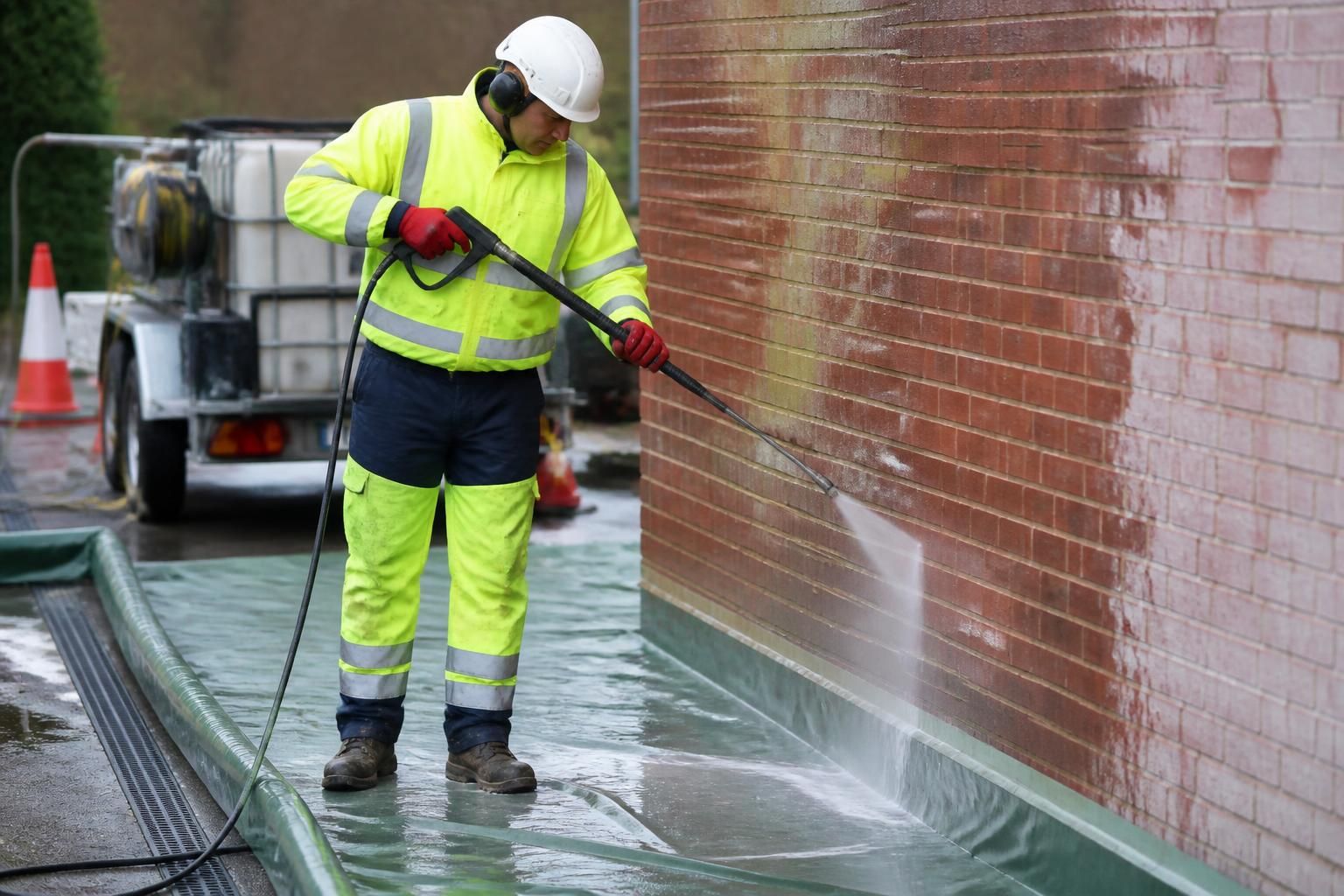
Control water at the point of use. Responsible water management involves using equipment that allows flow and pressure to be controlled, avoiding unnecessary continuous spraying and directing water only at the area being cleaned. The work area should be protected with suitable sheeting, bunding, drain covers, collection mats or temporary channels where appropriate. These controls should be planned before cleaning starts rather than added after runoff has already escaped.
Dirty water from brick cleaning can contain silt, mortar particles, paint fragments, biological material, salts or residues from cleaning products. It should not be allowed to flow into surface-water drains, streams, ponds, planted ground or neighbouring land. Depending on the site and the nature of the contamination, wastewater may need to be vacuumed up, passed through suitable filtration or settlement equipment, stored for controlled disposal, or discharged only where the relevant requirements and permissions allow it. Surface-water and foul-water drainage systems should not be treated as interchangeable.
Contain dust and loose debris. Dry brushing, abrasive cleaning and the removal of old coatings can release dust and fragments. The preferred approach is to use methods that minimise airborne material, damp down dust where suitable, and protect surrounding areas with carefully secured sheeting. Debris should be gathered rather than swept into drains. If the building contains older coatings or materials that may present a specific hazard, the work should be assessed and managed by competent persons before cleaning proceeds.
Manage waste responsibly. Used filters, contaminated absorbent materials, empty product containers, removed paint, silt and other residues should be kept separate where their contents or disposal requirements differ. Waste should be stored securely so that rain cannot wash contaminants into the ground or drainage network. It should then be transferred through an appropriately authorised waste route, with records retained where required. Waste should never be buried, burned on site or placed in general waste simply because it is present in a small quantity.
Water and material use can also be reduced through practical site planning. This includes accurately estimating the cleaning area, preparing equipment before work begins, reusing clean protective materials where safe, repairing leaks promptly and avoiding repeated cleaning caused by inadequate testing. Any temporary access equipment, hoses and containment systems should be positioned to reduce damage to landscaped areas and avoid unnecessary disturbance to the site.
Protect the wider site during and after cleaning. Vegetation, nesting areas, soil, air-intake points and nearby watercourses should be identified during the risk assessment. Plants and sensitive surfaces may need temporary protection, although coverings should not be left in place in a way that causes heat build-up or prevents ventilation. Cleaning should be paused if weather conditions could carry spray or contaminated water beyond the controlled work area, particularly during heavy rain or strong winds.
Once cleaning is complete, the contractor should inspect the work area, remove containment, collect remaining debris and confirm that no residue has entered drains or surrounding ground. Any temporary drain protection should be removed only after the area has been checked and cleaned appropriately. The brickwork should also be reviewed for damage, trapped moisture or areas requiring further restoration, since environmentally responsible cleaning includes preventing avoidable follow-on work.
Check the contractor’s procedures before authorising the work. Ask for the proposed cleaning method, product information, wastewater and waste-management arrangements, site-specific risk assessment and method statement. The contractor should be able to explain how runoff will be contained, where wastewater will go, what will happen to contaminated solids and how nearby surfaces and vegetation will be protected. For larger commercial or industrial sites, request suitable waste transfer documentation and records of any relevant discharge or disposal arrangements.
Environmental responsibility is therefore not limited to choosing a biodegradable product or using less water. It depends on the complete process: accurate assessment, controlled cleaning, effective containment, lawful wastewater management, segregation of waste and a documented final inspection. These controls should be agreed before work starts and maintained throughout the project.
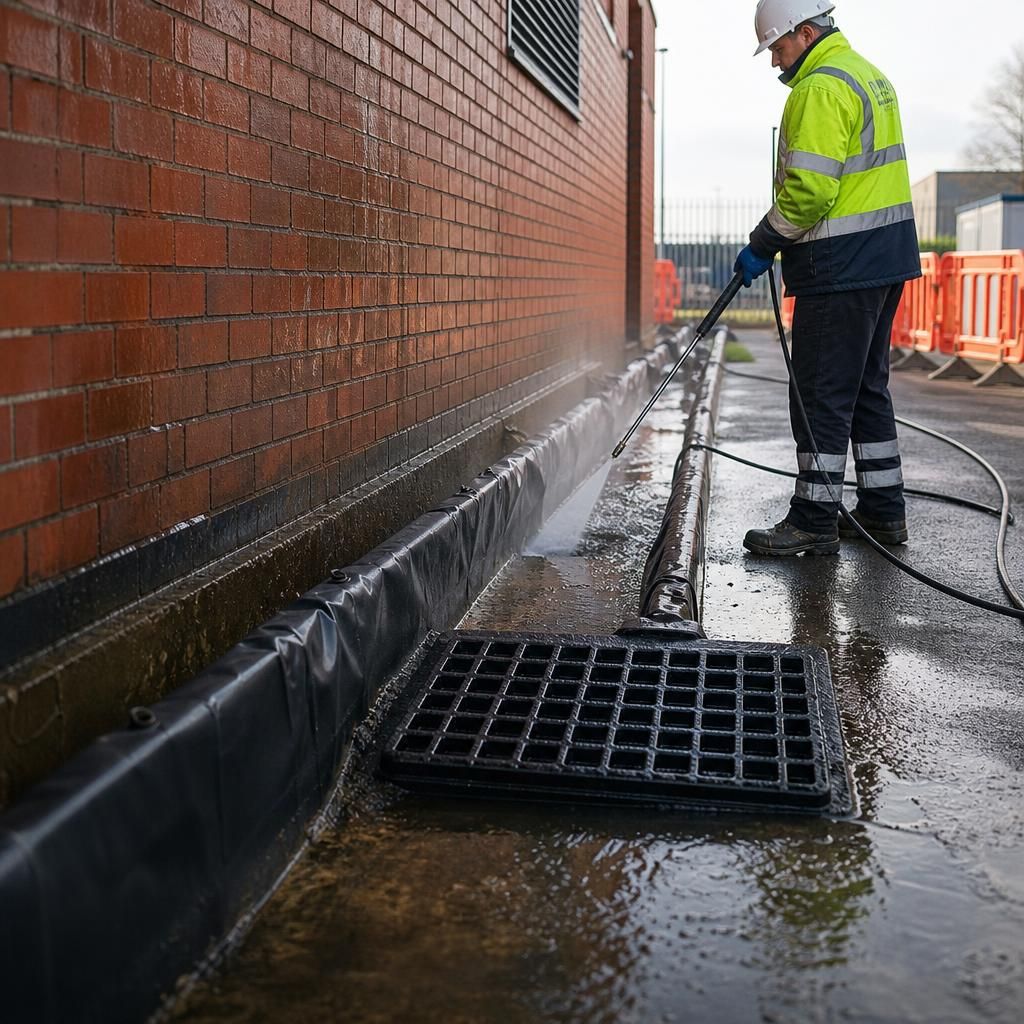
Contain and manage wastewater before cleaning begins. Brickwork cleaning runoff can carry silt, mortar particles, paint fragments, salts and chemical residues into surface-water drains, soil or nearby watercourses. Use suitable drain protection, bunding, collection mats or temporary channels to keep dirty water within the controlled work area. Depending on the contamination and site requirements, wastewater may need to be vacuumed up, filtered, settled and stored for appropriate disposal. A responsible contractor should agree the drainage and waste arrangements in advance and inspect the area after cleaning to confirm that no polluted residue has escaped.