
How can brickwork be restored after repointing?
Brickwork can be restored after repointing by carefully removing mortar residue, cleaning the surface with a suitable low-pressure or steam-cleaning method, and repairing any damaged bricks or joints. Once fully dry, the brickwork should be assessed for further treatment, such as appropriate protection, while avoiding aggressive cleaning that could damage the new mortar or brick faces.
Brickwork is restored after repointing by allowing the new mortar to cure, removing mortar residue and staining with a controlled cleaning method, repairing any damaged bricks or joints, and assessing whether the finished surface needs protection. The work must be carried out carefully because freshly repointed joints are more vulnerable to erosion, staining and moisture penetration than established masonry.
Allow the repointing to cure first. Cleaning should not begin until the mortar has developed sufficient strength. The appropriate curing period depends on the mortar composition, weather conditions, joint depth and exposure of the wall. Cleaning too soon can wash out the joints, soften the surface or leave permanent marks. The repointing contractor or cleaning specialist should confirm when the wall can safely be treated. Protection from heavy rain, frost, direct heat and rapid drying may also be necessary during this stage.
Once the mortar is ready, the brickwork should be inspected from ground level and, where required, from access equipment. This inspection identifies mortar smears, surface dust, cementitious residue, efflorescence, paint, biological growth, damaged bricks and areas where joints remain incomplete. It is important to distinguish between residue left by the repointing process and defects in the brickwork itself, as each requires a different treatment.
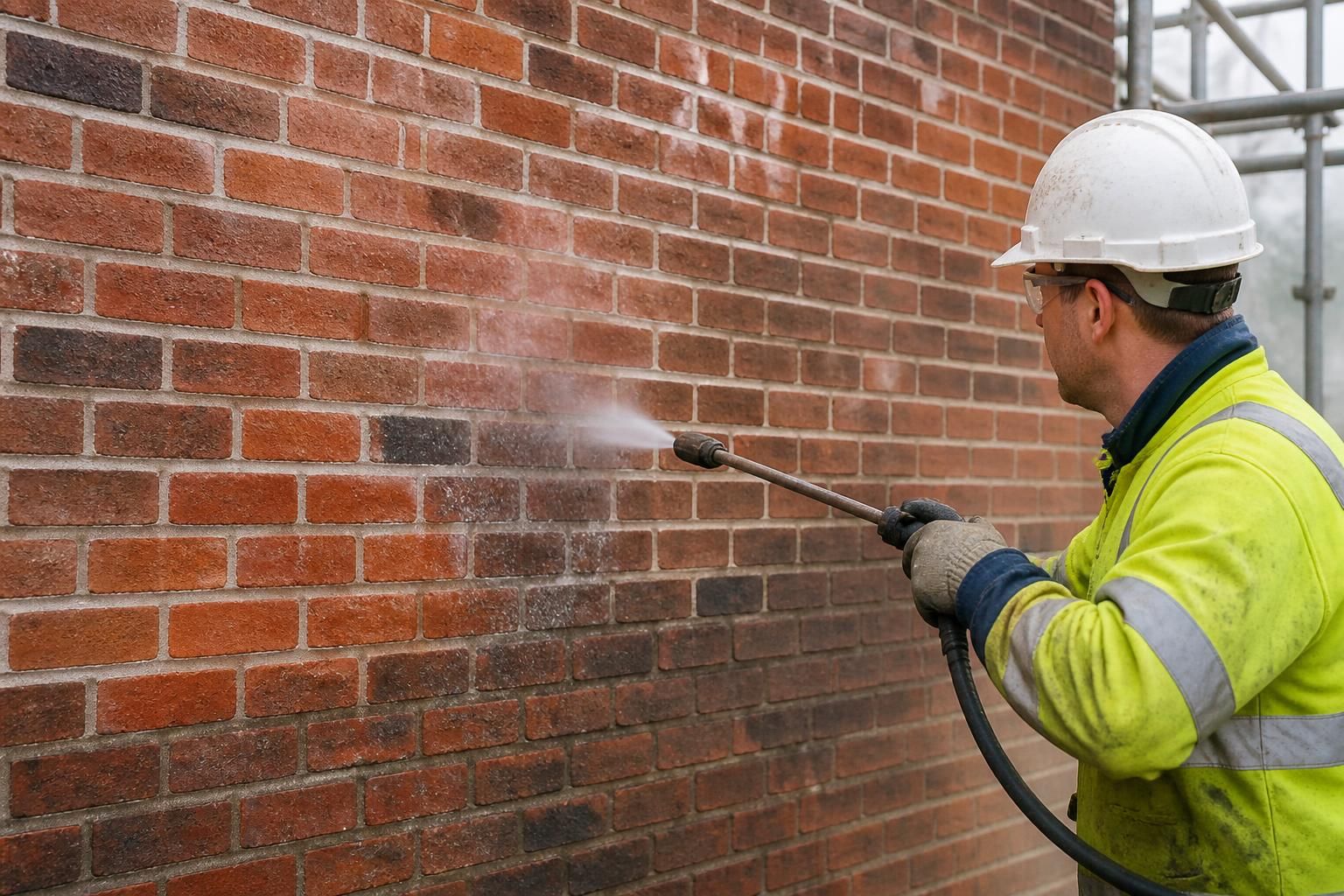
Mortar residue should be removed using the least aggressive effective method. Loose deposits may be brushed away with a suitable masonry brush, while more persistent haze or staining may require low-pressure washing, controlled steam cleaning or a carefully selected specialist cleaning solution. The method is chosen according to the brick type, age, porosity, mortar composition and contaminant. A test area should be completed first so that the cleaning result and any effect on the brick face or new joints can be assessed before wider work begins.
Pressure washing can be suitable in some circumstances, but excessive pressure, a concentrated spray or an incorrect nozzle can open the mortar joints, mark the brick faces and drive water into the wall. Water should not be directed aggressively at the edges of new joints. Steam cleaning can offer better control where heat and low mechanical impact are useful, particularly for light residue or organic soiling. Chemical treatments require additional care because an unsuitable product can discolour bricks, attack mortar or leave salts behind.
Efflorescence, which appears as a white or pale crystalline deposit, is usually associated with soluble salts moving through the masonry as it dries. Light deposits may be removed by dry brushing once the wall is fully dry. Repeated wet cleaning without addressing excessive moisture can make the problem recur. Persistent efflorescence should prompt checks of coping stones, gutters, downpipes, flashings, ground levels and other sources of water ingress before further restoration is undertaken.
Any defective work should be corrected before the final clean is considered complete. This may include removing loose mortar, filling missed sections, replacing severely damaged bricks or carefully repairing areas affected by previous cleaning. Replacement bricks and mortar should be compatible with the existing wall in appearance, strength, permeability and movement characteristics. Hard, impermeable repairs can trap moisture and cause surrounding historic bricks to deteriorate.
After cleaning, the wall should be allowed to dry naturally before its condition is reviewed. Drying can reveal remaining staining, colour variation, salt deposits or areas where the brickwork is still retaining moisture. A final inspection should check that:
- the new joints remain intact and have not been recessed or washed out;
- brick faces have not been etched, scoured or discoloured;
- mortar residue and cleaning deposits have been removed without spreading contamination;
- open cracks, damaged bricks and defective details have been recorded; and
- water is draining correctly from adjacent roofs, sills, copings and rainwater goods.
Protection is not automatically required after repointing. A breathable masonry treatment may be appropriate where the brickwork is exposed to persistent driving rain or where a specified conservation system is needed, but it should only be applied to a clean, fully dry surface after compatibility has been confirmed. Non-breathable coatings can prevent moisture from escaping and may accelerate frost damage, salt problems or mortar failure. Coatings should therefore never be used to conceal unresolved defects.
Restoration should also include a practical maintenance plan. Gutters and downpipes should be kept clear, vegetation should not be allowed to grow into joints, and new staining should be dealt with before it becomes embedded. Routine inspections are particularly useful after severe weather or building work nearby. Where the wall forms part of a larger commercial or industrial property, access requirements, protection of nearby surfaces, containment of wash water and safe disposal of cleaning residues should be agreed before work starts.
The correct sequence is therefore cure, inspect, test, clean gently, repair, dry, reassess and protect only where justified. For older, listed or heavily weathered brickwork, restoration should be planned around the masonry’s existing condition rather than treated as a standard pressure-washing exercise. A controlled assessment by an experienced exterior cleaning contractor helps preserve the new pointing while returning the brickwork to a consistent, serviceable finish.
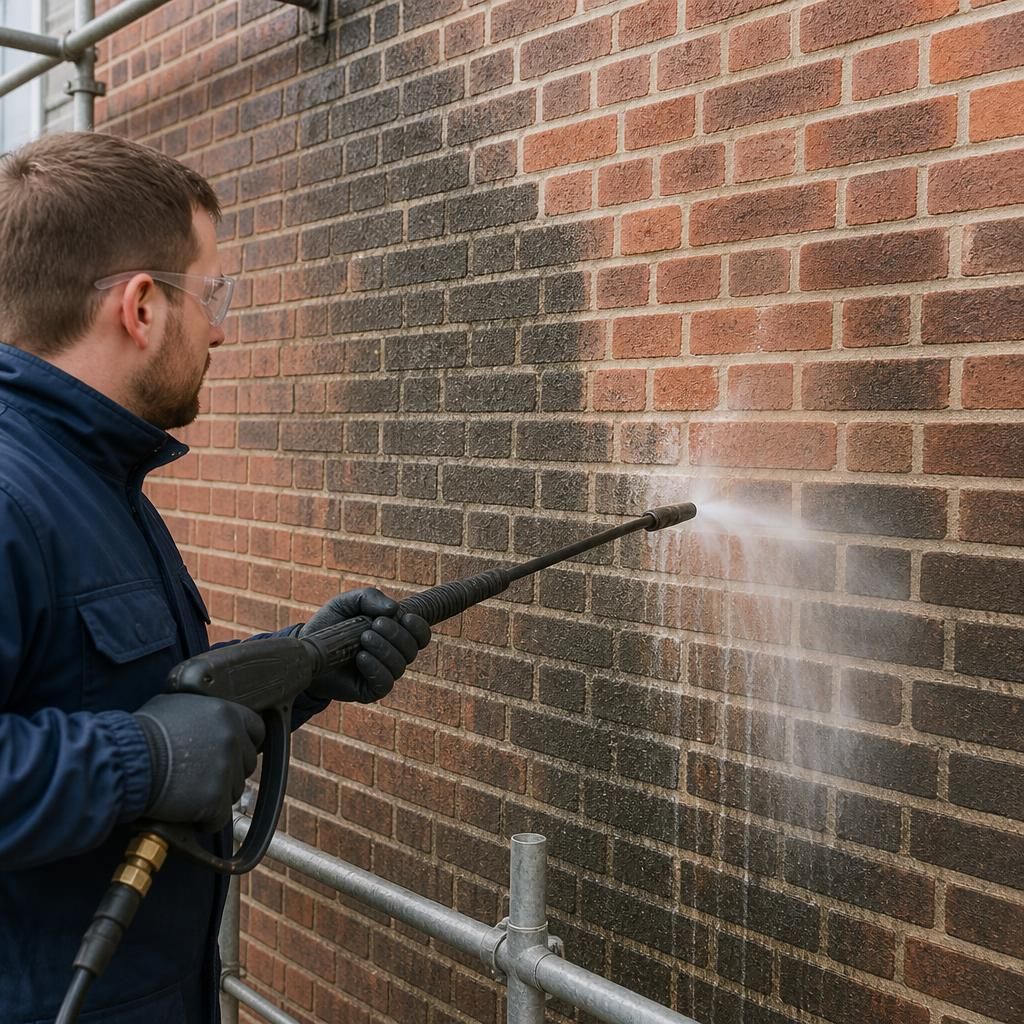
Brickwork should be cleaned only after new repointing has cured sufficiently to withstand the chosen restoration method. Cleaning too soon can erode the joints, spread mortar residue across the brick faces or force water into vulnerable areas.
Once the mortar is ready, the surface should be assessed and a small test area completed. Loose residue may respond to gentle brushing, while more persistent staining may require controlled low-pressure washing or steam cleaning. The method must suit the brick type, mortar composition, age of the wall and nature of the contamination.
- Avoid directing high-pressure water at fresh joints.
- Check that the brick faces are not being etched, discoloured or scoured.
- Allow the wall to dry naturally before deciding whether further cleaning or repairs are needed.
- Use breathable protection only where the masonry is clean, dry and suitable for treatment.
This sequence preserves the new pointing while removing residue and revealing any defects that still require attention.