
What preparatory steps should be taken before commencing block paving pressure washing?
Before commencing block paving pressure washing, clear the area, remove loose debris and weeds, protect nearby walls, plants and property, and check that drainage points are unobstructed. Inspect the paving for damaged or loose blocks, identify oil or other heavy stains, and select a suitable pressure and cleaning method to avoid dislodging jointing material or causing surface damage.
Preparation for block paving pressure washing is the process of making the surface, surrounding area, drainage system and cleaning equipment ready before water and pressure are applied. The work should begin with a site assessment and thorough clearance, followed by checks for damaged paving, vulnerable features, blocked outlets, staining and suitable water run-off. These steps help achieve a consistent clean while reducing the risk of dislodging blocks, removing jointing material, spreading contamination or causing damage to nearby property.
Inspect the paving before cleaning
Start by assessing the overall condition of the block paving. Look for loose, rocking, cracked or sunken blocks, open joints, areas of erosion and previous repairs. Pressure washing can expose or worsen existing defects, so unstable blocks should be identified before work starts. Where necessary, damaged sections can be repaired or isolated from the cleaning process.
Check whether the surface has been sealed and establish, where possible, which type of sealer has been used. A strong jet or unsuitable detergent may mark, soften or strip some coatings. The paving should also be examined for differences in material, colour and age, as these can affect the cleaning pressure and the final appearance.
Clear the area thoroughly
Remove vehicles, bins, planters, furniture, signage and other movable items from the work area. Sweep away leaves, loose grit, soil and other debris before wet cleaning begins. This prevents loose material from becoming slurry and makes it easier to identify stains, damaged joints and areas requiring additional treatment.
Weeds should be removed carefully, particularly where roots have expanded joints or lifted blocks. Pulling out established growth can leave voids, so affected joints may need to be stabilised or re-filled after cleaning. Moss and organic growth should also be dealt with in a controlled manner, since disturbed material can enter gullies and drainage channels.
Check drainage and water run-off
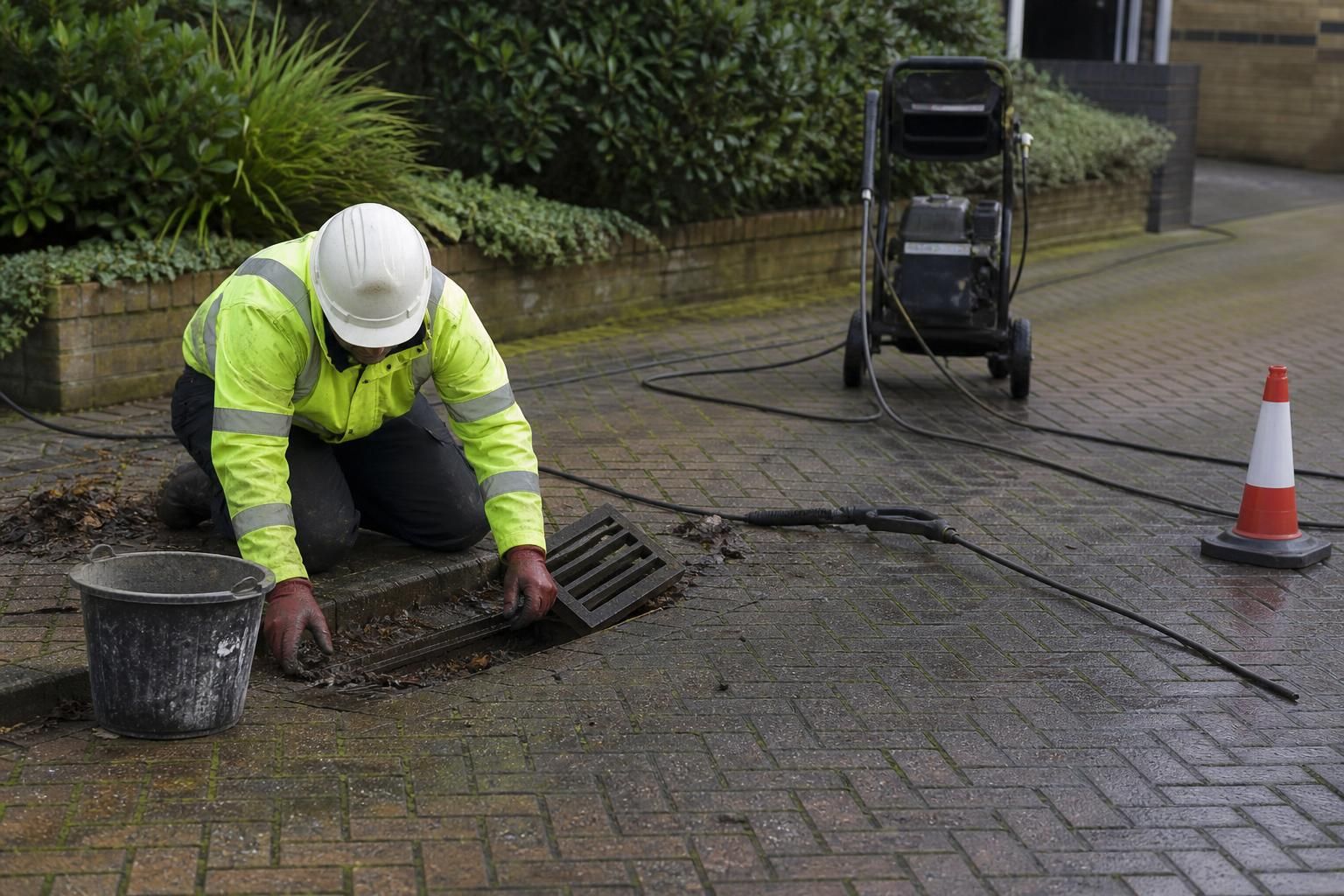
All gullies, drainage channels, inspection covers and soakaway inlets should be located and checked for obstruction. Remove leaves, silt and loose debris where this can be done safely. If outlets are blocked, pressure washing may cause standing water, flooding or uncontrolled run-off across adjoining land.
Before applying detergents or treating oil, algae or other contaminants, establish where the wash water will go. Dirty water should not be allowed to flow into watercourses, unprotected ground or neighbouring properties. Where required, use drain covers, temporary barriers, wet vacuums or other suitable controls to contain and recover contaminated water in line with site and environmental requirements.
Protect adjoining surfaces and property
Pre-wet or cover vulnerable adjoining surfaces where appropriate. Particular care may be needed around rendered walls, painted surfaces, timber, doors, air bricks, electrical fittings, vehicle access points and low-level vents. Splashback can carry dirt and detergent beyond the paving, while a concentrated jet can damage fragile finishes.
Plants, lawns and planted borders should be protected from dirty run-off and cleaning chemicals. Move portable items away from the work zone and cover fixed features where practical. Doors and windows should remain closed during cleaning, and occupants or site users should be kept clear of areas where spray, slurry or displaced debris could create a hazard.
Identify and assess staining
Not all marks should be treated with pressure alone. Oil, grease, rust, paint, chewing gum, tyre marks, organic growth and efflorescence may require different pre-treatment methods. Identify these areas before washing so that an appropriate product and dwell time can be selected.
Oil and chemical contamination may require containment and specialist treatment rather than simply being blasted across the paving. Rust removers and acidic products can alter the colour of concrete blocks or affect surrounding materials, so they should only be used after checking compatibility and following the product instructions. Never mix cleaning chemicals, and ensure that any detergent is suitable for block paving and the surrounding drainage arrangements.
Choose the cleaning method and pressure carefully
The equipment should be selected according to the block type, joint condition, surface age, level of contamination and available drainage. A rotary surface cleaner can help distribute water more evenly across broad areas, while a controlled lance may be needed around edges, steps, joints and drainage features. High pressure should not be treated as the default setting.
Begin with the lowest effective pressure and use a suitable nozzle, spray angle and working distance. The aim is to remove contamination without cutting into the surface, loosening blocks or excavating jointing sand. Avoid holding the lance in one position, directing a concentrated jet straight into joints or forcing water beneath adjoining surfaces.
Carry out a test area
A small, inconspicuous test area should be cleaned before the main work starts. This confirms how the blocks, joints, existing sealer and any pre-treatment respond to the proposed method. It also provides a realistic indication of the achievable finish, since some deep staining, colour variation and weathering cannot be removed without risking damage.
Inspect the test area after rinsing and, where relevant, after it has dried. Check for surface scarring, colour change, exposed aggregate, loosened jointing material and run-off problems. Adjust the pressure, nozzle, detergent or cleaning technique before continuing if the result is unsuitable.
Plan safe access and working conditions
Agree the work area and access arrangements with the site contact before equipment arrives. Consider pedestrians, vehicles, deliveries, shared entrances and emergency routes. Use suitable warning signs, barriers and controlled access where wet paving, hoses and electrical equipment could create a risk.
Check the weather and surface conditions. Rain can increase run-off and make containment more difficult, while strong wind can spread spray and detergent onto people, vehicles or nearby façades. Extremely hot, dry conditions may cause cleaning products to dry on the blocks before they can be rinsed. Work should be postponed where conditions prevent safe control of water, chemicals or access equipment.
Use appropriate personal protective equipment and confirm that pressure-washing equipment, hoses, electrical connections and water supplies are safe and suitable for the site. Hoses should be routed to reduce trip hazards, and operators should maintain a stable position when working on slopes or near steps.
Confirm the finishing requirements
Before cleaning, establish whether the joints are to be re-sanded, whether repairs are included and whether sealing is required after the surface has dried. Pressure washing can remove loose jointing material as part of the cleaning process, particularly where joints are already eroded. Agreeing the required reinstatement in advance prevents the newly cleaned area from being left vulnerable to movement and weed growth.
Once the area has been cleared, inspected, protected and tested, the main wash can be carried out in controlled sections. This preparation gives the operator a clear understanding of the paving’s condition and ensures that pressure, water flow, pre-treatment and run-off controls are appropriate for the surface and site.
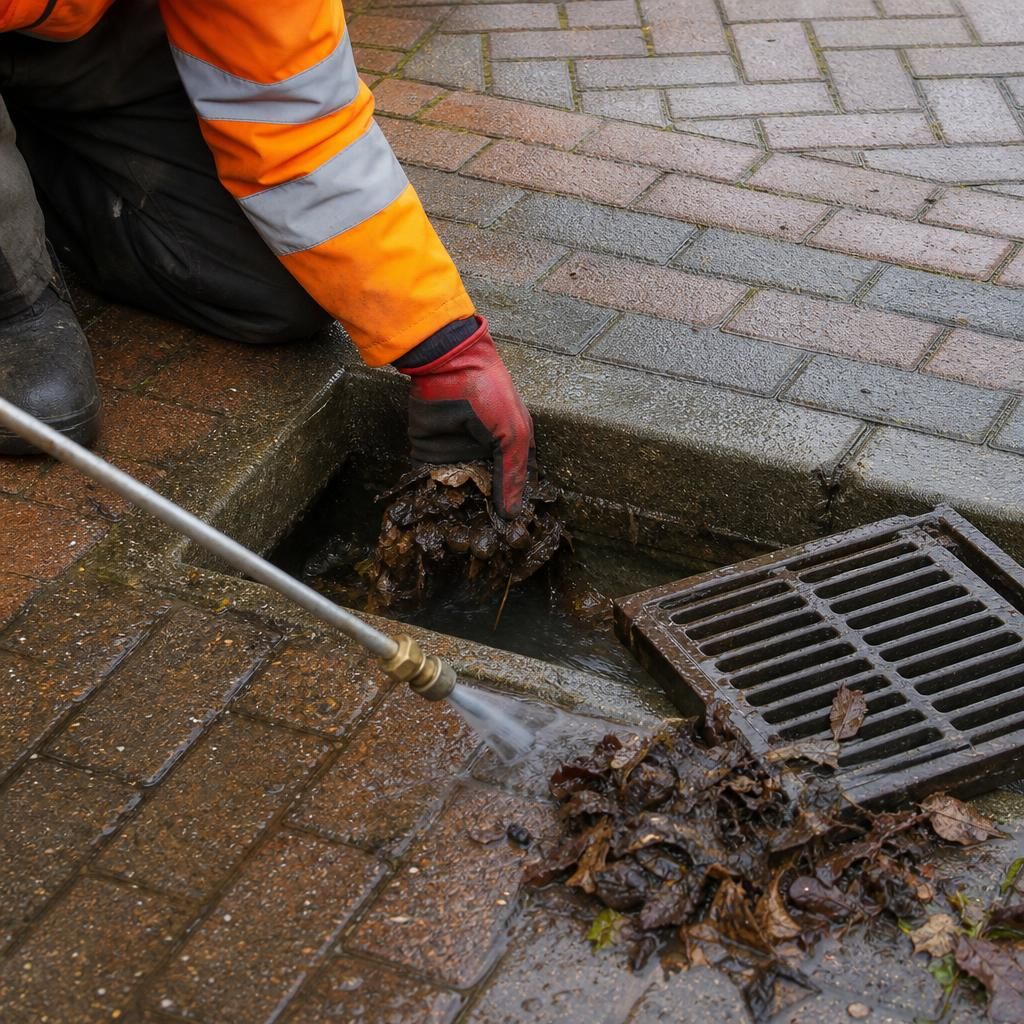
Checking drainage and water run-off is an essential preparation step before block paving pressure washing. Gullies, channels, inspection covers and soakaway inlets should be located and cleared of leaves, silt and loose debris where it is safe to do so. Blocked outlets can cause standing water, flooding and uncontrolled dirty run-off during cleaning.
Before using detergents or treating oil, algae and other contaminants, establish where the wash water will flow. Protect vulnerable drainage points where necessary and prevent contaminated water from reaching watercourses, neighbouring properties or unprotected ground. Suitable controls may include temporary barriers, drain covers or water recovery equipment, depending on the site and the type of contamination.
This check also helps the operator plan the cleaning sequence. Working in manageable sections towards a suitable collection point makes it easier to control slurry and prevents loosened soil, moss and jointing material from being carried into the drainage system.