
What factors should be considered when choosing between pressure washing and other cleaning methods for block paving?
Choosing between pressure washing and other cleaning methods for block paving depends on the paving material and condition, the type and severity of soiling, the risk of disturbing jointing sand, water-management requirements and the finish required. Pressure washing is effective for heavy dirt, algae and moss when correctly controlled, while rotary scrubbing, steam cleaning or chemical treatment may be safer for delicate, damaged or lightly soiled surfaces.
The best cleaning method for block paving depends on the paving material and condition, the type of soiling, the stability of the jointing sand, water-management requirements and the finish required. Pressure washing is usually the most effective option for heavy dirt, algae, moss and embedded contamination, but controlled steam cleaning, rotary scrubbing, manual brushing or suitable chemical treatment may be more appropriate where the surface is delicate, damaged, lightly soiled or difficult to drain.
Assess the paving material and surface condition first
Concrete block paving, clay pavers and natural stone respond differently to cleaning. Concrete is generally robust, although worn surfaces can become more porous and vulnerable to surface erosion. Clay pavers may have a more delicate face, while natural stone can vary considerably in hardness, texture and resistance to chemicals. Existing sealants, coatings, colour treatments and repairs also affect the choice of method.
Inspect the area for cracked or loose blocks, failed edges, damaged pointing, open joints, surface scaling and areas where the bedding has settled. Pressure washing can expose defects that were already present and may worsen loose jointing or dislodge unstable blocks. A gentler method, localised cleaning or repairs before washing may therefore be advisable where the paving is deteriorated.
Identify the type and severity of the contamination
The cleaning method should match the substance being removed rather than relying on pressure alone.
- Loose soil, dust and surface debris: sweeping, vacuuming or low-pressure rinsing may be sufficient and avoids unnecessary water use.
- Algae, moss and organic growth: controlled pressure washing, steam cleaning or an appropriate biocidal treatment can be effective. Thick growth may need to be scraped or brushed away before rinsing.
- Oil, grease and vehicle-related deposits: a suitable degreaser, dwell time and recovery process may be needed. Pressure washing alone can spread the contamination and carry it into drains or surrounding areas.
- Rust, mortar, paint and cement residues: these often require specialist treatment and careful spot cleaning. An unsuitable acid or aggressive technique can mark the paving permanently.
- Weeds and rooted growth: removing the visible growth does not always remove the roots. The joints may need further treatment, cleaning and replenishment once the surface has dried.
Heavy, widespread contamination normally justifies a professional pressure-washing process because it provides consistent coverage and can remove embedded deposits from textured blocks. Light staining or isolated marks may be better dealt with through targeted treatment rather than cleaning the whole area at high pressure.
Consider how much pressure the paving and joints can tolerate
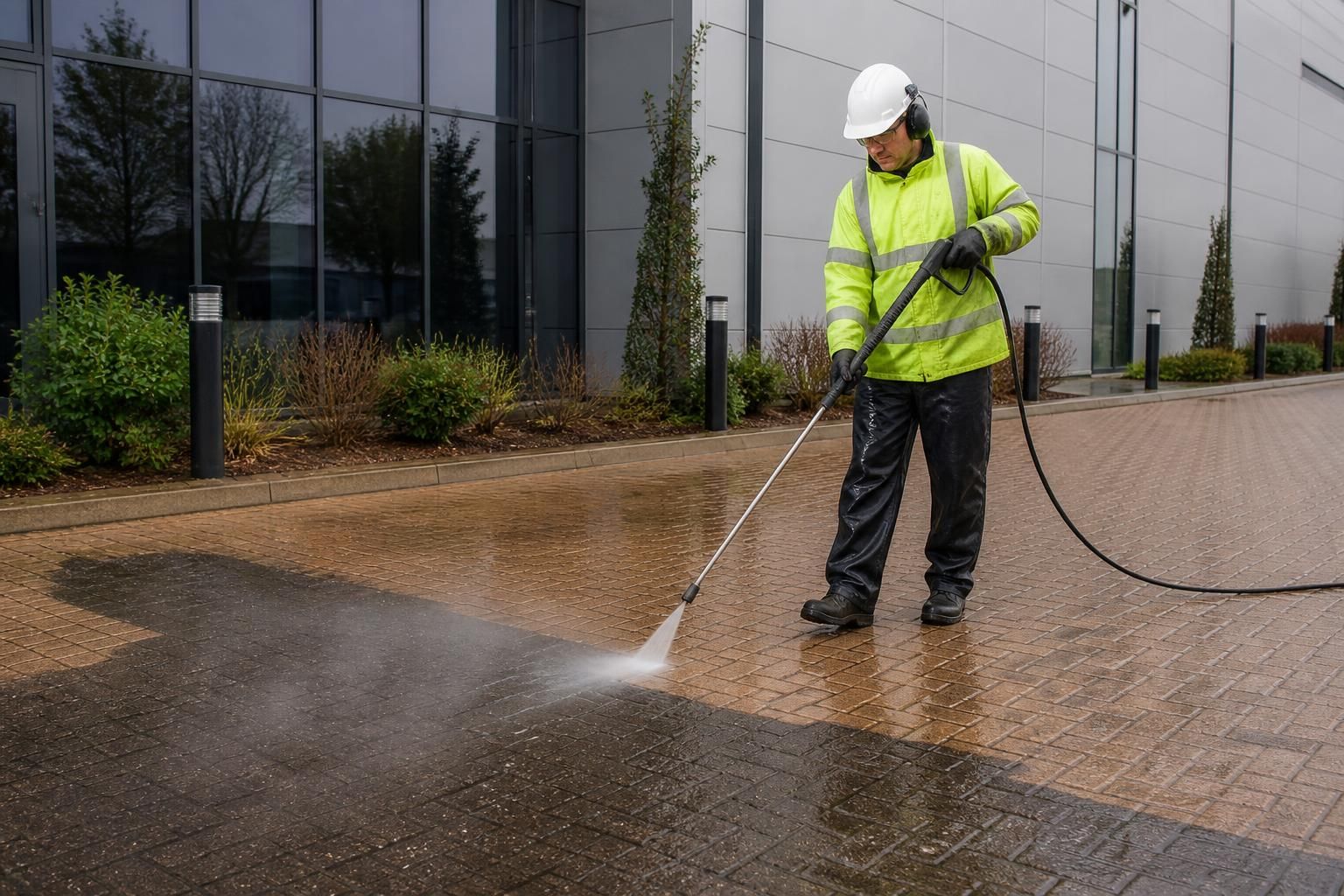
Pressure washing is not simply a matter of using the highest available setting. Excessive pressure, an unsuitable nozzle or holding the lance too close to the surface can erode the face of the blocks, strip a sealant, widen joints and remove the sand that helps lock the paving together. It can also drive water beneath loose blocks or into vulnerable edges.
A professional approach uses the lowest effective pressure, the correct spray pattern, a suitable working distance and a controlled cleaning speed. Rotary surface cleaners can help produce a more even result across larger areas and reduce uncontrolled spray, although they still need to be selected and operated correctly. A test area should be completed where the paving, coating or contamination is unfamiliar, with the result checked after drying.
Protect the jointing sand and paving stability
Jointing sand is an important part of block paving, not just a cosmetic finish. It helps resist lateral movement and limits the space available for weeds and water ingress. If substantial sand is removed during cleaning, the surface should be allowed to dry and the joints assessed before compatible kiln-dried jointing material is brushed back in. This is not suitable where the joints are unstable, contaminated or structurally defective without further remedial work.
Alternative methods may be preferable when the joints are already open or fragile. Steam cleaning and controlled rotary agitation can sometimes remove surface contamination with less direct impact on the joints, while manual brushing is appropriate for small or sensitive areas. The correct choice depends on the condition of the whole installation, not only the appearance of the blocks.
Compare the available cleaning methods
- Pressure washing: effective for broad areas and stubborn dirt, moss and algae. It is efficient but needs careful control to protect joints, coatings, drainage systems and adjacent surfaces.
- Steam cleaning: uses high-temperature water at comparatively controlled pressure. It can be useful for delicate surfaces, organic growth and areas where reducing mechanical impact is important, although it may require more time and may not remove every heavy deposit on its own.
- Rotary scrubbing: provides mechanical agitation and can give an even finish on relatively sound paving. It may be combined with detergent or low-pressure rinsing, but the brush type must suit the surface.
- Manual brushing and scraping: useful for localised contamination, loose growth, edges and areas close to sensitive features. It is less practical for large surfaces or deeply embedded soiling.
- Chemical treatment: can target algae, oil, rust or other specific deposits. Product compatibility, dwell time, dilution, run-off control and thorough rinsing are essential. Chemicals should never be selected solely because they produce a rapid visual change.
- Low-pressure cleaning: appropriate for lightly soiled, weathered or vulnerable paving where aggressive impact is unnecessary. It may need to be combined with brushing or a controlled treatment.
These methods are not always mutually exclusive. For example, sweeping and pre-treatment may be followed by low-pressure rinsing, or pressure washing may be used only on heavily soiled sections while more sensitive areas are steam cleaned or treated manually.
Allow for drainage, run-off and environmental controls
Block paving often lies beside buildings, landscaped areas, roads, parking spaces and public walkways. Before choosing a water-based method, check where wash water will flow and whether drains can safely receive it. Silt, oil, detergents, biological residues and chemical products should not be allowed to enter surface-water systems without appropriate controls.
Good preparation may include isolating drains, using collection or recovery equipment, protecting planted areas and controlling overspray. Where water supply, drainage or access is restricted, steam, low-moisture cleaning, dry brushing or targeted treatment may be more suitable. Environmental requirements can therefore influence the method as much as the paving itself.
Match the method to the required finish
A routine maintenance clean may only need to remove loose dirt and organic growth. A restoration clean may need to address ingrained staining, old sealant, weed growth and uneven discolouration. If the paving is to be resealed, the surface must be cleaned consistently and allowed to dry sufficiently; residue, trapped moisture or remaining contamination can affect the appearance and performance of the new coating.
For commercial sites, safety and presentation are additional considerations. Cleaning may need to remove slippery algae, restore visibility around entrances and maintain access for pedestrians and vehicles. A method that produces the cleanest visual result is not necessarily the best choice if it creates excessive overspray, prolonged closure or uncontrolled run-off.
Consider whole-life cost rather than the initial cleaning price
The least expensive method at the outset may not provide the best value if it causes joint loss, surface damage, repeat staining or the need for remedial work. Compare the likely cleaning result, preparation time, water and chemical requirements, drying period, access arrangements, joint reinstatement and future maintenance needs.
For most sound block-paved areas with substantial dirt or organic contamination, controlled pressure washing followed by inspection and, where necessary, jointing sand replacement is a practical solution. Steam or lower-impact cleaning deserves preference where the paving is fragile, the joints are unstable, water discharge is restricted or the contamination can be removed without high-pressure impact.
Before work begins, the chosen method should be confirmed through a site assessment and test clean. This should establish the paving type, identify vulnerable features, determine how the soiling responds, confirm the required finish and set out controls for water, chemicals, access and joint protection. Selecting the method on that evidence gives a more reliable result than treating every block-paved surface in the same way.
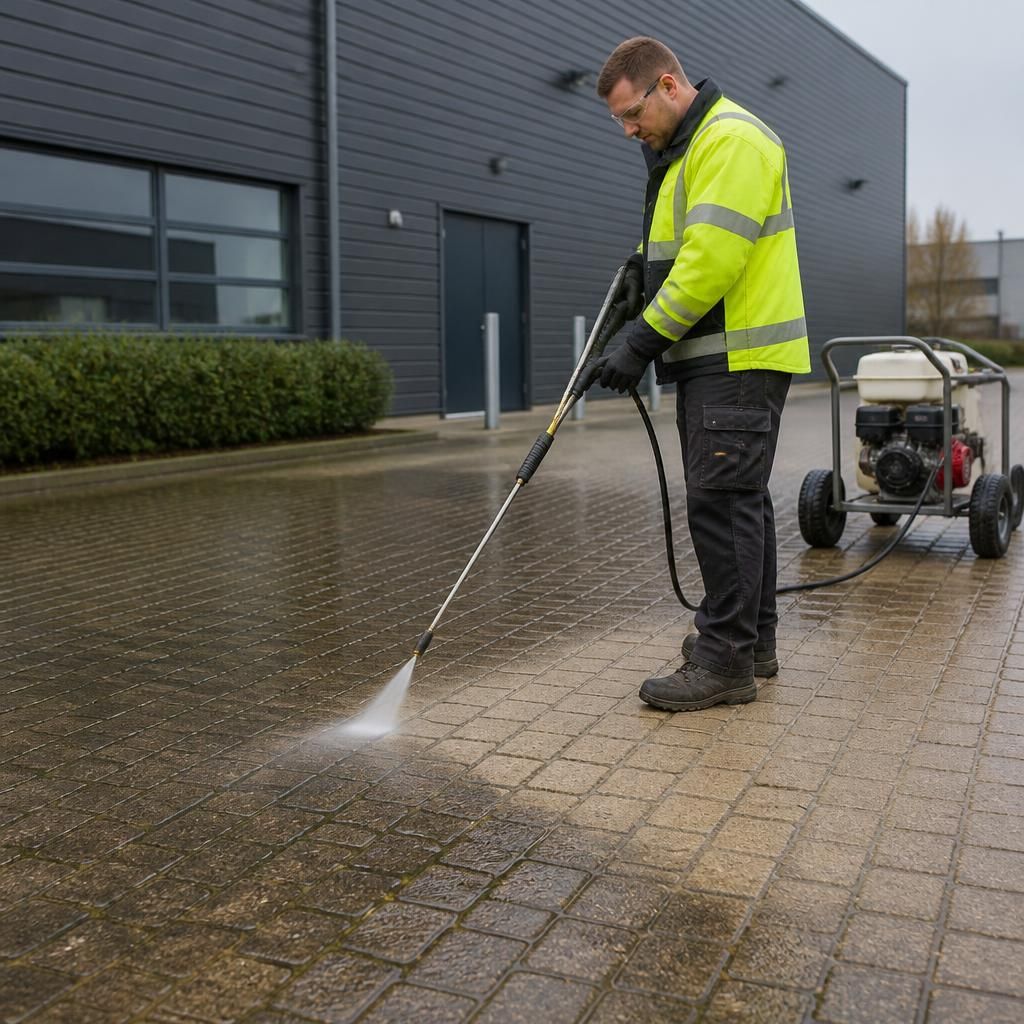
The condition of the paving and its jointing sand should be checked before choosing pressure washing or an alternative cleaning method. Sound concrete blocks with heavy algae, moss or ingrained soil can usually tolerate controlled pressure washing, while loose blocks, open joints, damaged surfaces or delicate clay and stone may require steam cleaning, rotary scrubbing or manual treatment.
A small test area should be cleaned first and assessed once dry. This confirms whether the chosen method removes the contamination without eroding the block face, stripping sealant or displacing jointing sand. The result should also be considered alongside drainage, nearby surfaces and the finish required, so the cleaning process is effective without creating avoidable repairs or run-off problems.