
What equipment and techniques are used in professional block paving pressure washing?
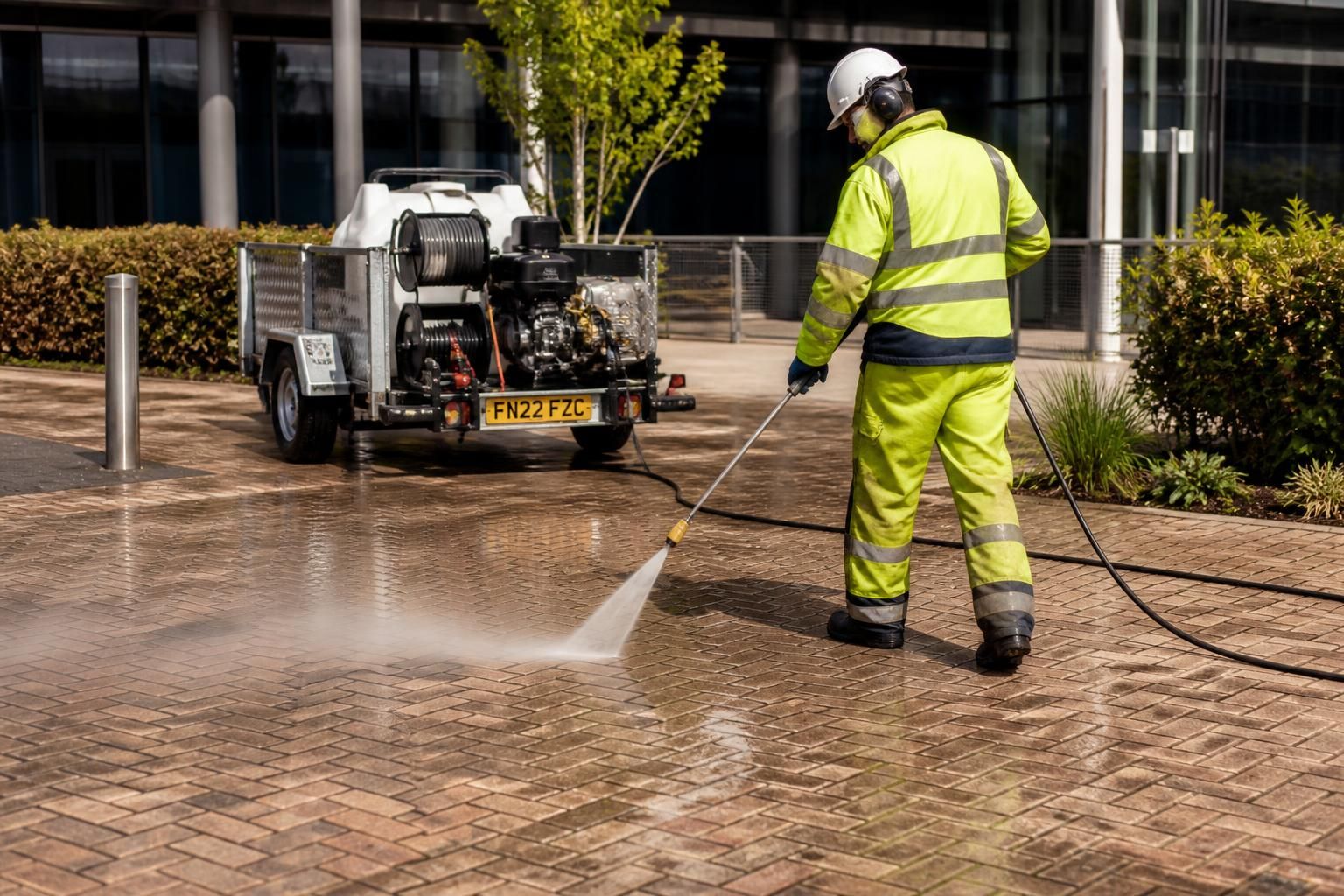
Professional block paving pressure washing uses adjustable-pressure washers, surface-cleaning attachments, rotary cleaners, steam equipment and suitable recovery tools to remove dirt, algae, moss, weeds and surface staining. Technicians select the pressure, water temperature, cleaning solution and working method according to the paving type and condition, then rinse and manage wastewater carefully to protect the blocks, joints and surrounding areas.
Professional block paving pressure washing combines adjustable-pressure washing equipment, surface-cleaning attachments, rotary systems, targeted treatments and controlled rinsing. The operator chooses the equipment and technique according to the paving material, jointing condition, level of soiling, surrounding surfaces and how wastewater can be contained and recovered. This approach cleans the surface without unnecessarily dislodging blocks, removing jointing material or spreading contamination.
Adjustable-pressure washing equipment
Commercial pressure washers provide a consistent flow of water at a controllable pressure. Professional operators adjust the pressure, flow rate and working distance rather than using the highest available setting throughout the job. This is important because sound concrete or clay paving can tolerate a different treatment from weathered blocks, damaged edges or areas with loose kiln-dried sand.
The main equipment may include:
- Pressure washers with adjustable pressure and flow controls for general cleaning and rinsing.
- Cold-water systems for removing loose dirt, soil and general surface deposits.
- Hot-water or steam equipment for greasy residues, biological growth and ingrained staining where heat is appropriate.
- Variable spray lances and nozzles for controlled work around edges, joints, drainage channels and sensitive features.
- Long-reach equipment for larger paved areas and locations where access is restricted.
A professional does not keep the nozzle close to the surface simply to increase cleaning power. Excessive pressure or an unsuitable nozzle can mark the paving, expose aggregate, damage joint edges and drive water beneath adjacent surfaces. The correct setting is normally established on a small, inconspicuous area before wider cleaning begins.
Surface cleaners and rotary attachments
Flat surface-cleaning attachments use enclosed rotating jets to distribute water more evenly across the paving. They are particularly useful on courtyards, paths, forecourts, communal areas and car parks because they reduce streaking and overspray compared with working a narrow lance across a large area.
Rotary cleaners are operated at a controlled pace and kept level with the surface. Moving too quickly can leave dirt behind, while dwelling too long in one place can create lighter patches or damage weak areas. The operator may still use a lance around walls, kerbs, steps, drainage covers and other places that the rotary attachment cannot reach safely.
For heavily soiled paving, rotary equipment is usually part of a wider process rather than a complete solution. Loose debris is removed first, treatment is applied where suitable, and the surface is then cleaned in manageable sections. This helps prevent loosened dirt from drying back onto areas that have already been treated.
Cleaning solutions and biological treatments
Water alone may remove surface dirt, but algae, moss, lichen, oil and organic staining can require a compatible pre-treatment or detergent. The product selected should be suitable for the paving and used in accordance with its instructions. It must also be assessed for nearby planting, drainage systems, painted surfaces, metalwork and other materials that could be affected.
Pre-treatment helps loosen biological growth and ingrained deposits so that less mechanical force is needed. It is applied evenly, allowed the appropriate contact time and prevented from drying where the product instructions require this. Stronger chemical concentration is not automatically better; over-application can discolour paving, affect jointing materials or create risks for people, animals and vegetation.
Oil and fuel staining may need a dedicated degreasing treatment, although complete removal cannot always be guaranteed where contamination has penetrated deeply into porous blocks. Rust, paint, cement residue and efflorescence also need different approaches. Treating every stain with the same chemical or pressure setting can worsen the appearance, so the cause of the deposit should be identified first.
Steam and hot-water cleaning
Steam and hot-water systems can assist with greasy deposits, chewing gum, biological contamination and some persistent staining. Heat can soften residues and improve the performance of a suitable cleaning solution, reducing the need for aggressive pressure. It is particularly useful where controlled, targeted cleaning is required.
Heat must still be used carefully. Sudden temperature changes, prolonged application or unsuitable cleaning products may affect certain paving materials, sealants, jointing compounds or nearby finishes. A test area and controlled working method are therefore important, especially on older or previously repaired block paving.
Pre-cleaning and preparation equipment
Good results depend on preparation before the pressure washer is started. Typical tools include stiff brooms, scrapers, shovels, leaf blowers, weed-removal tools and wet vacuums. These remove loose grit, leaves, weeds and surface debris that could otherwise block drains, scratch the surface or be redistributed during washing.
Technicians also inspect for rocking blocks, failed joints, damaged edges, open drainage channels, cracks and areas where water could enter a building. Loose blocks or defective areas may need repair before cleaning. Protecting doors, vents, electrical fittings, painted surfaces and vulnerable landscaping is part of the equipment and preparation plan, not an optional finishing step.
Joint and edge control
Block paving relies on correctly filled joints to help keep the blocks stable. Pressure washing can remove jointing sand, particularly where joints are already low, eroded or contaminated. Operators therefore avoid directing a concentrated jet straight into joints and use a suitable angle, pressure and working distance.
After cleaning and drying, the joints may need to be inspected and re-filled with appropriate jointing material. Re-sanding is not simply a cosmetic step: it helps restore stability and reduces the opportunity for weeds to establish. The paving should be allowed to dry sufficiently before jointing material is applied, and excess material should be swept from the surface rather than left to harden on the blocks.
Water management and recovery
Professional cleaning includes controlling the water and debris created during the work. Drain covers, temporary bunds, drain mats, silt traps, wet vacuums and recovery systems may be used to prevent dirty water, oil or chemical residue from entering surface-water drains. The correct arrangement depends on the site layout, drainage system and type of contamination.
Recovered slurry and contaminated water should be handled responsibly and not discharged onto roads, neighbouring property or watercourses. Where a site has restricted drainage or a particularly sensitive environment, low-water methods, steam cleaning or vacuum recovery may be more appropriate than unrestricted rinsing.
The professional cleaning sequence
- Inspect the paving, identify the block type and assess joints, drainage, staining and vulnerable surrounding features.
- Remove furniture, loose debris, weeds and other obstructions, then protect adjacent surfaces and landscaping.
- Carry out a small test clean to confirm that the chosen pressure, temperature, nozzle and treatment are suitable.
- Apply an appropriate pre-treatment where biological growth, grease or ingrained deposits require it.
- Clean in controlled sections using a surface cleaner, rotary attachment or lance according to the area and condition.
- Detail edges, joints, corners and stubborn deposits with targeted equipment rather than increasing pressure across the whole surface.
- Rinse or recover wastewater in a controlled manner, checking that loosened debris has not been moved into drainage channels.
- Inspect the finished surface, allow it to dry, and assess whether joints require re-sanding or whether further treatment is appropriate.
The most suitable method is determined by the condition of the paving rather than by equipment power alone. Adjustable settings, suitable attachments, controlled chemical use, careful joint protection and responsible water recovery produce a more consistent result while reducing the risk of surface damage and long-term maintenance problems.
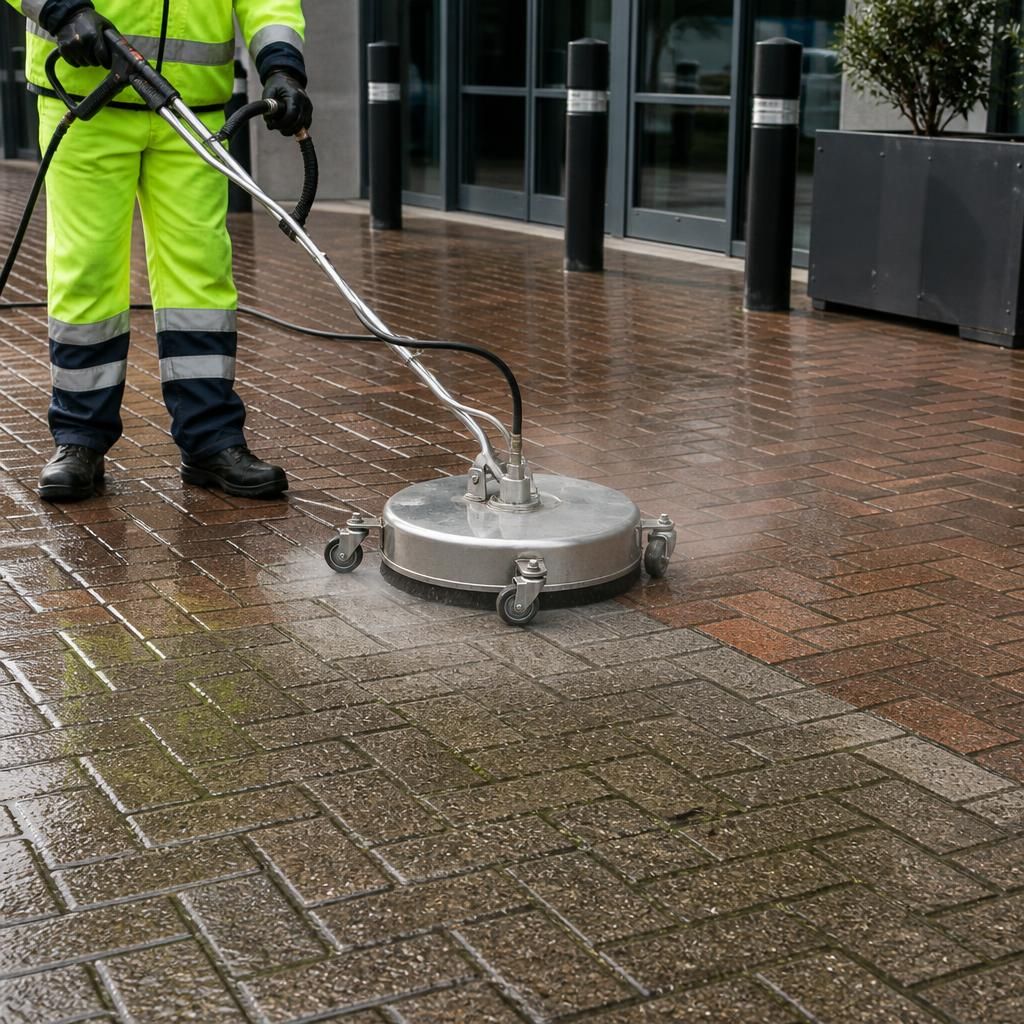
Professional block paving pressure washing relies on controlled water delivery rather than maximum pressure. A flat surface-cleaning attachment uses rotating jets beneath a cover to clean evenly across larger areas, helping reduce streaks, splash and inconsistent results. It is well suited to paths, courtyards, forecourts and communal paved areas.
The operator still adjusts the machine to the condition of the paving. A test area is used to check the pressure, flow, nozzle height and cleaning solution before work continues. Edges, steps, drainage channels and delicate joints are then cleaned with a lance at a suitable distance. This combination of rotary cleaning and careful detail work removes dirt while limiting damage to block faces and jointing sand.
Arrange professional block paving pressure washing
Arrange professional block paving pressure washing with Encanto Exterior Cleaning for controlled cleaning, joint protection and responsible wastewater management. Contact our team to discuss the condition of your paving and the most suitable equipment and technique for the site.