
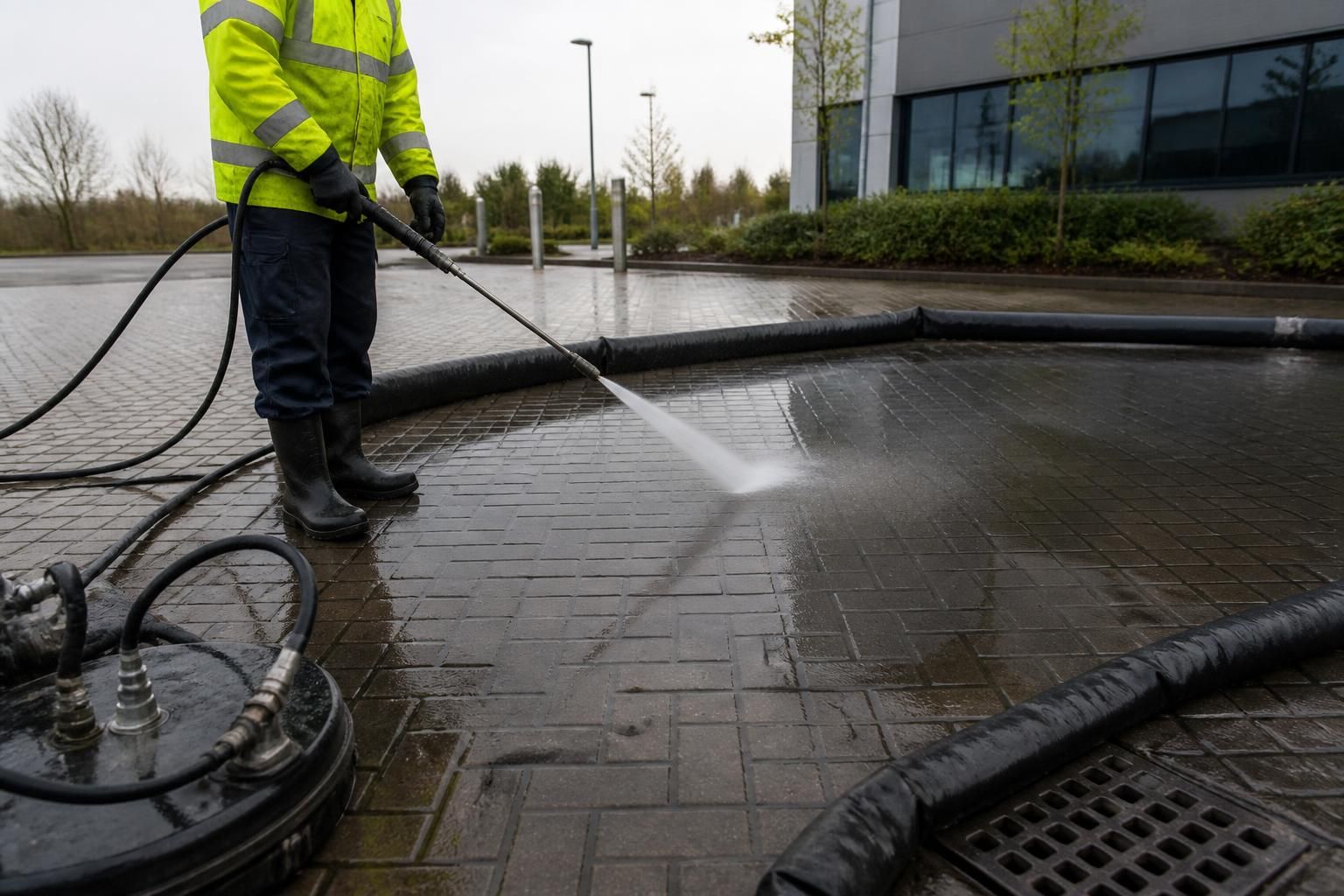
What environmental considerations should be taken into account when using pressure washing on block paving?
Environmentally responsible pressure washing of block paving involves using water efficiently, preventing dirty runoff from entering drains or watercourses, and choosing cleaning products that are suitable for the surface and surrounding environment. Wastewater, sediment and removed contaminants should be contained, treated or disposed of in accordance with local requirements rather than allowed to spread into the drainage system.
Environmentally responsible pressure washing of block paving depends on controlling water use, preventing contaminated runoff, selecting suitable cleaning products and disposing of recovered waste correctly. Dirty water, silt, oil, algae, moss, jointing sand and detergent should not be allowed to flow into surface-water drains, ponds, streams or neighbouring land.
Control and contain the runoff
Pressure washing lifts more than surface dirt. The wastewater can contain sediment, organic matter, vehicle residues, weed-treatment residues and cleaning chemicals. Before work begins, identify the drainage layout and distinguish surface-water drains from foul-water connections. Surface-water systems commonly discharge directly to the environment, so they are not suitable for untreated wash water.
- Use drain covers, berms, bunds or temporary barriers to prevent water escaping from the working area.
- Direct recovered water to an appropriate foul-water connection only where this is permitted and practical.
- Collect wastewater for settlement, filtration, treatment or removal from site where discharge to a drain is not suitable.
- Prevent contaminated water from entering watercourses, soakaways, planted borders, neighbouring properties or public areas.
- Stop work if heavy rain could overwhelm containment or carry pollutants beyond the site.
Discharge arrangements should be agreed with the site owner and checked against the requirements of the relevant water company, local authority and environmental regulator. A connection that appears convenient is not automatically an authorised disposal route.
Use water efficiently
High pressure is not the same as high water consumption, and the most efficient method is the one that removes the required contamination with the least avoidable water. Initial sweeping, scraping or vacuuming can remove loose debris before washing starts. Working in controlled sections also prevents clean areas being repeatedly wetted.
- Select pressure, flow and nozzle settings that are suitable for the paving and the contamination.
- Use rotary cleaning equipment or recovery systems where they improve control and reduce overspray.
- Avoid leaving equipment running while repositioning or inspecting the surface.
- Reuse recovered water only when it has been appropriately filtered and will not spread oil, sediment or biological contamination.
- Plan the work so that cleaning and rinsing are completed without unnecessary repeat passes.
Water efficiency must not come at the expense of surface safety. Excessive pressure, rapid wand movement or inadequate rinsing can damage blocks, remove jointing material and create a need for additional remedial work. The environmental approach is therefore to use the least aggressive effective method, rather than simply reducing water or pressure in isolation.
Choose cleaning products carefully
Many block-paving jobs need water pressure and mechanical action only. Where a detergent, degreaser, biocide or stain treatment is necessary, the product should be selected for the specific contaminant and used at the lowest effective concentration. Read the product label and safety data information before use, including instructions for dilution, contact time, rinsing and disposal.
- Do not assume that a product described as biodegradable is harmless to aquatic life or suitable for discharge.
- Avoid unnecessary use of acids, strong alkalis, solvents and persistent biocides.
- Prevent concentrated product from reaching soil, drains, ponds or planted areas.
- Use products compatible with concrete blocks, coloured finishes, sealants and nearby metals.
- Store chemicals securely and keep containers closed to prevent spills and contamination.
Oil, fuel and chewing gum may require targeted treatment, while algae, moss and lichen may respond better to a controlled treatment and dwell period than to prolonged high-pressure cleaning. Using a suitable treatment reduces repeat washing, but any chemical residue and loosened organic material still need to be contained and removed responsibly.
Manage silt, sand and removed material
Block paving joints commonly contain kiln-dried or other jointing sand. Pressure washing can displace this material along with soil, moss and fine sediment. Allowing the mixture to wash into drainage channels can cause blockages and transfer pollutants elsewhere.
- Sweep or vacuum loose debris before washing where possible.
- Use barriers and collection points to capture sediment at the edge of the work area.
- Keep recovered silt separate from clean recyclable materials.
- Do not sweep contaminated residue into a drain or leave piles where rain can wash them away.
- Replace jointing sand only after the surface has been cleaned, has drained properly and is sufficiently dry.
Waste should be assessed according to what it contains. Material contaminated with oil, chemicals or other pollutants may require different handling from ordinary soil or green waste. It should be stored securely and transferred through an appropriate, authorised disposal route, with waste documentation retained where required.
Protect surrounding plants, soil and wildlife
Overspray and runoff can scorch vegetation, alter soil conditions and harm aquatic organisms. Before cleaning, move portable items and protect vulnerable planting, ponds, water features, air-intake points and drainage channels. Do not rely on dilution from rainfall or garden watering to make contaminated water safe.
Rinse protected areas with clean water only where this will not create additional contaminated runoff. If a treatment could affect vegetation or aquatic life, postpone the work or use a different method. Weather, wind and temperature should also be considered: strong wind increases spray drift, while rain increases the risk of uncontrolled runoff and dilution of products.
Limit energy use and unnecessary repeat work
Environmental performance also includes the energy used by pressure washers, pumps, water recovery units and access equipment. Well-maintained machinery operates more efficiently and reduces the likelihood of leaks, excessive noise and repeated cleaning. Correct assessment of the paving before work begins helps determine whether pressure washing, steam cleaning, soft washing, manual treatment or a combination of methods is the most appropriate option.
Cleaning should not remove sound surface material unnecessarily. Protecting the blocks, retaining stable jointing and applying any agreed maintenance treatment can extend the serviceable life of the paving and reduce the environmental impact associated with premature repairs or replacement.
Use a documented site procedure
For commercial and larger paved areas, responsible work should be supported by a simple environmental plan. This normally records the drainage arrangements, likely contaminants, products to be used, containment method, wastewater route, spill response and waste disposal arrangements. A pre-work inspection should also identify oil contamination, damaged blocks, loose joints, nearby watercourses and any areas where runoff could leave the site.
Spill kits and absorbent materials should be available before cleaning starts. If a spill or uncontrolled discharge occurs, stop the source, protect drains and watercourses, contain the material and report it through the site’s agreed procedure. Contaminated absorbents should be disposed of according to their contents rather than placed in general waste without assessment.
In practice, the most sustainable approach is a controlled clean: remove loose material first, use the least aggressive effective equipment and product, contain and recover the wastewater, protect nearby vegetation and drainage, and restore the joints without creating avoidable waste. This protects the block paving while reducing the risk of pollution and helping the site remain compliant with its environmental responsibilities.
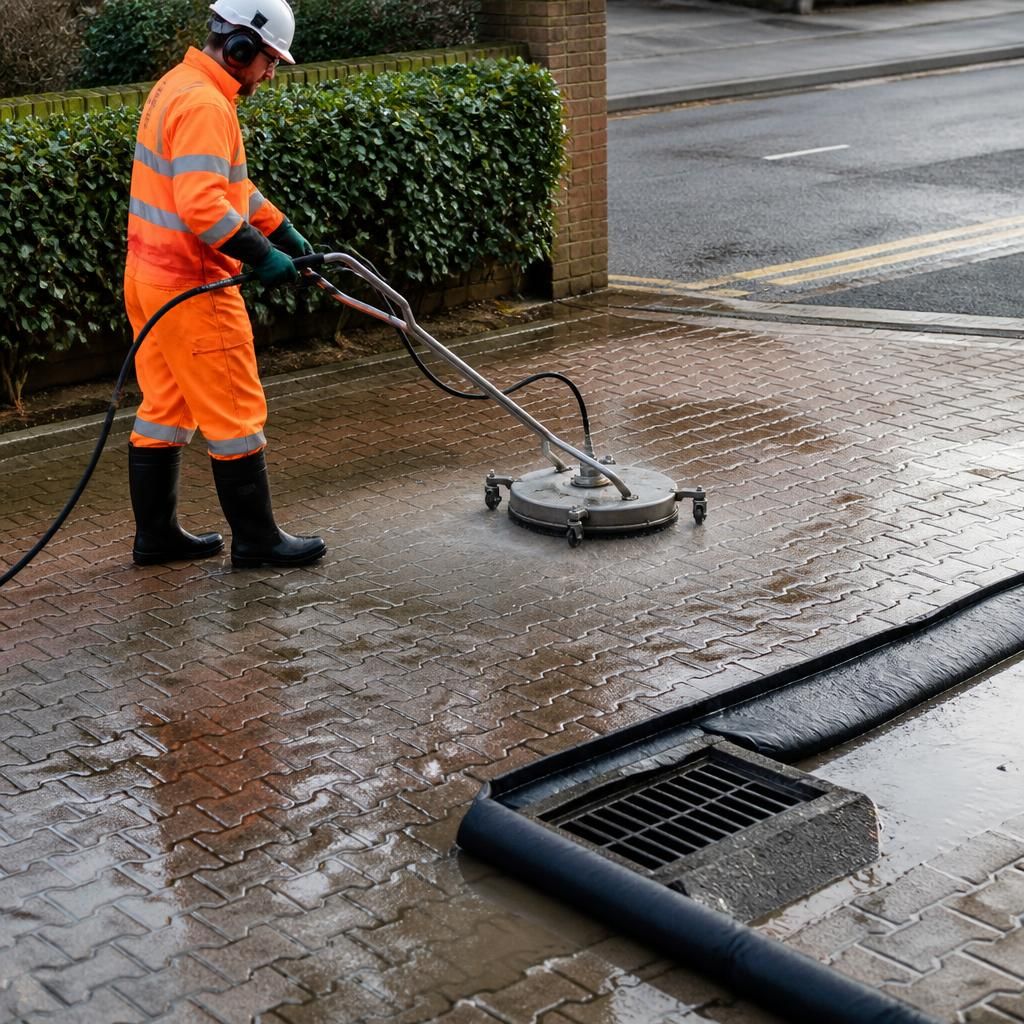
Containing wastewater is one of the most important environmental controls when pressure washing block paving. Dirty water can carry silt, oil, algae, jointing sand and cleaning residues into surface-water drains, soil or nearby watercourses, so it should be kept within the work area and recovered wherever practicable.
Before cleaning, identify the drainage layout and use suitable drain covers, bunds or temporary barriers. Recovered water should only enter an authorised foul-water connection; otherwise, it may need to be settled, filtered, treated or removed from site. Cleaning should also be postponed during heavy rain or strong wind, when runoff and spray are harder to control.