
What are the potential risks of using high-pressure washing on block paving, and how can they be mitigated?
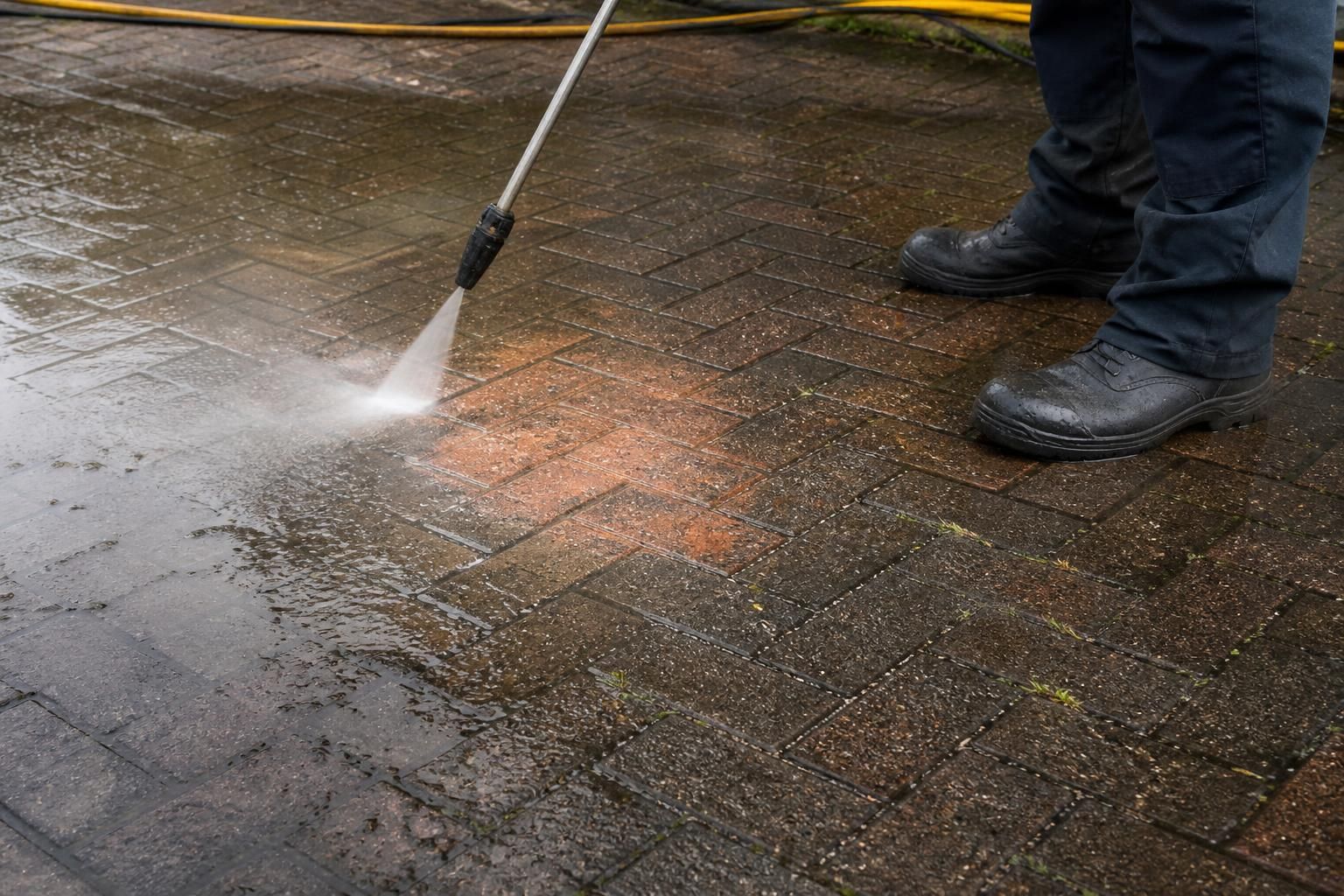
High-pressure washing can damage block paving by dislodging jointing sand, eroding the surface, spreading stains and forcing water into weak joints or surrounding structures. These risks are mitigated by assessing the paving first, using the lowest effective pressure with suitable equipment and technique, protecting nearby areas, and replenishing jointing material where necessary after cleaning.
High-pressure washing can damage block paving when excessive pressure, an unsuitable nozzle or poor technique removes jointing sand, erodes the surface or drives water into weak areas. The risks are reduced by inspecting the paving first, testing a small inconspicuous section, using the lowest effective pressure and controlling the spray consistently. After cleaning, joints should be checked and replenished with suitable kiln-dried jointing sand where required.
Dislodged or weakened jointing sand
The most common risk is the removal of sand from the joints between blocks. High-pressure water can scour out the material, particularly where joints are already open, shallow or affected by weeds. This may leave blocks less supported and allow them to move under traffic. Open joints also provide space for weeds, ants and water to enter.
This is mitigated by avoiding a direct, close-range jet along the joints. The operator should use a suitable fan pattern or surface-cleaning attachment, keep the lance moving and work at a controlled distance. The pressure should be increased only if the surface and joint condition justify it. Once the paving has dried sufficiently, the joints should be inspected and clean, compatible jointing sand brushed in if needed.
Surface erosion and cosmetic damage
Concrete blocks can lose their fine surface texture if exposed to excessive pressure, a narrow zero-degree jet or repeated passes over the same area. This can leave scarring, rough patches, exposed aggregate or uneven colouring. Older, weathered or previously damaged blocks are more vulnerable. Clay pavers may also be chipped or have their surface finish altered if cleaned too aggressively.
A professional approach starts with identifying the paving material, age, condition and any existing defects. A test patch helps establish the lowest effective pressure and the most suitable nozzle or attachment before the full area is cleaned. The spray should be kept perpendicular or at a controlled angle to the surface, rather than directed beneath the edges of the blocks, and the operator should avoid lingering in one place.
Damage to damaged or unstable paving
Pressure washing does not correct loose, rocking, cracked or sunken blocks. Water entering beneath unstable paving can wash out bedding material or reveal defects that were previously less noticeable. Pressure can also worsen poorly supported edges, failing restraints and areas where the paving has already begun to settle.
Before cleaning, loose blocks, failed joints, damaged edges, trip hazards and areas of settlement should be recorded. Where necessary, repairs should be completed separately rather than relying on pressure washing to improve the appearance of a structural problem. Cleaning should be stopped if blocks move, joints open significantly or the bedding layer becomes exposed.
Water entering buildings and surrounding structures
Water can be forced through defective pointing, open joints, cracks, vents, thresholds and drainage channels. This may affect adjacent walls, garages, basements, retaining structures or building interiors. It can also carry dirt into areas that are difficult to access and dry.
Nearby doors, air bricks, wall bases, electrical equipment and vulnerable finishes should be identified and protected before work begins. The operator should avoid directing water towards openings and should use controlled flow around edges. Drainage routes must be checked so that water does not collect against a building or flow into an area where it could cause damage.
Staining, striping and uneven results
Incorrect pressure washing can spread oil, rust, organic growth and other contaminants across the paving. A narrow nozzle or inconsistent working pattern may create visible lines, clean patches or differences between blocks. Some stains are absorbed into the paving and cannot be removed safely with pressure alone.
Cleaning should be planned around the type of contamination. A suitable pre-treatment may be used for organic growth or specific staining, but it should be compatible with the paving and surrounding surfaces. Dirt should be removed methodically towards an appropriate collection point rather than simply moved across the surface. The pressure and cleaning path should remain consistent to prevent striping.
Damage to sealers and surface treatments
High-pressure water can lift, whiten or unevenly remove a previous sealer, especially if that coating is aged, poorly bonded or incompatible with the paving. This can leave a patchy appearance and may require further preparation before resealing.
The presence and condition of any sealer should be assessed before cleaning. A test area can show whether the coating is stable and how it responds to the proposed method. Resealing should not be carried out until the paving is clean, fully dry and free from loose jointing material. The replacement product must be suitable for the block type and site conditions.
Run-off and contamination of drainage systems
Wash water may contain silt, algae, oil, detergents, paint fragments and jointing material. If it is allowed to enter surface-water drains without control, it can cause blockages or transfer contaminants into the drainage system and the wider environment.
Drainage points should be identified before work starts, and run-off should be contained, diverted or collected where appropriate. Silt and debris should not be swept into drains. Any cleaning solution must be used according to its instructions, with particular care around planting, watercourses and sensitive surfaces. These controls are especially important on commercial sites with large paved areas or busy drainage networks.
Practical controls for safer block paving cleaning
- Inspect the blocks, joints, edges, drainage, surrounding structures and previous coatings before selecting equipment.
- Identify the paving material and test the proposed method in an inconspicuous area.
- Use the lowest pressure and water flow that achieves the required result rather than starting with maximum power.
- Choose a suitable fan nozzle or surface-cleaning attachment instead of relying on a concentrated jet.
- Keep the equipment moving at a consistent speed and distance, avoiding prolonged contact with one spot.
- Work carefully around joints, block edges, thresholds, wall bases, drainage channels and fragile finishes.
- Use appropriate pre-treatment for particular contaminants where pressure alone could cause unnecessary damage.
- Control wash water and remove loosened silt, debris and contaminated residues responsibly.
- Allow the paving and joints to dry before assessing the final result or applying jointing sand and sealer.
Professional cleaning is not simply a matter of applying more pressure to remove more dirt. The correct method depends on the paving material, its condition, the contamination present and the construction of the surrounding area. Where the blocks are badly deteriorated, unstable or extensively stained, a lower-impact cleaning method or local repair may be more appropriate than aggressive pressure washing.
After cleaning, the surface should be checked for loose blocks, open joints, exposed bedding material, damaged edges and areas that remain stained. Re-sanding helps restore joint support, but it should only be done when the joints are suitably clean and dry. A final inspection confirms whether further repairs, drainage attention or a compatible protective treatment is needed.
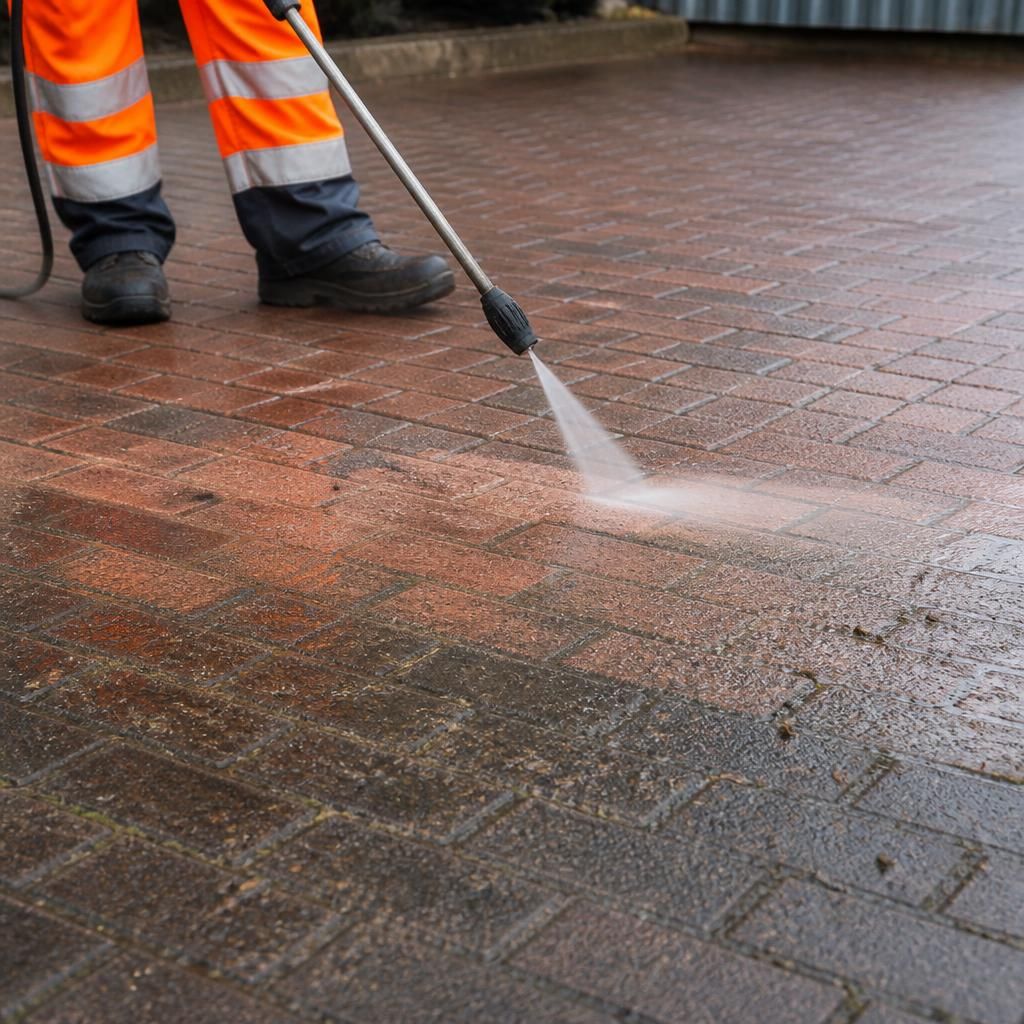
The most common risk of high-pressure washing on block paving is the removal of jointing sand between the blocks. Once these joints are weakened, blocks may move under traffic, weeds can return more easily and water may penetrate beneath the surface. This is particularly likely where joints are already shallow, open or affected by moss and weeds.
To reduce the risk, the paving should be inspected first and cleaned using the lowest effective pressure. A fan spray or surface-cleaning attachment is generally safer than a concentrated jet, which should not be directed along the joints or held close to one area. After cleaning, the paving should be allowed to dry before the joints are checked and replenished with compatible kiln-dried jointing sand where necessary.