
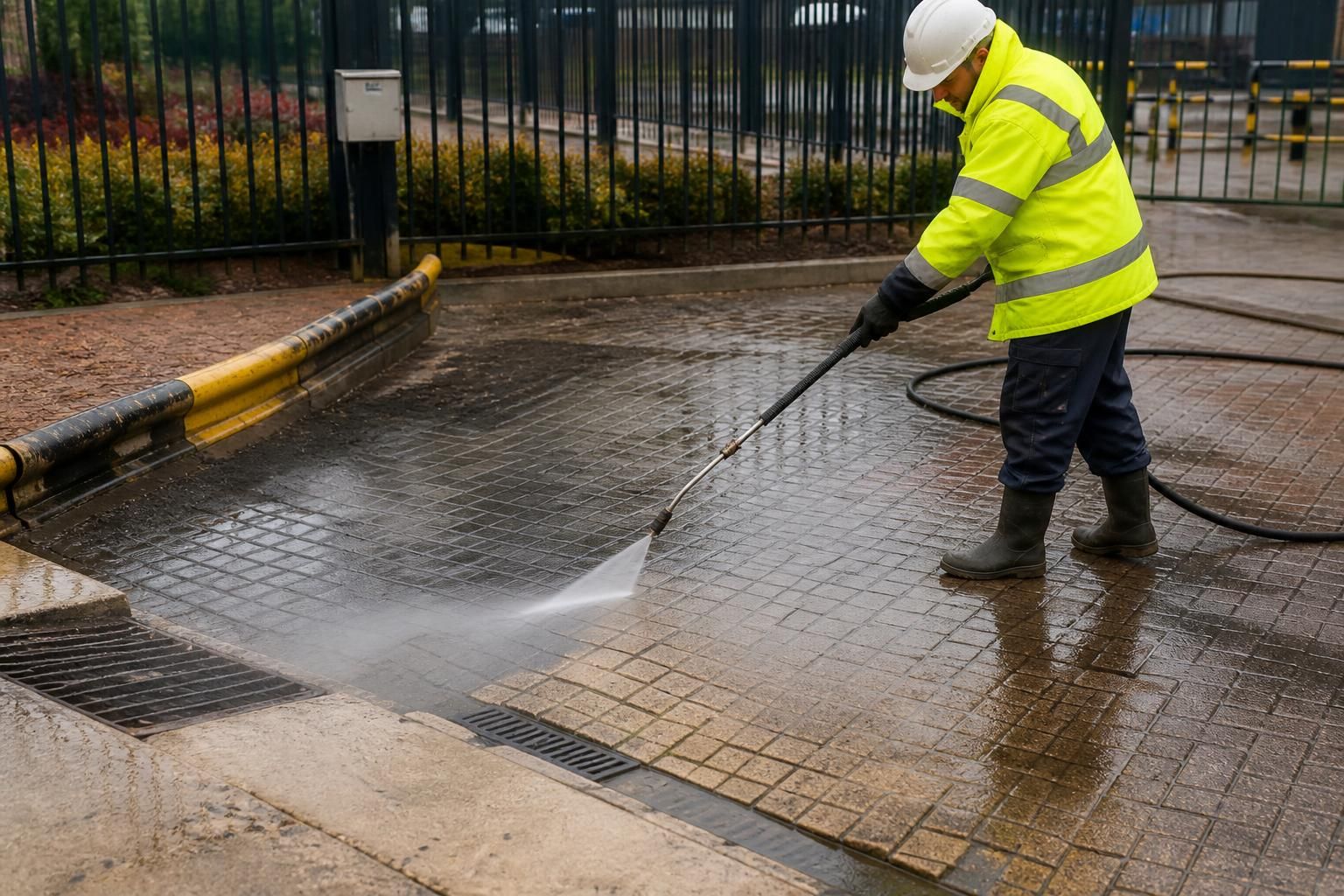
What are the environmental considerations when using pressure washing on block paving?
Pressure washing block paving can affect the environment through water consumption, contaminated runoff, cleaning chemicals and displaced jointing sand. Responsible cleaning uses controlled pressure, minimises water use, prevents dirty water entering drains or watercourses, and manages removed sediment and waste appropriately.
The main environmental considerations when pressure washing block paving are water consumption, contaminated runoff, cleaning chemicals, displaced jointing sand and the correct disposal of waste. Responsible cleaning controls the pressure and water flow, contains dirty water, protects drainage systems and avoids unnecessary chemical use.
Water consumption
Pressure washing generally uses less water than an uncontrolled hose, but large paved areas can still require substantial volumes. Use efficient equipment, suitable nozzles and the lowest flow rate that will remove the dirt effectively. Avoid repeatedly washing clean areas, and do not leave equipment running while it is unattended.
Where site conditions and equipment allow, wash water can be collected, filtered and reused for suitable cleaning stages. Recovered water should not be reused if it contains oil, hazardous substances or other contaminants that could spread across the paving or enter the surrounding environment.
Preventing contaminated runoff
Runoff from block paving may contain silt, algae, moss, traffic residue, oil, fuel, metals, organic matter and cleaning products. It should not be allowed to flow into surface-water drains, streams, ponds or other watercourses. Surface-water drainage commonly discharges directly to the environment without treatment, so visible clarity does not mean the water is harmless.
Before work begins, identify nearby drains and watercourses and establish where the wash water will go. Use drain covers, bunds, booms, wet vacuums or other suitable recovery methods to contain and collect the runoff. Collected water should be treated or disposed of through an appropriate route. Discharging trade effluent to a foul sewer may require the permission of the relevant sewerage undertaker, so this should be confirmed rather than assumed.
Cleaning should also be postponed during heavy rain or when runoff cannot be controlled. Rain can spread suspended sediment and chemicals beyond the work area, while saturated ground provides less opportunity to contain or recover wastewater.
Use of detergents and biocides
Many block paving jobs can be completed with water and mechanical cleaning alone. Avoid chemicals unless they are needed for a particular contamination, such as oil staining, organic growth or chewing gum. Any product used should be suitable for the surface, applied at the recommended dilution and accompanied by the manufacturer’s safety and disposal instructions.
Terms such as biodegradable or environmentally friendly do not mean that a product can be discharged into a drain or watercourse. Detergents, disinfectants and biocides can still harm aquatic life or affect soil if they are misused. Prevent overspray, do not mix incompatible products, and rinse or recover residues in a controlled manner.
Protecting jointing sand and surrounding ground
High-pressure cleaning can remove sand from between blocks. This creates additional waste, may destabilise the paving and can leave fine sediment in drainage systems or planted areas. Use a pressure and technique appropriate to the paving, keep the lance moving and avoid directing concentrated pressure at joints for longer than necessary.
Collect displaced sand and silt rather than sweeping it into a drain or onto a neighbouring border. After the paving has dried and the joints have been inspected, replace jointing material where required. Any new sand or jointing product should be kept out of drains and watercourses during application and storage.
Managing oil and other hazardous contamination
Oil, fuel, paint and chemical residues need particular care because pressure washing can disperse them over a wider area. Absorb or remove heavier contamination where practical before washing, and use suitable containment and recovery equipment. Do not wash oily water into a surface-water drain. Contaminated absorbents, filters and sludge should be handled as controlled waste where applicable and passed to an authorised waste contractor.
Reducing disturbance to the site
Protect planted borders, lawns, soil, vehicles and building entrances from overspray and sediment. Keep chemicals and dirty water away from trees and planting beds, as concentrated residues can affect soil organisms and vegetation. Plan access and equipment placement to avoid unnecessary damage to grassed areas or compacted ground.
Professional cleaning should therefore begin with an environmental assessment of the paving, nearby drainage, likely contaminants, weather conditions and available wastewater controls. The most responsible method is the least aggressive process that achieves the required result, with water and chemicals used only where necessary and all contaminated runoff contained and managed correctly.
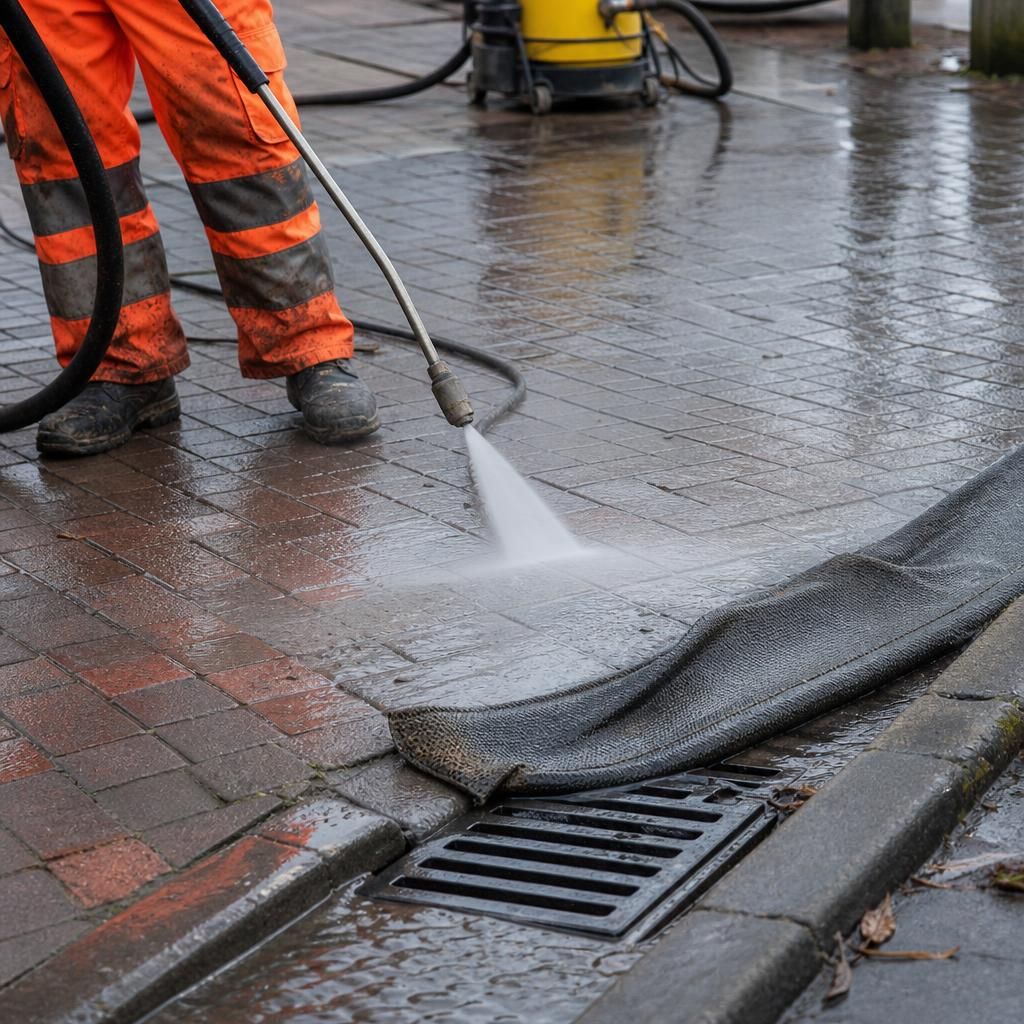
Controlling dirty water is one of the most important environmental considerations when pressure washing block paving. Runoff can carry silt, algae, oil, fuel residue, metals and cleaning products into surface-water drains, which may discharge directly to streams or other watercourses without treatment.
Before cleaning, identify nearby drains and decide how wastewater will be contained. Drain covers, temporary bunds, wet vacuums and suitable recovery equipment can help prevent contaminated water leaving the work area. Avoid washing during heavy rain, and never assume that a product labelled biodegradable is safe to discharge into a drain or onto soil.
Collected water, sediment and contaminated absorbents should be managed through an appropriate disposal route. Where oil, fuel or chemical contamination is present, remove or absorb as much as possible before washing and use controlled recovery methods rather than spreading the contamination across the paving or surrounding ground.