
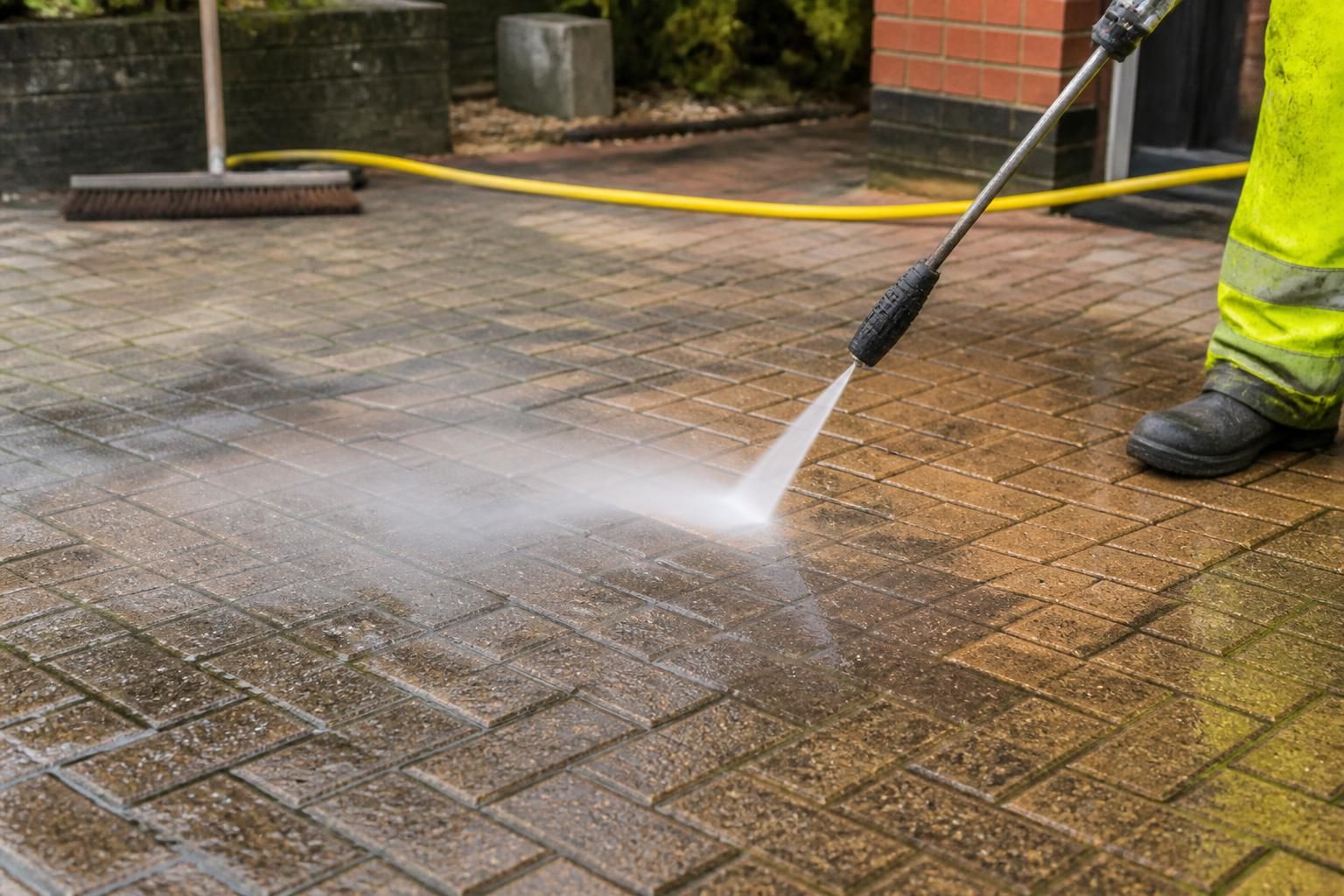
What are the best practices for preparing block paving surfaces before pressure washing to ensure effective and safe cleaning?
Before pressure washing block paving, inspect the surface, remove loose debris, protect nearby property, control weeds and moss, and identify damaged or unstable blocks. Confirm suitable drainage and runoff controls, pre-treat ingrained staining where appropriate, and test the cleaning method in an inconspicuous area to prevent damage and achieve an even result.
Preparing block paving properly before pressure washing is essential for an even clean and to avoid dislodged blocks, damaged joints, uncontrolled runoff and injury. The preparation should include a condition survey, removal of loose debris, weed and moss treatment, protection of surrounding property, drainage checks, suitable stain pre-treatment and a small test clean before the main work begins.
Inspect the paving and identify defects
Begin with a close inspection of the entire area. Look for rocking or sunken blocks, open joints, cracked or broken paving, failed edging, loose kerbs and areas where the sub-base may have settled. Pressure washing can worsen existing defects, so unstable blocks should be lifted and re-bedded or secured before cleaning. Mark damaged areas so they can be avoided or treated separately.
Check for signs of oil contamination, rust, organic growth, chewing gum, paint, mortar and other substances. Different stains may require different treatments, and aggressive pressure alone is not always the safest or most effective solution. Record areas that need repair or specialist treatment before work starts.
Clear loose material from the surface
Remove litter, leaves, twigs, stones, grit and other loose debris using a stiff brush, blower or suitable mechanical sweeping equipment. This prevents debris from being driven into the joints or thrown against vehicles, glazing and nearby walls during washing. Sweep the surface thoroughly, paying particular attention to drainage channels, corners and areas beneath parked vehicles.
Where sand or jointing material is already loose, avoid sweeping it into drainage systems. Collect it for suitable disposal or retain it for reinstatement after cleaning where appropriate.
Control weeds, moss and organic growth
Remove substantial weeds before pressure washing, including visible roots where this can be done without disturbing the paving. Moss, algae and lichen can make the surface slippery and may need to be loosened with a brush or treated with an appropriate product before washing. Allow any treatment to work for the required time and follow its label instructions.
Do not rely on high pressure to remove deep-rooted weeds from joints. This can widen the joints, remove essential bedding sand and leave the paving more vulnerable to movement. Organic waste and treatment residues should be collected rather than washed into surface-water drains.
Check drainage and plan runoff control
Identify gullies, channels, soakaways, inspection covers and nearby watercourses before setting up equipment. Confirm that drains are clear enough to accept the expected flow and establish where dirty water will be contained or directed. Silt, oil, detergents and biological residues should not be allowed to enter surface-water systems without suitable controls.
Use drain covers, bunding, wet vacuums, collection points or other appropriate measures where runoff could affect public areas, neighbouring premises or the environment. On larger commercial sites, agree the runoff plan with the responsible property or facilities manager before cleaning begins.
Protect adjoining surfaces and property
Move vehicles, bins, planters, loose furniture and other portable items away from the work area. Protect doors, vents, electrical equipment, air-conditioning units, signage, painted surfaces and vulnerable façade materials from spray and splashback. Keep windows and doors closed, and confirm that sensitive equipment has been isolated or covered where necessary.
Establish a safe working zone with suitable barriers and warning signs, particularly where pedestrians, residents, staff or traffic may pass close to the paving. Check access routes, trip hazards and hose positions before introducing water and equipment to the area.
Deal with oil and other ingrained stains before washing
Apply a compatible pre-treatment to oil, grease, rust, organic staining or other deposits when required. Pre-treatment helps to break down contamination so it can be removed with controlled pressure rather than excessive force. Use products suitable for the paving material, existing sealant and surrounding surfaces, and prevent them from drying where the manufacturer advises otherwise.
Never mix cleaning chemicals unless the product instructions specifically permit it. Use the required protective equipment and provide ventilation where products are used near buildings. Any chemical residue and contaminated water should be managed in accordance with the product instructions and site controls.
Test the proposed cleaning method
Carry out a small test in an inconspicuous or agreed area before cleaning the whole surface. Assess the effect of the selected pressure, nozzle, water flow, cleaning head, temperature and pre-treatment. Check whether the colour changes, jointing material is removed, the surface becomes marked or stains are merely spread.
Use the least aggressive method that achieves the required result. A surface cleaner may provide a more consistent finish than a concentrated lance, while lower pressure and a wider spray pattern may be appropriate for older or weaker paving. The test area should be allowed to dry sufficiently for differences in colour, patchiness or damage to become apparent.
Confirm the paving and jointing materials
Establish whether the surface consists of concrete or clay blocks, and determine whether it has been sealed. Clay paving, aged concrete, decorative finishes and some polymeric jointing compounds can respond differently to pressure, heat and detergents. If the paving has been recently installed, repaired, re-sanded or sealed, confirm that it has reached the relevant manufacturer’s curing period before washing.
Take particular care with polymeric or resin-based jointing materials. Excessive water or pressure can disturb them, especially where the joints are already failing. If the jointing system has specific cleaning requirements, follow the manufacturer’s guidance rather than applying a standard pressure-washing process.
Plan the cleaning sequence
Work from the area furthest from the intended runoff collection point towards that point, while keeping dirty water under control. Divide large surfaces into manageable sections so that pre-treatment does not dry unevenly and cleaned areas are not re-contaminated. Avoid directing spray towards buildings, traffic, pedestrians or unprotected landscaping.
Before starting, confirm that the weather and site conditions are suitable. Heavy rain can overwhelm runoff controls, while strong wind can spread spray and cleaning products beyond the work area. Cold conditions may create slippery or frozen surfaces and can affect the performance of some treatments.
Recheck the area immediately before washing
Remove any remaining loose debris, confirm that protection and barriers are secure, check that drains and collection equipment are functioning, and make sure all occupants or site users understand the exclusion area. Keep a record of pre-existing damage and, where appropriate, photograph the surface before work begins.
After preparation, pressure washing should be carried out with controlled passes rather than by holding a powerful jet close to the blocks. Preparation reduces the need for excessive pressure, helps produce a more uniform result and makes it easier to identify repairs, re-sanding or sealing that may be needed after the paving has dried.
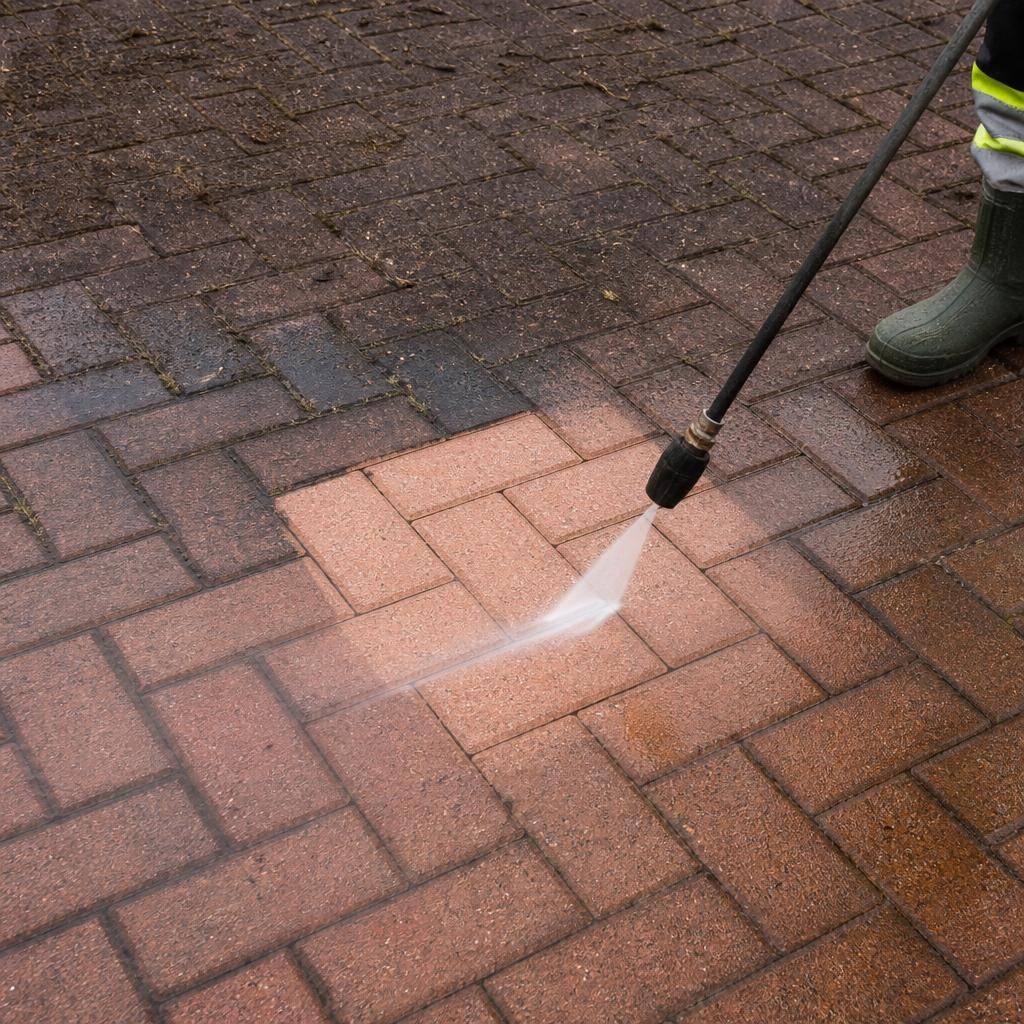
Testing a small, inconspicuous section is one of the most important preparation steps before pressure washing block paving. It confirms whether the selected pressure, nozzle, cleaning head and treatment are suitable before the whole surface is exposed.
Allow the test area to dry sufficiently before assessing it. Check for surface marking, colour changes, disturbed joints, exposed aggregate and patchy cleaning. Older concrete blocks, clay paving, weak joints and previously sealed surfaces may require a gentler method than a concentrated lance. Use the least aggressive approach that removes the contamination effectively, then adjust the cleaning process for the rest of the area.
Arrange a Professional Block Paving Assessment
Arrange a professional block paving assessment with Encanto Exterior Cleaning to identify surface defects, drainage requirements and the safest preparation method before pressure washing. Contact our team to plan suitable cleaning and runoff controls for your site.