
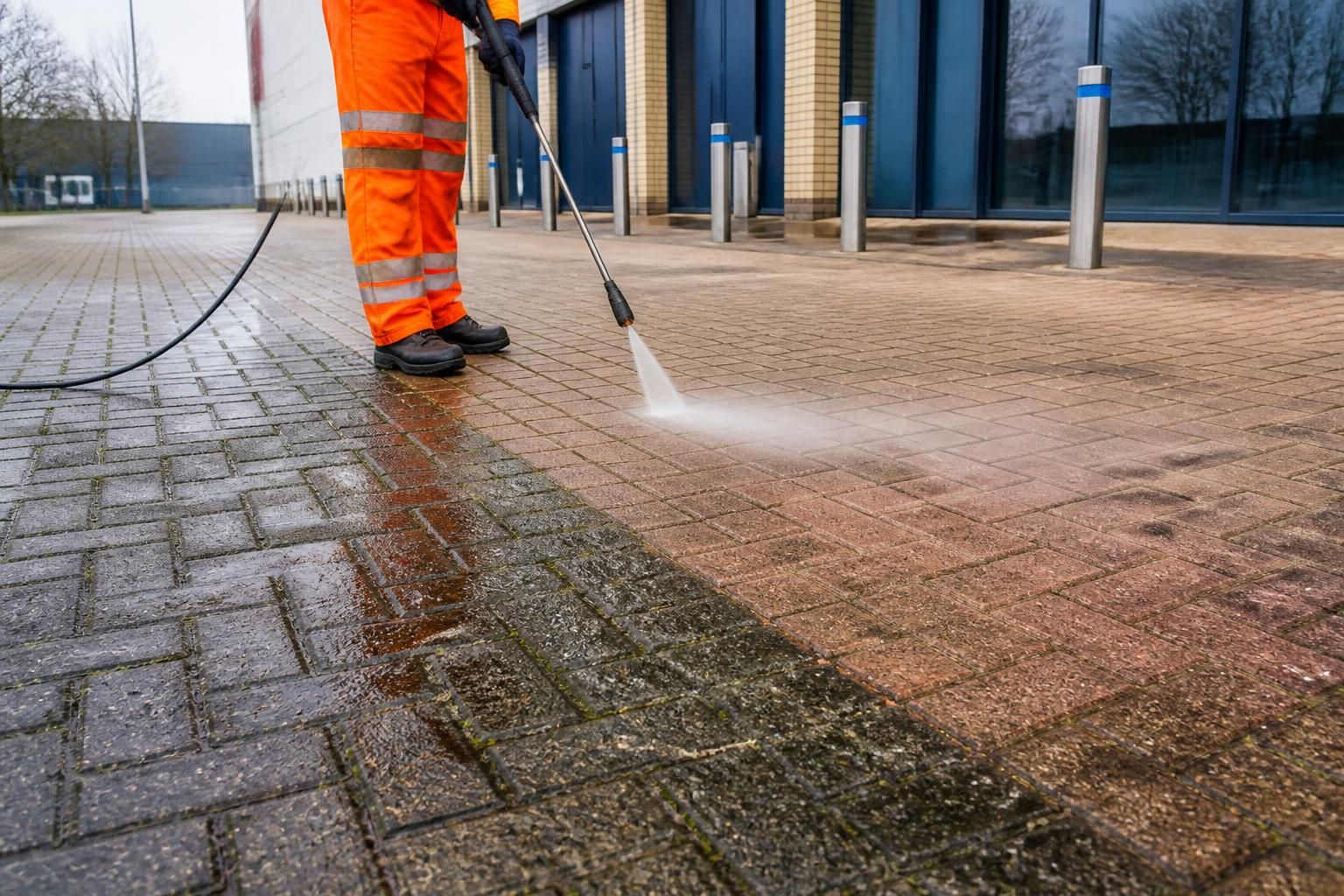
How often should block paving be pressure washed to maintain its appearance and longevity?
Block paving should generally be pressure washed every few years, with an annual inspection to assess staining, moss, weeds and joint-sand loss. High-traffic, shaded or heavily soiled areas may need attention sooner, while unnecessary pressure washing should be avoided because it can wear the surface and disturb the joints.
Block paving should usually be pressure washed every few years rather than on a fixed annual schedule. An annual inspection is more useful than automatically washing the surface, because the appropriate interval depends on traffic, exposure, drainage, shading, staining and the condition of the jointing sand. Areas that are heavily used, shaded or exposed to persistent contamination may need cleaning sooner, while lightly used paving can remain serviceable for longer.
Routine maintenance should take place between pressure-washing treatments. Regular sweeping removes grit, leaves and organic debris before they become embedded. Weeds should be dealt with promptly, and spillages such as oil, food residue or tracked-in soil should be treated using a suitable method rather than left to weather into the blocks. These measures help preserve appearance and can reduce the need for frequent high-pressure cleaning.
Inspect the paving at least annually, looking for:
- Persistent moss, algae, lichen or weeds between the blocks;
- Oil, tyre marks, rust, organic staining or other contamination that routine cleaning cannot remove;
- Darkened or uneven areas caused by poor drainage or prolonged dampness;
- Loose, missing or heavily eroded jointing sand;
- Sunken, rocking or displaced blocks; and
- Areas where the surface has become slippery or presents a safety concern.
The presence of staining alone does not always justify pressure washing. For example, a small isolated oil mark may be better treated locally, while light surface dust can often be removed by sweeping or low-pressure washing. Full pressure washing is more appropriate when contamination is widespread, the paving has become slippery, or the appearance of a larger area needs to be restored consistently.
Usage and site conditions have the greatest effect on cleaning frequency. Commercial entrances, service yards, loading areas, car parks and pedestrian routes generally become soiled more quickly than lightly used domestic paving. Shaded paving dries slowly and is more likely to support moss and algae. Trees can deposit organic matter, while nearby construction, traffic or industrial activity can introduce dust and grime. Poor falls, blocked drainage and standing water can also make repeated cleaning necessary unless the underlying issue is corrected.
Pressure washing should not be used simply to maintain a calendar. Repeated or excessively forceful cleaning can strip the surface, damage the edges of blocks, remove jointing sand and expose the paving to movement and weed growth. If the blocks are already worn, cracked, loose or unstable, the cause should be assessed before cleaning. Washing a damaged or poorly laid surface may make the defects more visible without resolving them.
Where pressure washing is required, the method should be matched to the paving and its condition. A professional assessment normally considers the block material, surface finish, joint condition, contamination and nearby drainage before selecting pressure, water flow, nozzle type and cleaning technique. Cleaning should be controlled rather than carried out at maximum pressure, with particular care around edges, joints, walls, doors, drainage channels and fragile features.
Jointing sand is an important consideration after cleaning. Pressure washing can remove sand from between the blocks, so the joints may need to be allowed to dry and then refilled with an appropriate kiln-dried or specified jointing material. The paving should not be treated as fully maintained until the joints are stable and the blocks are secure. In some situations, sealing may help reduce staining and water penetration, but it should only be considered once the surface is clean, dry and free from defects. The paving manufacturer’s guidance and the existing surface treatment should be checked first.
For most sites, a practical programme is to carry out routine sweeping and spot cleaning throughout the year, inspect the paving annually, and arrange a full pressure wash when the inspection shows that general contamination is affecting appearance, safety or drainage. High-traffic or damp locations may benefit from a planned maintenance review more frequently, whereas low-traffic areas may only require occasional cleaning. This approach protects the appearance and longevity of the paving without subjecting it to unnecessary pressure.
If moss returns quickly, stains reappear soon after cleaning, joints continue to lose sand or blocks keep moving, the problem may be caused by drainage, shade, vehicle use, defective installation or unsuitable jointing. In those circumstances, increasing the washing frequency is unlikely to provide a lasting solution. Identifying and addressing the underlying cause will usually protect the paving more effectively than repeated high-pressure treatment.
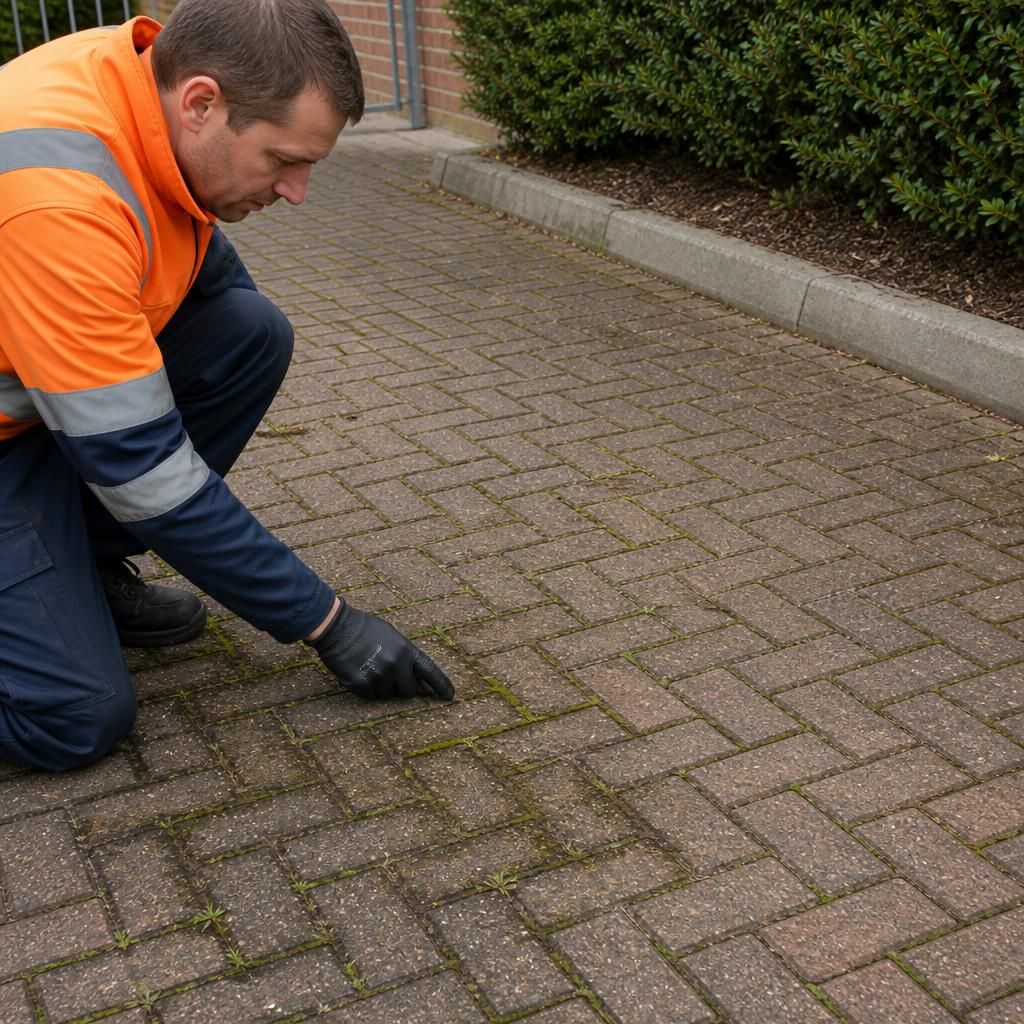
Pressure washing should be scheduled according to the condition of the block paving, not simply carried out every year. Inspect the surface regularly for persistent moss, algae, weeds, staining, slippery areas, poor drainage and eroded jointing sand. High-traffic, shaded or poorly drained paving may need cleaning sooner, while lightly used areas can often be maintained with sweeping and localised spot treatment. This approach limits unnecessary pressure, protects the joints and helps preserve the paving for longer.