
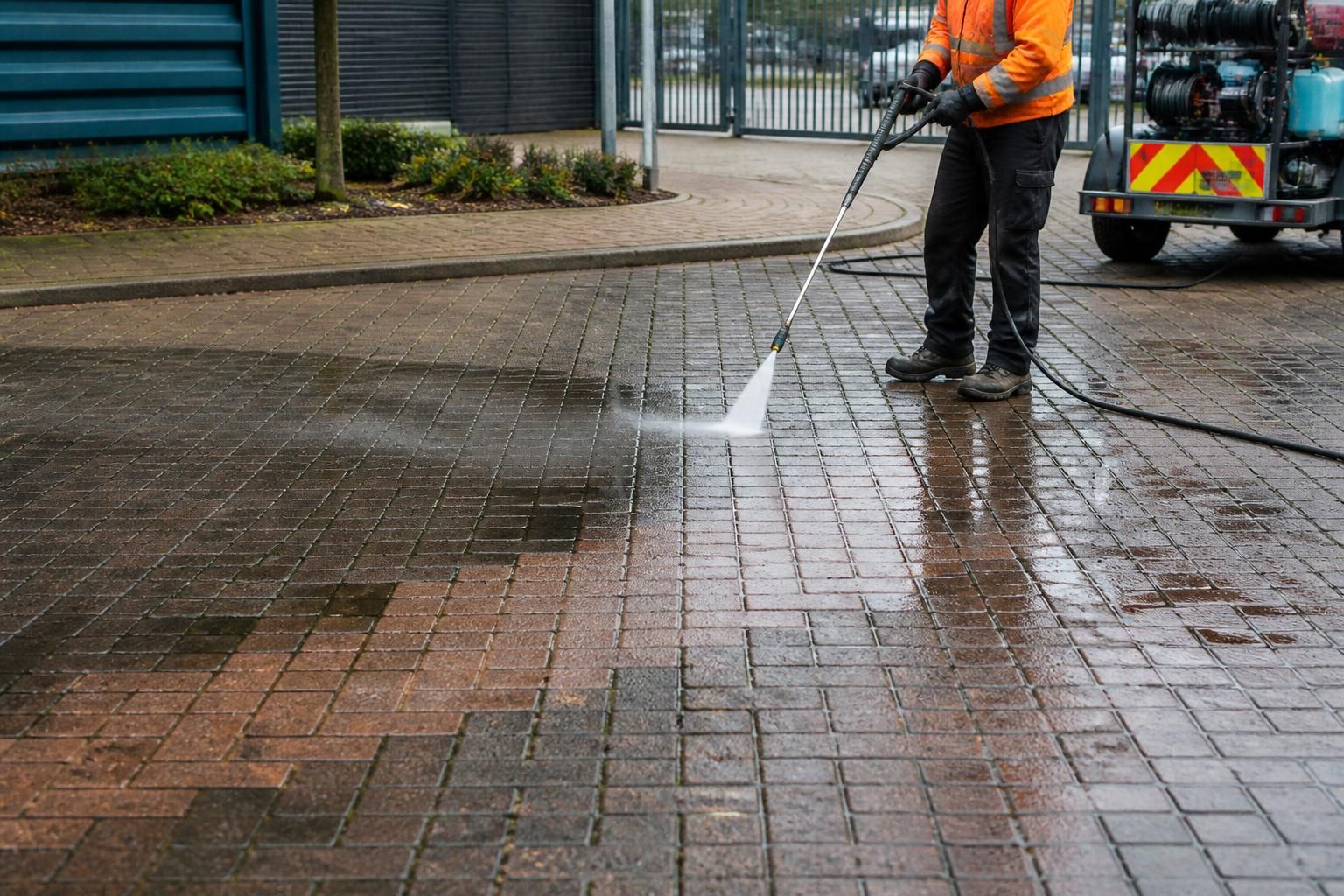
How often should block paving be pressure washed to ensure optimal maintenance and prevent long-term damage?
Block paving is typically best pressure washed annually, with additional cleaning when weeds, moss, oil or heavy soiling appear. The frequency should reflect traffic, weather exposure and the condition of the joints, while using controlled pressure and suitable techniques to prevent damage.
For most block-paved areas, pressure washing once a year provides effective routine maintenance. Additional cleaning may be needed when weeds, moss, algae, oil, food deposits or heavy traffic-related soiling become established. The correct interval depends on the paving’s condition, how heavily it is used, its exposure to weather and whether the joints and blocks remain sound.
Annual cleaning is a practical starting point for commercial paths, entrances, courtyards and car parks. It removes accumulated dirt before it becomes firmly embedded and helps limit the spread of organic growth. Cleaning is often most useful in spring, when winter moisture and shaded conditions have encouraged moss or algae. However, the work should be planned around the site’s operational requirements, weather conditions and any nearby drainage or water-management controls.
Some surfaces need attention more frequently, while others can go longer between professional washes. Consider the following factors:
- Traffic: Vehicle entrances, loading areas and pedestrian routes collect tyre residue, oil, grit and general contamination more quickly than lightly used paving.
- Shade and moisture: Paving beneath trees, beside buildings or in poorly drained areas is more likely to develop moss, algae and weeds.
- Joint condition: Loose, eroded or missing jointing sand requires care. Aggressive washing can remove more material and leave the blocks less stable.
- Type of contamination: Oil, chewing gum, rust and construction residue may require targeted treatment rather than simply increasing pressure or washing more often.
- Previous cleaning: Surfaces that have been neglected may need an initial deep clean, followed by a planned maintenance programme once their condition has been restored.
Routine pressure washing should not replace regular sweeping and prompt spot cleaning. Removing leaves, soil and spillages as they occur reduces the amount of contamination that reaches the joints and limits the conditions in which weeds can establish. A well-maintained area may therefore need only an annual professional wash, whereas a heavily trafficked or poorly drained site may require an inspection and targeted treatment between scheduled cleans.
Pressure washing too frequently can be counterproductive if it is carried out without a clear need. Repeated or excessive cleaning may disturb jointing sand, expose the edges of blocks, worsen existing cracks or drive contaminated water into unsuitable drainage points. The objective is to clean the surface thoroughly while preserving the paving system, not to use the highest possible pressure or wash to a fixed timetable regardless of condition.
Professional cleaning should begin with an assessment of the block type, surface condition, joint stability, stains and drainage arrangements. The operator can then select an appropriate pressure, nozzle, cleaning head and treatment method. Controlled rotary cleaning is often preferable to directing a concentrated jet at close range, particularly where the paving is aged or the joints are fragile. Cleaning should be followed by inspection, removal of displaced debris and, where appropriate, replacement of lost jointing material once the surface has dried.
Resealing is not automatically required after every pressure wash. It should be considered only where the paving and joints are suitable, the surface is fully clean and dry, and the chosen product is compatible with the blocks. Applying a sealer over dampness, remaining contamination or unstable joints can trap problems beneath the coating and make future maintenance more difficult.
Arrange an inspection rather than waiting for the next annual clean if you notice spreading weeds, persistent slippery growth, standing water, heavy oil staining, loose blocks, widening joints or rapid changes in appearance. These signs can indicate drainage, jointing or surface issues that pressure washing alone will not resolve.
In summary, schedule professional pressure washing annually as a general maintenance measure, increase the frequency where traffic, shade, moisture or contamination demand it, and avoid cleaning solely for the sake of a fixed interval. Combining routine sweeping, early stain removal and controlled pressure washing gives block paving the best chance of retaining its appearance, stability and serviceable condition without causing avoidable long-term damage.
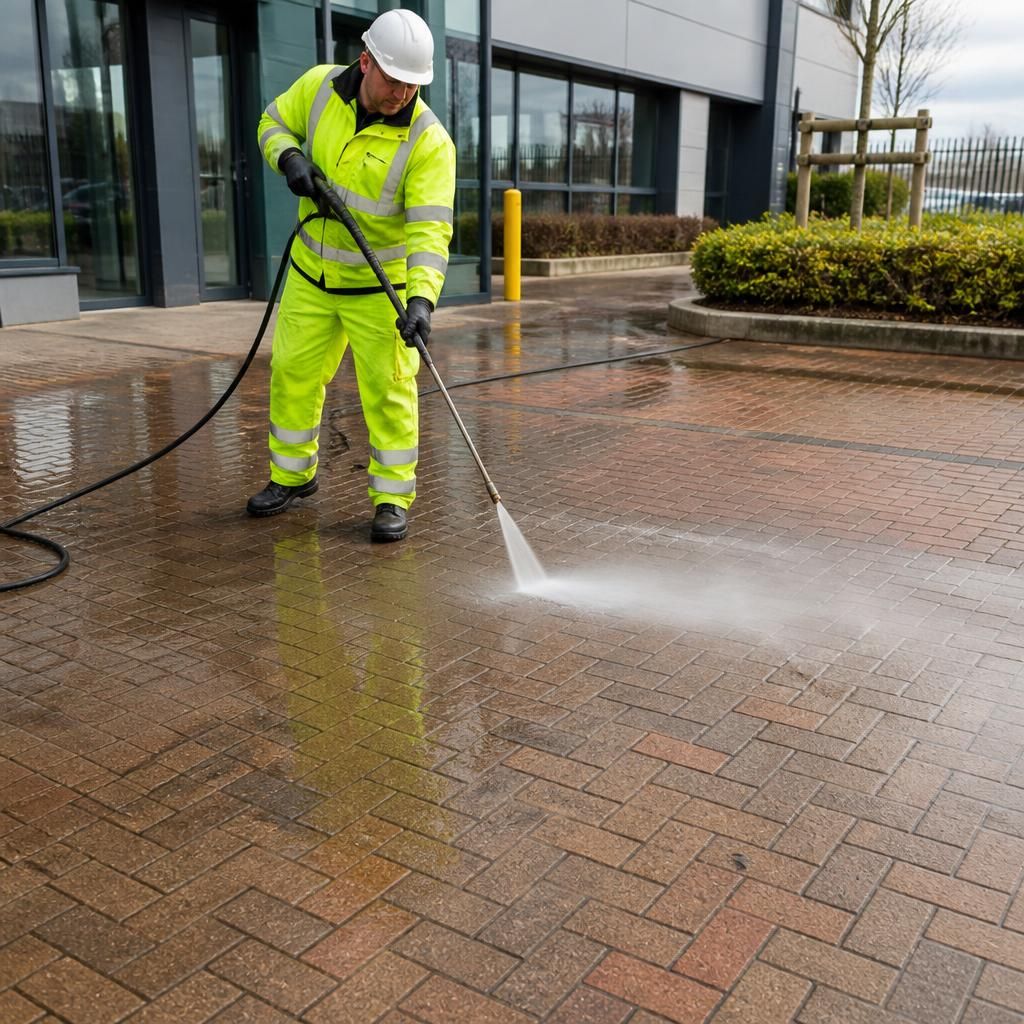
Block paving should generally be professionally pressure washed annually, but the correct interval depends on how quickly the surface accumulates contamination and organic growth. High-traffic entrances, car parks and loading areas may need an inspection or targeted clean between scheduled washes, while sheltered or lightly used paving may remain suitable for longer.
Look for spreading weeds, moss, algae, oil marks, slippery deposits, darkened joints or visible staining rather than relying on the calendar alone. Routine sweeping and prompt removal of spillages can extend the time between pressure washes by stopping soil and contaminants becoming established in the joints.
Cleaning should be carried out with controlled pressure suited to the paving and the condition of its jointing material. Washing too frequently or using excessive pressure can remove jointing sand, disturb loose blocks and worsen existing defects. After cleaning, the surface should be inspected and any displaced jointing material replaced when the paving is fully dry.
Arrange Your Block Paving Pressure Washing Inspection
Arrange an inspection of your block paving to establish the appropriate pressure washing schedule and identify any issues with weeds, staining, drainage or jointing. Encanto Exterior Cleaning can recommend a suitable maintenance plan for your site.