
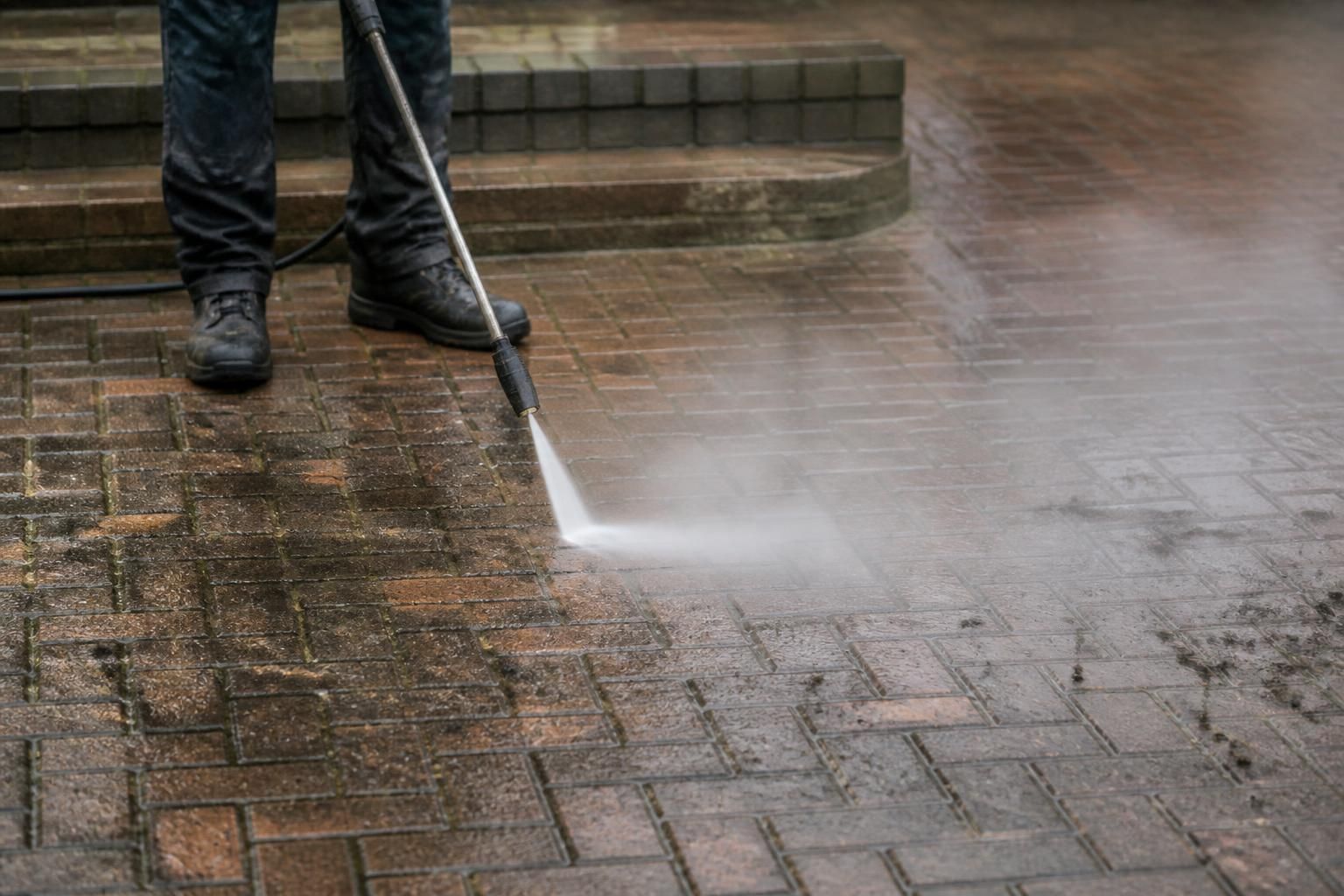
Can pressure washing harm the surface of block paving if not carried out correctly?
Yes. Incorrect pressure washing can erode the surface of block paving, dislodge jointing sand, damage sealants and force water into vulnerable areas, but using suitable pressure, spray distance and cleaning techniques can remove dirt safely while protecting the paving.
Yes. Pressure washing can harm block paving when excessive pressure, an unsuitable nozzle, a spray held too close to the surface or poor drainage control is used. The main risks are removing the jointing sand, eroding the surface of the blocks, damaging sealants and forcing water beneath the paving or towards vulnerable building areas. Used with the correct settings and technique, pressure washing can clean block paving effectively without causing avoidable damage.
How incorrect pressure washing damages block paving
Block paving is made up of individual units with sand-filled joints. The surface may also have a textured or lightly weathered finish, and some paving has been sealed. A concentrated jet can affect each of these elements in different ways:
- Jointing sand can be displaced. A high-pressure jet directed into the joints can wash out the sand that helps lock the blocks together. Empty or shallow joints allow the blocks to move and create spaces where weeds and water can collect.
- The surface can be etched or eroded. Aggressive cleaning may remove the finer surface material, leaving marks, rough patches or an uneven appearance. Older, softer or already weathered blocks are particularly vulnerable.
- Sealants can be stripped or marked. A strong jet, incorrect cleaning solution or uneven passes can break down a sealer, produce patchy areas or expose the paving to staining and moisture.
- Water can be driven into vulnerable areas. Water directed at the edges of paving, walls, door thresholds, drainage channels or damaged joints can enter gaps and contribute to damp-related problems or movement.
- Contamination can be spread. Dirty water and loosened debris may be pushed onto walls, façades, vehicles, landscaping or neighbouring surfaces if run-off is not controlled.
Why pressure alone is not the measure of cleaning quality
Increasing pressure is not always the best way to remove dirt. Oil, organic growth, tyre marks, algae and ingrained grime may need pre-treatment, controlled agitation or a suitable cleaning solution rather than a more powerful jet. Excessive pressure can damage the paving while leaving some stains behind, particularly where contamination has penetrated the surface.
The condition and construction of the paving should be assessed before cleaning. Loose blocks, failing joints, cracks, settlement, previous sealant, surface wear and drainage limitations all affect the safest method. The type of block also matters: concrete, clay and natural stone paving do not respond identically to pressure or cleaning products.
How damage can be mitigated
- Inspect the paving, joints, edges, drainage and surrounding structures before starting.
- Test the proposed method in an inconspicuous area and check the result after the surface has dried.
- Use the lowest effective pressure and a suitable nozzle or surface-cleaning attachment rather than relying on a narrow, concentrated jet.
- Keep the spray moving at a consistent distance and avoid holding it over one spot.
- Work with the layout and fall of the paving so loosened dirt and water are directed towards suitable drainage points.
- Avoid directing water into open joints, cracks, thresholds, vents, wall bases or damaged areas.
- Pre-treat appropriate stains and biological growth where this reduces the need for aggressive pressure.
- Protect adjacent walls, doors, landscaping, vehicles and other vulnerable surfaces from splashback and run-off.
- Inspect the joints after cleaning and allow the area to dry before carrying out any necessary re-sanding or sealing.
Re-sanding should not be treated as an automatic substitute for careful cleaning. If jointing sand has been removed, the joints may need to be cleared, dried and refilled with a suitable material. The paving should then be checked for movement and areas of settlement. Applying sand or sealer over unresolved defects can conceal the problem rather than correct it.
When an alternative method may be more suitable
Pressure washing may not be the right first choice for severely worn, loose, cracked or unstable block paving. It may also be unsuitable where drainage is poor, water could enter a building, or the surface has a delicate finish or failing sealant. In these situations, lower-pressure cleaning, controlled steam cleaning, mechanical brushing, localised treatment or repair work may provide better control. The appropriate method depends on the type of contamination and the paving’s condition, not simply on how dirty it appears.
Warning signs after an incorrectly conducted clean include noticeably lower or missing joint sand, exposed or rough patches, lines or stripes from the cleaning pass, chipped block edges, standing water and blocks that move under foot or vehicle loading. These issues should be addressed promptly because open joints and displaced blocks can deteriorate further through traffic, weed growth and water movement.
For commercial sites, large paved areas and locations next to buildings, cleaning should also include run-off planning and protection of surrounding assets. A controlled process helps maintain the appearance and function of the paving while reducing the risk of damage to façades, access routes, drainage systems and landscaped areas. Professional block paving pressure washing should therefore be based on a site assessment, test cleaning, controlled application and a post-clean inspection rather than maximum pressure.
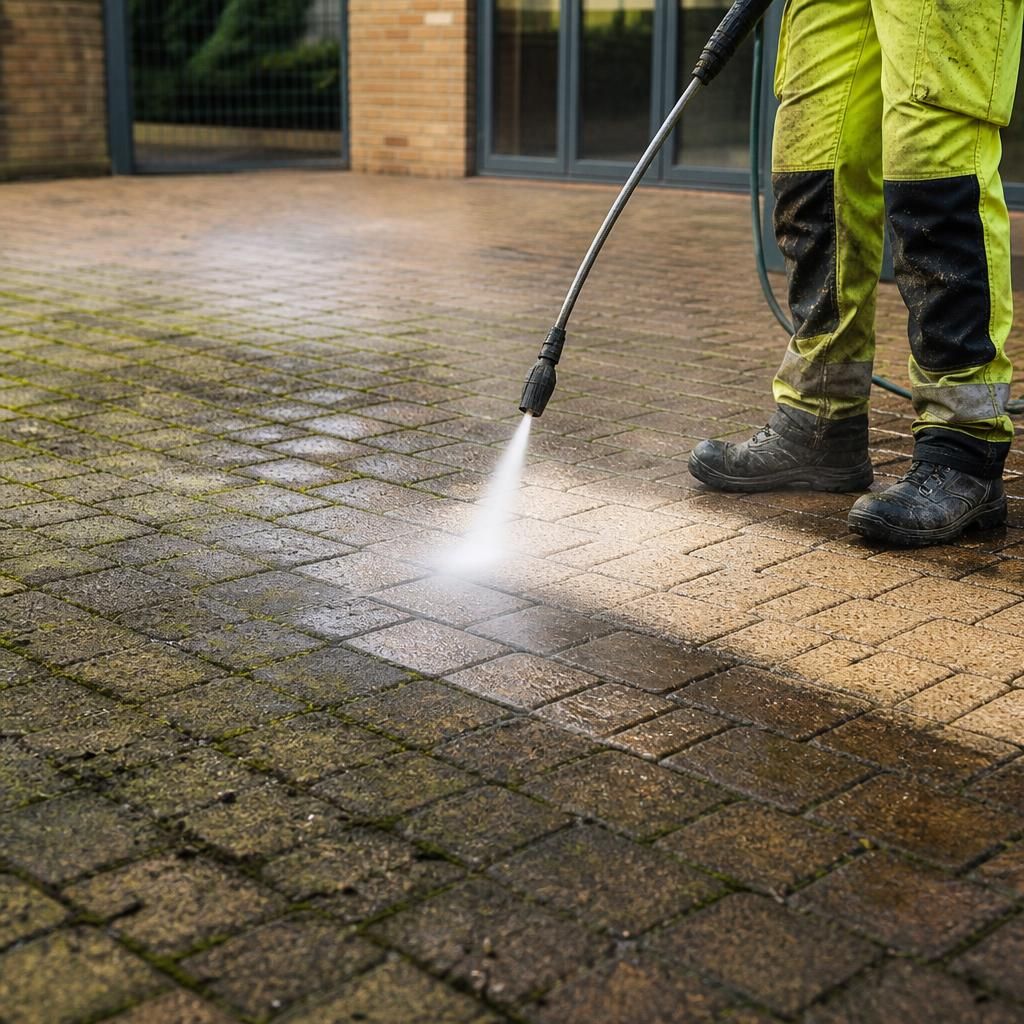
Pressure washing can damage block paving when the jet is too forceful, too close or directed into the joints. A controlled test clean in an inconspicuous area helps confirm that the surface, jointing sand and any sealant can tolerate the proposed method before the full area is treated.
The safest approach is to use the lowest effective pressure, keep the spray moving and choose a suitable nozzle or surface-cleaning attachment. Pre-treating oil, algae and ingrained dirt can reduce the need for aggressive pressure. After cleaning, the paving should be checked for displaced sand, exposed patches, chipped edges and movement before any re-sanding or sealing is considered.