
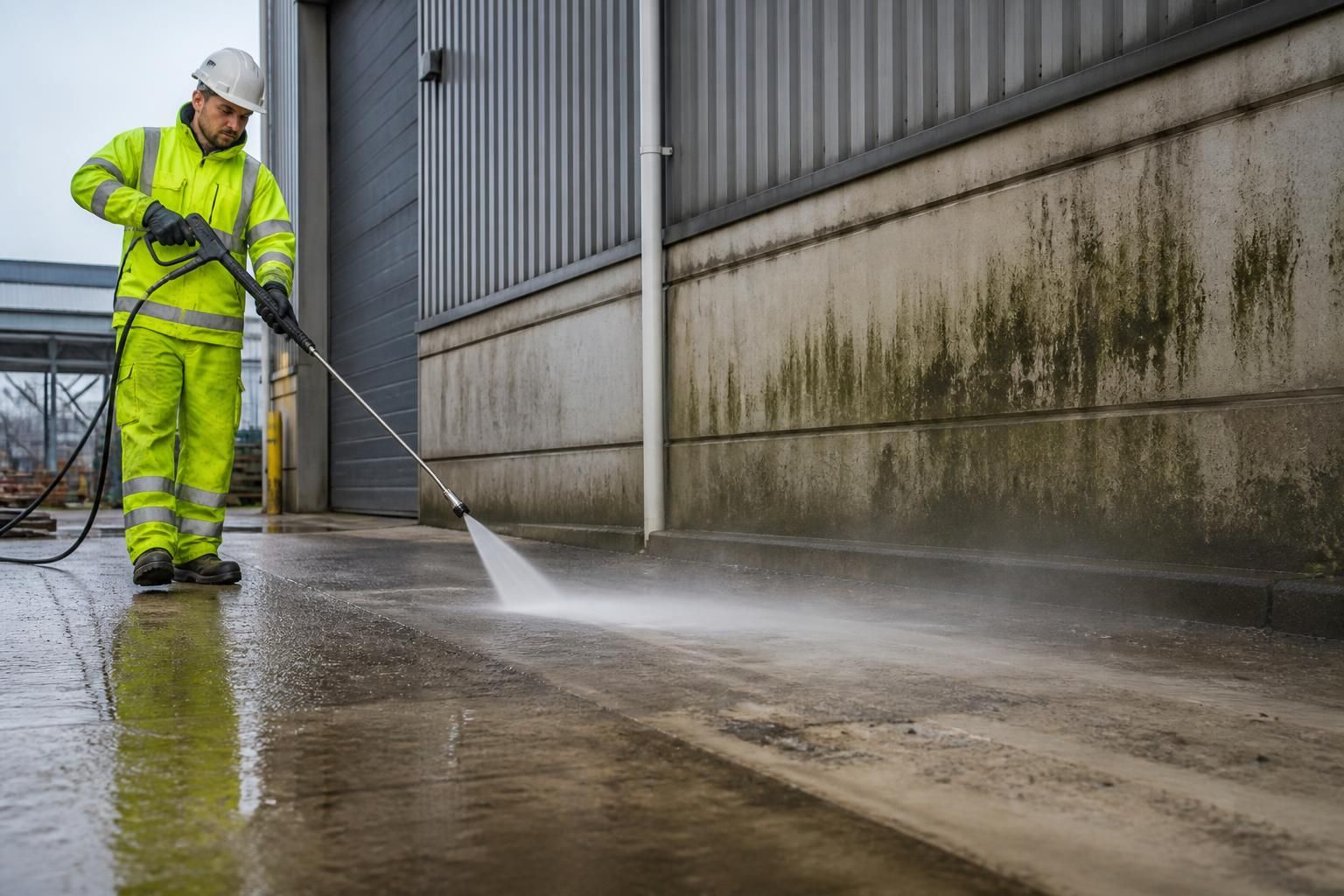
What types of industrial surfaces are best suited for jet washing, and what are the considerations for choosing the appropriate pressure levels and cleaning solutions?
Industrial jet washing is best suited to durable, water-resistant surfaces such as concrete, paving, brickwork, metal cladding and some hard-wearing façades, where it can remove dirt, oil, algae, residue and loose coatings efficiently. The correct pressure, nozzle and cleaning solution depend on the surface’s strength, condition and contamination: use the lowest effective pressure and a compatible, surface-safe detergent to prevent etching, coating damage, water ingress or environmental harm.
Industrial jet washing is best suited to robust, water-resistant surfaces that can tolerate controlled mechanical cleaning, including concrete, block paving, brickwork, stone, metal cladding and some hard-wearing façades. The correct approach depends on the surface, its condition and the contaminant present. Pressure should be set at the lowest effective level, with the nozzle, water temperature, flow rate and cleaning solution selected together to remove soiling without causing surface erosion, coating failure, water ingress or pollution.
Surfaces commonly suited to industrial jet washing
- Concrete: Sound concrete slabs, loading areas, service yards, ramps and car parks generally respond well to jet washing. It can remove traffic film, algae, moss, mud, dust, surface staining and some oil contamination. A controlled technique is important because aggressive cleaning can expose aggregate, mark the surface or worsen existing defects.
- Block paving and concrete paving: Jet washing can remove soil, organic growth, surface debris and joint contamination. Operators should check the stability of the blocks and jointing material first. Excessive pressure can remove sand from joints, disturb damaged areas or drive water beneath adjacent surfaces.
- Brickwork and masonry: Sound, dense engineering brick and some robust masonry may be suitable, but older, soft, porous or weathered brickwork requires a gentler method. High pressure can erode the face of the brick, damage mortar joints and force water into the building fabric.
- Metal cladding and sheet materials: Coated steel and aluminium cladding can often be cleaned with low to moderate pressure and a compatible detergent. The condition of the coating, joints, fixings and seals must be assessed before work begins. Jetting directly into laps, vents, seals or damaged coating can cause water penetration and corrosion risks.
- Industrial floors and hard-standing: Finished concrete, resin-coated areas and other hard-wearing floors may be cleaned effectively when the surface is chemically compatible with the chosen detergent. Resin, painted or anti-slip finishes need particular care, as pressure and chemicals can reduce adhesion or alter the texture.
- Stone and hard façades: Some dense stone surfaces tolerate controlled washing, while softer or historic stone may be better suited to low-pressure steam cleaning or another conservation-led method. The porosity, finish, age and previous repairs should be considered rather than treating all stone as the same material.
Surfaces requiring caution or an alternative method
Jet washing is not automatically appropriate for every exterior surface. Timber, friable masonry, fragile render, painted surfaces, damaged coatings, natural stone with a soft or open structure, insulation-backed systems and areas with exposed electrical components may be harmed by water pressure. Some façades also contain vulnerable joints, vents, membranes or penetrations that cannot safely be saturated.
Roofing materials require a separate assessment. Robust metal roofing may be suitable for controlled cleaning, but old tiles, slate, felt, membranes and fragile roof coatings can crack, lift or lose protective finishes when exposed to jetting. Roof access, fall protection and the direction of water flow must also be addressed. Where the substrate is delicate or contamination is light, soft washing, steam cleaning, brushing or a low-pressure rinse may provide a safer result.
How the appropriate pressure is selected
Pressure is chosen from the condition and resistance of the substrate, not simply from the equipment’s maximum capability. A sound concrete yard may withstand a more forceful treatment than weathered brickwork, coated cladding or a painted façade. The operator should begin conservatively, inspect the result and increase the pressure only when necessary.
- Substrate strength: Dense, stable materials generally tolerate more mechanical action than porous, friable or aged materials.
- Surface condition: Cracks, open joints, loose pointing, spalling, delamination, corrosion and failed sealants increase the risk of damage and water ingress.
- Contaminant type: Loose mud may need little pressure, whereas bonded traffic film, oil or mineral deposits may respond better to heat or detergent rather than increased pressure.
- Distance and angle: Holding the lance too close or directing the jet straight into a joint concentrates the force. A suitable stand-off distance and controlled angle help distribute the cleaning action.
- Nozzle selection: Fan patterns usually provide more even coverage than a concentrated jet. Rotating or specialist nozzles may be effective on robust surfaces but should not be used indiscriminately on coatings, joints or delicate materials.
- Flow rate and temperature: Cleaning performance is affected by the volume and temperature of the water as well as pressure. More pressure is not always the most efficient solution; adequate flow, hot water or a compatible detergent may remove contamination with less mechanical impact.
The equipment’s pressure should be checked at the nozzle rather than assumed from the pump’s stated maximum. Hose length, fittings, nozzle wear and the operating configuration can affect the pressure delivered at the surface. Trained operators should also control their movement speed and overlap so that the finish remains consistent and striping is avoided.
Choosing the right cleaning solution
Cleaning solutions should be selected according to the contaminant and tested for compatibility with the substrate, coating and surrounding materials. A detergent can loosen contamination so that it is removed with lower pressure, but the wrong chemical may stain masonry, dull a coating, attack metal, damage sealants or harm nearby planting.
- Oil, grease and hydrocarbon residue: A suitable degreasing product, often assisted by hot water, may be more effective than increasing pressure. The resulting wash water must be contained and managed appropriately.
- Algae, moss and organic growth: A compatible biocidal or anti-organic-growth treatment may help remove growth and reduce rapid return. It must be used in accordance with the product instructions and kept away from sensitive vegetation and watercourses.
- General dirt and traffic film: A mild, surface-safe detergent is often sufficient, particularly on cladding, façades and painted finishes where aggressive chemicals are unsuitable.
- Mineral deposits and cement residue: Specialist acidic products may be effective on appropriate, acid-resistant surfaces, but they can damage concrete, limestone, some metals, coatings and mortar. They should only be used after a compatibility assessment.
- Graffiti and coatings: The removal product depends on the paint, substrate and protective coating. Solvents or alkaline products can create additional damage if used without testing, and removed material must be prevented from entering drains.
Product labels, safety data sheets and site-specific risk assessments should be followed for dilution, contact time, personal protective equipment, ventilation and rinsing requirements. Cleaning chemicals should never be mixed unless the manufacturer expressly permits it. A surface-safe product still needs controlled application, because prolonged contact or drying on the surface can leave marks.
Testing and preparation before cleaning
A pre-cleaning inspection should identify the substrate, coating system, contamination, drainage routes, vulnerable openings and any signs of structural or surface failure. The area should be checked for loose materials, damaged pointing, failed sealants, exposed wiring, fragile fixtures and materials that may react adversely to water or chemicals.
A small test area should then be cleaned using the proposed pressure, nozzle, distance, temperature and solution. The test should be allowed to dry where necessary so that changes in colour, sheen, texture, coating adhesion or staining can be assessed. Testing is particularly important on aged façades, mixed materials and surfaces with previous repairs, as a successful result on one section does not prove that every area will respond in the same way.
Before full-scale work, suitable protection and controls may include covering sensitive equipment, isolating vulnerable electrical items, securing doors and vents, protecting landscaping, establishing exclusion zones and confirming where wastewater will go. On operational sites, the cleaning sequence should also account for pedestrians, vehicles, deliveries, tenants and any need to keep access routes open.
Water management and environmental considerations
Industrial jet washing can mobilise oil, silt, detergents, paint particles and other contaminants. Wash water should not be allowed to enter surface-water drains, watercourses or unprotected ground where it could cause pollution. Drainage arrangements may include drain covers, temporary bunding, collection, filtration, vacuum recovery or controlled discharge, depending on the contamination and site requirements.
Water use and chemical use should be kept to the level needed for the task. Effective pre-sweeping, suitable nozzles, controlled flow, hot water where appropriate and accurate detergent dosing can improve cleaning without relying on excessive pressure or repeated passes. Wastewater and collected residues should be handled through an appropriate disposal route in line with site procedures and applicable environmental requirements.
Practical selection guide
- Identify the substrate and any applied coating, sealant or protective treatment.
- Establish whether the surface is sound, porous, cracked, loose, corroded or previously damaged.
- Identify the contaminant and decide whether pressure, hot water, detergent, steam or another method is the most suitable removal mechanism.
- Choose a compatible nozzle, flow setting, temperature and cleaning solution.
- Carry out a controlled test clean and inspect the dried result.
- Set up access, exclusion, drainage and wastewater controls before starting the main work.
- Clean systematically at the lowest effective pressure, keeping the lance moving and avoiding vulnerable joints, openings and fixtures.
- Rinse or neutralise the surface as required, inspect the finished area and record any defects that need repair rather than further cleaning.
For most commercial and industrial sites, the safest specification is not the highest-pressure wash available but a method matched to the material and contamination. Durable concrete and paving can generally accept more mechanical cleaning than weathered masonry, coated cladding or delicate façades. Where the surface is uncertain, a test patch and a conservative cleaning method help prevent avoidable damage while still achieving a consistent, professional finish.
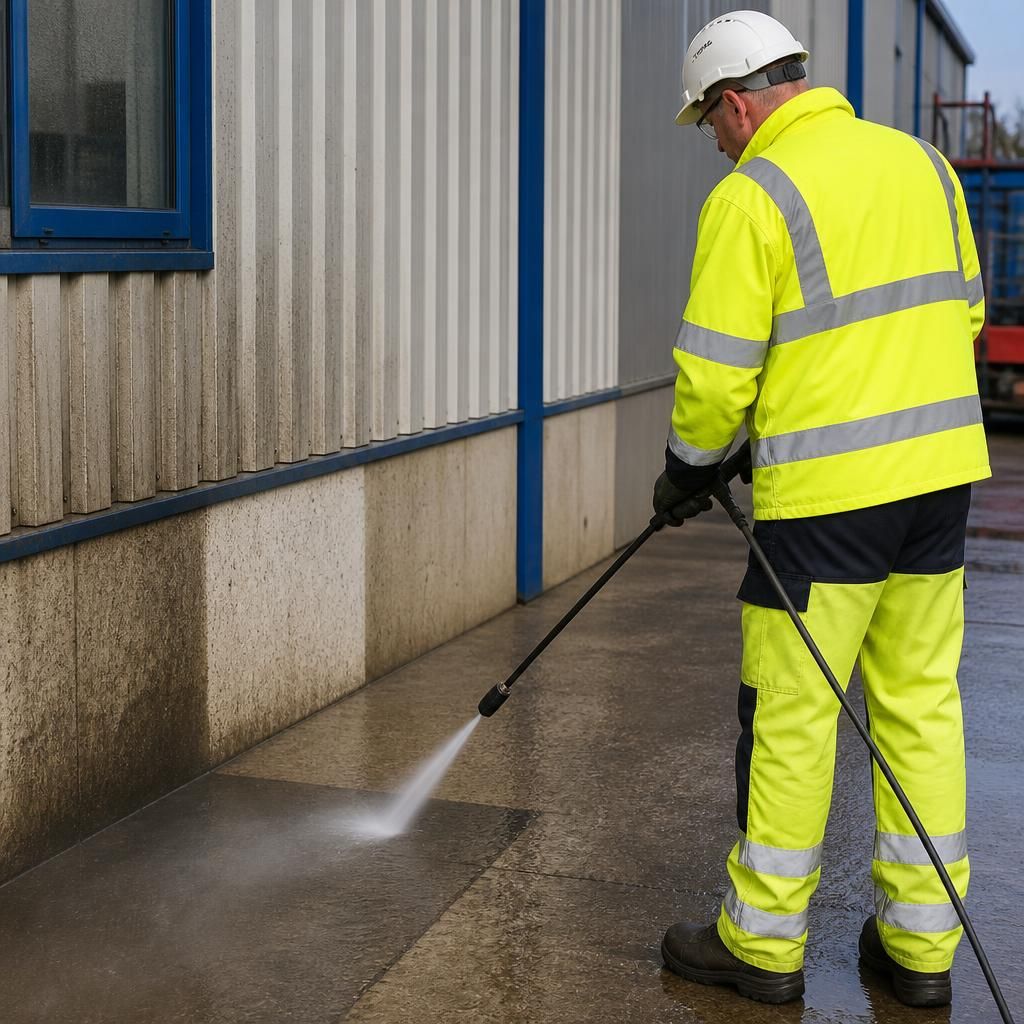
The safest way to choose jet-washing settings is to test the proposed pressure, nozzle, temperature and cleaning solution on a small, inconspicuous area first. This confirms whether the surface can tolerate the treatment without etching, lifting coatings, loosening joints or altering its appearance.
Allow the test area to dry before assessing the finish, particularly on porous masonry, coated cladding and repaired surfaces. If the result is satisfactory, continue at the lowest effective pressure, keeping the lance moving and avoiding direct jetting into seals, vents, cracks and open joints.
Arrange an Industrial Surface Assessment
Arrange an industrial surface assessment with Encanto Exterior Cleaning to confirm the safest pressure, nozzle, temperature and cleaning solution for your site. We can identify vulnerable materials, access requirements and wastewater controls before jet washing begins.