
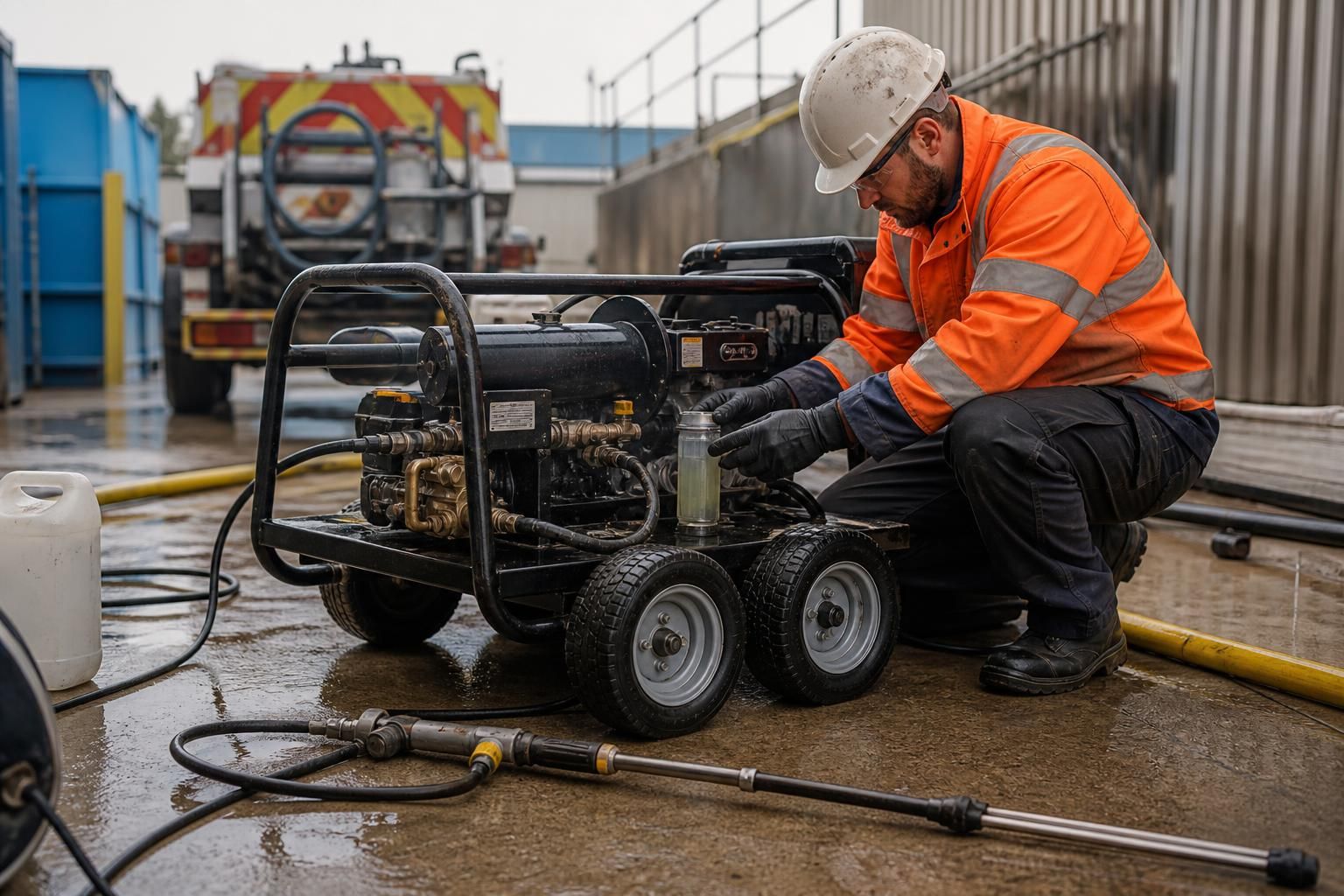
What preventative maintenance is necessary for industrial pressure washing equipment?
Preventative maintenance for industrial pressure washing equipment should include routine inspection and cleaning of the pump, hoses, trigger guns, nozzles, filters, seals, fittings and safety controls, alongside checks of engine fluids or electrical connections. Flush the system after use, replace worn parts promptly, store equipment correctly and follow the manufacturer’s servicing schedule, keeping maintenance records to help prevent breakdowns and unsafe pressure loss.
Preventative maintenance for industrial pressure washing equipment means inspecting, cleaning, testing and servicing the complete system before faults affect performance or safety. The routine should cover the pump, engine or motor, hoses, trigger gun, lance, nozzles, filters, seals, fittings, frame, wheels and safety controls, with worn parts replaced promptly and all work recorded.
Carry out pre-use checks before every shift or cleaning project. Inspect the machine for leaks, loose fasteners, damaged guards, cracked covers and signs of impact or corrosion. Check that the hose, couplings, lance and trigger gun are free from cuts, bulges, distortion and damaged threads. High-pressure hoses must not be repaired with makeshift clamps or tape; remove any hose that shows damage or has exceeded the manufacturer’s service requirements.
- Confirm that the trigger gun returns to the closed position when released.
- Check that the lance and nozzle are securely fitted and suitable for the intended pressure and flow.
- Inspect electrical leads, plugs, isolators and residual-current protection on electric machines.
- Check fuel, engine oil, coolant and battery condition on petrol or diesel equipment, following the manufacturer’s instructions.
- Make sure guards, emergency stops, pressure controls and unloading devices are present and functional.
- Verify that water, detergent and waste connections are secure before starting the equipment.
Clean and flush the system after use. Run clean water through the pump, hose and lance to remove detergent, silt and other contaminants. This is particularly important after cleaning oily surfaces, masonry, façades or areas where aggressive chemicals have been used. Relieve trapped pressure before disconnecting any component, drain water where freezing is possible and wipe down the machine to identify new leaks or damage.
Do not leave detergent or contaminated water standing in the pump. Residue can attack seals, valves and fittings, while sediment can restrict filters and nozzles. Where the equipment is used with chemicals, follow the chemical supplier’s guidance for rinsing, neutralisation and safe disposal. Wastewater must be managed in accordance with the site’s drainage arrangements and environmental requirements.
Maintain the pump and pressure system. Inspect the pump for oil leaks, unusual vibration, knocking, overheating or changes in pressure. Check pump oil level and condition where the pump has an oil-filled crankcase, replacing it at the interval specified by the equipment manufacturer. Pressure loss can result from a blocked inlet filter, restricted water supply, worn seals, damaged valves, a partially blocked nozzle or an unloader problem, so the cause should be diagnosed rather than corrected simply by increasing the pressure setting.
Clean inlet filters and strainers regularly, especially when drawing from tanks or water sources that may contain sediment. Never operate the pump without an adequate water supply or bypass the manufacturer’s inlet protection. Cavitation, caused by insufficient water flow or restricted suction, can damage internal pump components and may produce a distinctive rattling noise or fluctuating pressure.
Inspect nozzles, hoses and fittings for wear. Nozzles gradually erode and can deliver a wider spray pattern and excessive flow, reducing cleaning control and placing additional load on the pump. Compare performance with the manufacturer’s specification and replace nozzles that are worn, blocked or damaged. Use the correct nozzle type and angle for the surface and task; never clear a blockage while the trigger is live, and do not probe a nozzle with an unsuitable object that could damage the orifice.
Check O-rings, gaskets, quick-release couplings and threaded fittings for flattening, cuts or seepage. Replace seals with compatible parts and tighten fittings correctly. Over-tightening can damage threads or seals, while under-tightening can allow leaks and pressure loss. A leaking high-pressure connection must be isolated and depressurised before inspection.
Service the power source according to its type. Combustion engines require checks of engine oil, air filters, fuel filters, cooling systems, spark plugs or glow plugs, belts and fuel lines, as applicable. Keep cooling fins and ventilation areas clear of dust and debris. Diesel and petrol equipment should be operated and stored in well-ventilated areas, with fuel handled and stored in line with site fire procedures.
Electric machines need inspection of cables, plugs, switches, motor ventilation and protective devices. Keep electrical connections dry and do not use equipment with exposed conductors, damaged insulation or evidence of water ingress. Electrical inspection and repair should be completed by a competent person where required by the equipment and site procedures.
Check hot-water systems separately. For machines fitted with a burner or boiler, inspect fuel lines, burner components, ignition systems, thermostats, combustion air paths and exhaust arrangements. Remove soot and scale in accordance with the manufacturer’s service instructions. Temperature controls, pressure relief devices and flame-failure protection must not be bypassed. Boiler and burner servicing should be carried out by an appropriately competent technician, particularly where fuel combustion or statutory inspection requirements apply.
Use a planned maintenance schedule. Daily operator checks should be supported by periodic servicing based on operating hours, water quality, duty cycle and the manufacturer’s recommendations. A suitable programme normally includes:
- Before each use: visual inspection, fluid checks, hose and connection checks, nozzle inspection and safety-control test.
- After each use: pressure release, clean-water flushing, draining, external cleaning and secure storage.
- At planned service intervals: pump oil or lubricant checks, filter replacement, seal and valve inspection, engine or motor servicing, electrical examination and pressure-control testing.
- After intensive or unusual work: a condition check for chemical exposure, abrasive contamination, overheating, impact damage or abnormal pressure behaviour.
The exact interval should come from the equipment manual rather than a generic calendar. Equipment used continuously on construction sites, with hard water or contaminated feed water, may need more frequent attention than a lightly used machine supplied with clean mains water. Record the machine identification, operating hours, checks completed, defects found, parts fitted and the person who carried out the work.
Store equipment correctly. Keep machines upright and protected from rain, dust, unauthorised use and extreme temperatures. Coil hoses without sharp bends, keep lances and nozzles clean, protect electrical components from moisture and prevent fittings from resting in dirt. In cold conditions, drain the water system fully and use only an approved protection method if the manufacturer recommends one. Do not store fuel or chemicals where leaks could contaminate the equipment or surrounding area.
Operators should be trained to recognise pressure fluctuations, leaks, unusual noise, vibration, smoke, overheating, electrical faults and ineffective detergent delivery. Stop the machine and isolate it if any of these conditions occur. Never remove guards, work on the pump or disconnect a pressurised hose. Lockout and isolation procedures are required where maintenance could expose a person to stored hydraulic, electrical, thermal or mechanical energy.
Professional servicing is appropriate when pressure remains unstable after basic checks, the pump is leaking internally, the engine or motor is overheating, safety devices do not operate correctly, or a burner, electrical system or pressure relief component needs repair. Keeping maintenance evidence alongside risk assessments, inspection records and equipment instructions helps demonstrate that the machinery is being managed safely and makes recurring faults easier to identify before they cause an avoidable breakdown.
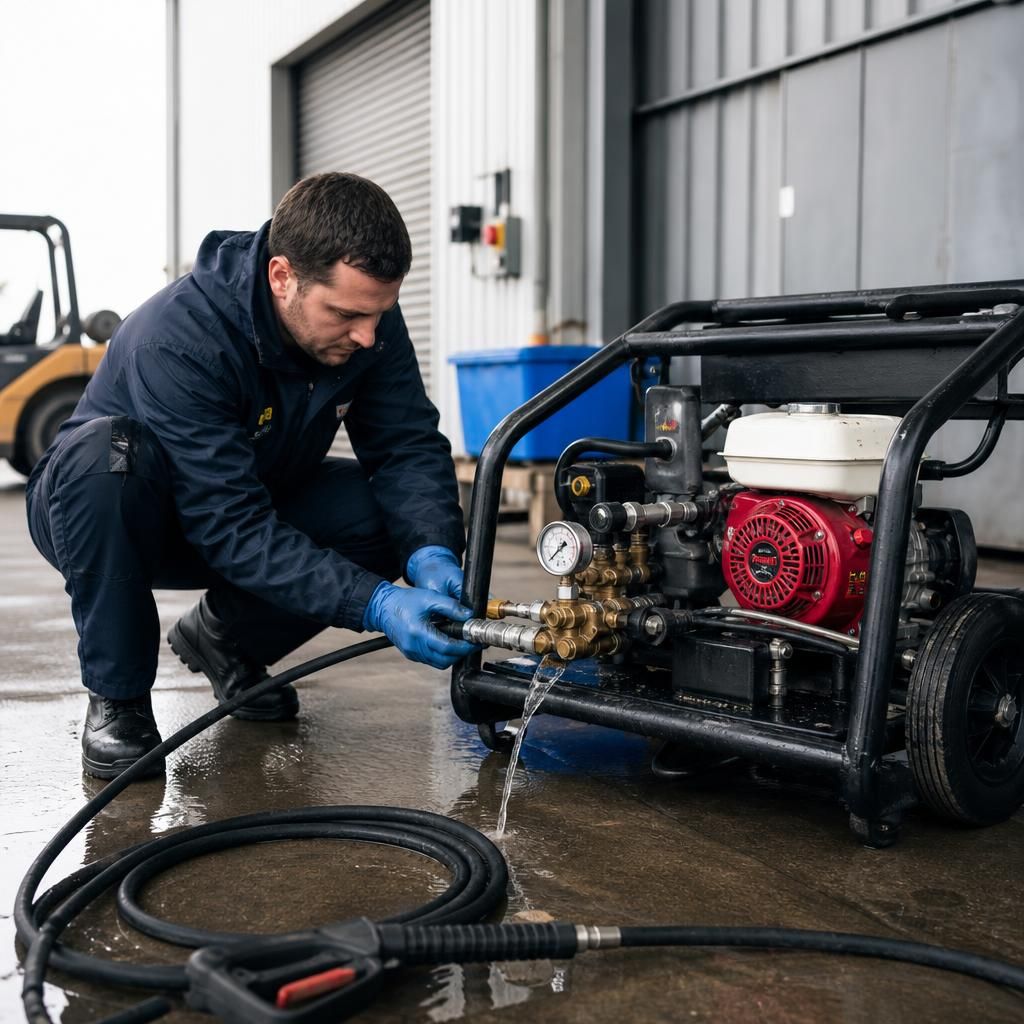
Flushing and correctly storing industrial pressure washing equipment after every use is one of the most effective preventative maintenance measures. Run clean water through the pump, hose, lance and detergent system to remove chemical residue, oil, silt and other contaminants that can restrict flow or damage seals and valves.
Before disconnecting components, release all trapped pressure and inspect for leaks or damage. Drain the system where freezing is possible, coil hoses without sharp bends and store the machine upright in a dry, protected area. Use only manufacturer-approved winterisation products or procedures, as unsuitable fluids can affect pump components and seals.