
What maintenance and upkeep are required for equipment used in industrial jet washing to ensure long-term efficiency and safety?
Industrial jet washing equipment requires scheduled servicing, pre-use inspections and prompt replacement of worn hoses, seals, nozzles, pumps and safety components. Operators should also maintain filters and fuel or electrical systems, check pressure and temperature controls, and keep accurate service records to support reliable performance and safe operation.
Industrial jet washing equipment needs a planned maintenance system combining pre-use checks, routine cleaning, scheduled servicing and prompt replacement of worn parts. Pumps, hoses, trigger guns, lances, nozzles, filters, heating systems, electrical components and safety controls should all be inspected because a small defect can reduce cleaning performance, cause unplanned downtime or create a serious pressure, burn, chemical or electrical hazard.
Use a written maintenance schedule. The schedule should identify each machine, its operating hours, service requirements, responsible person and the checks that must be completed. Manufacturer instructions should take priority, particularly for maximum pressure, water temperature, approved fuels, lubricants, detergents and replacement components. Service records should include inspection dates, faults found, repairs completed, parts replaced and the name of the person carrying out the work. This provides traceability and helps identify recurring faults.
Complete checks before every use. Equipment should be isolated from its power source before detailed inspection, and operators should never use a machine that has a known defect. Before starting, check:
- the frame, wheels, guards and handles for damage, loose fixings or instability;
- the high-pressure hose for cuts, abrasion, bulges, kinks, exposed reinforcement or damaged couplings;
- the trigger gun, lance, safety lock and quick-release connections for secure operation;
- the nozzle for blockage, wear, distortion or an incorrect spray pattern;
- the water inlet hose, strainer and supply connection for leaks or restricted flow;
- the electrical cable, plug, isolator and residual current protection on electrically powered equipment; and
- fuel lines, oil levels, exhaust components and ventilation arrangements on petrol or diesel machines.
Run the equipment only in a controlled area and check for abnormal vibration, pressure fluctuation, overheating, unusual noise, smoke or leakage. If any of these conditions is present, stop the machine, depressurise it and arrange an inspection by a competent person.
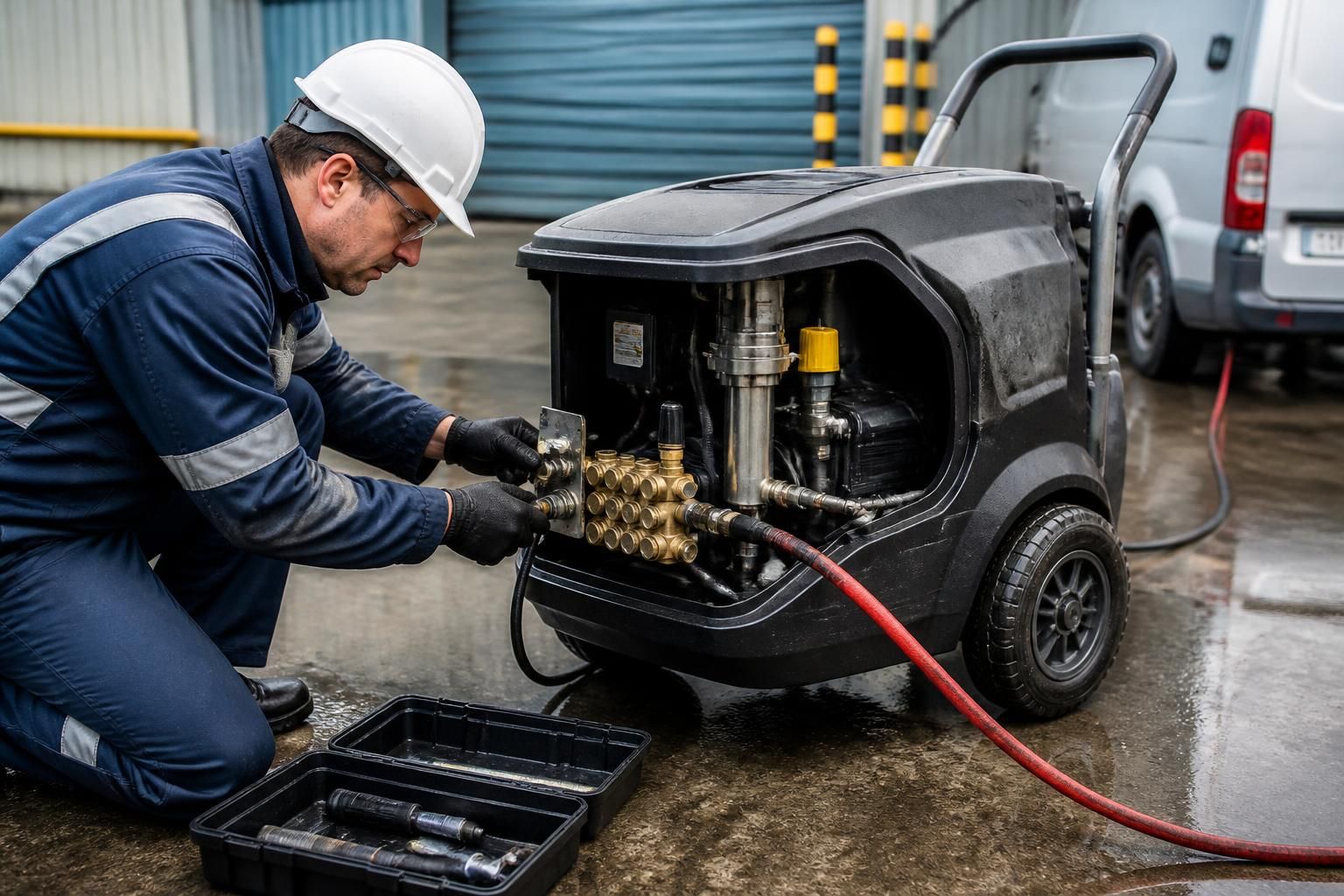
Maintain the pump and pressure system. The pump is central to both cleaning performance and operator safety. Regular servicing may include checking pump oil where applicable, inspecting seals and valves, confirming that pressure is within the specified operating range and testing the unloader or pressure-regulating valve. Operating at a pressure higher than the machine or surface is designed to withstand can accelerate wear and increase the risk of hose or component failure. Pressure should be verified with suitable test equipment when readings appear inconsistent, rather than adjusted by guesswork.
Water starvation can damage a pump quickly. Maintain an adequate, clean water supply and avoid running the machine dry. Inlet filters and strainers should be cleaned at the recommended intervals, particularly when the supply contains sediment. Where equipment is used with a tank, the tank, float valve, feed line and overflow arrangements should also be checked for contamination, blockage and leaks.
Inspect hoses, couplings and accessories closely. High-pressure hoses should be protected from vehicle traffic, sharp edges, excessive heat and unnecessary twisting. They should be coiled without tight bends and stored clean, dry and away from direct sunlight or chemicals that could degrade the cover. Hoses showing significant abrasion, exposed wire braid, damaged end fittings, blistering or other deterioration should be removed from service. Do not repair a high-pressure hose with tape, makeshift clamps or unapproved fittings.
Trigger guns, lances, extensions, rotary cleaners and surface-cleaning attachments need the same attention as the main machine. Check that connections lock correctly, seals are intact and moving parts operate smoothly. Nozzles wear gradually, which can alter the spray pattern and increase water flow or reduce cleaning control. Clean blocked nozzles with the correct tool; never force a wire or other object through an opening in a way that could damage it. Replace nozzles that are worn, damaged or unsuitable for the required pressure and flow.
Service heating and fuel systems on hot-water machines. Hot-water jet washers require additional checks because they combine high pressure with combustion or electrical heating. Inspect the burner, ignition system, fuel lines, filters, electrodes, thermostat, temperature limiter and exhaust route in accordance with the service instructions. Soot, smoke, fuel odour, unstable flame or failure to reach the selected temperature indicates that the machine should be taken out of service until assessed.
Fuel should be stored and handled safely, with spills cleaned up promptly and ignition sources controlled. Combustion equipment must have adequate ventilation and must not be operated where exhaust gases could accumulate. Temperature controls and overheat protection should not be bypassed. Electrical heating systems require inspection of connections, insulation, controls and protective devices by a suitably competent person.
Keep electrical and engine systems in good condition. Electrical equipment should be protected from water ingress beyond its design rating, and cables should be routed to prevent crushing, trip hazards and contact with hot or moving parts. Portable equipment should be inspected and maintained under the organisation’s electrical safety arrangements. Petrol and diesel engines require checks of oil, air filters, fuel filters, cooling arrangements, battery connections and exhaust components. Follow the manufacturer’s servicing requirements rather than relying only on operating hours, as dusty, wet or intensive work can increase maintenance demands.
Clean and protect the equipment after use. After completing work, shut down the machine correctly, turn off the water supply, release trapped pressure and disconnect the power or fuel source as appropriate. Flush detergent and chemical residues from the system using the approved method, clean filters and wipe down controls and fittings. Do not direct a high-pressure jet at electrical panels, bearings, seals or other parts that are not designed for it.
In cold conditions, drain water from pumps, hoses and accessories and use only an approved method of frost protection. Water left in the system can freeze, expand and damage pumps, valves and fittings. Store the machine in a secure, dry, ventilated location, with hoses and lances supported so they do not become kinked or contaminated.
Maintain detergent and chemical systems separately. Chemical injection lines, dosing valves, tanks and strainers should be checked for blockage, leaks and compatibility with the products being used. Labels and safety data should be retained, and containers should be clearly identified. Never mix cleaning chemicals unless the product instructions specifically permit it. Rinse the system when changing products to prevent unwanted reactions, crystallisation or damage to seals.
Test safety controls and provide competent servicing. Emergency stops, trigger locks, pressure relief devices, thermostats, low-water cut-outs and residual current protection must remain functional. They should never be bridged, tied back or adjusted to defeat their purpose. Repairs involving pressure systems, combustion, electrical components or safety devices should be completed by a suitably trained and competent person using compatible parts.
Employers should also consider their duties under the Provision and Use of Work Equipment Regulations (PUWER). Where applicable, lifting or access equipment used to position operators or machinery may require separate inspection and thorough examination arrangements, including those associated with the Lifting Operations and Lifting Equipment Regulations (LOLER). The precise requirements depend on the equipment and how it is used, so the maintenance plan should cover the complete work system, not just the pressure washer.
Review maintenance after faults, changes or demanding work. Equipment used with abrasive water, heavily contaminated surfaces, reclaimed water, long hose runs or frequent hot-water operation may need more frequent inspection. A near miss, burst hose, pressure loss, overheating event or failed safety control should trigger a documented investigation before the equipment returns to service. Keeping accurate records, using a quarantine process for defective items and briefing operators on recurring issues helps maintain both long-term efficiency and safe working practices.
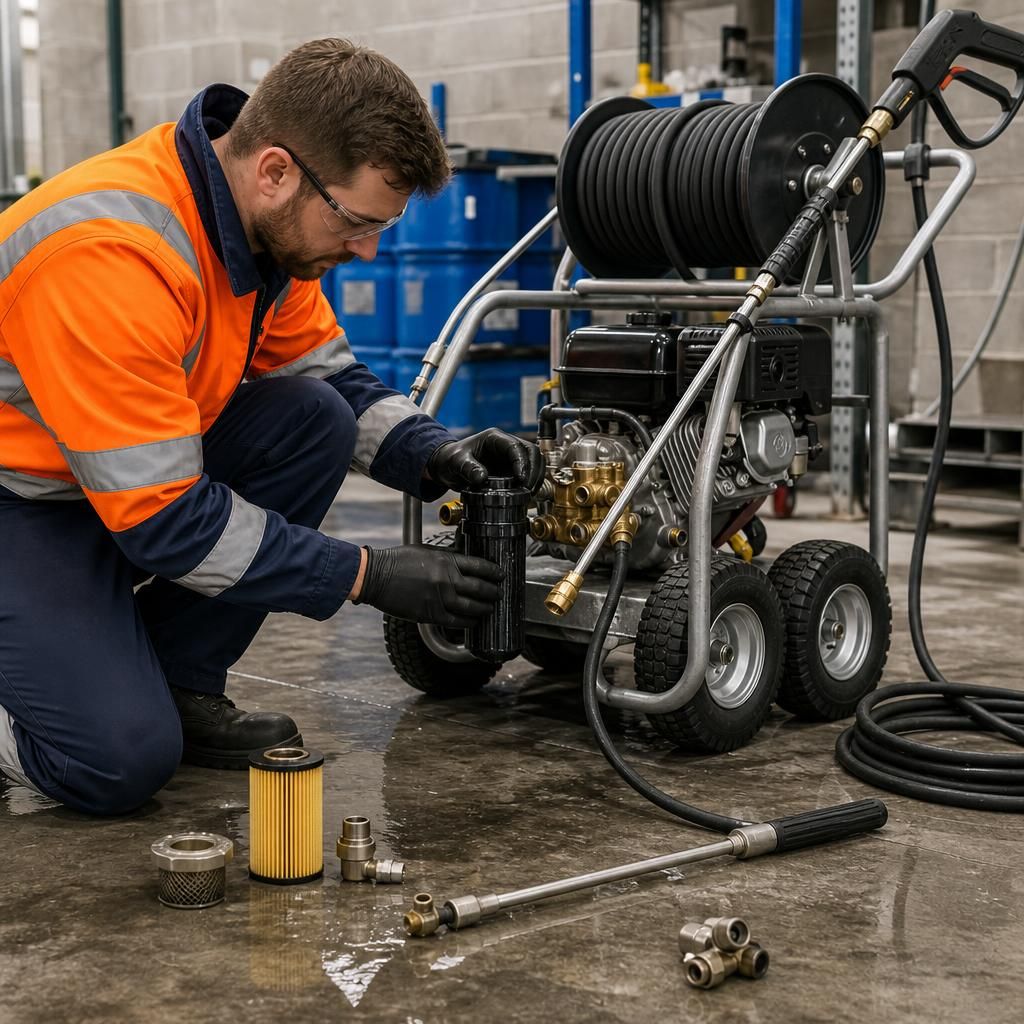
Post-use cleaning and correct storage are essential to maintaining industrial jet washing equipment. After each job, shut the machine down according to the manufacturer’s instructions, isolate the power or fuel supply, release trapped pressure and flush out detergent or chemical residue using the approved method.
- Clean inlet filters, strainers, nozzles and chemical dosing lines to prevent blockages.
- Inspect hoses, couplings, trigger guns and lances for damage before storing them.
- Drain water from pumps, hoses and accessories in cold conditions to prevent frost damage.
- Store hoses without tight bends in a dry, secure and ventilated area away from direct sunlight, chemicals and vehicle traffic.
Record any faults or parts requiring attention and quarantine defective equipment until it has been assessed by a competent person. This simple process prevents minor wear, contamination or freezing from developing into pressure loss, equipment failure or an avoidable safety incident.