
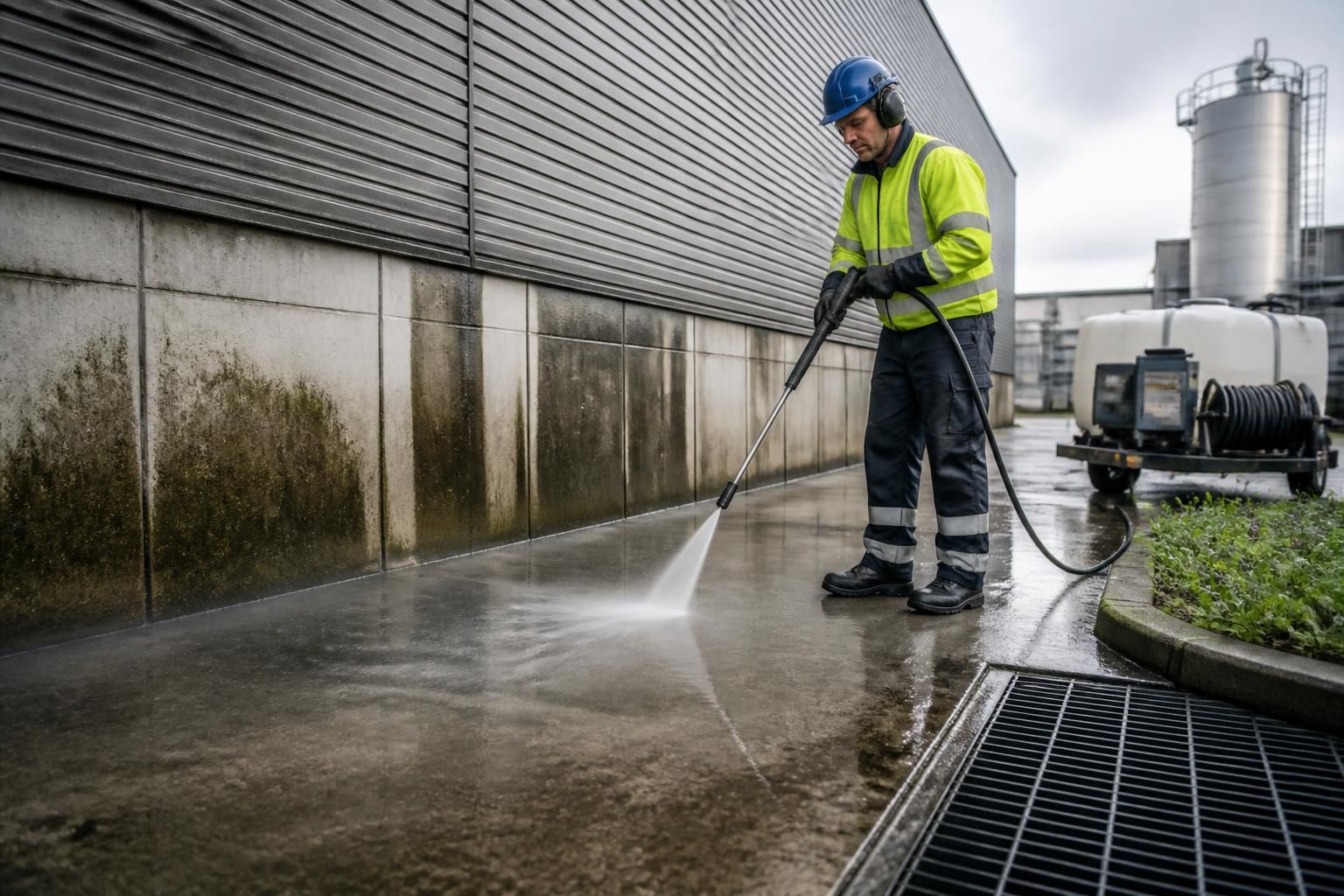
What environmental considerations should be taken into account when using industrial jet washing, and how can sustainable practices be incorporated into the process?
Sustainable industrial jet washing requires careful control of water use, runoff, wastewater, energy consumption and cleaning chemicals to prevent pollution and protect drains, soil and watercourses. Practical measures include using efficient equipment, selecting biodegradable detergents where suitable, containing and treating wastewater, and following relevant UK environmental and waste-disposal requirements.
Sustainable industrial jet washing means removing dirt, coatings, oil, biological growth or construction residue while controlling water consumption, energy use, chemicals, runoff and waste. The objective is not simply to use less water; it is to prevent polluted wash water entering surface-water drains, soil or watercourses, while achieving the required cleaning standard safely and efficiently.
Begin with an environmental risk assessment
Before work starts, the site should be assessed for drainage routes, nearby watercourses, unmade ground, planting, protected areas, fuel storage, oil separators and surfaces that may contain hazardous residues. The cleaning method should reflect the type of contamination. Wash water from a lightly soiled façade presents a different risk from water containing oil, heavy metals, paint residues, biocides or construction dust.
The assessment should identify where water will collect, how it will be contained, whether it can be recovered for treatment and how it will be removed from site. A written method statement should record the proposed equipment, cleaning agents, containment measures, discharge arrangements, emergency controls and waste documentation.
Control water consumption
Industrial cleaning equipment can use substantial volumes of water when operated continuously or at excessive flow rates. Water use can be reduced without compromising the result by:
- Using equipment with an appropriate flow rate and pressure for the surface and contaminant.
- Removing loose dirt by sweeping, scraping or vacuuming before washing.
- Using trigger-controlled lances and switching equipment off during pauses.
- Cleaning in planned sections rather than allowing water to run across the site.
- Using rotary surface cleaners or other attachments that distribute water evenly and reduce overspray.
- Checking hoses, couplings, pumps and seals for leaks before and during the work.
- Using recovered or recycled water where it is suitable for the task and will not transfer contamination.
Higher pressure does not automatically mean a more sustainable process. A suitable combination of pressure, flow, temperature, dwell time and nozzle selection can reduce both water use and the time required on site. Excessive pressure may also damage coatings, joints or substrates, creating additional repair and waste requirements.
Contain and manage runoff
Wash water should be treated as potentially contaminated until its contents have been assessed. It must not be allowed to flow into surface-water drains, open ground or watercourses without an appropriate basis for doing so. Surface-water drainage commonly leads directly to a watercourse, whereas foul drainage may lead to a treatment works; the correct route must be confirmed with the site operator and relevant water company.
Practical containment measures include drain covers, inflatable drain blockers, bunds, temporary barriers, collection mats, wet vacuums, sump systems and sealed tanks. The arrangement should account for the volume of water being used, rainfall, gradients and the possibility of a hose or container failure. On high-level or façade work, additional controls may be needed to prevent spray and falling contaminated water affecting pedestrians, vehicles, neighbouring property or planted areas.
Where discharge to a drain is proposed, written approval or a trade effluent agreement may be required. A discharge should never be assumed to be acceptable because the water appears clear. Local requirements can depend on the contaminant, the drainage system and the receiving environment. If there is any uncertainty, the water should be collected and assessed before disposal.
Use cleaning chemicals selectively
Pressure and hot water should do as much of the cleaning work as the surface allows. Detergents, degreasers, biocides and other treatments should be used only where they are technically necessary and at the lowest effective concentration. Product labels and safety data sheets should be checked for environmental hazards, disposal instructions, dilution requirements and restrictions relating to aquatic life.
Biodegradable or readily degradable products may reduce persistence in the environment, but the term does not mean that a product is harmless or suitable for unrestricted discharge. A biodegradable detergent can still affect aquatic organisms, alter water chemistry or require controlled disposal. Product selection should therefore consider toxicity, surfactants, solvents, phosphates, pH, residues and the intended discharge route.
Chemicals should be measured accurately rather than added by guesswork. Concentrated products should be stored in secure, labelled containers with suitable secondary containment. Spill kits should be available, and operatives should know how to isolate drains and report a spill. Chemicals should never be mixed unless the manufacturer expressly permits it, as incompatible products can produce hazardous reactions or vapours.
Reduce energy use and emissions
Hot-water jet washing can shorten cleaning time and reduce the need for chemicals, particularly when removing grease or oily residues. However, heating water requires energy. The most efficient approach depends on the task, so temperature should be set to the lowest level that provides effective cleaning. Unnecessary idling, repeated passes and poorly maintained burners increase fuel consumption.
Energy and emissions can be controlled by selecting correctly sized equipment, maintaining burners and pumps, preventing leaks, avoiding prolonged engine idling and planning work to minimise transport and repeat visits. Where practical, lower-emission or electrically powered equipment may be appropriate, provided that the available power supply and site conditions are suitable. Equipment should not be selected on fuel type alone; the full process, including water recovery, transport and waste disposal, should be considered.
Prevent pollution from specific contaminants
Oil, fuel, hydraulic fluid, paint, cement residue, metal deposits, algae treatments and other contaminants require different controls. Dry residues should be removed before washing where possible, using sweeping, scraping or industrial vacuuming. Oil-affected water may require an oil separator or specialist treatment, while water containing paint, heavy metals or chemical residues may need collection and disposal as controlled waste.
Cleaning old coatings or industrial structures can mobilise hazardous substances. The substrate and existing coating should be considered before jet washing, particularly where there may be lead-based paint, asbestos-containing materials, chromium compounds or other hazardous residues. If hazardous material is suspected, the work should stop until the material has been assessed and the appropriate specialist controls are in place.
Treat, reuse or dispose of wastewater responsibly
Collected wastewater may be settled, filtered, separated or treated using suitable equipment, depending on the contamination. Solids, sludge, used filters and treatment residues must also be managed; they should not be swept into a drain after the liquid has been removed. Reuse is possible for some preliminary or non-critical cleaning tasks, but recovered water should be checked to ensure it will not spread oil, grit, salts, biological contamination or other pollutants.
Wastewater and contaminated solids should be transferred only through an appropriate, authorised waste route. The producer has a duty to describe waste accurately, use registered or permitted carriers where required, and retain relevant transfer or consignment records. The Environmental Protection Act, Environmental Permitting Regulations, waste duty-of-care requirements and local sewer controls may all be relevant, depending on the work and disposal route. Site-specific advice should be obtained where contamination or discharge conditions are unclear.
Protect the surrounding site
Planting, soil, ponds, watercourses and drainage features should be protected from spray, chemical drift, sediment and hot discharge water. Cleaning should be postponed or adapted during heavy rain, high winds or conditions that could carry contaminated water beyond the containment area. Wildlife and nesting considerations may also affect the timing and method of façade, roof or vegetation cleaning.
Noise, exhaust emissions and disturbance should be considered when selecting equipment and scheduling work. Enclosures, lower-noise equipment and sensible working hours can reduce disruption, particularly at occupied commercial premises, hospitals, schools and mixed-use developments.
Maintain equipment to prevent environmental incidents
Well-maintained pumps, hoses, boilers, fuel systems and recovery equipment operate more efficiently and are less likely to leak or fail. Inspections should cover hose condition, couplings, nozzles, trigger controls, pressure gauges, burner operation, fuel lines, tanks, filters and electrical connections. Recovery and filtration systems should be cleaned and serviced so that they continue to collect solids and pollutants effectively.
Maintenance records should identify defects, repairs, inspections and any equipment taken out of service. A pressure washer that is losing pressure, overheating or using unusually high volumes of water may be both a safety concern and an environmental inefficiency.
Use a controlled site process
- Inspect the surface, drainage and surrounding environment.
- Identify contaminants and select the least intensive effective method.
- Confirm chemical suitability, storage arrangements and disposal requirements.
- Install and test containment before introducing water or chemicals.
- Carry out a small test area to confirm pressure, temperature and chemical concentration.
- Clean in sections while monitoring runoff, containment and water use.
- Recover and treat or store wastewater rather than allowing uncontrolled discharge.
- Inspect the completed area and surrounding drains, ground and structures.
- Remove waste through the agreed route and retain the relevant records.
For ongoing contracts, environmental performance can be reviewed alongside the cleaning result. Useful records include estimated water use, chemical products and quantities, wastewater volumes, disposal documents, spill or near-miss reports, equipment defects and any changes made to the method. This creates an auditable process and helps identify where future work can use less water, energy or chemical treatment without reducing the required standard.
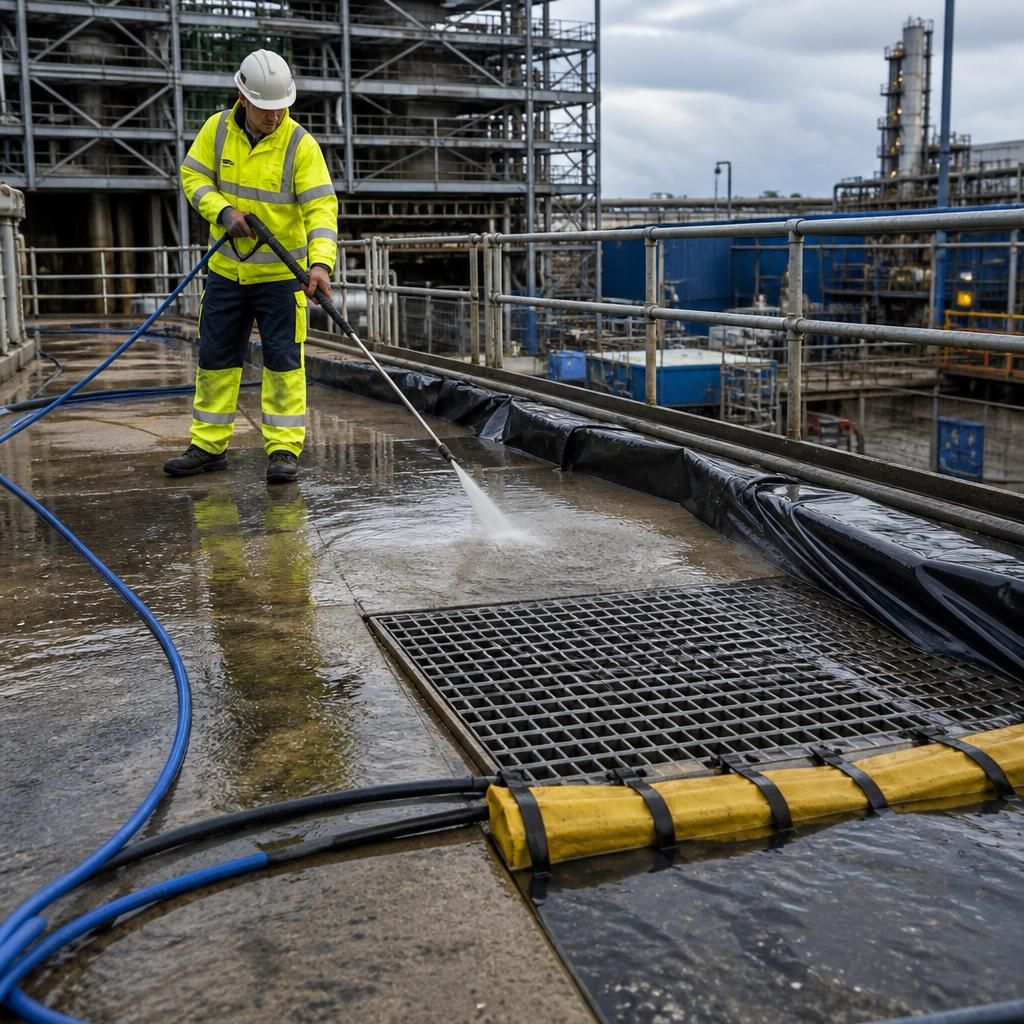
Runoff containment is the controlled collection of wash water so that oils, detergents, sediment, paint residues and other contaminants cannot enter surface-water drains, soil or nearby watercourses. Industrial jet washing should not begin until the drainage route and wastewater arrangements have been confirmed.
Suitable controls may include drain covers, inflatable drain blockers, bunds, collection mats, temporary barriers, wet vacuums and sealed storage tanks. The system must be sized for the expected water volume and checked throughout the work, particularly on sloping surfaces or during façade cleaning where spray can travel beyond the immediate work area.
Collected water should be assessed before disposal. Depending on its contents, it may require settlement, filtration, oil separation, specialist treatment or removal by an authorised waste contractor. Clear-looking water is not automatically safe to discharge, and approval from the site operator, sewerage provider or relevant authority may be needed before any discharge is made.
Plan Sustainable Industrial Jet Washing
Plan sustainable industrial jet washing with a site-specific assessment covering water use, runoff containment, cleaning chemicals, energy consumption and wastewater disposal. Contact Encanto Exterior Cleaning to agree a practical method statement for your site and cleaning requirements.