
What environmental considerations should be taken into account when conducting industrial jet washing?
Industrial jet washing should minimise water and chemical use while preventing contaminated runoff from entering surface-water drains, soil or watercourses. Effective practice includes selecting suitable low-impact detergents, containing and recovering wastewater, disposing of sludge responsibly, and complying with relevant environmental requirements.
Industrial jet washing must control water use, contaminated runoff, cleaning chemicals, waste and disturbance so that the work does not pollute drains, soil, watercourses or surrounding land. Before work begins, the cleaning method should be assessed against the surface, the contaminants present, the drainage arrangements and the applicable environmental requirements. Containment and recovery of wastewater are often as important as the cleaning itself.
Plan the work and identify environmental risks
An effective method statement should identify what is being removed, where wash water could flow, which drains are present and how wastewater will be collected. Oil, grease, fuel residues, heavy metals, cement, paint, biological growth and other deposits can make wash water unsuitable for discharge without treatment or approval. The site assessment should also consider nearby rivers, ponds, groundwater, planted areas, public areas and sensitive habitats.
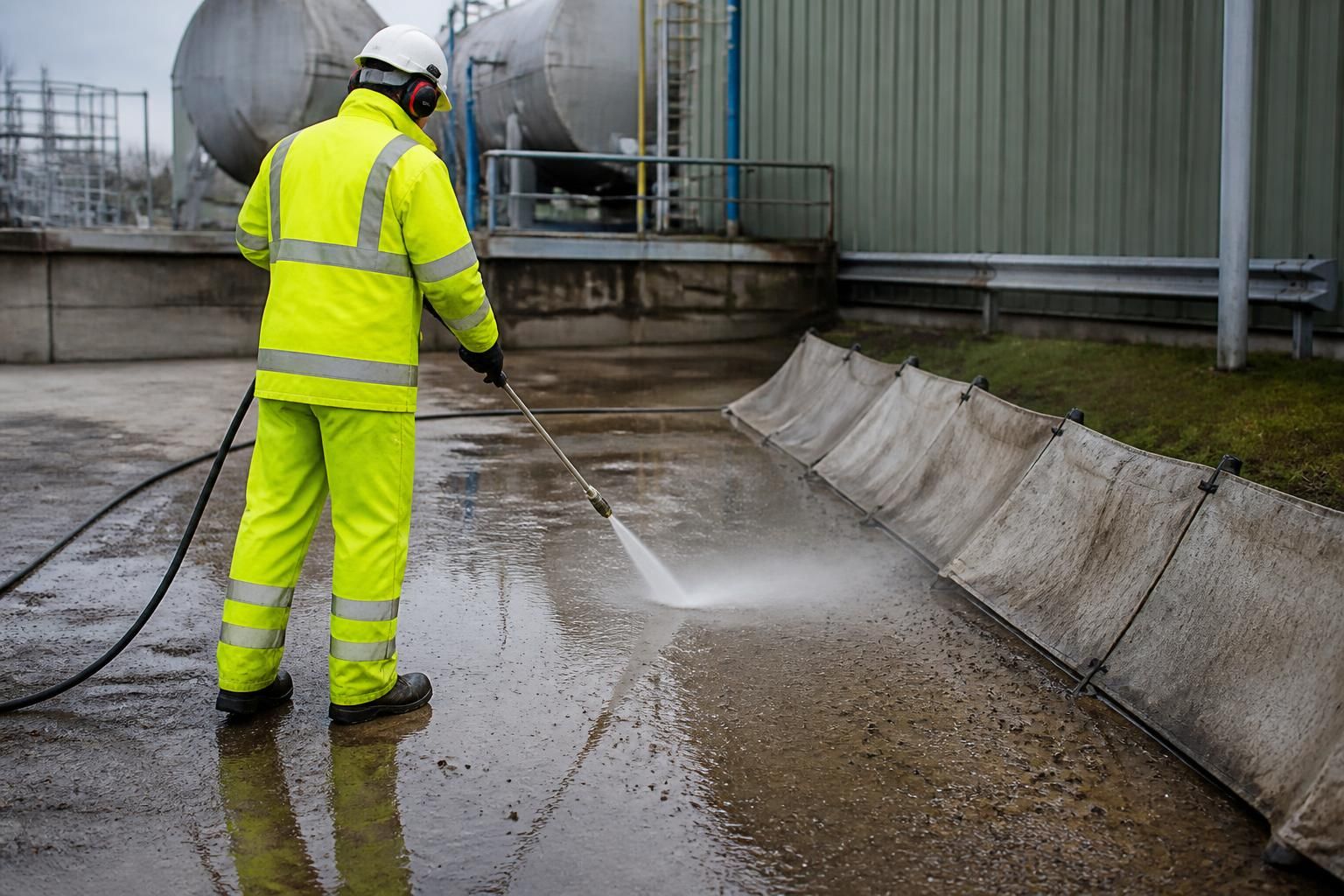
Surface-water drains commonly discharge directly to the environment rather than to a treatment works. They should never be assumed to accept contaminated wash water. Drain covers, drain mats, bunds, temporary barriers and wet vacuums can help prevent pollution, but they must be selected and installed so that water cannot bypass the containment system. Any accidental release should be stopped, contained and reported through the agreed site procedure without delay.
Use water efficiently
Water consumption can be reduced by using the lowest effective flow and pressure for the surface, rather than relying on excessive force. Trigger-controlled equipment, well-maintained nozzles, rotary cleaning heads and recovery vacuums can improve cleaning efficiency and reduce overspray. Dry removal of loose debris before washing also reduces the amount of water and sludge produced.
Water recycling may be suitable for some projects, particularly where large areas or repeated cleaning are involved. Recovered water should be filtered or treated to a standard appropriate for the equipment and task. It must not be reused if contaminants could damage the surface, create a health risk or be redistributed across the site. Equipment should be checked for leaks, and hoses and connections should be secured before work starts.
Control and treat wastewater
Wash water should be directed to a controlled collection point rather than allowed to run across hardstanding or into unprotected drains. Depending on the contaminants, control measures may include drain isolation, bunded areas, settlement tanks, filtration, oil separation or specialist wastewater recovery. Solids should be allowed to settle where appropriate, but settlement alone does not remove every dissolved pollutant or chemical.
Discharge to a foul sewer may require permission from the relevant sewerage provider, particularly where the wastewater contains oil, chemicals, silt or other trade effluent. Discharge to a surface-water drain, watercourse or ground may be prohibited or require regulatory approval. Where consent is not available, wastewater should be collected and transferred by a suitably authorised waste contractor. The site team should retain records of the collection, treatment or disposal route.
Choose chemicals carefully
Cleaning products should be selected according to the contaminant and substrate, using the least hazardous and least persistent option that will achieve the required result. Product instructions and safety data sheets should be reviewed before use, including information on dilution, aquatic toxicity, storage, handling and disposal. Overdosing detergent does not necessarily improve cleaning and increases the environmental burden and the cost of wastewater treatment.
Biodegradable does not automatically mean that a product can be discharged into a drain or watercourse. A biodegradable product may still harm aquatic life, alter pH or contain substances that require controlled disposal. Products containing solvents, strong acids, strong alkalis, biocides or corrosive ingredients need particular care. Chemicals should be stored securely in suitable labelled containers, with spill protection and separation of incompatible substances.
Where biocides are used to remove algae, moss or other biological growth, the application should be targeted and controlled. Overspray should be prevented, and treated residues and rinse water should not be allowed to enter watercourses or planted areas. The product label, safety data sheet and any relevant regulatory requirements should determine how it is applied and disposed of.
Manage sludge, debris and contaminated materials
Collected silt, paint fragments, oil residues, chemical containers, spent filters and contaminated absorbents should be assessed before disposal. The waste classification depends on what the material contains, so it should not be treated as ordinary general waste simply because it has been removed from a hard surface. Hazardous waste requirements may apply where residues contain dangerous substances, heavy metals, oils or certain coatings.
Waste should be kept contained, labelled where necessary and protected from rain so that contaminants cannot leach back into the drainage system. It should be transferred using an appropriate waste carrier and taken to a facility authorised to accept that type of waste. Waste transfer documentation and disposal records provide evidence of responsible handling and help the site owner demonstrate compliance.
Consider the surface and existing coatings
Jet washing can dislodge lead-based paint, anti-corrosion coatings, bituminous materials, concrete fines and other residues. Before cleaning older structures or industrial assets, the condition and likely composition of coatings should be considered. If hazardous coatings are suspected, the work may require additional assessment, containment, specialist removal methods and controlled waste arrangements.
Excessive pressure can also damage coatings, joints, sealants and masonry. Preventing damage is an environmental consideration because it avoids repeat cleaning, premature replacement and unnecessary use of materials. A test area can confirm the appropriate pressure, temperature, nozzle and detergent before full-scale work begins.
Reduce air, noise and disturbance
Industrial jet washing can create spray mist, noise and vibration. Work should be scheduled to reduce disturbance to neighbouring premises and avoid periods when pedestrians, vehicles or sensitive activities are most exposed. Screens or temporary enclosures may be needed where spray could affect people, ventilation intakes, stored goods or nearby vegetation.
High-pressure water can aerosolise contaminants, particularly when cleaning mould, bird fouling, oils or chemical residues. Suitable controls may include low-aerosol equipment, localised extraction, restricted access and appropriate personal protective equipment. The method should be chosen to prevent contaminants being spread through the air or deposited beyond the work area.
Protect wildlife, vegetation and watercourses
Runoff and chemical overspray should be kept away from trees, planted beds, ponds, rivers, streams and drainage ditches. Cleaning should be postponed or adapted during heavy rain, strong winds or conditions that would make containment unreliable. Nesting birds, aquatic life and protected habitats may require additional precautions, particularly when cleaning roofs, façades, bridges or structures close to water.
Where work is carried out near a watercourse or on land with a risk of groundwater pollution, the site-specific environmental controls should be agreed in advance. A spill kit suitable for the substances in use should be readily available, and operatives should know how to use it and who to contact if pollution occurs.
Keep records and verify controls
Environmental controls should be checked throughout the job rather than only at the start. Useful records include the method statement, chemical assessments, water source, drainage inspection, wastewater volumes where measured, waste transfer documentation, equipment checks, discharge permissions and any incident reports. Supervisors should inspect barriers, drain protection, collection points and storage containers during the work and after completion.
For complex or large-scale projects, the environmental plan should be coordinated with the principal contractor, facilities manager or site environmental representative. This confirms who is responsible for drainage isolation, permits, emergency response, waste documentation and final inspection. A properly planned industrial jet washing operation cleans the required surface while keeping water, chemicals and contaminated residues under control from application through to disposal.
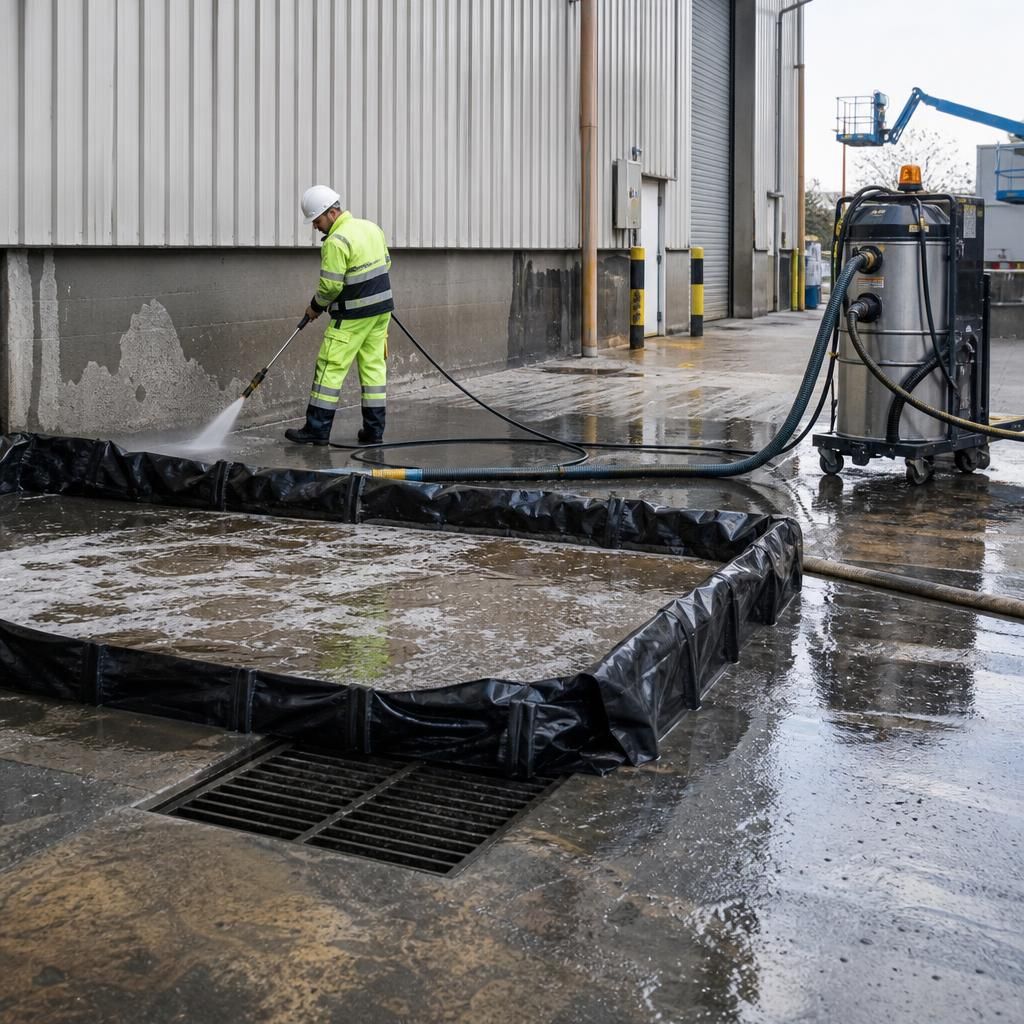
Containing and recovering wastewater is a central environmental control in industrial jet washing. Wash water carrying oil, silt, paint residue, chemicals or heavy metals must not be allowed to enter surface-water drains, soil or nearby watercourses. Drain mats, bunds, temporary barriers and wet vacuums can direct contaminated water to controlled collection points for filtration, treatment or authorised disposal. Any proposed discharge should be agreed with the relevant sewerage provider or site representative before work begins.