
What are the potential cost considerations associated with industrial jet washing, and how can businesses budget effectively for these services?
Industrial jet washing costs depend on the area and surface condition, water and waste requirements, access equipment, operating pressure and temperature, and the time needed to complete the work safely. Businesses can budget effectively by requesting a site-based quotation, allowing for preparation and access costs, and considering a planned maintenance contract rather than treating cleaning as an unplanned expense.
Industrial jet washing costs are determined by more than the size of the area being cleaned. The condition and type of surface, required pressure and water temperature, access arrangements, waste-water controls, preparation, working hours and the level of risk involved can all affect the final price. Businesses can budget accurately by arranging a site-based assessment, requesting a clearly itemised quotation and separating one-off remedial work from planned maintenance.
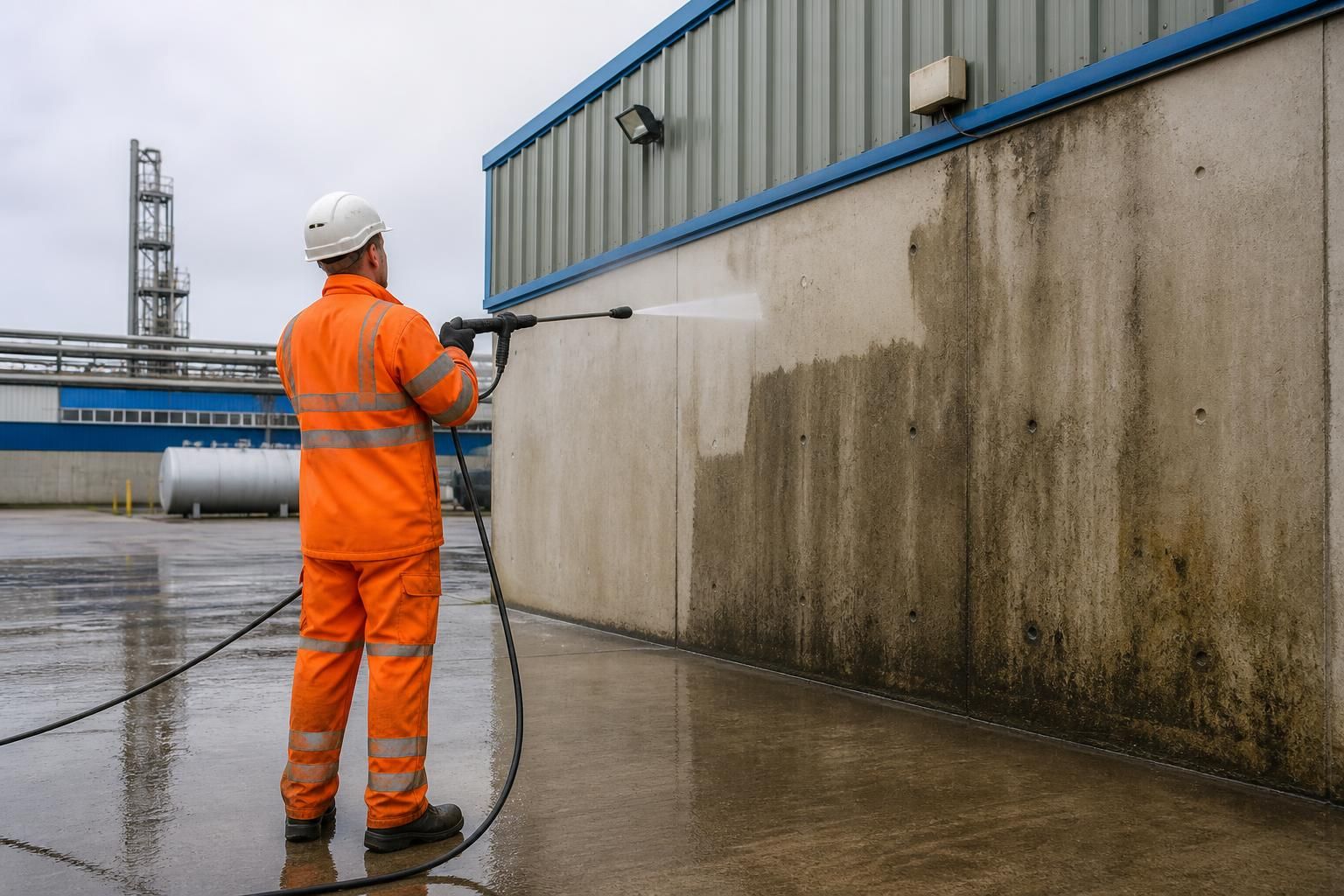
Area and cleaning time are usually important starting points. A large, open hardstanding may be relatively straightforward to clean, while a smaller area with heavy soiling, restricted access or multiple surface types may require considerably more labour. Contractors may price by area, by the time required, or as a fixed project cost. The most suitable method depends on whether the site has consistent surfaces and conditions.
The quotation should account for the level of soiling. Oil, grease, algae, moss, embedded dirt, cement residue, rust staining and chewing gum may need additional treatment, agitation, hot water or repeated passes. Long-standing contamination can take longer to remove and may require a separate stain-treatment process. Where contamination is hazardous or potentially polluting, the work may also require specialist handling and controlled disposal.
Surface type and condition affect both the technique and the time involved. Concrete, tarmac, brick, stone, metal cladding, rendered façades and coated surfaces have different pressure tolerances and cleaning requirements. Damaged joints, loose coatings, cracked concrete or degraded pointing may need to be recorded before work begins. A responsible contractor should identify areas where aggressive cleaning could cause further damage and recommend a lower-pressure method, steam cleaning or a suitable chemical treatment where appropriate.
Equipment and operating requirements are another cost consideration. Standard cold-water pressure washing may be suitable for general dirt, whereas hot-water jet washing can improve the removal of oil and grease but involves additional fuel and equipment requirements. Higher pressures, specialist lances, surface cleaners, vacuum recovery systems and water-fed equipment may be needed for particular tasks. Equipment should be selected for the surface and contamination rather than simply using the highest available pressure.
Access can materially change the budget. Ground-level areas with clear vehicle access are generally simpler to service than façades, roofs, elevated platforms, atria or restricted service yards. Depending on the site, the work may require mobile elevating work platforms, scaffolding, specialist access systems, edge protection, traffic management or a dedicated water supply. Access equipment may be charged separately or included within the project price, so this should be confirmed before approval.
High-level and complex work also involves additional planning. A method statement, risk assessment, permit arrangements, exclusion zones, rescue planning and suitably trained operatives may be required. These are necessary controls rather than optional extras, and their cost should be considered when comparing a specialist quotation with a basic cleaning estimate.
Water, drainage and waste-water management should be discussed at the quotation stage. The site may provide an appropriate water supply, or the contractor may need to bring tanks and manage water usage. Run-off containing oil, detergents, silt, paint or other contaminants must not be allowed to enter surface-water drains without suitable controls. Bunding, drain covers, wet vacuums, water recovery, filtration, settlement or licensed disposal may be required. The cost will depend on the type and volume of waste and the disposal route available.
Cleaning products can also affect the price. Some surfaces need a specialist detergent, biocide, degreaser or stain remover, followed by controlled rinsing. Product selection should take account of the surface, nearby landscaping, drainage, occupants and environmental requirements. A low-cost quotation that excludes chemical application, rinsing or waste-water controls may not represent the full cost of completing the work compliantly.
Site preparation and operational disruption can add to the overall budget. Items may need to be moved, vehicles relocated, loading bays closed or pedestrian routes diverted. Work in occupied premises may need to take place outside normal operating hours, at weekends or in phased sections. Out-of-hours working, additional supervision and traffic or pedestrian management should be identified in advance rather than treated as unexpected variations.
Businesses should also check whether the quotation includes mobilisation, transport, fuel, equipment setup, permits, insurance, documentation and reinstatement. If the work is part of a construction or refurbishment project, coordination with other contractors may be necessary. Delays caused by unavailable access, weather, parked vehicles or incomplete site preparation can affect the programme and may generate additional costs under the agreed terms.
To budget effectively, start with a site survey rather than relying on a remote estimate. Provide details of the surfaces, approximate areas, contamination, access restrictions, working-hour requirements, drainage arrangements and any known hazards. Photographs and drawings can assist with initial planning, but they do not always reveal surface deterioration, height, water availability or the practical route for equipment. A site inspection allows the cleaning method and project duration to be assessed more reliably.
Ask for an itemised quotation that distinguishes between:
- Labour, equipment and mobilisation;
- Cleaning of each surface or site area;
- Hot-water use, detergents and specialist treatments;
- Access equipment, traffic management and out-of-hours working;
- Water supply, recovery and waste disposal;
- Preparation, protection and post-cleaning inspection; and
- Any exclusions, assumptions, potential variations and applicable VAT.
This makes it easier to compare quotations on a like-for-like basis. Businesses should be cautious of comparing only the headline price when one quotation includes waste-water recovery, access controls and documentation while another assumes that the client will provide them.
Planned maintenance can make expenditure more predictable. A recurring cleaning schedule may prevent heavy contamination from becoming established and can reduce the need for intensive remedial work. The appropriate frequency depends on the site environment, surface, usage, nearby vegetation, traffic levels and the standard required by the occupier or asset owner. A maintenance agreement should define the areas covered, visit frequency, cleaning method, reporting arrangements and the process for approving additional work.
For financial planning, separate the expected annual maintenance cost from an allowance for irregular work. For example, a planned programme may cover routine façade, loading-area or car-park cleaning, while a separate allowance can cover graffiti removal, spill response, storm-related soiling, access repairs or unexpected surface treatment. This approach avoids treating every cleaning requirement as an emergency purchase.
It is also useful to consider the cost of postponing cleaning. Accumulated oil can create slip risks, organic growth can retain moisture against surfaces, and neglected façades or roofs may require more intensive treatment. Regular inspection and cleaning can help identify damaged coatings, failed joints, blocked drainage and other defects early, although cleaning should not be presented as a substitute for repair or planned asset maintenance.
Before work begins, agree the scope, measurable completion standard and inspection process. Clarify whether the aim is the removal of visible dirt, reduction of organic growth, removal of a particular stain or preparation for painting and repair. Some staining may be permanent or may have penetrated the substrate, so a contractor should explain realistic results and recommend a test area where there is a risk of damage or uncertain outcome.
A practical budget should therefore include the quoted cleaning cost, access and site-management requirements, water and waste controls, any specialist treatment, potential out-of-hours charges and a reasonable allowance for unforeseen conditions identified during preparation. Once the work is complete, retain the quotation, method statement, inspection record and before-and-after photographs. These records support facilities management, future tendering and more accurate estimates for subsequent cleaning cycles.
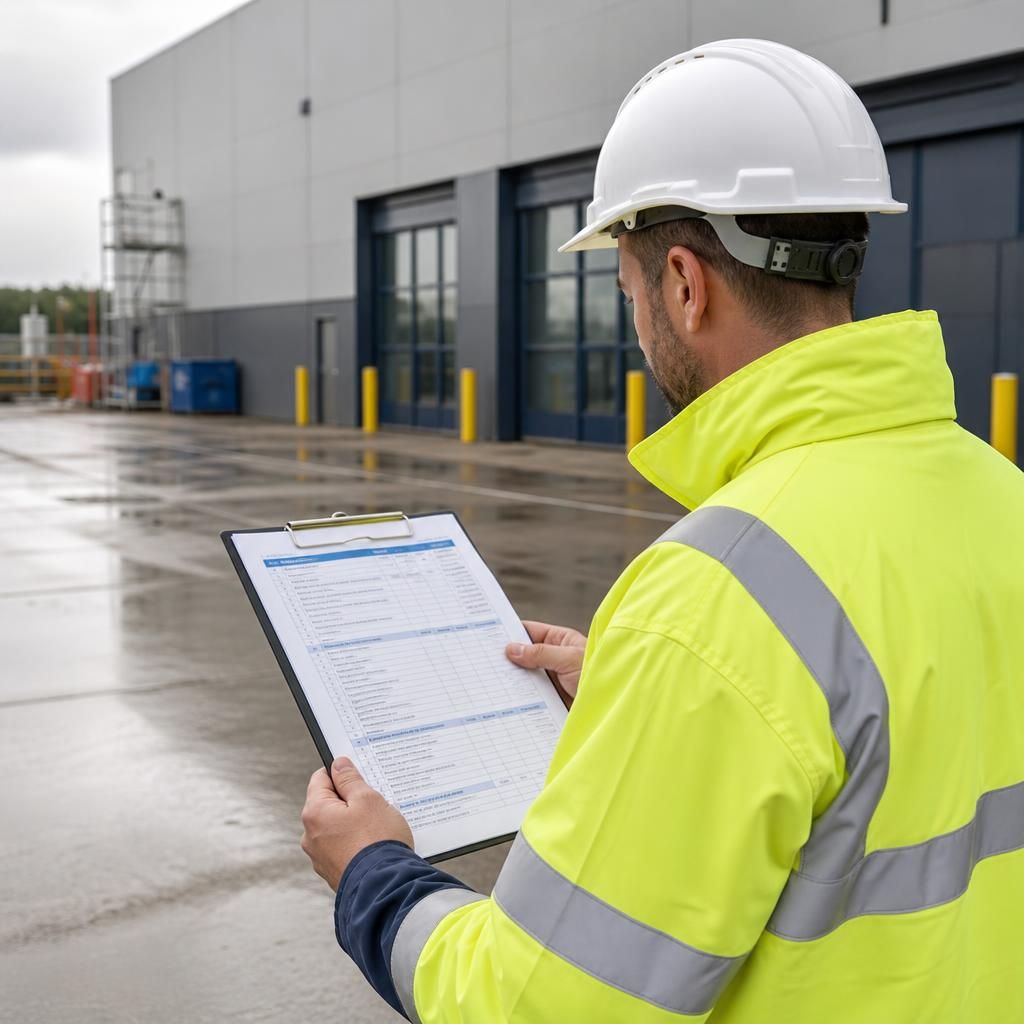
An itemised, site-based quotation is one of the most effective ways to control industrial jet washing costs. It should show which areas and surfaces are included, the proposed cleaning method, labour, equipment, access arrangements, water use, waste-water controls and any specialist treatments.
When reviewing a quotation, check whether the price includes mobilisation, traffic management, out-of-hours working, detergents, recovery and disposal of contaminated water, post-cleaning inspection and applicable VAT. Ask the contractor to state all assumptions and exclusions, including requirements for client-provided water, clear access or moving vehicles. This allows businesses to compare quotations on a like-for-like basis and reduces the risk of unexpected variations during the work.
For ongoing budgeting, separate the agreed planned maintenance cost from an allowance for irregular requirements such as graffiti removal, oil-spill treatment, storm-related soiling or additional access equipment. Keeping these costs distinct makes annual expenditure easier to forecast while preserving flexibility for site conditions that cannot be confirmed until preparation or cleaning begins.