
What are the benefits of using hot water in industrial jet washing?
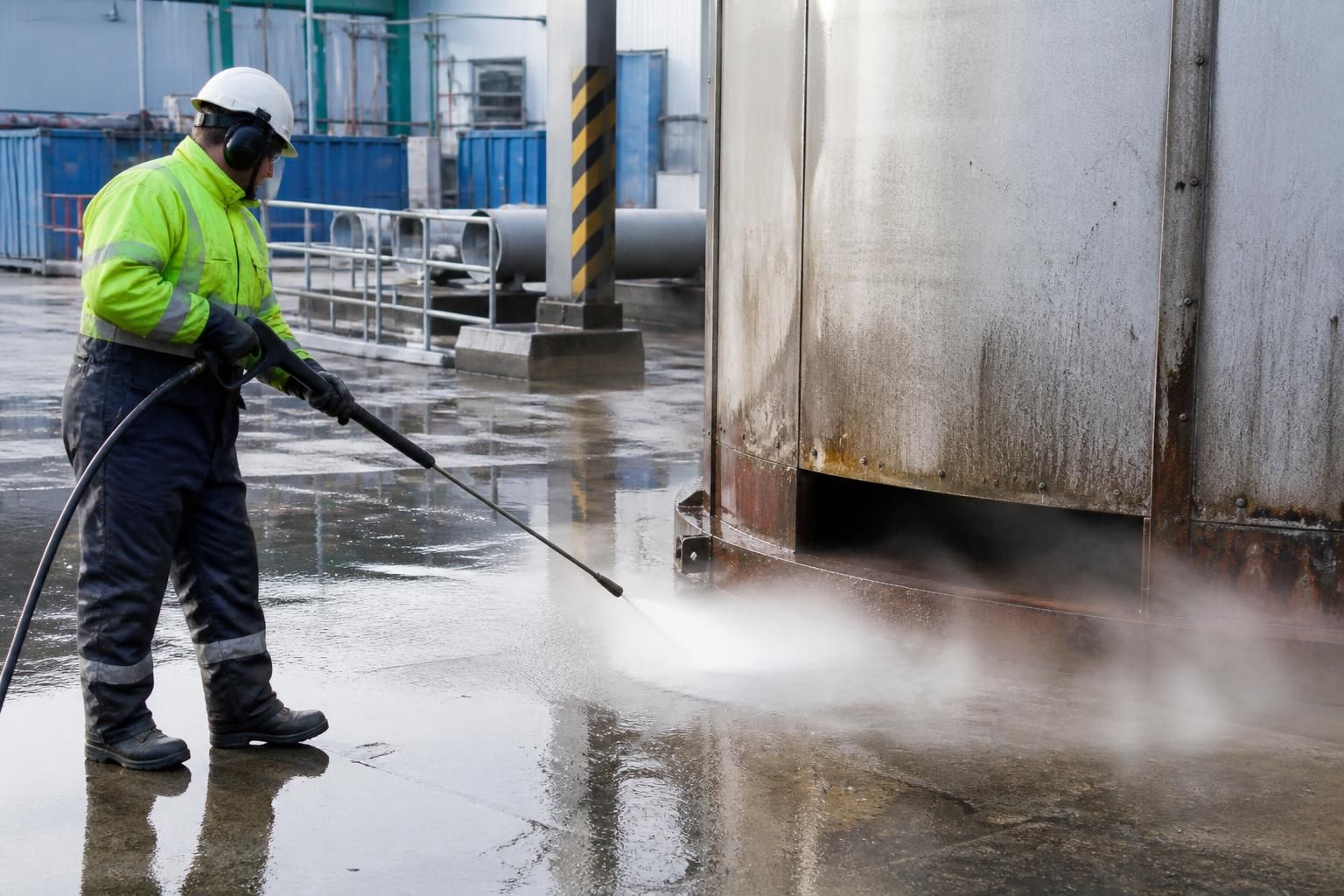
Hot water improves industrial jet washing by softening grease, oil, food residue and other stubborn contaminants, allowing them to be removed more quickly and thoroughly than with cold water alone. It can also support improved hygiene and reduce the need for aggressive detergents, provided the temperature and pressure are selected safely for the surface and site.
Hot water makes industrial jet washing more effective by softening and loosening grease, oil, fats, food residue, traffic film and other temperature-sensitive contaminants. The heat helps the water and cleaning solution penetrate soiling more quickly, allowing it to be removed with less reliance on very high pressure or aggressive chemicals. This can improve cleaning quality, productivity and hygiene when the temperature, pressure and method are matched to the surface and the site conditions.
More effective removal of oils and grease
Cold water can dislodge loose dirt, dust and some surface deposits, but it is less effective against contaminants that become softer when heated. Hot water reduces the viscosity of oils and fats, helping them flow away from concrete, metal, loading bays, plant areas and other hard surfaces. It is particularly useful for removing:
- Hydraulic oil, lubricants and fuel residues around machinery and vehicle areas
- Grease and fat deposits in food production, catering and waste-handling environments
- Traffic film and road grime from car parks, yards and access roads
- Adhesive residues, waxes and some process-related deposits
- Organic residues that have hardened or become embedded in textured surfaces
Heating the contamination as well as the water can help break the bond between the residue and the substrate. The jet can then flush the loosened material away more efficiently, rather than simply spreading it across the surface.
Shorter cleaning times and improved productivity
Because hot water accelerates the breakdown of many stubborn deposits, operators may need fewer passes to achieve the required result. This can be valuable on commercial and industrial sites where access restrictions, production schedules, traffic management or public use limit the available cleaning window.
Faster removal does not mean that every job should be carried out at the highest possible temperature or pressure. A competent operator will assess the contamination, surface, drainage arrangements and surrounding activities before selecting the equipment settings. The practical benefit is a more controlled cleaning process, with less time spent repeatedly treating the same area.
Less reliance on strong detergents
Heat can increase the cleaning action of water and may reduce the quantity or strength of detergent needed for certain types of contamination. This is not the same as eliminating chemicals from every job. Detergents may still be necessary for emulsifying oils, treating biological growth or meeting a particular hygiene specification.
Where cleaning products are used, hot water can help them work more quickly and rinse from the surface more effectively. The product must be suitable for the material being cleaned, and the resulting wastewater must be managed in accordance with site procedures and environmental requirements. Oils, chemicals and contaminated wash water must not be allowed to enter surface-water drains without appropriate controls.
Improved hygiene and removal of organic residues
Hot water assists with removing food fats, grease, protein-based residues and other organic matter that can support unpleasant odours or microbial contamination. This makes it useful in areas such as food-related premises, waste compounds, service yards, industrial kitchens and facilities where cleanliness is closely linked to hygiene management.
Hot water cleaning should not automatically be described as sterilisation or disinfection. Temperature, contact time, detergent selection, rinsing and the required hygiene standard all affect the outcome. Where a site has a formal hygiene or infection-control procedure, jet washing should form part of that procedure rather than being treated as a substitute for an approved disinfection process.
Better results on heavily used external surfaces
Industrial sites commonly accumulate several types of soiling at once. A vehicle yard may have oil, rubber residue, mud and road film, while a service area may have grease, organic matter and ingrained dirt. Hot water is useful in these circumstances because it tackles the greasy component while the water flow and pressure remove the looser material.
It can be applied to suitable concrete, block paving, brickwork, metalwork, plant areas, cladding and other hard external surfaces following an assessment. Porous or weathered materials require particular care because heat, pressure and cleaning chemicals can affect coatings, joints, sealants and surface finishes. Test cleaning in an inconspicuous area is a sensible control where the substrate or coating is uncertain.
Reduced need for excessive pressure
Using more pressure is not always the safest or most effective response to stubborn dirt. Excessive pressure can damage pointing, coatings, fragile concrete, jointing materials, signage and surface finishes. Hot water can provide additional cleaning power, allowing the operator to achieve the required result with a more suitable pressure setting.
This is especially important when cleaning around doors, vents, electrical equipment, façade details and drainage components. The correct approach combines heat, pressure, flow rate, nozzle selection, distance and cleaning time. These factors should be adjusted together rather than increasing pressure alone.
Potential operational and environmental advantages
A quicker, more targeted cleaning process can reduce equipment running time and the amount of water or detergent used on some applications. The actual environmental benefit depends on the equipment, the contamination and how wash water is contained and disposed of. Hot water is not automatically the more sustainable option: heating it requires energy, and poor wastewater control can create a greater environmental risk than the cleaning itself.
Responsible industrial jet washing therefore includes selecting an efficient machine, avoiding unnecessary heating, using the lowest effective chemical concentration, preventing overspray and recovering or directing wastewater appropriately. Site drainage should be checked before work begins, particularly where oil, sediment or chemical residues may be present.
Important safety and surface considerations
Hot-water equipment presents additional risks, including burns, steam, heated surfaces, pressurised hoses and increased slip hazards from loosened grease. Operators should use appropriate personal protective equipment, inspect hoses and fittings, control access to the work area and follow the equipment manufacturer’s instructions. Nearby workers, members of the public, vehicles and vulnerable materials must be protected from spray and heat.
Heat can also damage or distort plastics, soften some coatings, affect sealants and accelerate the release of hazardous vapours from certain substances. It should not be used on an unfamiliar surface without checking its tolerance. Particular caution is required around electrical installations, combustible materials, sensitive machinery and areas where chemical reactions could occur.
In practice, hot water is most valuable where the main problem is greasy, oily, organic or firmly bonded contamination and where the surface can safely tolerate the selected treatment. A site assessment determines whether hot water, cold-water pressure washing, steam cleaning, detergent application or a combination of methods is the most appropriate solution. This ensures that the cleaning method delivers a thorough result without creating avoidable damage, safety risks or wastewater problems.
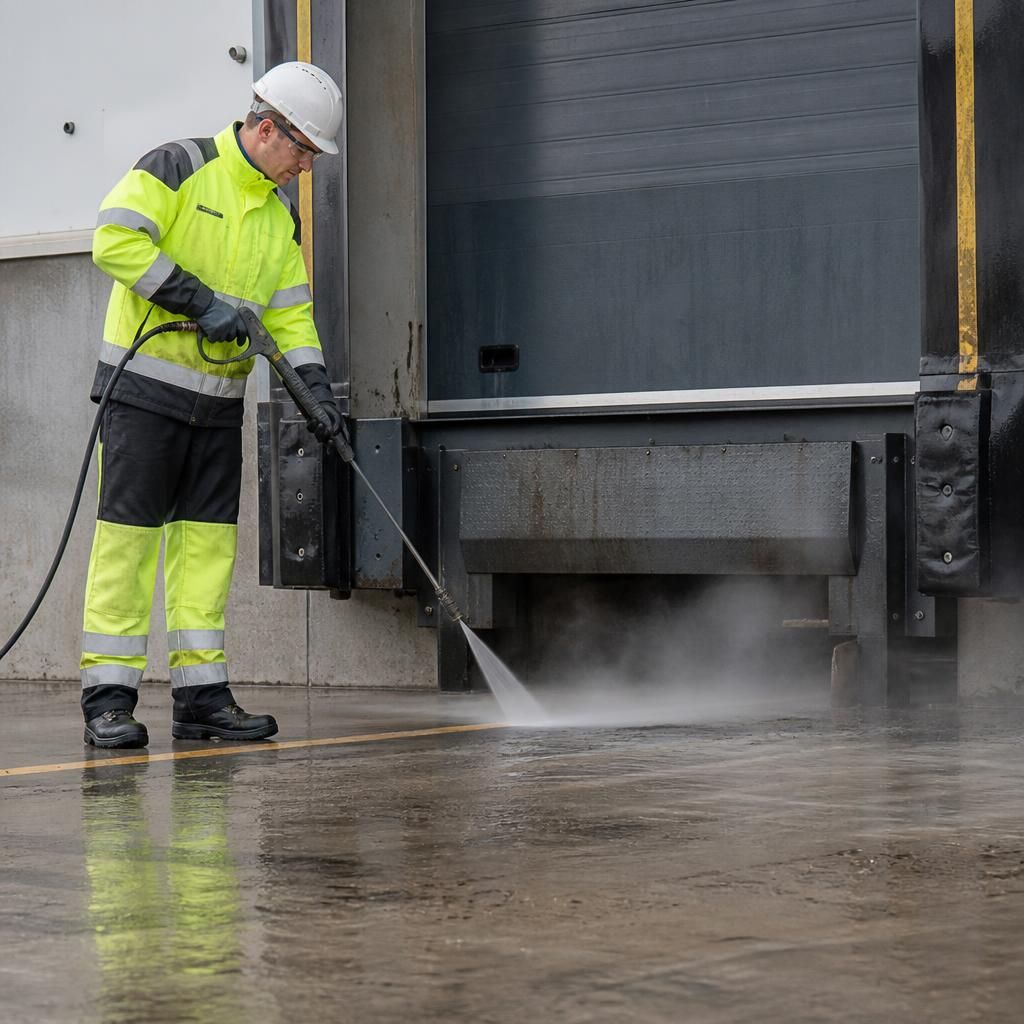
Hot water improves industrial jet washing by softening grease, oil, fats and other stubborn residues before they are rinsed away. This allows operators to achieve effective cleaning without relying solely on excessively high pressure or strong detergents.
Using a suitable combination of temperature, pressure, flow rate and nozzle selection can reduce the risk of damage to coatings, pointing, joints and sensitive surface finishes. It is particularly useful for loading bays, vehicle areas, plant rooms, waste compounds and food-related premises, where oily or organic contamination can become firmly bonded to hard surfaces.
Hot water is not suitable for every material or contamination type. The surface, drainage arrangements, surrounding equipment and wastewater controls should be assessed before work begins, with a small test area used where the substrate or coating is uncertain.