
What types of surfaces are best suited for industrial water jet cleaning?
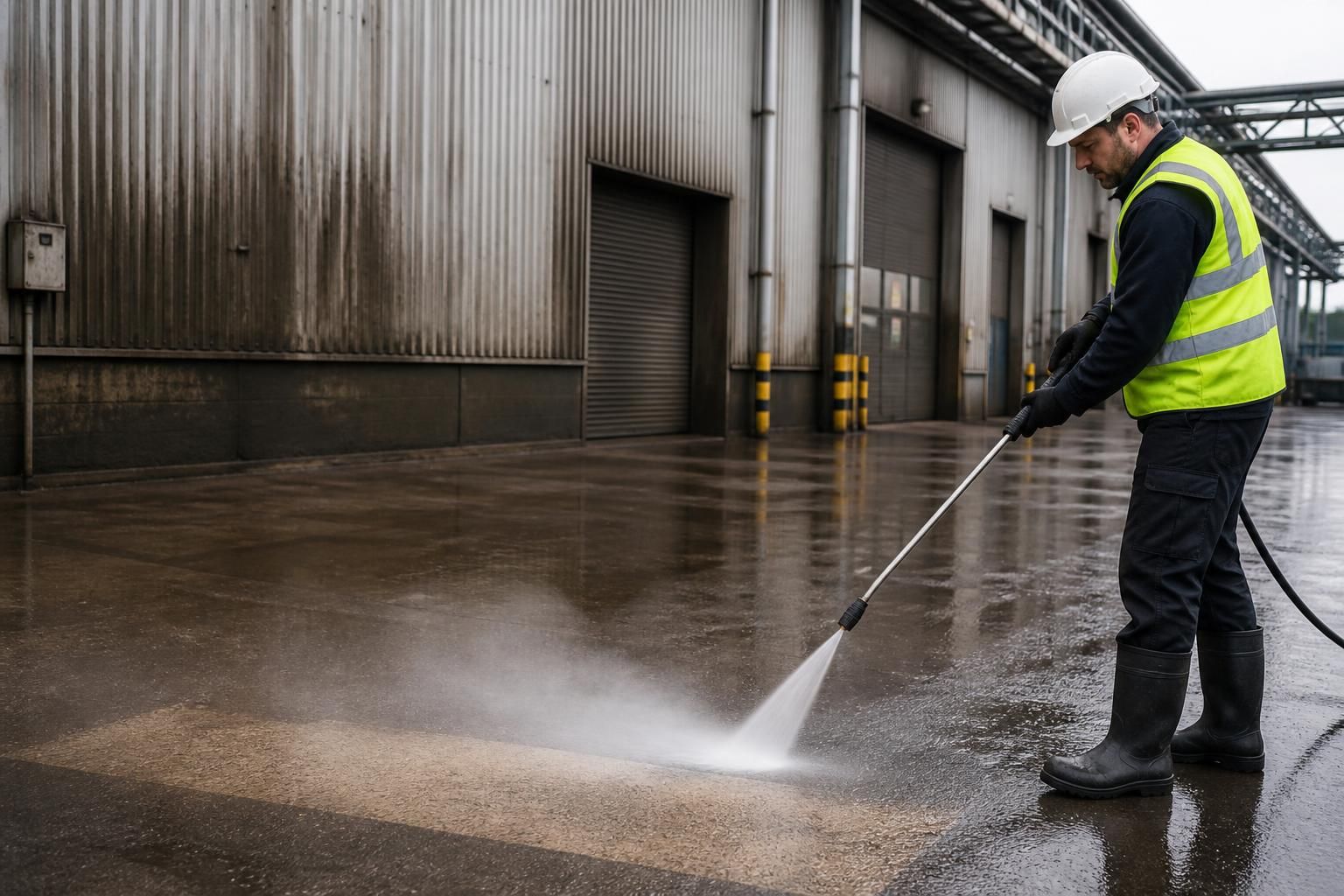
Industrial water jet cleaning is best suited to durable, non-porous surfaces that can withstand controlled high-pressure water, including concrete, steel, masonry, brick, cladding, paving and some roofing materials. Pressure, temperature and nozzle selection must be adjusted for more delicate or coated surfaces to prevent etching, water ingress or damage.
Industrial water jet cleaning is best suited to robust, water-tolerant surfaces that can withstand controlled high-pressure water without losing their finish, structural integrity or protective coating. Common applications include concrete, asphalt, paving, brick, stone, steel, aluminium cladding and selected roofing materials. The correct pressure, flow rate, water temperature, nozzle and working distance must be chosen for each surface, particularly where coatings, joints, seals or vulnerable finishes are present.
The condition of the surface is as important as its material. Sound, well-bonded surfaces usually respond well to water jet cleaning, while cracked, delaminated, friable or poorly maintained materials may require lower pressure, a different cleaning method or preliminary repairs. A site assessment helps identify the substrate, contamination, drainage arrangements and any areas where water could enter the building or affect nearby equipment.
Concrete and asphalt
Concrete is one of the most suitable surfaces for industrial water jet cleaning. It can be used to remove embedded dirt, algae, moss, oil residues, tyre marks, surface grime, coatings and some cementitious deposits from floors, yards, loading areas, ramps, car parks and service compounds. Water jetting is also useful for preparing concrete before repair, recoating or resurfacing by removing weak surface material and contamination.
Asphalt and tarmac can also be cleaned, but they need more controlled treatment than sound concrete. Excessive pressure or prolonged working in one area can dislodge aggregate, roughen the binder or worsen existing defects. Operators should avoid concentrating the jet on damaged edges, open joints, potholes and areas where the surface is already soft or deteriorated.
Brick, blockwork and masonry
Sound engineering brick, dense blockwork and some natural stone masonry are generally suitable for carefully controlled water jet cleaning. It can remove atmospheric soiling, biological growth, mortar splashes, paint residues and other deposits from external walls, retaining structures and industrial buildings.
Brick and masonry are not automatically suitable for high-pressure treatment. Soft, porous, historic or weathered materials can suffer from surface erosion, mortar loss, spalling and water penetration. The condition of the pointing, the porosity of the masonry and the presence of previous repairs should be checked first. A test area allows the cleaning result to be assessed without treating the entire elevation.
Steel, stainless steel and aluminium
Water jet cleaning is effective on many metal surfaces, including structural steelwork, plant housings, tanks, access platforms, handrails, shutters and vehicle or equipment surfaces. It can remove loose corrosion products, dirt, oil, grease, salts and old coatings, depending on the selected jetting process.
Metalwork must be assessed for its existing coating and corrosion condition. Water jetting can strip sound paint if the pressure is too high, while damaged coatings may allow water to reach the substrate and increase corrosion risk if the surface is not dried and protected promptly. Particular care is required around electrical components, bearings, seals, welds, joints and concealed voids. Stainless steel and aluminium can be cleaned effectively, but abrasive contamination, unsuitable chemicals or aggressive jetting can mark or discolour their surfaces.
Cladding and façades
Many industrial and commercial cladding systems respond well to low- or medium-pressure water cleaning, especially when removing dust, traffic film, bird fouling and general atmospheric deposits. Metal composite panels, profiled metal sheets, coated steel and some plastic-based panels may be treated where their finish is intact.
Cladding requires a more cautious approach than exposed concrete because the visible face may have a factory-applied coating that can be scratched, etched or lifted. Water should not be directed into laps, vents, panel joints, damaged sealant, cable penetrations or façade openings. The cleaning plan should also account for water run-off, vulnerable entrances and occupied areas below the work zone.
Roofs and roof coverings
Water jet cleaning can be appropriate for robust flat roofs, concrete roof slabs, some metal roofs and selected tiled or sheeted coverings. Typical tasks include removing moss, algae, dirt, loose coatings and accumulated debris from areas where blocked drainage or surface contamination affects maintenance.
Roof cleaning must never be based on appearance alone. The roof covering, membrane, laps, flashings, insulation, seals and drainage outlets all need consideration. High-pressure water can damage membranes, force water beneath laps or expose defects that were previously protected by dirt. Fragile, aged, insulated or single-ply roofing systems may be better suited to a lower-pressure soft-washing or manual cleaning process. Safe access and protection of roof outlets are essential.
Paving, concrete blocks and hardstanding
Block paving, concrete slabs, kerbs, ramps and other hardstanding areas are common applications for industrial water jet cleaning. The process can remove weeds, moss, silt, chewing gum, oil staining and general surface dirt from pedestrian routes, service yards and parking areas.
Operators should take account of jointing sand, loose blocks and damaged edges. Jetting too closely or at an unsuitable angle can remove joint material or spread contamination across adjacent areas. Where oil or chemical residues are present, the wash water must be contained and managed in line with site drainage and environmental requirements rather than allowed to enter an uncontrolled surface-water system.
Surfaces requiring additional caution
Some materials should not be treated with high-pressure water without a detailed assessment. These include soft brick, friable stone, untreated timber, damaged render, aged coatings, fragile roof membranes, deteriorated concrete and surfaces with open cracks or failing joints. Water can also cause problems behind cladding, around windows, within insulation or inside electrical and mechanical equipment.
- Painted or coated surfaces: the coating may be removed or weakened, so the required finish should be agreed before work begins.
- Porous materials: water can enter the substrate, carry contaminants deeper into it and extend drying times.
- Cracked or delaminated surfaces: jetting may enlarge defects or detach loose material.
- Electrical and mechanical assets: water ingress can damage controls, motors, bearings, seals and connections.
- Historic or delicate fabric: cleaning should be based on conservation requirements and a carefully controlled test area.
Water jet cleaning is not defined by maximum pressure. Effective results depend on matching the cleaning energy to the surface and contaminant. Technicians may adjust pressure, flow, temperature, nozzle type, spray angle and distance from the substrate. A rotary cleaner can provide a more even result on suitable horizontal surfaces, while a fan jet or other controlled nozzle may be preferable for façades and detailed areas.
Before treatment, the work area should be inspected and representative test patches completed where the surface or coating is uncertain. The assessment should confirm whether the substrate is sound, whether water can drain safely, and whether adjacent materials need shielding. After cleaning, surfaces should be checked for residual contamination, coating damage, exposed defects and trapped water. Where corrosion protection, repainting, joint repairs or sealing is required, these follow-on measures should be planned as part of the overall maintenance work.
In practical terms, the best candidates are durable surfaces with stable finishes, accessible drainage and contamination that water can remove without aggressive abrasion. Industrial water jet cleaning can be highly effective across concrete, paving, masonry, metal, cladding and selected roofs, provided the method is specified for the actual substrate rather than applied as a standard pressure-washing treatment.
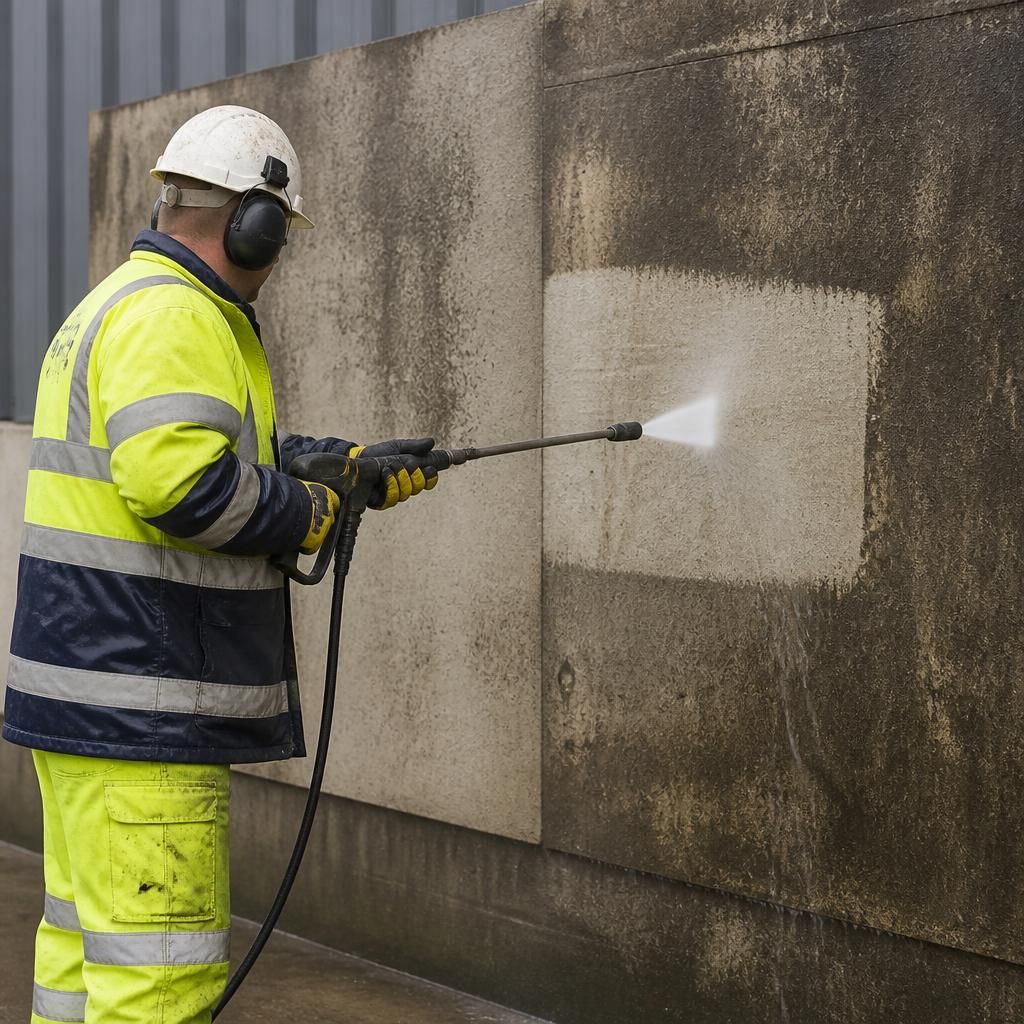
A test patch is essential before industrial water jet cleaning begins, particularly on coated, porous, weathered or unfamiliar surfaces. It confirms whether the substrate can withstand the proposed pressure, flow rate, nozzle and working distance without causing etching, coating loss, mortar damage or water ingress.
The test area should represent the wider surface and be checked after drying, as some defects or staining become more apparent once moisture has evaporated. The cleaning method can then be adjusted before full treatment, helping protect sound finishes while achieving the required removal of dirt, oil, algae, paint or other deposits.