
What maintenance practices are essential to ensure the longevity and efficiency of industrial water jet cleaning equipment?
Regular inspection, cleaning, lubrication and servicing are essential to keep industrial water jet cleaning equipment operating safely and efficiently. Inspect hoses, nozzles, pumps, seals, filters and connections before use, follow the manufacturer’s maintenance schedule, replace worn components promptly, and store the equipment clean, dry and protected from frost.
Industrial water jet cleaning equipment remains efficient and safe when it is inspected before every use, cleaned after each operation, serviced to the manufacturer’s schedule and stored correctly. The main priorities are protecting the high-pressure pump, hoses, guns, lances, nozzles, seals, filters and safety controls from contamination, wear, corrosion, overheating and frost damage. Planned maintenance is essential because a small leak, blocked filter or worn nozzle can reduce cleaning performance and place additional load on the pump.
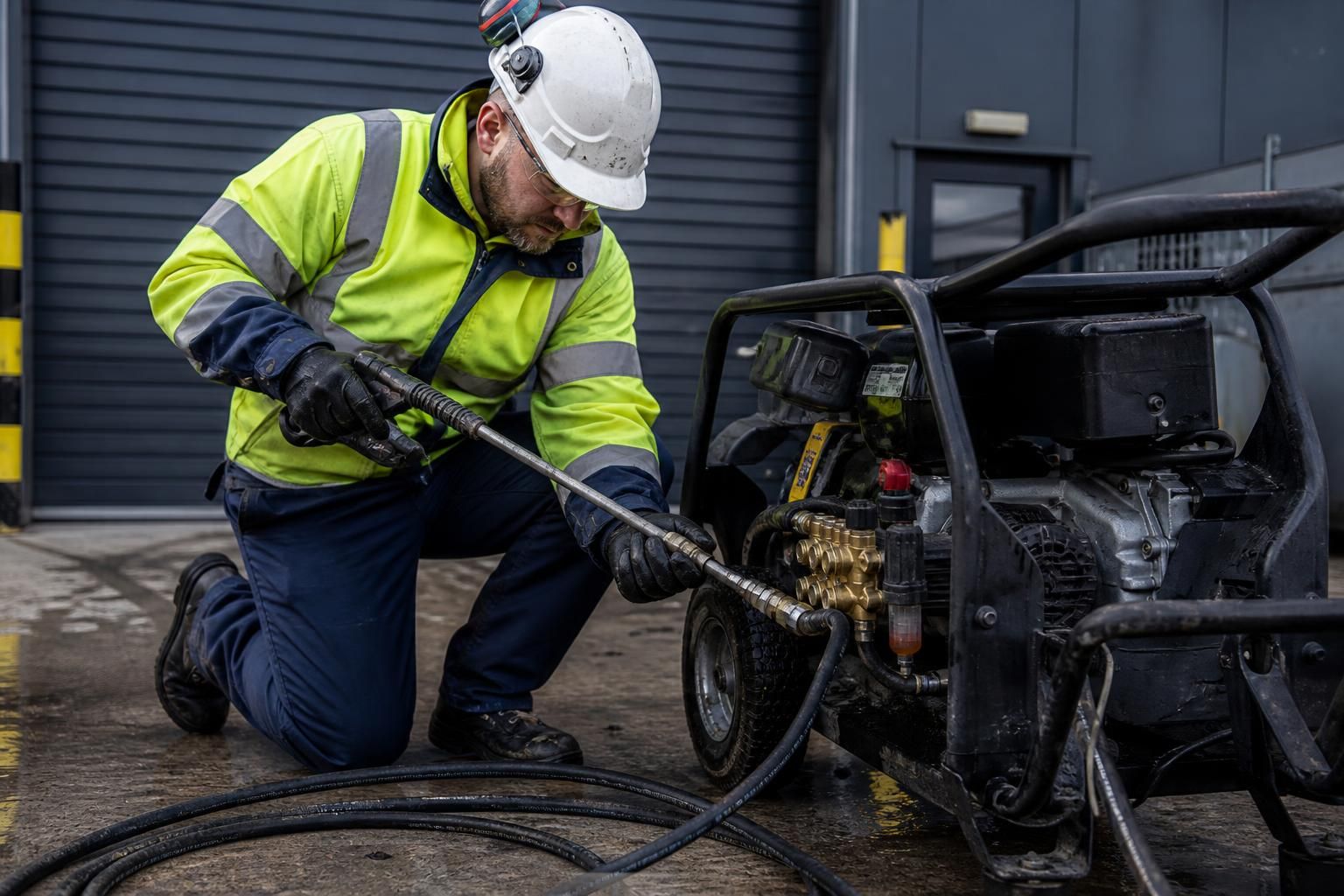
Carry out a pre-use inspection. Before starting a cleaning task, examine the complete system rather than checking only the pump unit. Look for cuts, abrasion, blistering, kinks or exposed reinforcement on high-pressure hoses. Check couplings, lance connections, trigger guns, whip checks, guards and locking devices for damage or looseness. Inspect the pump, frame, wheels, tank, electrical leads and control panel for signs of impact, corrosion or fluid leakage.
- Check that hoses are correctly rated for the operating pressure and are within their inspection and replacement period.
- Make sure couplings are clean, properly engaged and fitted with the correct seals.
- Confirm that the trigger gun returns to its safe position and that emergency stop controls function correctly.
- Inspect nozzles for blockage, erosion or an altered spray pattern.
- Check oil levels, fuel levels and coolant levels where applicable, following the equipment manufacturer’s instructions.
- Ensure filters, strainers and water supplies are clean and free from restrictions.
Equipment should not be used if a hose is damaged, a fitting is leaking, a safety control is defective or a nozzle has become visibly worn. High-pressure water can penetrate skin and materials, so leaks must never be located by hand and temporary repairs to pressure components should not be made with tape, clamps or improvised fittings.
Clean the equipment after every operation. Shut down the system, isolate the power source and release all residual pressure before disconnecting, cleaning or inspecting components. Remove mud, grit, oil, paint residue and other contaminants from the frame, hose reels, lances, nozzles and connections. Contamination left on fittings can enter the pump or prevent couplings from sealing correctly. Where cleaning agents have been used, flush the system with clean water in accordance with the chemical supplier’s and equipment manufacturer’s instructions.
Do not direct water at electrical controls, engine air intakes, bearings or other components that are not designed for washdown. Wipe these areas using an appropriate method and allow them to dry. Drain tanks, lines and pumps when required, particularly if the equipment will be left unused or exposed to low temperatures. Water trapped in the system can freeze, expand and damage pumps, valves, filters and pipework.
Maintain the water supply and filtration system. The pump depends on a clean, adequate and consistent water supply. Inspect inlet hoses for collapse or restriction and keep tanks and strainers free from sediment. Clean or replace inlet filters at the recommended intervals. A blocked inlet can cause cavitation, which may produce unusual noise, vibration and loss of pressure while damaging internal pump components.
Where the water source is hard, contaminated or recycled, establish a suitable filtration and flushing regime. The correct approach depends on the equipment design and the quality of the incoming water. Avoid using untreated or unsuitable water if it could cause scaling, corrosion or blockage. Any water treatment, anti-scale product or chemical additive should be approved for the system and used according to the relevant instructions.
Protect the pump and pressure controls. Check pump oil and change it at the specified service interval using the correct grade. Milky, dark or contaminated oil can indicate water ingress or internal wear and should be investigated rather than ignored. Inspect seals, packings, valves and pressure regulators for leakage or deterioration. Pressure should be checked using an accurate gauge; a gradual reduction in operating pressure may indicate a worn nozzle, blocked filter, leaking valve, damaged seal or pump fault.
Never operate the pump against a closed outlet unless the equipment is specifically designed and protected for that condition. Confirm that the unloader or pressure-regulating system is operating correctly and that recirculating water is not becoming excessively hot. Unusual vibration, pulsation, overheating, knocking or changes in pump noise require the machine to be stopped and assessed by a competent person.
Inspect and replace nozzles and accessories. Nozzles are wear items. Erosion changes the orifice and spray pattern, which can increase water consumption, reduce cleaning accuracy and make the pump work outside its intended operating conditions. Compare the spray pattern with a known serviceable nozzle and replace any component that is blocked, damaged or worn. Use the correct nozzle type, size and angle for the equipment and the surface being cleaned.
Lances, rotary heads, surface cleaners, hose reels and extension accessories should also be checked for free movement, secure guards and correct connections. Keep nozzle openings clean using the approved cleaning tool; do not force wire or other unsuitable objects through delicate orifices. Store small components so that they remain clean and cannot be damaged between projects.
Follow a planned servicing programme. Daily checks should be supported by routine inspections and periodic servicing carried out at the intervals specified by the manufacturer. Depending on the system, planned servicing may include changing pump oil, inspecting valves and seals, testing gauges and safety devices, checking electrical protection, examining engine components and verifying pressure and flow. High-use equipment may need more frequent attention than a machine used occasionally, particularly when it operates with abrasive water, chemicals or heavily contaminated surfaces.
Maintenance and repairs should be completed by trained, competent personnel. Pressure-rated parts must be replaced with compatible components, and modifications should not be made without technical approval. Keep service records showing inspections, faults, parts replaced, pressure checks and the date of the next planned service. These records help identify recurring problems and provide evidence that the equipment is being managed responsibly.
Use correct storage and transport practices. Before transport or storage, depressurise the system, secure loose accessories, coil hoses without tight bends and protect couplings from dirt. Store the equipment in a clean, dry, ventilated location away from impact, corrosive substances and unauthorised use. Protect pumps, hoses and controls from frost, direct weather exposure and excessive heat. During transport, secure the machine and prevent hose reels, lances or fittings from striking the frame or other equipment.
Good maintenance should be integrated with the site’s risk assessment and the manufacturer’s operating instructions. Operators should know how to isolate the machine, release pressure, report defects and remove equipment from service when it is unsafe. Consistent inspections, prompt replacement of worn parts and accurate service records reduce unplanned downtime while preserving the pressure, flow and control needed for effective industrial cleaning.
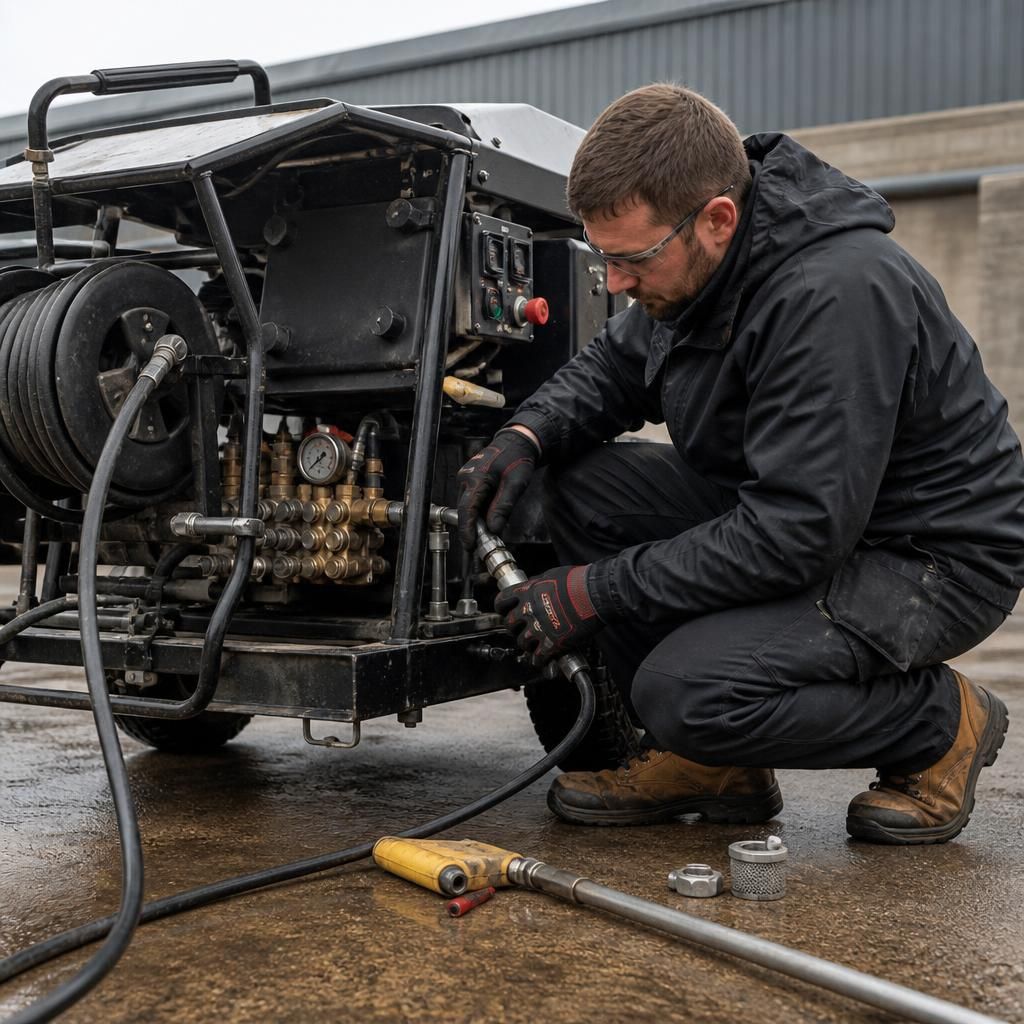
Pre-use inspection is the essential maintenance practice that identifies faults before industrial water jet cleaning equipment is pressurised. Check hoses, couplings, trigger guns, lances, nozzles, filters, gauges and safety controls for wear, blockage, leakage or damage, and remove the machine from service if any pressure-rated component is defective.
- Inspect hoses for cuts, kinks, abrasion, blistering or exposed reinforcement.
- Confirm that couplings are clean, secure and fitted with the correct seals.
- Check nozzles for blockage, erosion or an uneven spray pattern.
- Verify oil, fuel, coolant and water levels in line with the manufacturer’s instructions.
- Test emergency stops and confirm that the trigger gun returns safely.
These checks help maintain the correct pressure and flow while reducing the risk of pump damage, unexpected leaks and unplanned downtime. Never search for a high-pressure leak by hand or attempt a temporary repair; isolate, depressurise and have the equipment assessed by a competent person.