
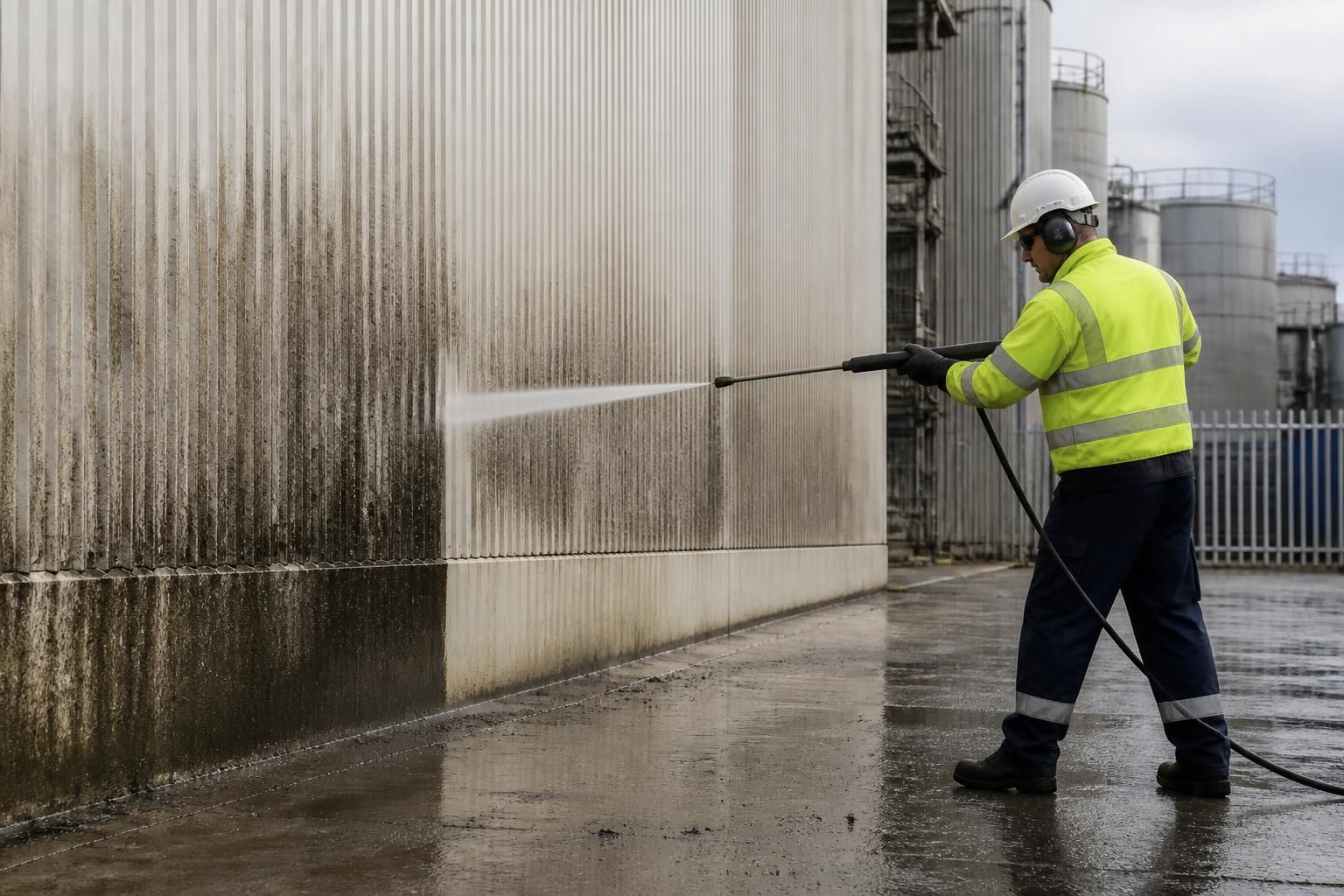
What are the key considerations when selecting an industrial water jet cleaning service provider?
When selecting an industrial water jet cleaning service provider, assess their relevant experience, operator competence, equipment capability, health and safety procedures, environmental controls, insurance and ability to meet your site’s access and scheduling requirements. Request a clear method statement and quotation that explain the proposed pressure, water recovery and waste-disposal arrangements for your specific surfaces and contaminants.
Select an industrial water jet cleaning service provider by checking its relevant experience, operator competence, equipment, health and safety controls, environmental procedures, insurance and ability to work within your site’s access, production and scheduling requirements. A suitable provider should also supply a clear method statement and quotation explaining the proposed water pressure, cleaning process, containment, recovery and waste-disposal arrangements for your surfaces and contaminants.
Relevant industrial experience
Choose a contractor with demonstrable experience of the type of work required, rather than relying solely on general pressure-washing experience. Industrial water jet cleaning may involve façades, cladding, concrete, steelwork, plant areas, loading bays, roofs, tanks, car parks or process-related contamination. Each application requires an appropriate combination of pressure, flow rate, nozzle selection, temperature, dwell time and operator technique.
Ask whether the provider has completed comparable work in environments such as manufacturing sites, warehouses, construction projects, commercial estates or publicly managed premises. Experience with similar materials and contaminants is particularly important because an unsuitable jetting approach can etch concrete, damage coatings, drive contamination into porous surfaces, strip protective finishes or force water into vulnerable building components.
Assessment of the surface and contamination
A competent provider should inspect the area before confirming the cleaning method. The assessment should identify:
- the surface material, condition and existing coatings;
- the type, depth and likely source of the contamination;
- areas of loose, damaged or friable material;
- nearby electrical equipment, ventilation points, doors, joints and drainage channels;
- risks to occupants, vehicles, plant, stock and surrounding property; and
- how dirty water, removed coatings or contaminated residues will be contained and handled.
Oil, grease, paint, cement residue, biological growth and general deposits do not respond in the same way to water jetting. The provider should explain whether water alone is suitable, whether a compatible detergent or treatment is required, and how the chosen process will avoid unnecessary damage or waste.
Equipment and technical capability
Check that the contractor has equipment appropriate to the scale and sensitivity of the work. This may include high-pressure or ultra-high-pressure systems, heated water equipment, rotary surface cleaners, specialist nozzles, telescopic equipment, vacuum recovery and access equipment. The highest available pressure is not automatically the best option. Effective cleaning depends on controlling pressure and flow at the surface, maintaining a suitable working distance and selecting the correct nozzle and angle.
Equipment should be maintained, inspected and operated within the manufacturer’s specifications. Hoses, couplings, lances, trigger mechanisms, pumps and safety devices require particular attention because failures can create serious injury and property risks. Where work involves access equipment, confirm that it is suitable for the ground conditions, working height and reach required.
Operator competence and supervision
Water jetting is a skilled task. Operators should understand the hazards associated with high-pressure water, flying debris, surface failure, noise, slips, contaminated run-off and contact with hidden services. They should also know how to adjust the process for different surfaces and recognise when cleaning is causing damage.
Ask how operators are trained, supervised and briefed for the specific site. Competence should cover the equipment being used, personal protective equipment, emergency shutdown, hose management, access equipment and the handling of cleaning chemicals where applicable. A reliable contractor should be able to explain who is responsible for site supervision and how changes in conditions will be managed during the work.
Health and safety documentation
Before work starts, request a site-specific risk assessment and method statement. These documents should describe the equipment, work sequence, exclusion zones, access arrangements, personal protective equipment, control of water and debris, emergency procedures and arrangements for protecting people not involved in the cleaning.
The assessment should also consider work at height, traffic and pedestrian movements, confined or restricted areas, electrical hazards, fragile surfaces, noise, hand-arm vibration, slips and trips, exposure to contaminated material and the possibility of hazardous substances. If the site is occupied or operational, the method should explain how cleaning will be segregated from staff, visitors, residents, vehicles and production activities.
Where the project falls within construction work or involves multiple duty holders, the contractor should cooperate with the principal contractor and follow the site’s induction, permit and coordination procedures. Documentation should be proportionate to the risk but specific enough to show how the work will be controlled.
Water management and environmental controls
Water jet cleaning can reduce the need for abrasive media and, in some applications, chemical products, but the environmental performance depends on how water and removed contaminants are managed. Ask whether the provider will use containment, drain protection, bunding, wet vacuum recovery or other controls to prevent polluted water entering surface-water drains, soil or neighbouring property.
The quotation should state whether water will be recovered, filtered, treated or removed from site, and who is responsible for its disposal. Any detergents or chemical treatments should be suitable for the surface and used in accordance with their safety and environmental information. A provider should never assume that dirty water can be discharged to a drain without confirming the site’s requirements and the relevant permissions.
Where paint, oil, fuel, heavy deposits or other potentially hazardous substances are removed, ask how the waste will be classified, stored, transported and transferred to an authorised disposal route. Waste transfer documentation may be required, depending on the material and disposal arrangement.
Site access, scheduling and operational disruption
Industrial sites often have restricted access, delivery movements, security controls and narrow working windows. Confirm that the provider has considered vehicle access, water supply, drainage, power, hose routes, lifting requirements, working heights and the location of equipment. If access equipment is needed, check that the proposed machine can operate safely on the available surface and within any height or width restrictions.
Agree the cleaning sequence, working hours, isolation requirements and communication arrangements before mobilisation. The provider should explain how the work will be paused during deliveries, adverse weather, unexpected contamination or a change in site conditions. This is particularly important where water, noise or overspray could affect production, tenants or members of the public.
Insurance, compliance and business procedures
Verify that the contractor carries suitable public liability and employers’ liability insurance, with cover appropriate to the nature and scale of the work. Depending on the project, additional cover may be relevant for hired equipment, professional activities or damage to property in the contractor’s care.
Ask for evidence of suitable compliance procedures, equipment inspection records and any relevant training or trade qualifications. Accreditations can support a procurement decision, but they should not replace a review of the actual method, competence and controls proposed for your site. The provider should also be willing to provide documentation required by your own contractor-management or supplier-approval process.
Trials, protection and quality control
For sensitive surfaces or uncertain contamination, a small test area should be considered before full-scale cleaning. The trial can establish the effective pressure, nozzle, temperature and cleaning rate, while checking for colour change, etching, coating loss, water penetration or other unwanted effects. Agree where the test will take place and how the result will be approved.
The method should include protection for adjacent surfaces, signage, temporary screening and the sealing or covering of vulnerable openings where appropriate. Quality control may involve pre-cleaning and post-cleaning photographs, agreed inspection points and a record of areas completed. Clarify what standard of cleanliness is required, as “clean” can mean removal of loose dirt, removal of staining, preparation for recoating or a more specific operational standard.
Quotation and contract clarity
Compare quotations on the basis of the complete scope rather than headline price. A useful quotation should identify the areas to be cleaned, the proposed technique, access equipment, water and power requirements, preparation and protection, containment, recovery, waste handling, drying time, exclusions and any assumptions. It should also state whether remedial work, repeated treatment or additional cleaning caused by previously hidden defects would be charged separately.
Be cautious of a price that does not explain how contaminated water, removed coatings or access constraints will be managed. The lowest initial quotation may not represent the lowest overall cost if it excludes recovery, disposal, protection or the specialist equipment needed to achieve the required result safely.
Questions to ask before appointing a provider
- Have you cleaned this type of surface and contamination before?
- What pressure, flow, temperature and nozzle arrangement do you propose, and why?
- How will you prevent damage to coatings, joints, plant and nearby property?
- How will water, sludge, paint residue or chemical waste be contained and disposed of?
- What risk assessment, method statement, permits and insurance documents will you provide?
- Who will supervise the work and how will operators be briefed for this site?
- What access, water, power, isolation and working-space requirements must we provide?
- Will you carry out a test clean or agree inspection points before the main work?
- What is included in the quotation, and what circumstances could lead to additional charges?
The most dependable choice is a provider that can connect its equipment and cleaning method to the actual condition of your site, while clearly accounting for safety, access, environmental controls, waste and the required finish. Reviewing these points before mobilisation helps prevent avoidable disruption and provides a sound basis for comparing industrial water jet cleaning proposals.
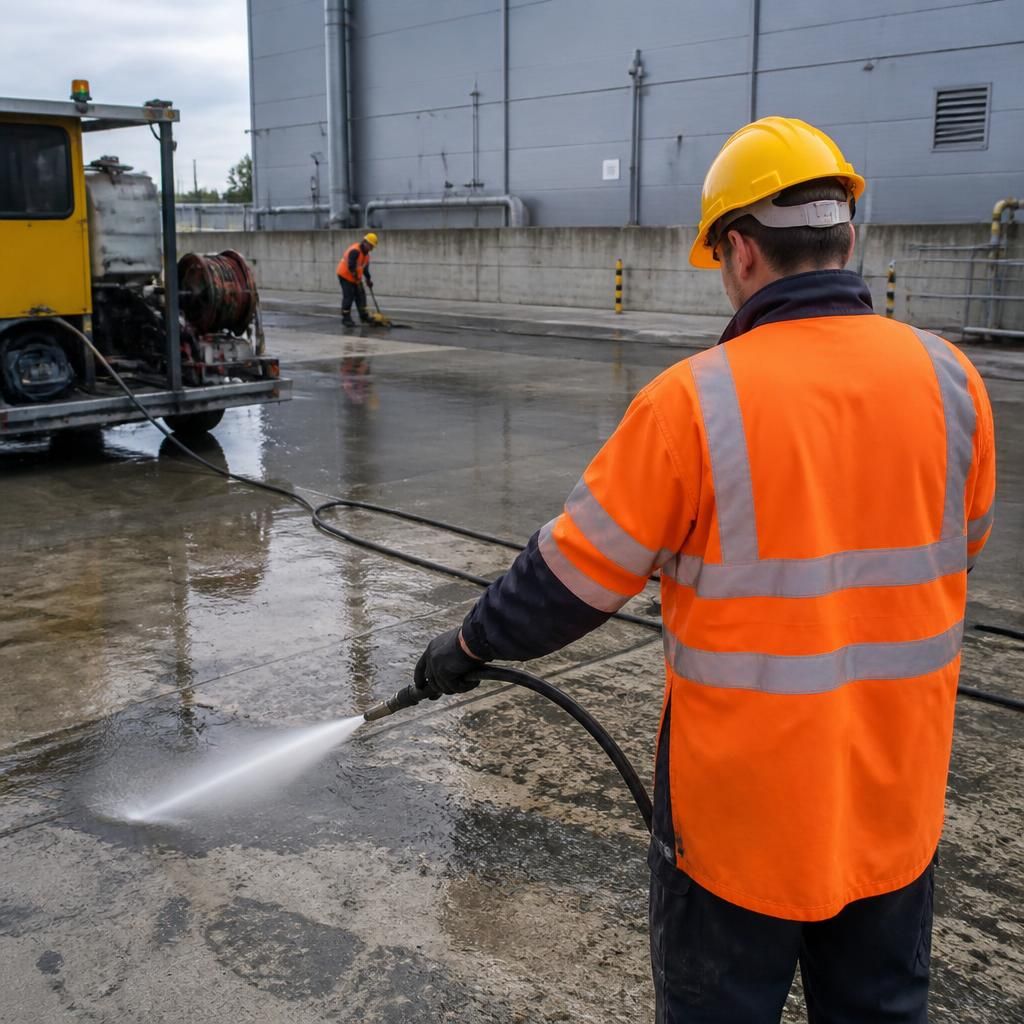
A site-specific method statement is a key safeguard when appointing an industrial water jet cleaning provider. It should explain how the contractor will select the pressure, flow, nozzle and working distance for the surface, while controlling overspray, debris, noise, access and contact with nearby equipment.
It should also set out how dirty water and removed contaminants will be contained, recovered and disposed of. Check that the document identifies exclusion zones, personal protective equipment, emergency arrangements, protection for drains and vulnerable openings, and the process for pausing work if site conditions change. A clear method statement allows you to compare providers on their proposed controls rather than price alone.
Discuss your industrial water jet cleaning requirements
Discuss your industrial water jet cleaning requirements with Encanto Exterior Cleaning, including the surfaces, contaminants, access arrangements and environmental controls involved. We can assess the site and outline a suitable cleaning method, risk controls and quotation.