
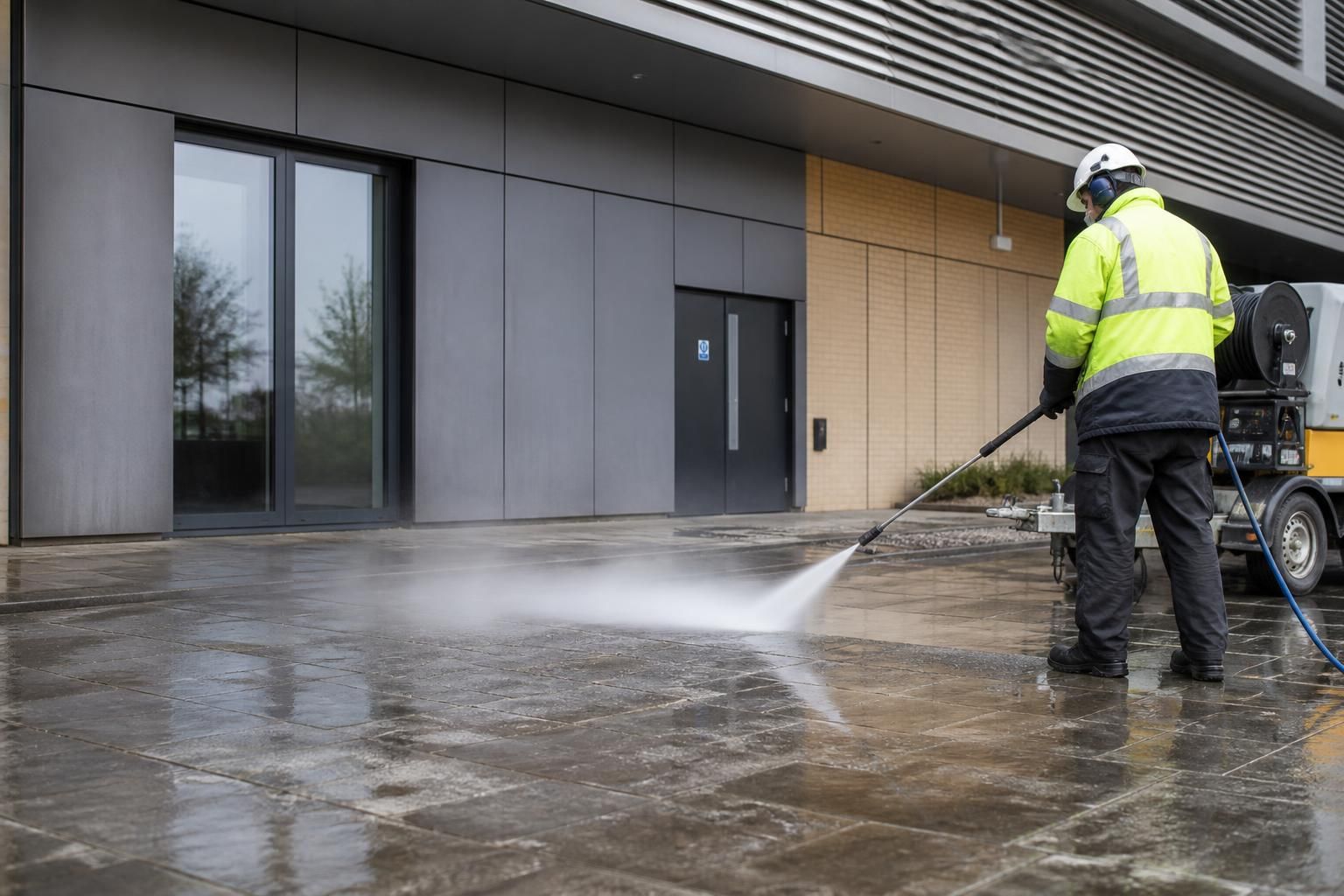
What are the environmental benefits of using industrial water jet cleaning compared to traditional cleaning methods?
Industrial water jet cleaning can reduce environmental impact by using pressurised water to remove dirt, oil, coatings and other contaminants with little or no chemical detergent. Compared with many traditional methods, it can also reduce consumable waste and limit contamination when water, debris and wastewater are properly collected and disposed of.
Industrial water jet cleaning can have a lower environmental impact than many traditional cleaning methods because it uses pressurised water to remove dirt, oil, coatings and other contaminants with little or no chemical detergent. When the work is properly planned, water use is controlled, wastewater is captured and waste is disposed of through the correct channels. This can reduce chemical use, packaging waste, airborne pollutants and the risk of contaminated residues entering the surrounding environment.
The environmental benefits depend on the equipment, pressure, flow rate, cleaning method and site controls. Water jet cleaning is not automatically sustainable simply because it uses water. Responsible contractors assess the surface and contaminant first, select the least intensive effective method and prevent dirty water from reaching surface-water drains, soil or watercourses.
Reduced reliance on chemical cleaning products
Many conventional cleaning processes rely on solvents, degreasers, acids, caustic products or coating strippers. These substances may create additional environmental risks during storage, handling, use and disposal. They can also leave residues on façades, plant, floors and other surfaces.
Water jetting can often remove surface contamination through mechanical action alone. Where a detergent or specialist treatment is necessary, it can usually be selected for the specific contaminant and applied in a controlled way rather than used across the whole area. This reduces the volume of chemical product required and limits the amount of chemical-laden wastewater needing treatment.
Chemicals are not always avoidable. Oil deposits, certain coatings and hazardous residues may require an appropriate cleaning agent or containment procedure. The environmental advantage comes from making that decision based on the condition of the surface, rather than treating every job with a broad chemical application.
Less packaging and consumable waste
Traditional cleaning may require repeated use of disposable cloths, abrasive media, pads, brushes, absorbent materials, solvent containers and other consumables. Water jet cleaning generally relies more heavily on reusable equipment, which can reduce the amount of packaging and spent material produced during the cleaning operation.
There can still be solid waste from the cleaning process. Removed paint, rust, silt, oil deposits, biological growth and other debris must be collected and classified appropriately. Capturing this material is environmentally preferable to allowing it to spread across the site, but it does not remove the need for responsible disposal. Where coatings or contaminants may be hazardous, their handling should follow the relevant waste requirements.
More controlled water use than some conventional methods
Industrial equipment can deliver water at high pressure, allowing effective cleaning with a controlled flow rather than relying solely on large volumes of low-pressure water. Operators can adjust pressure, nozzle selection, flow and cleaning time to suit the surface. This can make the process more water-efficient than unrestricted hosing or repeated manual washing.
Water consumption varies considerably. A large area, heavy contamination or a process requiring continuous rinsing may still use substantial water. Water-saving practice therefore includes testing the method, avoiding unnecessary rinsing, using suitable nozzles, repairing leaks and, where practical, recovering and treating water for reuse. The correct comparison is between the complete cleaning processes, including preparation, rinsing and waste management, rather than the equipment name alone.
Lower risk of contaminated runoff
Water jet cleaning can support better pollution control because the operator can plan where the wastewater will travel and how it will be recovered. Drain covers, bunding, temporary barriers, vacuum recovery and collection tanks may be used to keep contaminated water within the work area. Solids can be separated before the water is assessed for treatment, discharge or disposal.
This is particularly important when removing oil, paint, fuel residues, heavy silt or industrial deposits. Wastewater should not be discharged into surface-water drainage systems unless the discharge is permitted and suitable for that system. Depending on the site and contaminant, it may need filtration, separation, treatment or removal by an authorised waste contractor. Foul and surface-water drainage arrangements must be confirmed before work begins.
Fewer airborne pollutants and dust emissions
Compared with dry abrasive cleaning, water jetting can suppress airborne dust and prevent some particles from becoming suspended around the work area. This can reduce the spread of nuisance dust and limit the release of removed material into neighbouring areas. It can be beneficial when cleaning masonry, concrete, industrial floors or coated surfaces where dry methods might generate significant dust.
Water suppression does not remove every risk. Aerosols, contaminated spray and fine droplets can still be produced, particularly at high pressure. Appropriate exclusion zones, personal protective equipment, ventilation and wastewater controls remain necessary. If the existing coating or residue may contain hazardous substances, the cleaning method must be selected through a suitable risk assessment.
Reduced damage and longer surface life
When the pressure and nozzle are correctly matched to the substrate, water jet cleaning can remove contamination without the same level of abrasion associated with aggressive grinding, blasting or scraping. Preserving the underlying concrete, masonry, cladding or plant surface can reduce the need for replacement materials, repair products and repeat preparation.
This benefit depends on competent operation. Excessive pressure, an unsuitable nozzle or prolonged application can damage joints, coatings, seals and fragile surfaces. A controlled test area helps establish an effective setting before wider cleaning starts. Protecting the surface is both a maintenance consideration and an environmental one because it can avoid premature replacement and the associated manufacture, transport and disposal impacts.
Potentially lower energy and emissions from the overall process
Water jetting equipment requires energy, usually from an electric or diesel-powered pump. However, the overall environmental impact may be reduced where the method cleans efficiently, avoids several separate treatments and removes the need for high volumes of chemical manufacture, transport and disposal. Electric equipment may be suitable for some sites where access to an appropriate power supply is available, while equipment selection should take account of the full operating conditions.
Transport and waste movements also affect the result. Efficient site planning, suitable equipment selection and consolidated waste collections can help avoid unnecessary journeys. These factors should be considered alongside the cleaning method rather than assuming that water jetting alone determines the project’s emissions.
How to maximise the environmental benefit
- Survey the surface and identify the contaminant before choosing pressure, flow rate and cleaning agents.
- Use the lowest effective pressure and flow that achieves the required result without damaging the substrate.
- Use detergents only where necessary and select products suitable for the surface and wastewater controls.
- Prevent dirty water, sludge and removed coatings from entering soil, surface-water drains or watercourses.
- Use recovery, filtration, separation or off-site disposal where the wastewater or debris requires it.
- Keep records of chemicals, waste streams and discharge arrangements for the site’s environmental compliance file.
- Check the method statement and risk assessment for dust, aerosols, contaminated residues and nearby sensitive receptors.
For commercial and industrial sites, the most responsible approach is to consider cleaning performance and environmental controls together. Industrial water jet cleaning can reduce chemical use, consumable waste, airborne dust and uncontrolled runoff, while careful water management can limit consumption. The final environmental outcome depends on competent operation, effective containment and compliant disposal from the initial survey through to completion.
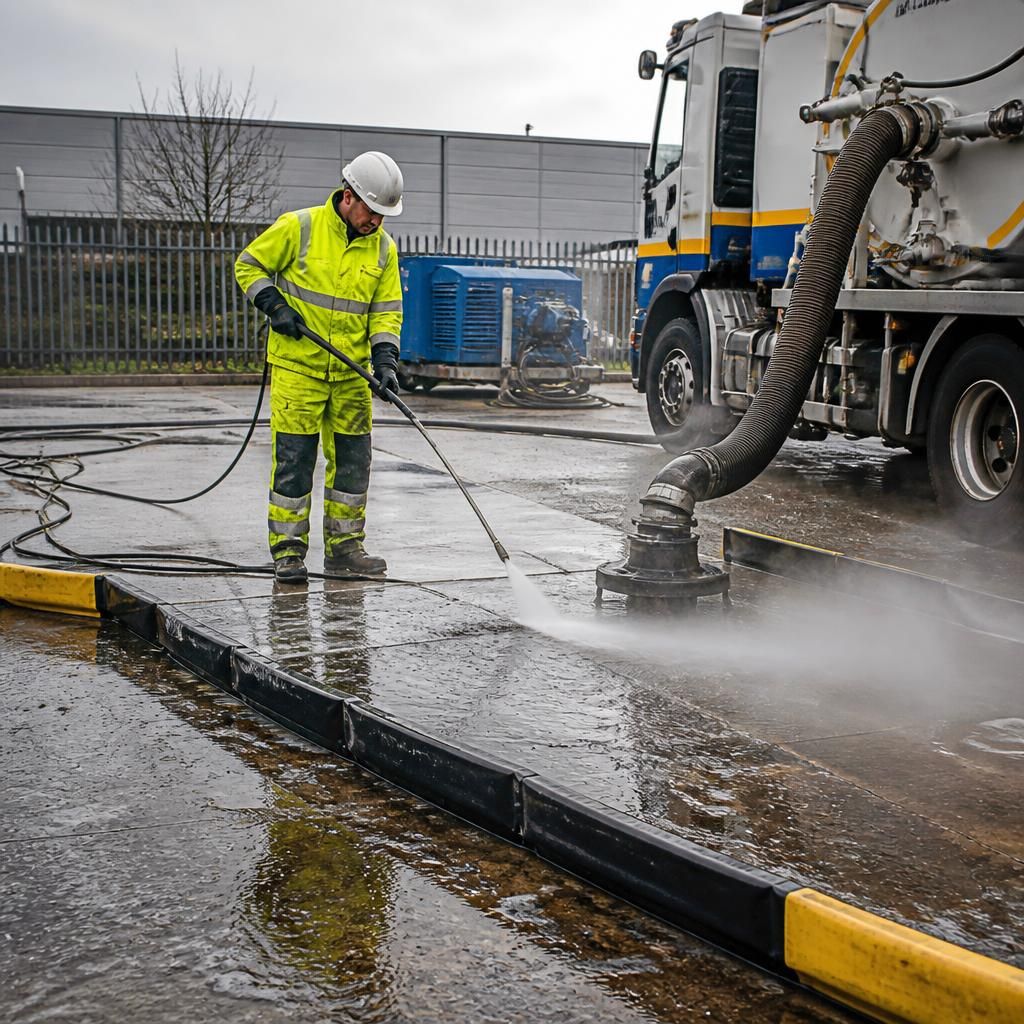
One of the main environmental benefits of industrial water jet cleaning is that wastewater and removed contaminants can be controlled at the point of cleaning. Rather than allowing oil, paint, silt or chemical residues to spread across a site, operators can use drain covers, bunding, temporary barriers and vacuum recovery to capture polluted water and debris.
The collected material can then be assessed and directed for suitable filtration, separation, treatment or disposal. This reduces the risk of contaminated runoff entering soil, surface-water drains or nearby watercourses. Effective containment is essential: water jet cleaning is environmentally responsible only when the water, sludge and removed coatings are managed in accordance with the site’s drainage arrangements and waste requirements.