
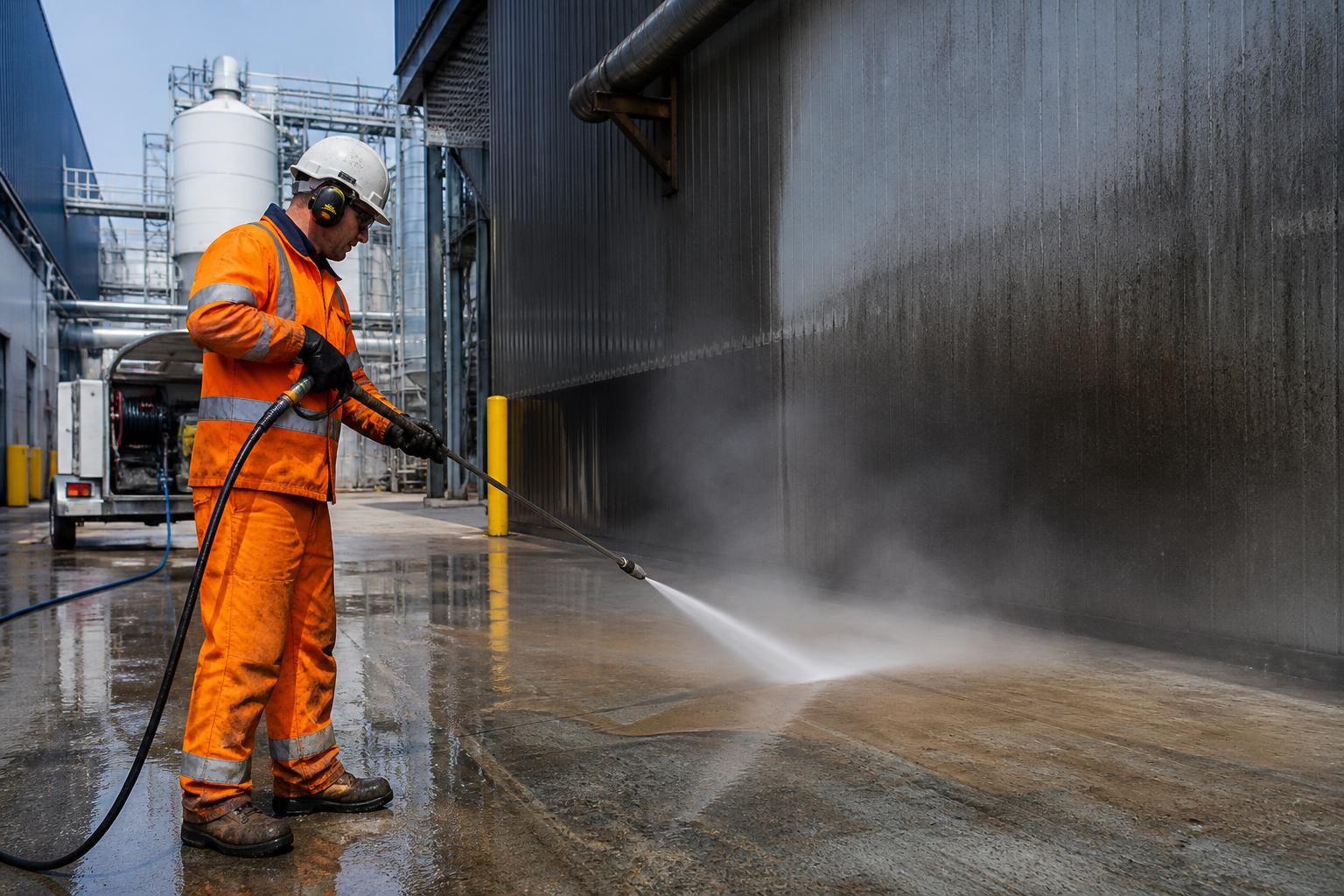
What are the benefits of using industrial water jet cleaning over traditional cleaning methods?
Industrial water jet cleaning uses high-pressure water to remove dirt, oil, paint, scale and other contaminants more quickly and consistently than many traditional methods. It can reduce manual labour, chemical use and surface damage while providing an efficient solution for large-scale commercial and industrial cleaning.
Industrial water jet cleaning uses a controlled stream of high-pressure water to remove contaminants from industrial and commercial surfaces. Compared with traditional hand cleaning, abrasive cleaning and many chemical-based methods, it can provide faster coverage, more consistent results, lower chemical use and less risk of surface damage when the pressure, nozzle and water temperature are selected correctly.
More effective removal of difficult contamination
Water jet cleaning is suitable for deposits that are difficult to remove with brushes or conventional washing. The force of the water can break the bond between a surface and contaminants such as oil, grease, mud, scale, algae, cement residue, loose coatings and some types of paint. Hot water or steam can improve the removal of greasy and oily deposits by softening them before they are rinsed away.
This makes the method useful for areas including factory floors, loading bays, plant and equipment, façades, cladding, roofs, car parks, concrete surfaces and construction sites. The cleaning approach can be adjusted to the material and contamination rather than relying on a single process for every surface.
Faster cleaning and reduced manual effort
Traditional cleaning often depends on repeated brushing, scraping or the application of chemicals followed by manual rinsing. Water jet cleaning can cover larger areas more quickly and reduce the physical effort required from operatives. This is particularly valuable on large sites, where prolonged manual cleaning may increase labour requirements and extend disruption to normal operations.
Where access equipment is needed, an efficient cleaning process can also reduce the time that teams, platforms or other equipment remain in use. The work still requires planning and skilled operation, but the cleaning stage is often more productive than labour-intensive alternatives.
Lower reliance on chemicals and abrasives
Many contaminants can be removed using water alone, or with a limited amount of suitable detergent where necessary. This can reduce the need to store, handle and dispose of strong cleaning chemicals. It also avoids introducing abrasive media into the waste stream, as can occur with some blasting techniques.
Reduced chemical use does not mean that every water jet cleaning project is chemical-free. Certain oils, coatings or biological contaminants may require a compatible treatment. The important consideration is that the process can be specified to use only the treatment needed for the contamination and surface involved.
Less surface damage when correctly specified
Unlike aggressive scraping or abrasive blasting, water does not remove material through direct impact from a solid medium. With the correct pressure, nozzle configuration, distance and operating technique, it can clean effectively while preserving the underlying substrate. This is important for concrete, masonry, metal, cladding and other surfaces where excessive abrasion could create additional maintenance problems.
Water jet cleaning is not automatically safe for every material. Excessive pressure can damage mortar joints, coatings, sealants, timber, fragile stone or deteriorated concrete. A competent contractor should assess the surface first, carry out a controlled test where appropriate and select a method that balances cleaning power with substrate protection.
Consistent and controllable results
Industrial equipment allows the operator to control variables such as pressure, flow, temperature, nozzle type and cleaning distance. This provides greater consistency across large areas than ad hoc hand cleaning, particularly when the work is carried out to a defined specification.
Controlled cleaning also makes it easier to separate light washing from more intensive preparation. For example, a façade may need gentle removal of surface dirt, while concrete affected by oil or laitance may require a different pressure and technique. This reduces the risk of over-cleaning areas that do not require aggressive treatment.
Versatility across commercial and industrial sites
A water jet system can be adapted to many cleaning tasks, from routine maintenance washing to preparation before repainting, repair or application of a protective coating. Different accessories and access methods allow work to be carried out on floors, walls, roofs, structural elements, vehicles, plant and difficult-to-reach areas.
It can also be combined with hot water, steam, detergents, vacuum recovery or other containment measures when the site conditions require them. This flexibility is useful for property managers, construction companies, facilities teams and local authorities managing different materials and contamination types across one or more sites.
Improved working conditions and site presentation
Reducing scraping, brushing and direct handling of contaminated surfaces can make some tasks less physically demanding. A well-planned water jet cleaning operation can also remove ingrained dirt and staining more evenly, helping commercial premises, public areas and industrial assets maintain a clean and professional appearance.
However, high-pressure water creates spray, noise, splashback and potentially hazardous dislodged material. Suitable exclusion zones, personal protective equipment, drainage controls and waste management remain essential. These controls protect workers, visitors, surrounding property and the wider environment.
Potentially lower overall cleaning costs
The financial benefit is not based solely on the hourly price of the equipment. Water jet cleaning may reduce total project costs by shortening cleaning time, limiting manual labour, reducing chemical consumption and avoiding unnecessary replacement or repair caused by abrasive methods. It can also support planned maintenance by removing contamination before it contributes to deterioration.
Actual costs depend on the surface area, contamination, access requirements, water supply, wastewater controls, equipment selection and required finish. A site assessment is therefore more reliable than comparing basic cleaning rates alone.
Better preparation for repair and coating work
Industrial water jet cleaning can remove loose material, surface contamination and poorly bonded residues before repairs, painting or protective coating applications. A clean, suitably prepared substrate helps the following treatment bond properly and makes defects easier to identify.
The required finish should be agreed before work starts. General washing, preparation for a coating and removal of a failed coating are different objectives and may require different pressures, temperatures, recovery arrangements and follow-up checks.
Overall, industrial water jet cleaning offers a practical alternative to traditional methods where speed, consistent cleaning, reduced chemical reliance and careful control of surface impact are important. The best results come from matching the equipment and technique to the contamination, substrate and site constraints rather than using maximum pressure as a default. Encanto Exterior Cleaning can assess the work area, identify the appropriate cleaning method and plan access, containment and wastewater controls for commercial and industrial projects across Birmingham, the West Midlands and the UK.
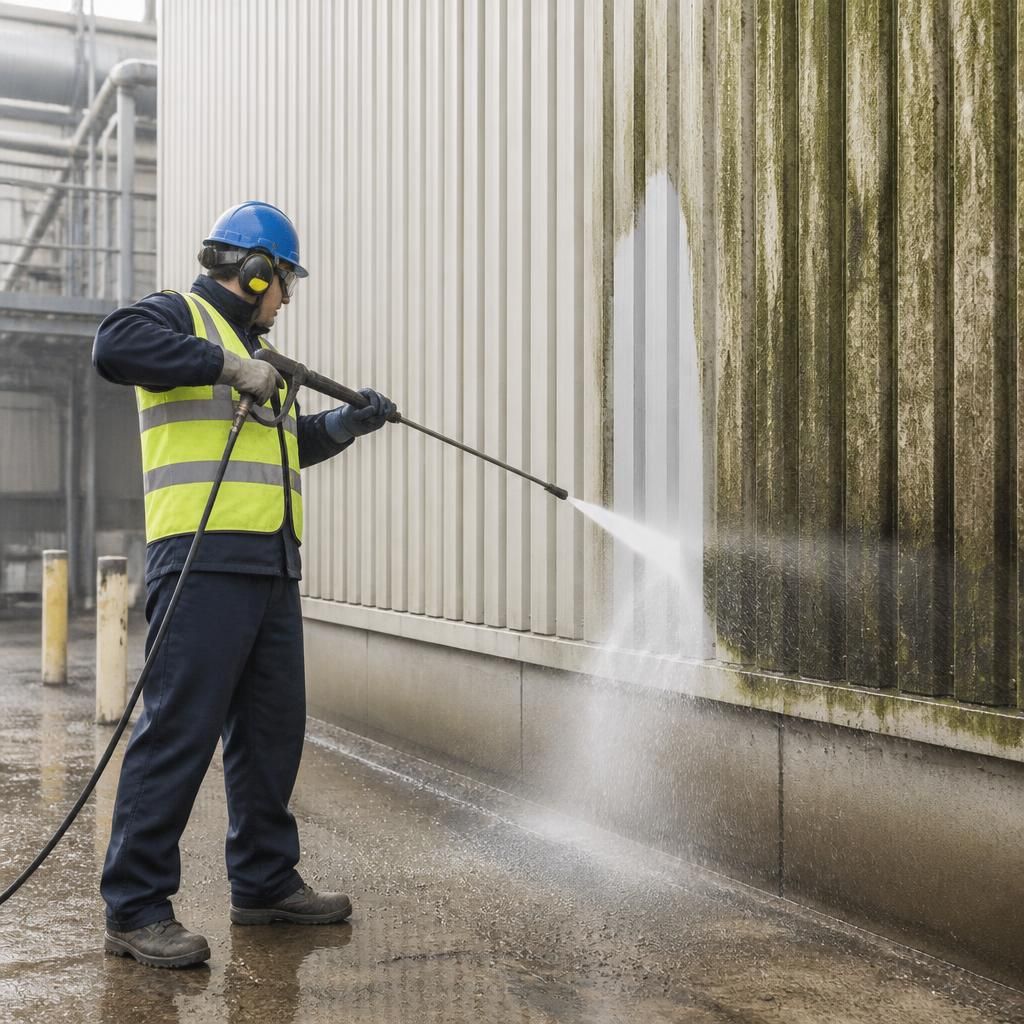
Industrial water jet cleaning removes contamination with a controlled stream of water rather than relying on abrasive media or repeated scraping. When the pressure, nozzle, temperature and working distance are matched to the surface, it can clean effectively while reducing unnecessary wear to concrete, masonry, metal, cladding and other substrates.
This level of control is particularly useful where the underlying material, coating or sealant must be preserved. A competent operator will assess the surface, test the chosen method where appropriate and use only the cleaning intensity required. Excessive pressure can still damage weak mortar, deteriorated concrete, timber or fragile coatings, so professional water jet cleaning is based on controlled application rather than maximum pressure.
Discuss your industrial water jet cleaning requirements
Discuss your industrial water jet cleaning requirements with Encanto Exterior Cleaning to identify the right equipment, access arrangements and wastewater controls for your site. Contact our team to arrange a site assessment and practical cleaning plan.