
How does industrial water jet cleaning ensure minimal environmental impact?
Industrial water jet cleaning minimises environmental impact by using high-pressure water to remove dirt, coatings and contaminants with little or no chemical additive. Careful control of water flow, collection of contaminated run-off and responsible disposal or treatment of waste help prevent pollution while reducing water and material consumption.
Industrial water jet cleaning minimises environmental impact by using controlled high-pressure water to remove dirt, coatings and contaminants with little or no chemical additive. The process is made environmentally responsible through careful control of water flow and pressure, prevention of uncontrolled run-off, recovery or treatment of contaminated water, and compliant disposal of collected waste.
Unlike many conventional cleaning processes, water jetting can often remove deposits mechanically rather than dissolving them with strong solvents, acids or degreasers. This reduces the volume of hazardous product brought onto site and limits the risk of chemical residues entering drainage systems, soil or watercourses. Where a detergent or specialist treatment is necessary, it should be selected for the contaminant and surface, used at the lowest effective concentration, and managed in accordance with its safety data sheet.
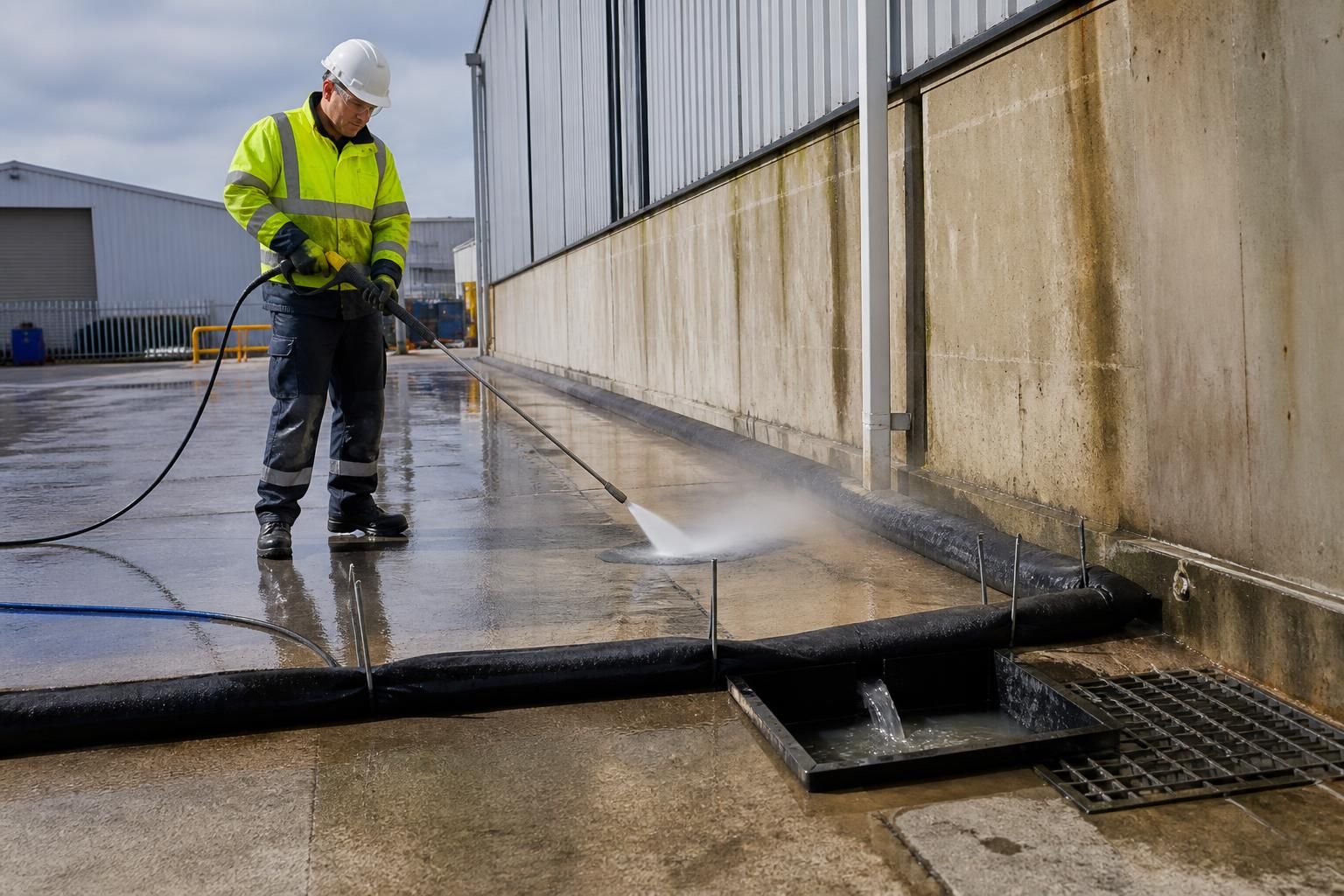
Environmental control starts with planning the work area. Before cleaning begins, the operator should identify nearby drains, surface-water gullies, watercourses, sensitive landscaping and areas where contaminated water could migrate. Suitable measures may include drain covers, bunding, temporary barriers, ground sheeting, collection channels and silt-control equipment. Surface-water drains must not be used for contaminated discharge, as they commonly lead directly to local watercourses rather than a treatment works.
Water use is also controlled through equipment selection and operating technique. The correct nozzle, pressure, flow rate and working distance allow the operator to achieve the required result without using more water than necessary. Applying water only to the contaminated area, avoiding unnecessary repeated passes and stopping equipment when it is not in use all help reduce consumption. Water jetting can also limit secondary waste because it removes deposits from the substrate without introducing large quantities of abrasive media, disposable pads or solvent-soaked materials.
Contaminated run-off requires particular care when removing oil, paint, chemical residues, biological growth or construction debris. The waste stream may contain both liquid and solid material, including paint flakes, silt and detached coatings. It should be contained, collected and assessed rather than allowed to flow away untreated. Depending on the substance and site conditions, treatment may involve settlement, filtration, separation or other approved methods. Recovered water may be suitable for controlled reuse only when its quality and intended application have been properly assessed.
Collected sludge, filter material and contaminated water must be handled according to their classification and disposed of through an appropriate, authorised route. Documentation may be required to record the waste description, collection arrangements and destination. Disposal requirements become especially important when cleaning industrial residues, lead-containing coatings, oils, biological contaminants or substances identified as hazardous under the site’s waste assessment.
Responsible water jet cleaning also includes protecting the surface and surrounding assets. Excessive pressure or an unsuitable technique can damage pointing, coatings, concrete, drainage components or protective finishes, creating additional repair waste and shortening the service life of the structure. A competent operator assesses the substrate, tests the method where appropriate and adjusts the equipment to remove the contaminant without unnecessary material loss.
Energy use and equipment condition contribute to the overall environmental profile as well. Well-maintained pumps, hoses and recovery systems operate more efficiently and are less likely to leak or require repeat cleaning. Planned maintenance, inspection of seals and connections, and prompt repair of faults help prevent wasted water, fuel and cleaning time. Where access and site conditions allow, efficient equipment and sensible work planning can further reduce vehicle movements and operating time.
Environmental controls should be agreed before work starts, particularly on industrial and construction sites. A suitable method statement should explain the cleaning process, substances likely to be encountered, run-off controls, drainage protection, recovery arrangements, emergency actions and waste responsibilities. If there is any uncertainty about discharge, the site operator should obtain guidance from the relevant water or environmental authority before cleaning begins.
Water jet cleaning is therefore not automatically low-impact simply because it uses water. Its environmental benefit depends on how the work is designed, operated and monitored. The most effective approach combines low-chemical cleaning with accurate water control, secure containment, appropriate wastewater management and documented disposal. This provides the cleaning performance required for industrial premises while reducing the risk of pollution and avoidable waste.
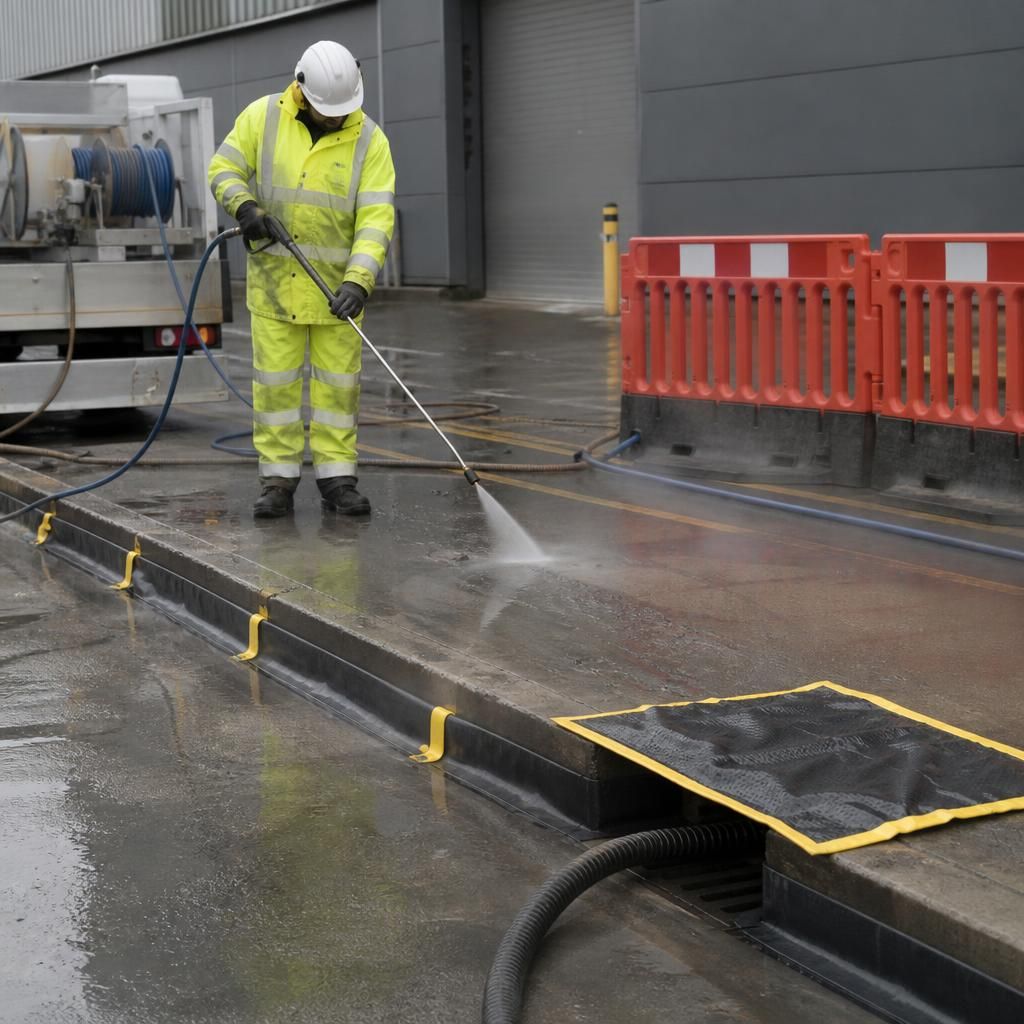
Industrial water jet cleaning minimises environmental impact by containing and recovering contaminated run-off instead of allowing it to enter surface-water drains, soil or nearby watercourses. Before work begins, the cleaning area should be assessed for drains, gullies, landscaping and other sensitive points, with suitable controls such as drain covers, bunding, temporary barriers, ground sheeting and collection channels installed where required.
Recovered water, sludge, paint flakes, oil residues and filtration materials must be assessed and handled through an appropriate treatment or disposal route. Depending on the contaminants, the water may require settlement, filtration or separation before discharge or controlled reuse. This approach prevents pollution while allowing high-pressure water to remove deposits with little or no chemical additive. The method statement should clearly allocate responsibility for containment, recovery, emergency response and compliant waste disposal.