How does industrial water jet cleaning ensure effective removal of specific industrial contaminants like oil and paint?
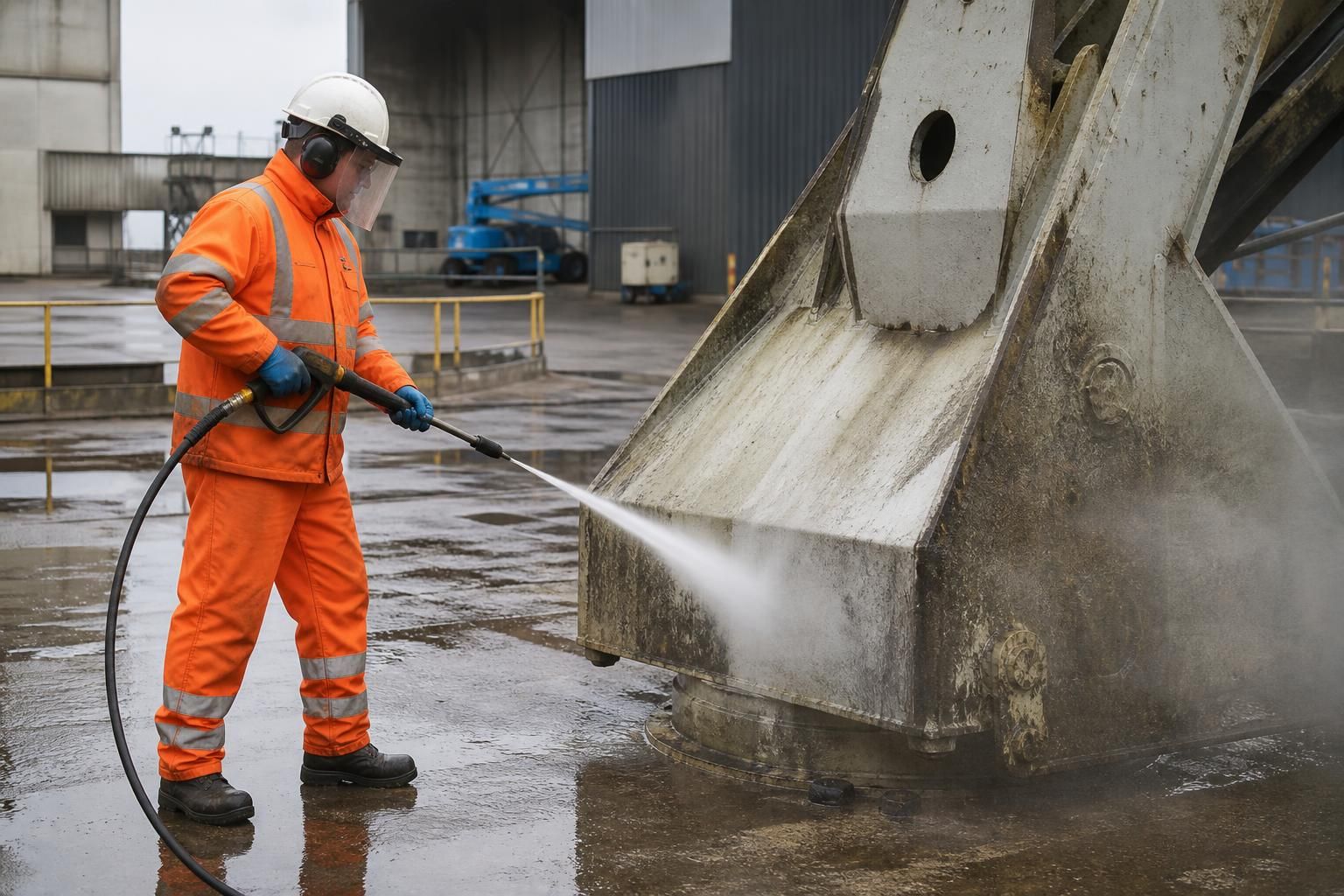
Industrial water jet cleaning uses controlled high-pressure water to break the bond between oil, paint and the underlying surface, lifting contaminants without abrasive media. Nozzle selection, water pressure, flow rate and, where suitable, heated water or an approved detergent are adjusted to match the contaminant and substrate.
Industrial water jet cleaning removes oil and paint by combining controlled water pressure, flow rate, temperature and nozzle action to break the contaminant’s bond with the substrate. The settings are matched to the contaminant and the surface: oil generally requires heat and, where appropriate, a compatible detergent, while paint may require a more concentrated jet to lift or cut through the coating without unnecessarily damaging the underlying material.
The process is not simply a matter of using the highest possible pressure. Excessive pressure can mark concrete, damage joint sealants, remove sound coatings or deform weaker components. Effective cleaning depends on selecting the least aggressive method that will achieve the required result, then controlling the water jet consistently across the work area.
How water jets remove industrial oil
Oil, grease, hydraulic fluid and similar residues adhere to surfaces by penetrating pores, collecting in texture and forming a film over the substrate. A water jet provides mechanical force that displaces this film and carries it away. On hard, non-porous surfaces such as steel, coated metal and some plastics, the jet can separate surface oil efficiently when the nozzle is operated at a suitable distance and angle.
Heated water is often useful for oily contamination because it lowers the viscosity of many oils and greases, allowing them to flow away more readily. It can also improve the action of an approved cleaning agent. Detergent is not automatically required: its use depends on the type of oil, the surface, the drainage arrangements and the site’s environmental controls. Where a detergent is used, it must be compatible with the substrate and properly rinsed away.
Porous materials, including unfinished concrete, require more careful treatment. Oil can migrate below the visible surface, so a single surface rinse may not provide complete removal. The cleaning plan may include a controlled pre-treatment, suitable dwell time, agitation from the water jet and repeated rinsing. The result should be assessed once the surface has dried, as residual darkening or an oily sheen may be less obvious while the substrate is wet.
How water jets remove paint and coatings
Paint removal relies primarily on the jet’s ability to break adhesion between the coating and the substrate. A narrow, concentrated jet can attack weakened, blistered, flaking or poorly bonded paint, lifting it in strips or fragments. On robust surfaces, a more powerful water jet may remove several coating layers or expose the underlying material. The correct approach depends on whether the specification calls for complete stripping, removal of loose paint only, preparation for recoating or cleaning of overspray.
Sound paint should not be removed unintentionally when the requirement is limited to cleaning. In this situation, the operator controls the pressure, nozzle type, stand-off distance, travel speed and angle to remove contamination while preserving the coating. A wider spray pattern may be appropriate for general washing, whereas a more focused jet may be required for localised coating failure or paint deposits.
Water jetting can also remove paint from concrete, masonry, steelwork, plant, kerbs and other industrial surfaces, but each substrate responds differently. Concrete may suffer surface erosion if the jet is held too close or moved too slowly. Steel can be left vulnerable to flash rust after coating removal, particularly where moisture and atmospheric conditions allow rapid oxidation. A post-cleaning plan may therefore include prompt drying, corrosion protection or preparation for a new coating system.
Controlling the cleaning variables
- Pressure: determines the force available to break the contaminant’s bond. It is increased only as far as necessary for the specified result.
- Flow rate: affects how much loosened oil, paint and debris can be flushed from the surface. Adequate flow is important where contamination is widespread or heavily deposited.
- Nozzle selection: controls the shape and concentration of the water stream. The choice may vary between broad-area washing, edge work, paint removal and detailed cleaning around fittings.
- Water temperature: can improve the removal of grease and some oily residues, although the permitted temperature must be suitable for the substrate, coatings, seals and equipment.
- Cleaning angle and distance: influence both impact and how effectively loosened material is driven away. Operators adjust these factors to avoid forcing contamination into joints, pores or inaccessible areas.
- Detergent or specialist pre-treatment: may help emulsify oil or soften certain deposits, but products are selected according to site controls, material compatibility and wastewater requirements.
Managing the removed contamination
Effective removal includes controlling the waste produced by the operation. Oil, paint fragments, detergent residues and contaminated wash water should not be allowed to enter surface-water drains or surrounding ground. Depending on the site and the contaminant, the work may require drain protection, bunding, temporary collection, filtration, vacuum recovery or disposal through an authorised waste route.
Paint removal can create chips or suspended particles, while oily water can spread beyond the immediate work zone if run-off is not controlled. The method statement should therefore address containment before cleaning begins. This is particularly important at industrial premises, service yards, transport facilities, manufacturing sites and areas connected to drainage or watercourses.
Inspection and verification
Before work starts, a test area is used to confirm that the selected settings remove the target contaminant without unacceptable surface damage. The test should represent the actual substrate, coating condition and degree of contamination wherever possible. After cleaning, the surface is inspected for remaining oil, loose paint, staining, embedded residue, coating damage and changes in texture.
Where the surface is being prepared for repair or recoating, the acceptance requirements should be agreed in advance. These may include a visually clean appearance, removal of loose material, a suitable surface profile or confirmation that no oily residue remains. Water jet cleaning can remove contamination very effectively, but it does not replace any separate preparation, drying or corrosion-control requirements specified for the next stage of the project.
For this reason, industrial water jet cleaning is most effective when treated as a controlled process rather than a generic pressure-washing task. Accurate identification of the oil or paint, a substrate assessment, controlled trial work, suitable equipment and responsible wastewater management allow the cleaning method to deliver the required result while protecting the asset and the surrounding site.
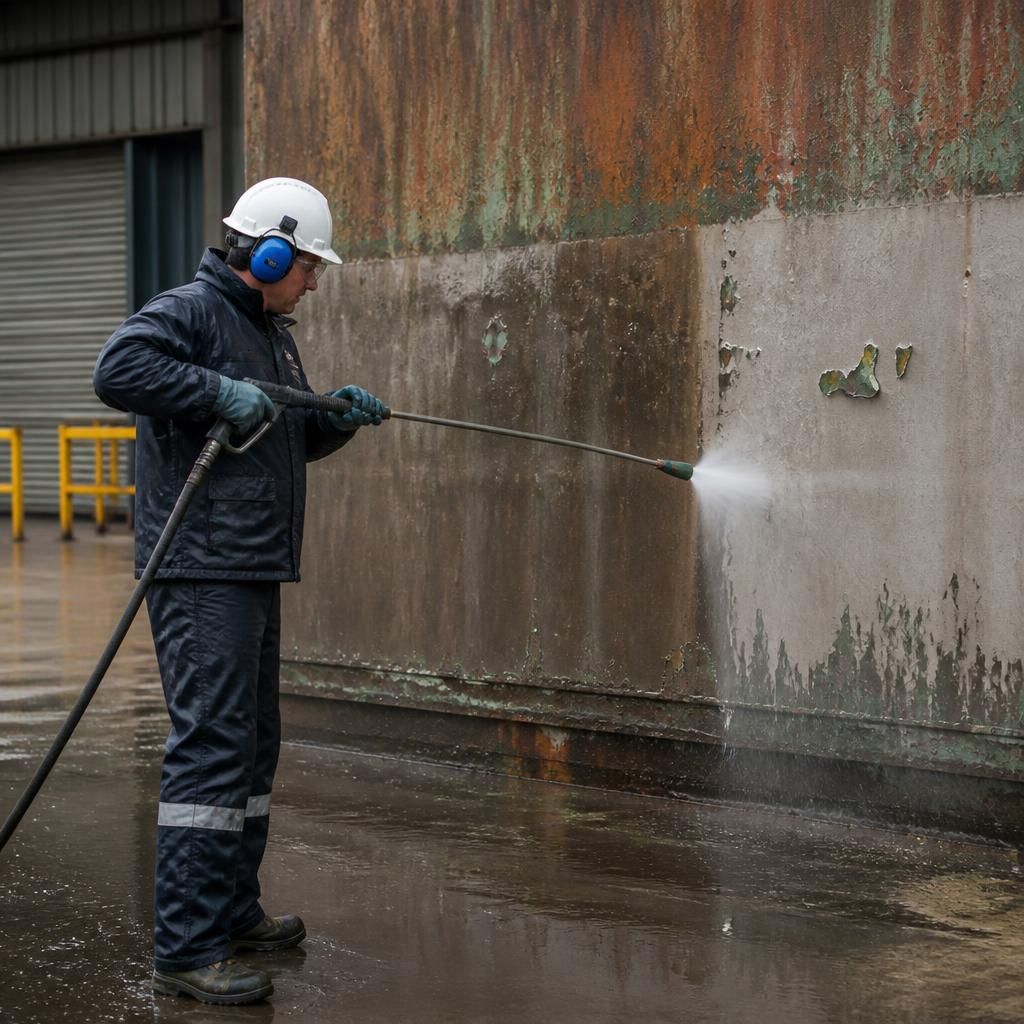
Effective industrial water jet cleaning depends on matching the jet to both the contaminant and the underlying surface. Oil and grease may respond better to heated water and a compatible detergent, while bonded or flaking paint usually requires controlled mechanical impact from a suitable nozzle. A small test area confirms whether the chosen pressure, temperature, spray pattern and working distance remove the contamination without eroding concrete, damaging sound coatings or marking metal.
The test also helps establish how removed oil, paint fragments and wash water will be contained. This allows the cleaning team to set practical controls before work begins, including drain protection, recovery of contaminated water and any required post-cleaning treatment such as drying or corrosion protection.
Arrange an Industrial Water Jet Cleaning Assessment
Arrange an industrial water jet cleaning assessment to identify the oil, paint or other contaminants present and confirm the safest effective cleaning method for the surface. We will review access, containment and wastewater requirements before preparing a suitable approach.
For a free quote & consultation
Contact usAccreditations