
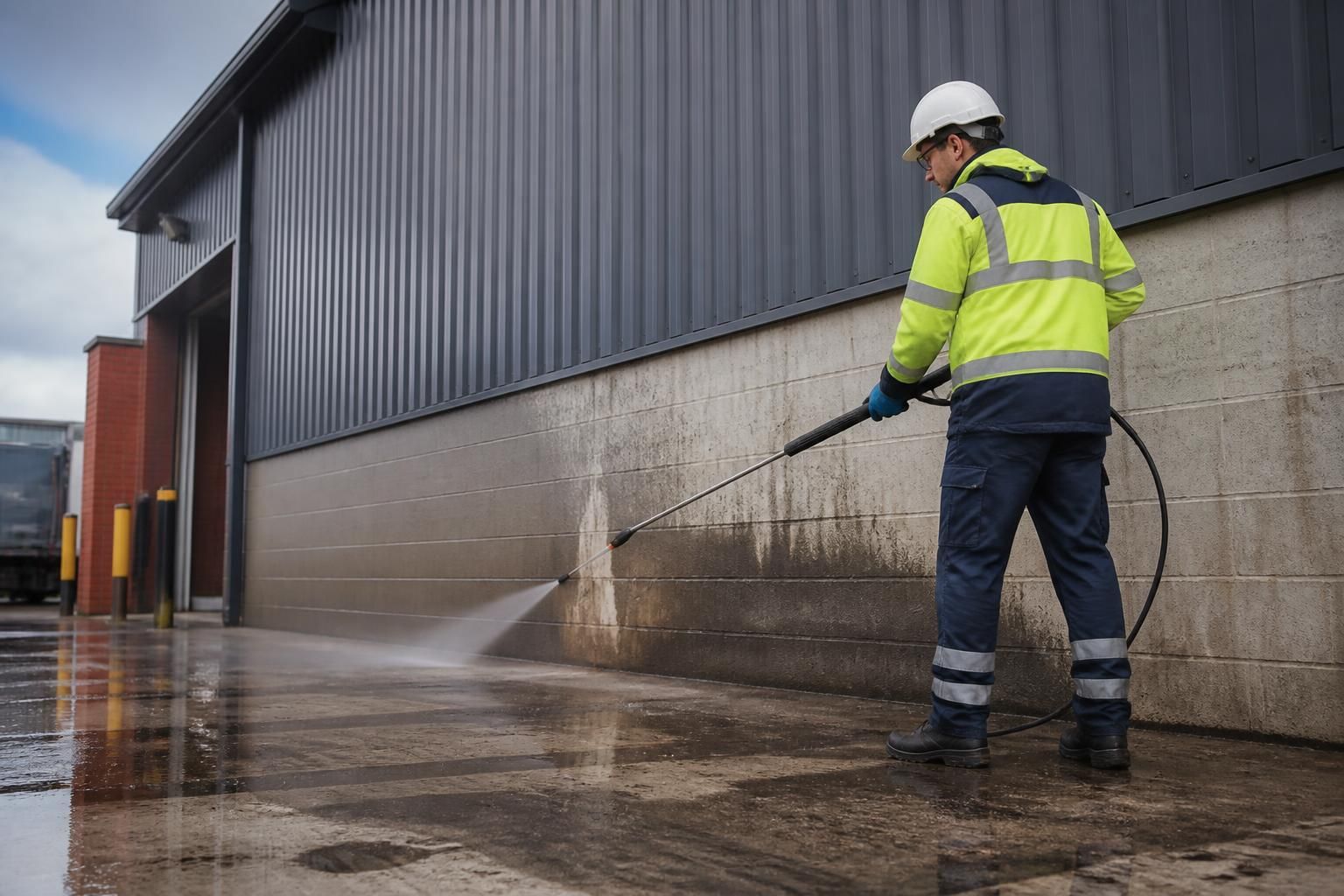
What specific surfaces can be cleaned using industrial jet washing?
Industrial jet washing can clean a wide range of durable surfaces, including concrete, paving, brickwork, cladding, façades, roofs, loading areas and car parks. The correct pressure, water temperature and cleaning method must be selected for each material to remove dirt, oil, moss, algae, coatings and other deposits without causing damage.
Industrial jet washing can clean most hard, durable external surfaces, including concrete, tarmac, block paving, brickwork, stone, façades, cladding, roofs, loading areas, car parks, plant areas and service yards. The appropriate pressure, water temperature, nozzle, distance and cleaning agent must be selected for each material so that deposits are removed without dislodging joints, eroding the surface or forcing water into vulnerable areas.
The method is particularly effective where surfaces have accumulated traffic film, mud, dust, oil, grease, algae, moss, bird fouling, atmospheric staining or construction residues. Jet washing can also be combined with steam cleaning, detergents, rotary surface cleaners and vacuum recovery when a controlled or low-runoff process is required.
Concrete and reinforced concrete
Concrete floors, slabs, ramps, steps, loading bays and external aprons are commonly cleaned using industrial jet washing. The process can remove general soiling, tyre marks, algae, moss, cement residue and some oil contamination. A rotary cleaner is often suitable for broad, level areas because it distributes the water more evenly than a hand-held lance and helps produce a consistent finish.
Older or weathered concrete requires care. Excessive pressure can expose aggregate, damage a weak surface layer or make existing defects more visible. Oil and hydraulic-fluid staining may need a suitable degreaser and additional treatment rather than pressure alone. Where the concrete is painted, sealed or resin-coated, the cleaning method must be chosen to preserve the coating.
Tarmac and asphalt
Car parks, access roads, service yards and pedestrian routes made from tarmac or asphalt can be cleaned to remove mud, organic growth, loose debris and general traffic film. The operator must avoid aggressive treatment of friable, cracked or recently laid surfaces, as high pressure and heat can loosen aggregate or disturb the binder.
Oil marks on tarmac can be difficult to remove completely because they may have penetrated the material. Pre-treatment, controlled agitation and suitable absorbent or recovery procedures may be required. Cleaning should not be used as a substitute for repairing potholes, failed edges or areas where the surface is already breaking down.
Block paving and concrete paving
Block paving, paving slabs and concrete flags can usually be cleaned effectively, including pedestrian areas, courtyards, forecourts and external walkways. Jet washing can remove moss, algae, dirt and weeds from the surface and, where appropriate, from the joints.
Strong pressure can remove jointing sand, lift damaged blocks or drive water beneath loose paving. After cleaning, joints may need to be re-filled with a suitable material once the surface is fully dry. Care is also needed around sealed paving, decorative finishes, drainage channels and areas where water could enter adjacent buildings.
Brickwork and masonry
External brick walls, boundary walls, retaining walls and robust masonry can be cleaned of dirt, algae, moss and some atmospheric deposits. Brick type, age, condition and mortar strength are important. Older or softer bricks may be damaged by aggressive jetting, while weak mortar joints can be scoured or opened.
For sensitive brickwork, a lower-pressure wash, steam cleaning or a more controlled specialist process may be preferable. A small test area should be assessed before full cleaning, particularly where the wall is historic, painted, lime-mortared or already showing spalling, cracking or flaking.
Stone and hard landscaping
Natural and manufactured stone paving, steps, plinths, walls and external features may be cleaned using jet washing when the material is sound and compatible with the chosen method. Granite and some dense stones generally tolerate more robust cleaning than softer or more porous materials such as limestone and certain types of sandstone.
Jet washing can alter the appearance of weathered stone if the surface patina is removed. It may also open pores, expose aggregate or drive moisture into joints. The cleaning plan should therefore consider the stone’s hardness, porosity, finish and any existing sealant before work begins.
Metal cladding and industrial façades
Steel, aluminium and composite cladding can be cleaned to remove dust, traffic film, algae, bird fouling and other external deposits. This is relevant to warehouses, manufacturing units, retail premises, office buildings and distribution facilities.
Cladding should not automatically be treated like concrete. Pressure and nozzle selection must account for panel joints, seals, vents, louvres, fixings, paint finishes and concealed cavities. Water must be directed in a way that avoids forcing moisture behind panels or through openings. Where access is required at height, the equipment and working method must also suit the building and its surrounding area.
Rendered, painted and coated façades
Render, painted walls and coated façades can sometimes be cleaned with low- or medium-pressure washing, but their condition must be checked first. Peeling paint, hollow render, cracks, exposed substrate and failed sealant can all allow water ingress or worsen existing defects.
Gentler pressure, wider fan patterns and controlled water flow are usually more appropriate than a concentrated high-pressure jet. Cleaning agents may be used for biological growth or staining, but they must be compatible with the coating and managed so that runoff does not affect people, vegetation or drainage systems.
Roofs and roof-mounted areas
Industrial and commercial roofs may be cleaned to remove moss, algae, lichen, dirt and loose deposits. Suitable methods depend on the roof covering. Some robust metal and concrete roof surfaces can tolerate carefully controlled washing, while fragile, aged, coated or membrane roofs may require a low-pressure or non-jetting approach.
Before cleaning, the roof should be checked for fragile sheets, damaged laps, exposed insulation, failed flashings, blocked outlets and areas where water could enter the building. Jet washing is not appropriate simply because a roof is dirty; the cleaning technique must protect the covering and avoid spreading contamination into gutters, downpipes or rainwater systems.
Loading bays, service yards and plant areas
Industrial jet washing is well suited to loading docks, delivery areas, warehouse yards, plant rooms with suitable external flooring and waste-handling areas. These surfaces often have a mixture of mud, rubber deposits, oil, grease, food residue, dust and spillages.
Heavy contamination may require pre-treatment, hot water or steam, mechanical agitation and vacuum recovery. Where oils, chemicals or other controlled substances are present, the waste water must be contained and handled in accordance with site procedures and applicable environmental requirements. A visual clean is not sufficient if contamination has entered joints, drains or porous concrete.
Car parks, walkways and shared access areas
Jet washing can clean car park decks, pedestrian routes, ramps, steps, kerbs and forecourts. It can improve the removal of algae and other slippery deposits, although cleaning does not correct underlying drainage, shading or surface defects that allow regrowth.
For occupied premises, the work should be planned around vehicle and pedestrian movements. Signs, barriers and controlled access help protect people from spray, slippery surfaces and equipment. The area should be left in a condition that allows it to dry safely and prevents dirty runoff from spreading onto adjoining routes.
Graffiti and surface markings
Paint, marker ink, adhesive residue and unwanted surface markings can often be removed from concrete, brick, stone, metal and some cladding. The correct approach depends on the substrate and the type and age of the marking. A controlled combination of detergent, steam or pressure may be more effective than increasing pressure alone.
Porous materials may retain a shadow or absorb pigment below the surface, so complete removal cannot always be guaranteed without risking damage. Protective coatings can be considered after cleaning where they are suitable for the surface and the site’s maintenance requirements.
Surfaces requiring additional caution
- Soft or porous brick, sandstone, limestone and weathered masonry.
- Painted, powder-coated, anodised or otherwise finished metalwork.
- Render, insulation systems, fragile cladding and deteriorated coatings.
- Roof membranes, aged roof sheets, rooflights and sealed joints.
- Cracked concrete, loose paving, friable tarmac and failed mortar.
- Electrical equipment, vents, door seals, roller shutters and other water-sensitive components.
Before cleaning, the surface should be inspected for age, material, coating, cracks, loose sections, drainage routes and signs of previous damage. A test patch helps establish whether the chosen pressure, temperature and cleaning product achieve the required result without changing the appearance or integrity of the substrate. The final method may be adjusted across the site because one facility can contain several different materials.
Industrial jet washing is therefore best viewed as a range of controlled cleaning techniques rather than one fixed pressure setting. Concrete and paving may accept a more productive surface-cleaning system, whereas masonry, façades, roofs and coated materials often need lower pressure, greater working distance, specialist detergents or steam. Selecting the method according to the surface is what allows large commercial areas to be cleaned thoroughly while protecting the building fabric and managing wastewater responsibly.
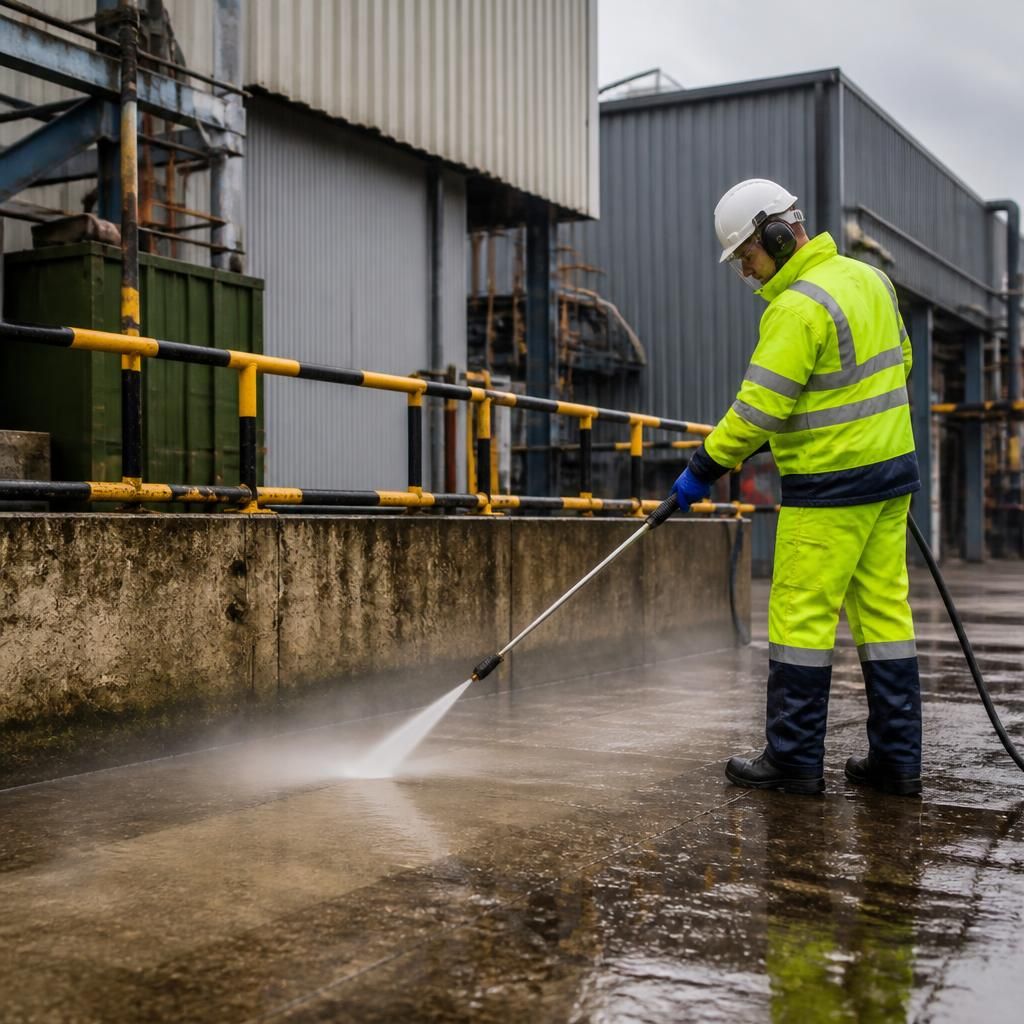
Industrial jet washing can clean many external surfaces, but the pressure and cleaning method must be matched to the material. Concrete, paving and sound tarmac generally tolerate more productive cleaning, while brickwork, stone, cladding, coatings and roof coverings may require lower pressure, greater working distance or steam cleaning.
A test patch should be completed before wider work begins, particularly where surfaces are aged, porous, painted, sealed or already damaged. This confirms that dirt, algae, oil or other deposits can be removed without stripping coatings, eroding masonry, displacing jointing sand or forcing water behind panels and seals.