
What safety measures are implemented during an industrial jet washing service?
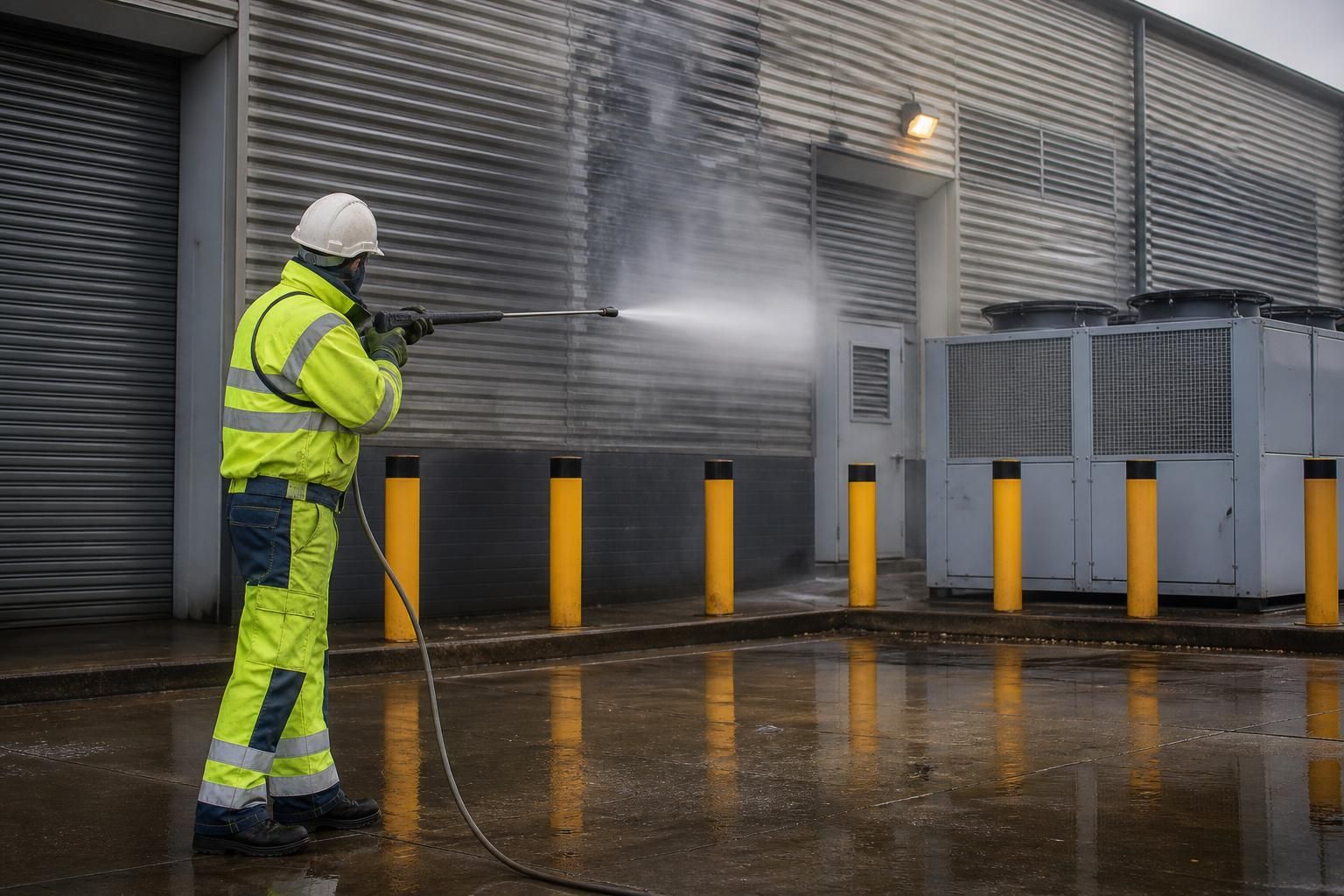
Industrial jet washing services use trained operatives, task-specific risk assessments, suitable personal protective equipment and controlled exclusion zones to protect people, property and equipment. Operators also manage water, electricity, access equipment, overspray and waste in line with site requirements and relevant health and safety procedures.
Industrial jet washing is controlled through a documented risk assessment, trained operatives, suitable personal protective equipment and clear site controls. Before work starts, the cleaning team considers the pressure and temperature required, the surface condition, access arrangements, nearby people and vehicles, electrical equipment, drainage, chemicals, waste water and any other site-specific hazards. Controls are then put in place to protect operatives, building users, visitors, the property and the surrounding environment.
Site assessment and method statement
A competent supervisor should assess the work area before equipment is connected or cleaning begins. This includes identifying fragile surfaces, overhead obstructions, confined areas, trip hazards, traffic routes, access limitations and locations where water could enter buildings or sensitive equipment. The planned sequence, equipment, cleaning agents, access systems, water recovery arrangements and emergency procedures are recorded in the relevant risk assessment and method statement.
Where the site has its own induction, permit-to-work system or contractor rules, these requirements are incorporated into the cleaning plan. The team should also confirm who is responsible for isolating machinery, managing vehicle movements, providing site access and responding to an emergency.
Training and competent operation
Jet washing equipment is operated by people who have been trained in the safe use of the machinery and the risks associated with high-pressure water. Operatives need to understand how pressure, flow rate, nozzle selection, temperature and cleaning chemicals affect both the surface and the risk of injury. They should be able to recognise defects in hoses, lances, couplings and safety controls, and know when work must stop.
Training is also required for any additional equipment used on the project. This may include powered access equipment, pressure washers, water recovery systems, chemical dosing equipment and traffic-management measures. Site-specific briefings help ensure that operatives understand local hazards rather than relying only on general training.
Personal protective equipment
Personal protective equipment is selected according to the task and the hazards identified. Typical controls may include:
- Water-resistant protective clothing and gloves to reduce exposure to spray, contaminated water and cleaning chemicals.
- Safety boots with suitable grip and protection against wet floors, falling items and puncture hazards.
- Eye protection or a face shield to protect against high-pressure spray, loosened debris and chemical splashes.
- Hearing protection where equipment noise makes it necessary.
- Head protection and high-visibility clothing where there is a risk from falling objects, vehicles or other site activity.
- Respiratory protection where the assessment identifies a risk from aerosols, dust or chemical vapours that cannot be adequately controlled by other means.
PPE is an important final layer of protection, but it does not replace safe working distances, equipment controls, exclusion zones or proper planning.
Pressure, heat and equipment controls
High-pressure water can cut skin, damage eyes, loosen masonry and force contaminants into the air or surrounding areas. Operatives keep the lance pointed away from people, maintain a controlled stance and avoid directing spray at electrical components, sealed joints, vents, glazing or vulnerable finishes. Nozzle changes, hose connections and equipment adjustments are carried out with the system depressurised.
Hot-water systems introduce additional burn and fire-related considerations. Hoses, fittings and surfaces may become hot, so suitable gloves, clothing and operating procedures are required. Fuel, burners and electrical supplies are checked and positioned to avoid contact with water, combustible materials and vehicle routes. Equipment is inspected before use, and defective hoses, trigger mechanisms, guards or couplings are removed from service.
Exclusion zones and communication
A clearly defined exclusion zone prevents pedestrians, employees, visitors and unauthorised contractors from entering the spray area. Barriers, cones, signs and, where necessary, a banksman or site marshal are used to control access. The size of the zone depends on the pressure, nozzle, height of the work, wind conditions, overspray and the likelihood of debris being displaced.
Work should be coordinated with the site’s normal operations. This may involve scheduling cleaning outside busy periods, separating the work from loading bays and walkways, controlling vehicle movements and notifying occupants before water or noise could affect them. Operatives should use agreed communication methods when visibility is limited or when more than one person is working around the equipment.
Work at height and access equipment
Cleaning from roofs, façades, platforms or elevated structures requires a separate assessment of falls, falling objects, fragile surfaces and rescue arrangements. The safest practical method is selected first, which may involve ground-level equipment, telescopic systems, mobile access platforms or other suitable access equipment.
Access equipment must be appropriate for the ground conditions, reach and cleaning activity. It should be inspected and used by trained personnel, with gates, restraints and stabilisers used as required. Operatives must not overreach from platforms or use ladders as a substitute for a properly planned access system. Areas below elevated work are controlled to protect people from falling tools, debris and contaminated water.
Electrical and machinery safeguards
Water and electricity are managed as a specific hazard. Electrical installations, sockets, lighting, control panels and exposed cables are identified before cleaning. Where appropriate, equipment is isolated, protected or kept outside the spray area, and residual-current protection and suitable outdoor-rated connections are used. Extension leads and connections are positioned to prevent immersion, crushing or trip hazards.
Industrial machinery may need to be shut down, locked off or covered before cleaning. The client or responsible site representative should confirm isolation requirements, as a cleaning contractor must not assume that machinery is safe simply because it is not operating at the time.
Chemical handling and contaminated surfaces
Where detergents, degreasers, biocides or other products are required, the team follows the product safety information and the relevant COSHH controls. Chemicals are stored, diluted and applied as instructed, with suitable gloves, eye protection and ventilation. Products are not mixed unless the manufacturer’s instructions specifically permit it.
The risk assessment should consider the substance being removed as well as the cleaning product. Oil, fuel residues, biological contamination, mould, industrial dust and other deposits may require additional hygiene, containment or disposal controls. Operatives avoid creating unnecessary spray or aerosol, and contaminated PPE and equipment are cleaned or disposed of safely after the work.
Slips, overspray and water management
Jet washing creates wet surfaces and can move dirt, oil and loose material into pedestrian routes or drainage systems. The work area is therefore controlled while surfaces are wet, with safe routes maintained or temporarily closed. Water is directed away from entrances, electrical installations, stock and sensitive landscaping wherever possible.
Drainage arrangements are agreed before cleaning. Depending on the site and the contaminants involved, wastewater may need to be contained, filtered, collected or removed rather than allowed to enter surface-water drains. Spill kits, wet-floor signs, squeegees, pumps or recovery equipment may be used to reduce the risk of pollution and uncontrolled runoff.
Weather and changing site conditions
Wind, rain, ice, poor visibility and extreme temperatures can change the risk profile. Wind may carry spray or chemicals beyond the exclusion zone, while freezing conditions can create dangerous ice. Elevated work is particularly sensitive to wind and poor weather. The supervisor should monitor conditions throughout the service and pause or revise the method when the planned controls are no longer effective.
Emergency arrangements and completion checks
Before starting, the team should know how to raise an alarm, contact the responsible site person, access first aid and report an incident. Emergency arrangements should cover pressure-related injuries, chemical splashes, falls, fire, electrical incidents, spills and damage to property. High-pressure injuries can appear less serious than they are, so medical assessment is important following an injection-type injury or other significant contact.
At completion, equipment is depressurised and removed safely, barriers remain in place until surfaces and routes are safe, and the area is checked for standing water, debris, displaced materials and accidental damage. Any incident, near miss, defect or change to the agreed method should be reported to the relevant site contact. These checks help confirm that the premises are safe to hand back and that any follow-up maintenance or repair requirement is identified.
For a complex industrial project, the client should provide information about hazardous substances, fragile areas, underground and overhead services, drainage, traffic routes, access restrictions and any required permits. Sharing this information before mobilisation allows the cleaning method and safety controls to be matched to the facility rather than applying a generic approach.
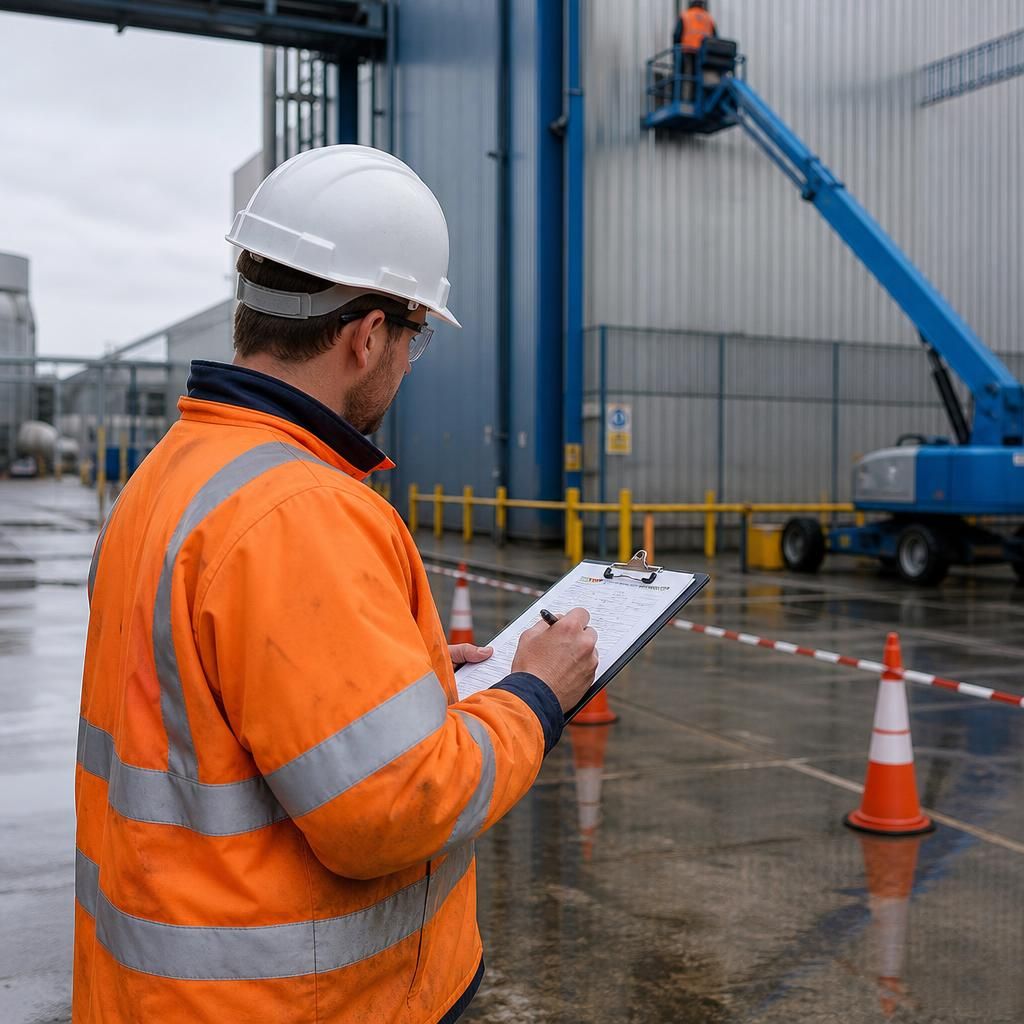
Industrial jet washing safety starts with a site-specific assessment before equipment is connected or cleaning begins. The cleaning team identifies risks such as fragile surfaces, electrical installations, vehicle movements, access restrictions, drainage points and areas where spray or debris could affect people or equipment.
These findings are recorded in the risk assessment and method statement, which set out the cleaning method, exclusion zones, personal protective equipment, access arrangements, water recovery and emergency procedures. The plan can then be coordinated with your site rules, permits and operational requirements before work starts.