
What maintenance procedures should be established post-service to prolong the cleanliness and integrity of industrial surfaces?
After industrial jet washing, establish a scheduled inspection and maintenance plan covering routine rinsing, prompt removal of new spills or staining, drainage checks, surface repairs and controlled re-cleaning. Record the cleaning methods and surface condition, follow any agreed aftercare guidance, and address damaged coatings, joints or sealants promptly to preserve both cleanliness and material integrity.
Post-service maintenance should combine documented inspections, routine removal of fresh contamination, drainage checks, timely repairs and controlled re-cleaning. This approach preserves the appearance of industrial surfaces while reducing the risk of staining, corrosion, coating failure, slip hazards and water-related deterioration. The maintenance plan should reflect the surface material, site use, exposure to contaminants and the cleaning method applied.
Record the condition at handover
Keep a service record describing the areas cleaned, the surface types, the cleaning system used and any defects identified before or during the work. It is useful to retain photographs of representative areas, particularly where there were existing cracks, failed joints, damaged coatings, oil staining or corrosion. This provides a reference for future inspections and helps distinguish new deterioration from pre-existing damage.
The handover record should also note any areas requiring observation, restrictions on access, drying requirements and aftercare recommendations. Where a coating, sealant or jointing material has been affected by contamination or requires separate repair, record this as a planned maintenance item rather than allowing the defect to remain untreated.
Establish condition-based inspections
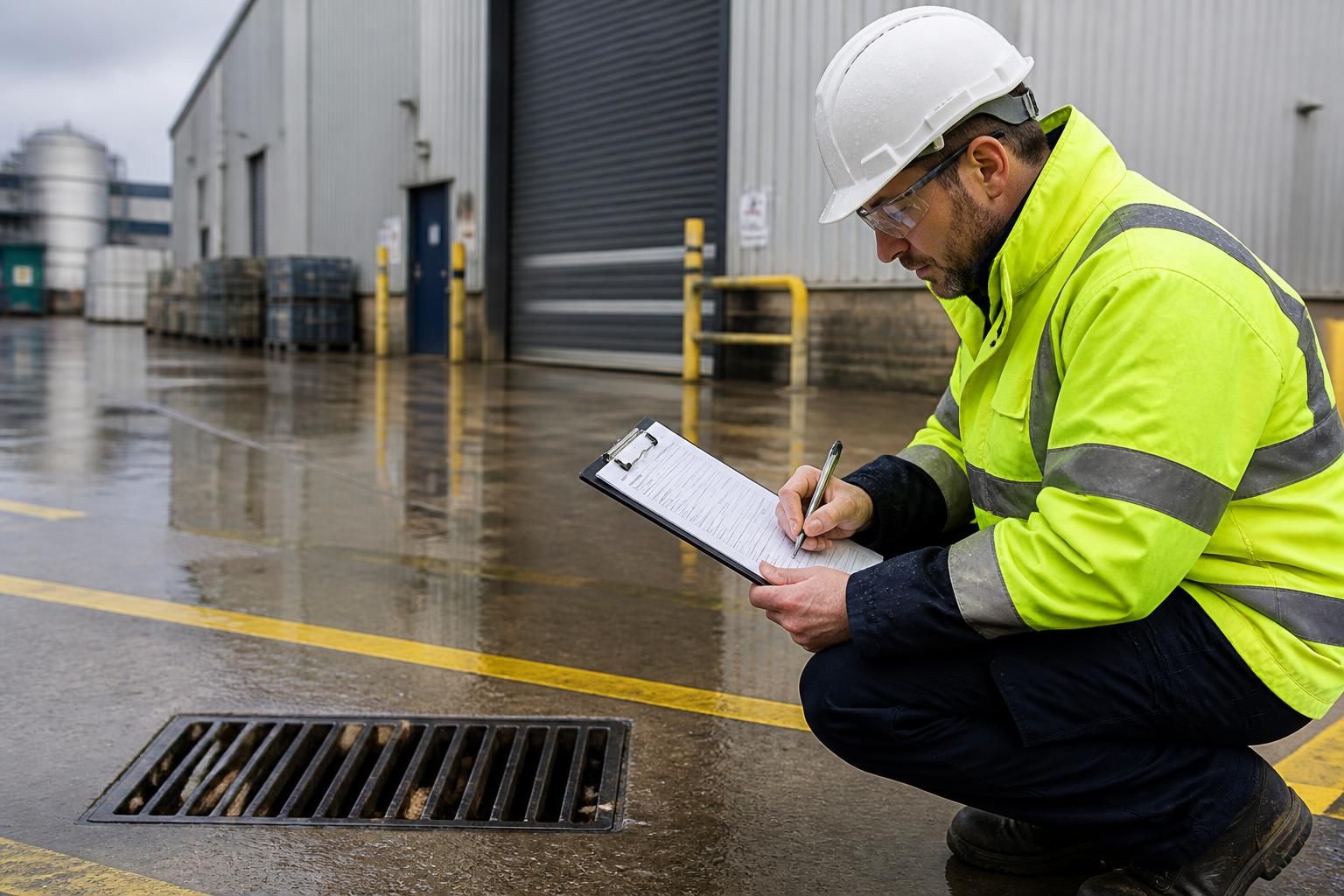
Inspect cleaned surfaces at a frequency suited to the level of use and contamination. High-traffic yards, loading bays, waste-handling areas, food or manufacturing premises and sites exposed to road spray usually require closer monitoring than low-use areas. Inspections should cover:
- New oil, chemical, food, organic or general dirt deposits.
- Standing water, blocked channels, silt, leaves and debris around drains.
- Cracking, spalling, loose material or movement in concrete and masonry.
- Blistering, flaking, chalking or lifting of painted and protective coatings.
- Open joints, failed sealants and water ingress around penetrations.
- Corrosion on steelwork, fixings, gates, cladding and other exposed metalwork.
- Changes in surface texture or areas that may become slippery when wet.
Inspections should be recorded with the location, observed condition, likely cause and required action. A simple site plan or marked-up photograph can help maintenance teams locate recurring problems accurately.
Remove contamination promptly
Fresh spills are generally easier to manage before they dry, migrate into porous materials or are spread by vehicle and foot traffic. Introduce a clear spill-response procedure identifying who isolates the area, who applies suitable absorbent materials and who arranges collection and disposal. Do not wash oil, chemicals or contaminated sediment into surface-water drains. The correct response depends on the substance, so staff should follow the site’s COSHH information, spill plan and waste-handling procedures.
Routine sweeping or low-pressure rinsing may be appropriate for loose dust, grit and general debris, provided the method does not move pollutants into drainage systems or damage the surface. Abrasive methods, strong chemicals and repeated high-pressure cleaning should not be used as default maintenance measures because they can wear coatings, open joints and increase surface porosity.
Keep drainage and water management effective
Clean surfaces can quickly become dirty or deteriorate if water cannot drain correctly. Check gullies, channels, grates, kerbs and outfalls for blockages and remove accumulated silt or organic matter using an approved process. Investigate ponding rather than repeatedly cleaning around it, as standing water may indicate settlement, blocked drainage, inadequate falls or a damaged channel.
Any wash water generated during follow-up cleaning should be managed in accordance with the site drainage arrangements and applicable environmental requirements. Where contamination is present, use appropriate containment and recovery rather than allowing dirty water to enter an uncontrolled discharge point.
Repair defects before they spread
Arrange repairs to cracks, joints, sealants, damaged render, loose masonry, concrete defects and failed coatings as soon as they are identified. Cleaning does not correct structural or weatherproofing defects; it can simply make them more visible. Open cracks and joints can admit water, while damaged coatings may expose metal or masonry to further contamination and corrosion.
Use repair materials compatible with the substrate and the existing finish. The surface should be assessed and prepared before patching, repainting or resealing. If a further cleaning operation is needed, coordinate it with the repair programme so that newly repaired or coated areas are not exposed to unsuitable pressure, heat, chemicals or traffic before they have cured.
Control traffic and site activities
Where practicable, protect cleaned areas from unnecessary vehicle movements, material storage, loading activity and maintenance work that could recontaminate or mark the surface. Review routes used by forklifts, delivery vehicles and waste equipment, particularly where turning forces or dropped materials may damage concrete, paving or coatings. Use suitable protection during adjacent construction, painting, welding or landscaping work, and remove protection carefully to avoid trapping moisture or transferring contamination.
Any temporary barriers or access controls used during and immediately after cleaning should remain in place until the surface is safe for normal use and any coating, sealant or treatment has reached the required condition. Site teams should be told which cleaning products and equipment are permitted for routine upkeep.
Use controlled re-cleaning
Plan follow-up cleaning according to the type and rate of soiling rather than waiting for heavy deposits to build up. Light, frequent maintenance using the least aggressive effective method is usually preferable to infrequent intensive cleaning. The chosen pressure, temperature, flow rate, nozzle, detergent and recovery method should remain appropriate for the material and any protective coating.
Before re-cleaning, identify the contaminant and inspect the surface. Test an inconspicuous area where the material, coating or stain response is uncertain. Avoid directing water into electrical equipment, vents, façade joints, insulation, roof details or other vulnerable points. Repeated cleaning should be reviewed if the same staining returns, as recurrence may indicate a leak, defective drainage, vehicle emissions, process contamination or another underlying source.
Review the plan and escalate recurring issues
Use inspection records to adjust cleaning frequencies, spill controls, drainage maintenance and repair priorities. Recurring staining, corrosion, coating failure, unusual dampness or surface movement should be referred for an appropriate technical assessment rather than managed solely through additional jet washing. Maintaining a clear history of cleaning and repairs helps coordinate future services, protect warranties where relevant and preserve the long-term integrity of the industrial site.
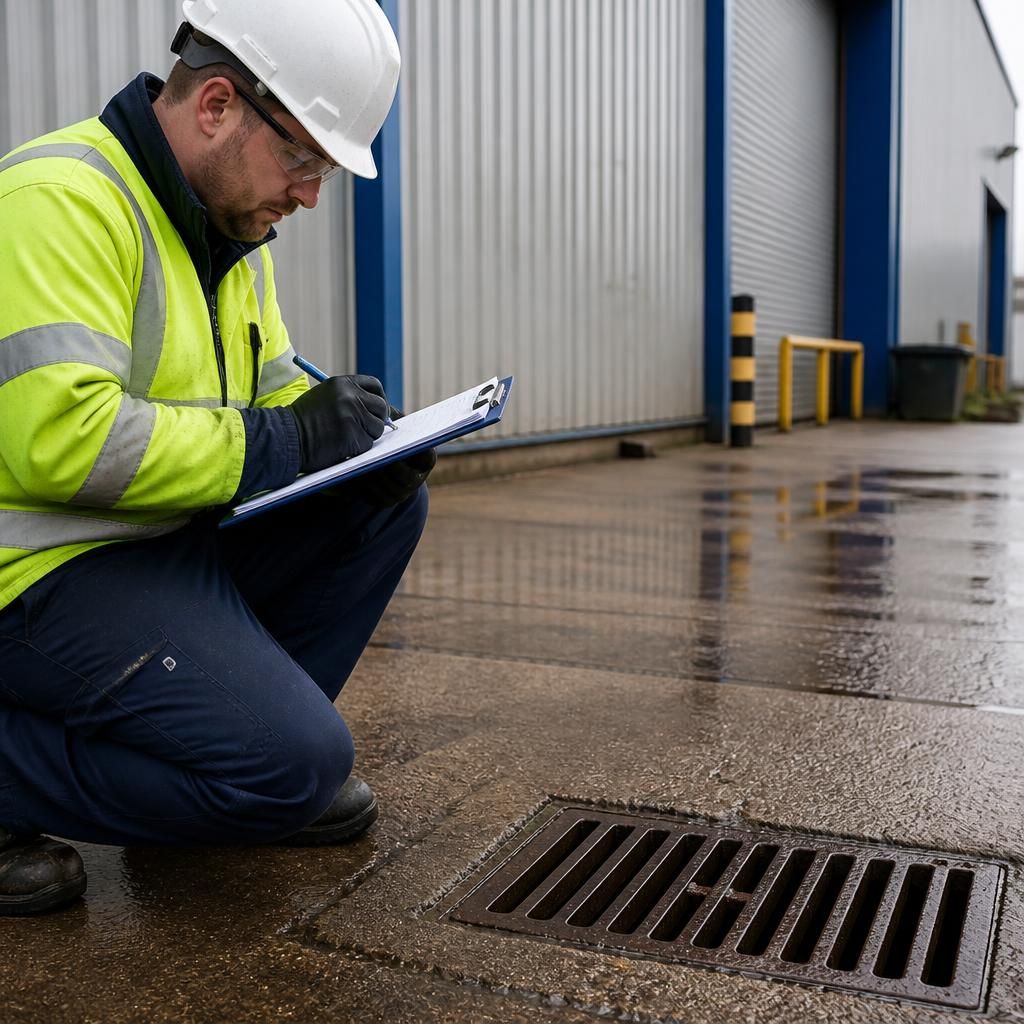
Post-service inspections are a documented check of cleaned industrial surfaces, drainage points and protective finishes to identify new contamination or early signs of deterioration. They should be scheduled according to site use, traffic, exposure to spills and the type of material cleaned.
Record the location and condition of oil deposits, standing water, blocked drains, cracks, loose material, coating failure, open joints and corrosion. Photographs and the cleaning handover record provide a useful comparison for future visits. Fresh spills should be dealt with promptly using the site’s spill-response and waste-handling procedures, while recurring staining or dampness should be investigated rather than repeatedly treated with high-pressure cleaning.
Arrange Your Industrial Surface Maintenance Plan
Arrange your industrial surface maintenance plan with Encanto Exterior Cleaning to coordinate inspections, follow-up cleaning, drainage checks and essential repairs. Contact our team to agree an aftercare schedule suited to your site and the surfaces we have cleaned.