
What is the environmental impact of industrial jet washing?
Industrial jet washing can affect the environment through water consumption, energy use, cleaning chemicals, noise and contaminated runoff carrying oil, dirt or other pollutants into drains and waterways. Responsible contractors reduce these risks by using efficient equipment, selecting suitable pressures and detergents, controlling and collecting wastewater, and disposing of pollutants in line with environmental regulations.
Industrial jet washing can affect the environment through water consumption, energy use, cleaning chemicals, noise and contaminated wastewater. The level of impact depends on the equipment, pressure and temperature selected, the condition of the surface, the substances being removed, and how runoff is contained, treated and disposed of. A responsible service aims to achieve the required cleaning result while using no more water, heat or chemical product than necessary.
Water consumption is a primary consideration. High-pressure equipment can clean large areas efficiently, but poorly selected machinery, excessive rinsing or repeated passes can increase water use. Water-efficient systems, controlled trigger guns, suitable nozzles and experienced operators help reduce unnecessary consumption. Where appropriate, recovered or recycled water may be used, provided it is suitable for the equipment and the cleaning task.
Water use also needs to be considered alongside the condition of the surface. A lower pressure or a slower cleaning method may sometimes require more time, while excessive pressure can damage coatings, mortar joints or drainage components and create additional cleaning, repair or replacement work. The most sustainable approach is therefore not simply to use the lowest pressure, but to select the least intensive method that removes the contamination safely and effectively.
Energy use and carbon emissions vary according to the equipment and operating conditions. Cold-water pressure washing generally requires less energy than hot-water cleaning, although hot water can remove grease, oil and biological growth more quickly and may reduce the amount of detergent or repeated cleaning required. Equipment powered by electricity, fuel or other energy sources has different environmental characteristics. Efficient engines, well-maintained machines, sensible operating times and avoiding unnecessary idling all help limit energy use.
Cleaning chemicals can affect soil, drainage systems and waterways. Detergents, degreasers, biocides and other treatments should only be used when they are necessary for the contamination and compatible with the surface. Products should be selected using their safety and environmental information, then diluted and applied according to the manufacturer’s instructions. Using more product than required does not necessarily improve the result and can make wastewater more difficult to manage. Chemical residues must not be allowed to enter surface-water drains or watercourses.
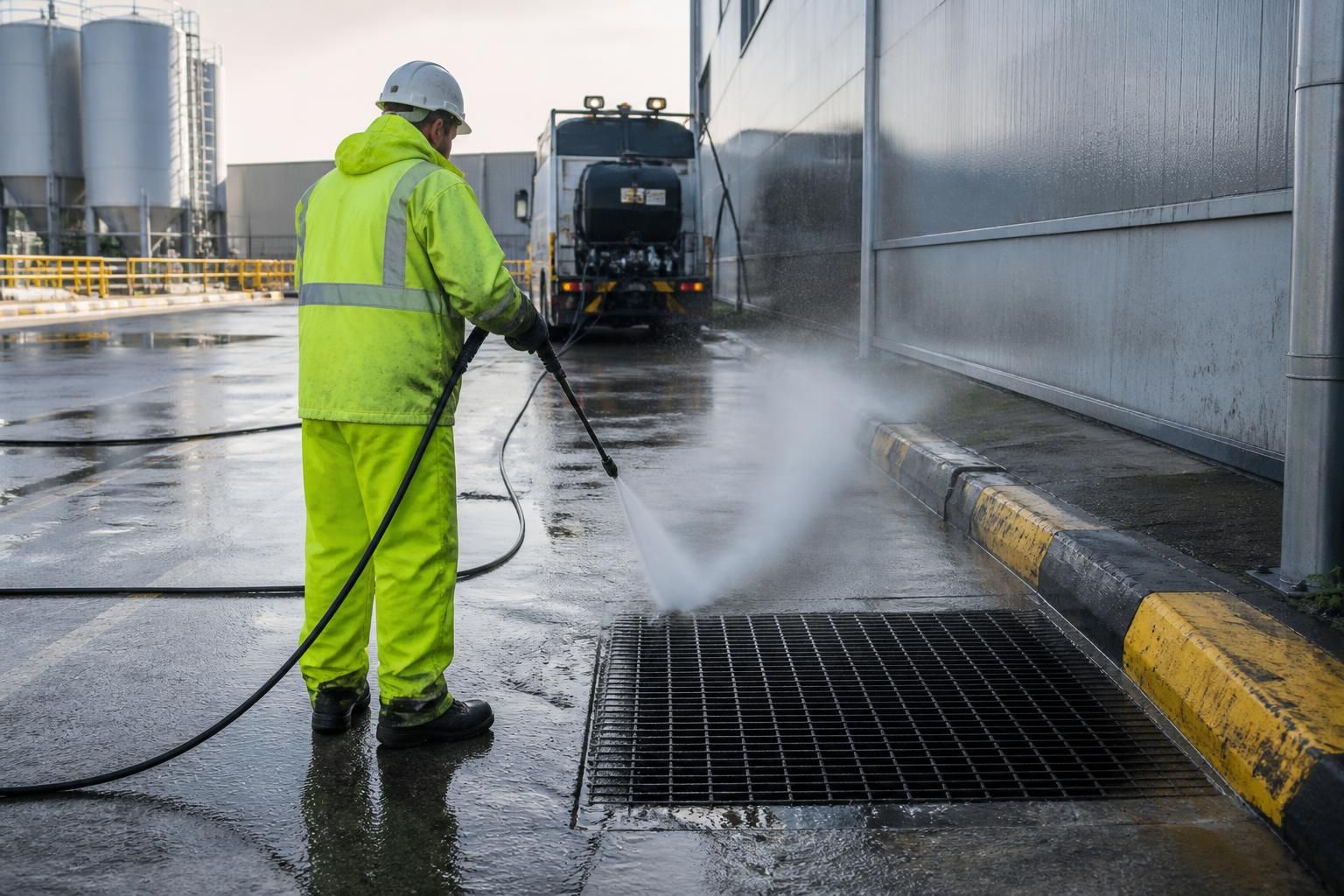
Runoff is often the most significant environmental risk on industrial sites. Jet washing can mobilise oil, fuel residues, heavy deposits, paint particles, metals, silt, algae and other contaminants that were previously attached to the surface. If this water reaches a surface-water drain, stream, river or unprotected area of ground, it may pollute the receiving environment and harm aquatic life. A visual check of drainage routes and the surrounding area should therefore form part of the planning process before work begins.
Runoff controls may include:
- Identifying and protecting surface-water drains before cleaning starts.
- Using drain covers, bunds, booms, temporary barriers or vacuum recovery equipment where appropriate.
- Separating relatively clean rinse water from heavily contaminated wastewater.
- Using settlement, filtration, oil separation or other suitable treatment where required.
- Collecting wastewater for authorised discharge, treatment or disposal rather than allowing uncontrolled flow.
- Inspecting the area after cleaning to confirm that residues and standing water have been removed.
The correct wastewater route depends on the contaminants, the site drainage system and the receiving authority. Discharge to a foul sewer may require the consent of the relevant water and sewerage company, while discharge to surface water or land can involve additional environmental restrictions. Contaminated water should never be directed into a surface-water drain simply because it is the nearest outlet. Where waste is removed from site, it should be handled and documented in line with applicable waste requirements and the contractor’s duty of care.
Noise and disturbance are further considerations, particularly at hospitals, schools, residential developments, town centres and sites operating close to wildlife or sensitive neighbours. Pumps, generators, recovery equipment and vehicle movements can create noise. Planning work for suitable hours, keeping equipment well maintained, using quieter equipment where practicable and limiting unnecessary idling can reduce disturbance. Local restrictions or site-specific working requirements should be considered before a large project begins.
Jet washing can also create spray, aerosols and airborne particles. This matters when removing bird fouling, mould, dust, old coatings, cement residue or other potentially hazardous material. Appropriate containment, controlled pressure, personal protective equipment and, where necessary, specialist assessment help prevent contaminants spreading beyond the work area. Certain coatings or residues may require additional precautions and should not be disturbed without understanding their composition.
Responsible industrial jet washing reduces environmental impact through planning rather than relying on pressure alone. Before work starts, the cleaning method should be matched to the surface, contamination and surrounding drainage. The assessment should consider whether cold water, hot water, steam, detergent, soft washing, manual preparation or a combination of methods is most suitable. It should also identify sensitive areas, water supplies, vegetation, occupied buildings, nearby watercourses and any substances that could make the wastewater hazardous.
For a commercial or industrial project, it is useful to ask the cleaning provider how they will manage:
- Expected water consumption and opportunities to minimise it.
- Energy use, hot-water requirements and equipment maintenance.
- Detergent selection, dilution and chemical storage.
- Drainage checks, runoff containment and wastewater recovery.
- Testing, treatment or disposal of contaminated wastewater.
- Waste transfer records and any required discharge permissions.
- Protection of landscaping, wildlife, neighbouring premises and the public.
- Emergency action if a spill, hose failure or uncontrolled discharge occurs.
Environmental performance should be assessed against the cleaning objective. Removing oil from a loading area, restoring a building façade, cleaning a roof or preparing industrial flooring can each require a different technique. Attempting to use one standard pressure, chemical or discharge method for every surface can increase water use, damage materials and create avoidable waste. A documented method statement and site-specific risk assessment provide a practical way to confirm that the chosen process is proportionate.
Industrial jet washing is therefore not automatically environmentally damaging, but it is not environmentally neutral either. Its impact is controlled by the quality of the planning, the efficiency of the equipment, the substances being removed and the management of wastewater and waste. Choosing a contractor that can explain these controls clearly helps ensure that premises are cleaned effectively without transferring pollutants from the surface into drains, soil or waterways.
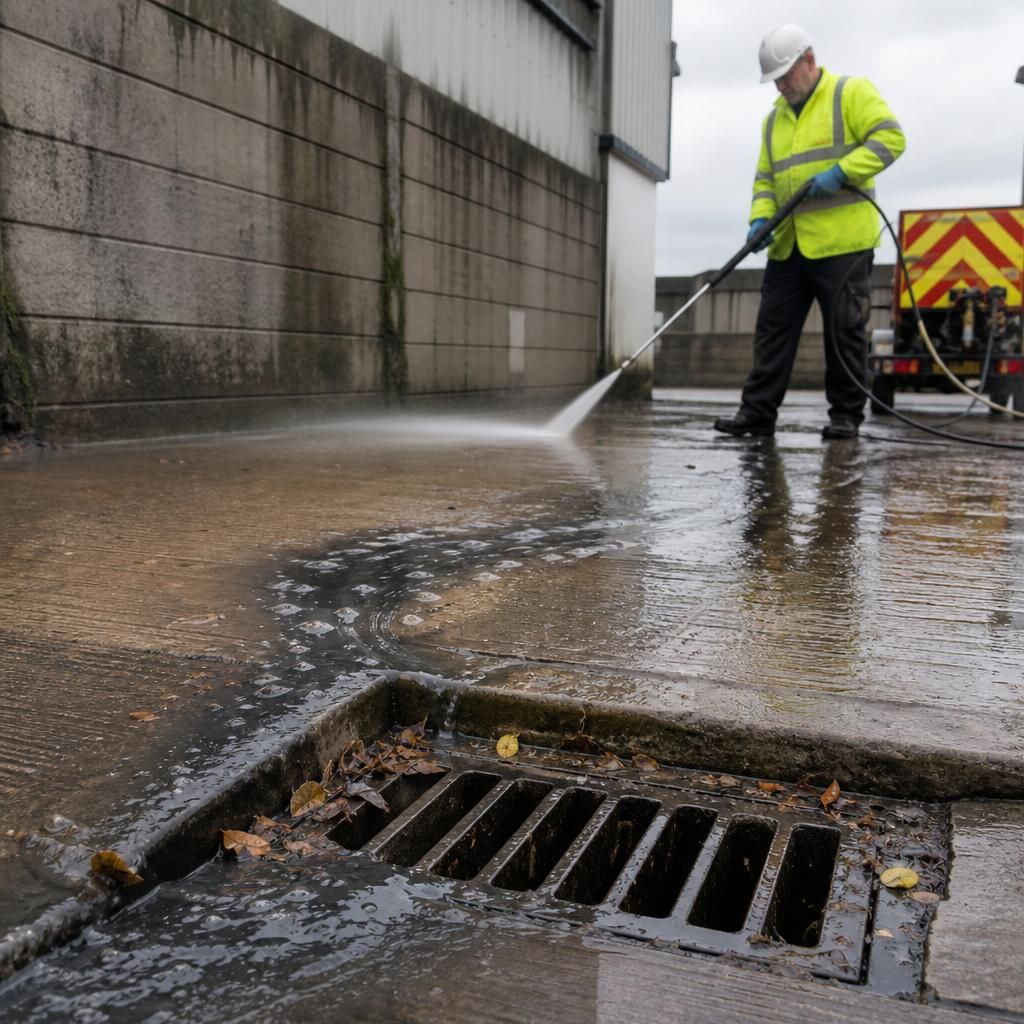
The main environmental risk of industrial jet washing is contaminated runoff. High-pressure water can dislodge oil, fuel residues, metals, paint particles, silt, detergents and other pollutants, which may enter surface-water drains, soil or nearby waterways if the wastewater is not controlled.
Before cleaning begins, drainage routes should be checked and vulnerable outlets protected with suitable covers, bunds or barriers. Where necessary, wastewater should be recovered for settlement, filtration, oil separation or authorised disposal. The correct discharge route depends on the contaminants and site drainage system; polluted water must not be released into a surface-water drain simply because it is convenient.
Discuss your industrial jet washing requirements
Discuss your industrial jet washing requirements with our team, including the surfaces, contaminants, drainage arrangements and environmental controls needed for your site. We can help identify a suitable cleaning method and wastewater management approach.