
What are the specific surface considerations necessary for choosing the optimal jet washing technique for my industrial facility?
Choosing the optimal industrial jet washing technique depends on the surface material, its condition, the type of contamination and the risk of water or chemical damage. Concrete, metal cladding, painted finishes, roofing materials and delicate façades each require the appropriate water temperature, pressure, nozzle, cleaning agent and method of wastewater control.
The optimal jet washing technique is determined by the surface’s material, condition, coating, porosity and sensitivity to water, heat and pressure. The contamination must also be assessed, because removing loose dust from sound concrete requires a different approach from removing oil, biological growth, corrosion deposits or ingrained process residue. A suitable method balances cleaning effectiveness with control of pressure, temperature, nozzle selection, chemical use, operator distance and wastewater.
Begin with a surface assessment
Before selecting equipment, the substrate should be identified and inspected. This includes checking whether the surface is concrete, brick, stone, metal, render, plastic, glass, roofing material or a composite system. Its age, previous repairs, joints, sealants, paint and protective coatings are equally important. A surface that appears sound may have weak areas beneath a coating or around fixings, edges and drainage points.
The inspection should identify cracks, spalling, delamination, corrosion, loose pointing, failed sealant, open joints and areas where water could enter the building. Drainage channels, electrical fittings, ventilation openings, loading doors and vulnerable machinery also affect how the work is planned. Cleaning should not be used to disguise a defect that requires repair.
Concrete and hardstanding
Concrete generally tolerates controlled pressure well, but its performance varies with age, finish and condition. Newer or weaker concrete, exposed aggregate, trowelled finishes and repaired areas can be marked by excessive pressure or an unsuitable nozzle. Strong, sound concrete may accept a rotary surface cleaner or a broad fan jet, while damaged or friable areas usually require lower pressure, greater working distance and more careful passes.
Oil, hydraulic fluid, tyre marks and embedded dirt may need hot water and a suitable detergent or degreaser rather than pressure alone. Chemical dwell time should be controlled so that the product does not dry on the surface or enter drainage systems. Cleaning around expansion joints and cracks requires particular care, as forcing water into these areas can worsen existing deterioration.
After cleaning, the surface should be checked for exposed aggregate, staining that has penetrated the concrete, failed repairs and remaining slip hazards. Wastewater containing oils, silt or cleaning chemicals must be contained and recovered in accordance with the site’s drainage and environmental requirements.
Brickwork, masonry and stone
Brick, mortar and natural stone are porous materials, so water pressure can drive contamination deeper into the substrate or remove the softer material between units. Older brickwork and weathered pointing are particularly vulnerable. A wide fan pattern, lower pressure and a suitable distance from the surface are normally safer than a concentrated jet.
Stone must be assessed individually. Polished, honed, limestone and other softer stones can be etched, dulled or discoloured by aggressive pressure or acidic products. The cleaning method should account for the stone’s porosity, mineral composition and existing finish. Efflorescence, biological growth and atmospheric soiling may respond to different treatments, and a chemical that is appropriate for one type of masonry may damage another.
Test cleaning should be carried out in an inconspicuous area to confirm that the chosen pressure, temperature and product remove the contamination without removing the face of the brick, mortar or stone. The test area should be allowed to dry where necessary, since wet masonry can conceal colour changes and staining.
Metal cladding, steelwork and painted finishes
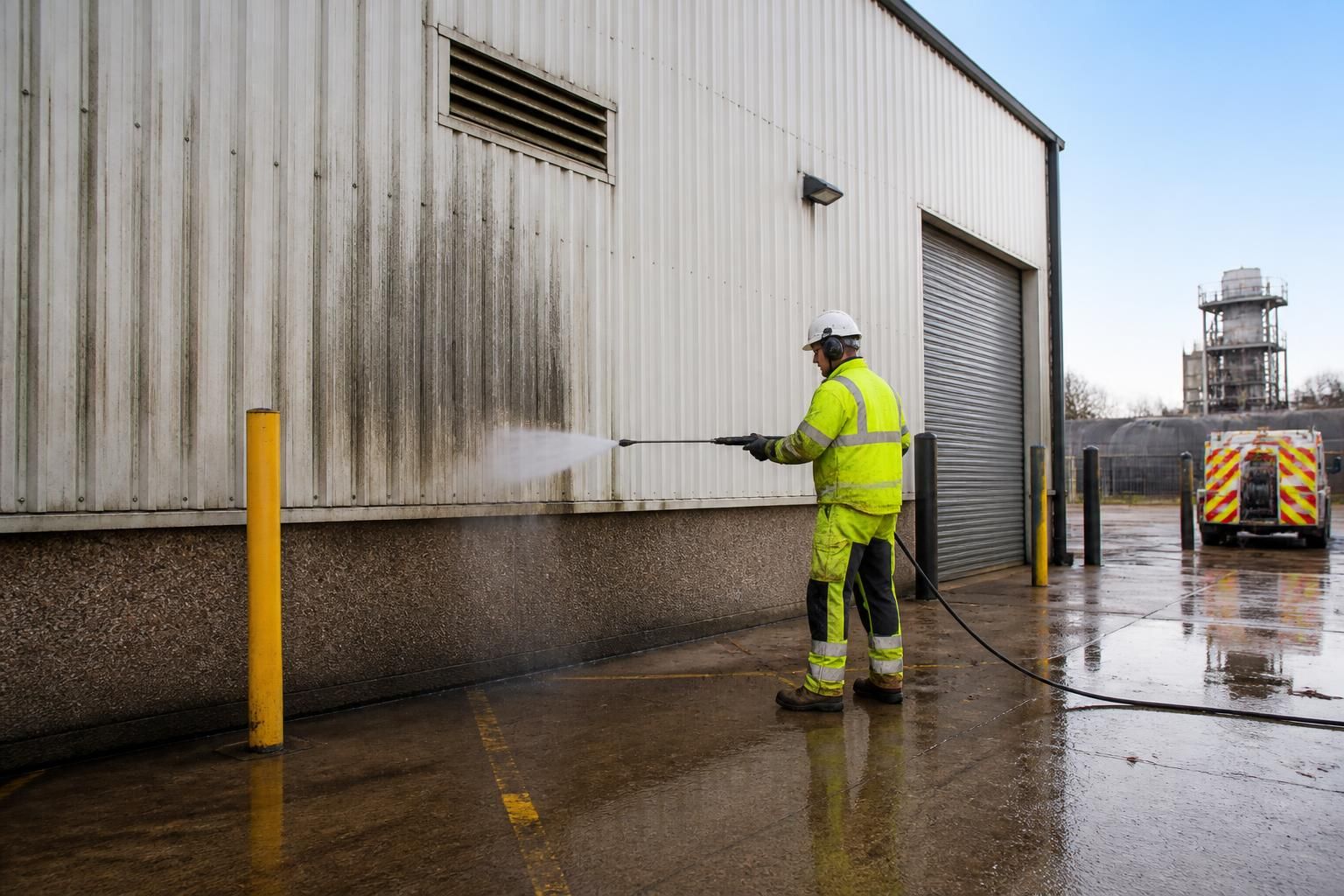
Metal surfaces are usually less porous than masonry, but they can be damaged by excessive pressure at laps, seams, fixings, joints and damaged coating edges. Jet washing can lift loose paint, expose corrosion or force water behind cladding panels. The correct approach depends on the metal type, coating system and condition of the finish.
Broad fan nozzles and controlled pressure are generally preferable to narrow, highly concentrated jets. Hot water can help remove grease and traffic film, but its use must be compatible with the coating and sealants. Chemical products should be selected to avoid attacking paint, galvanised finishes, powder coating, anodising or protective treatments. Run-off from corroded or coated metal may require specific containment and disposal arrangements.
Particular care is needed around electrical cabinets, sensors, motors, control panels and cable entries. These components may need to be isolated, protected or cleaned using a lower-moisture method rather than being directly exposed to a high-pressure stream.
Roofs and roof-mounted equipment
Roof cleaning requires an assessment of the covering, its age, fall, laps, flashings, seals and load-bearing condition. A pressure level that is suitable for a concrete yard may damage roof membranes, dislodge protective granules, open laps or drive water beneath sheets. Fragile roofing materials and aged waterproofing systems may be better suited to low-pressure soft washing, controlled steam cleaning or manual treatment.
Solar panels, vents, skylights, rooflights, air-conditioning units and other plant must be protected from direct impact and chemical overspray. The work plan should also address safe access, fall prevention and the movement of contaminated water from the roof to lower façades or drainage points. Cleaning should not proceed until the roof’s condition and access arrangements have been properly assessed.
Glass, plastics, render and delicate façades
Glass can be scratched by abrasive particles in the water stream or by deposits loosened from surrounding masonry. Pressure should be controlled around seals, gaskets and frames, and cleaning solutions must be compatible with the glass coating and frame material. Polycarbonate, acrylic, uPVC and composite panels can become marked, clouded or distorted by aggressive pressure, heat or unsuitable solvents.
Render and insulated façade systems often require low-pressure cleaning because the surface finish and underlying insulation can be vulnerable to impact and water penetration. The condition of the render, joints and protective coating should be checked first. A broad spray, suitable detergent and adequate rinsing control are generally safer than a narrow jet held close to the surface.
Match the technique to the contamination
Surface choice cannot be separated from the type of dirt present. Loose dust, cobwebs and light atmospheric deposits may need only cold-water rinsing at controlled pressure. Grease, oil and food or process residues often respond better to hot water and a compatible degreaser. Moss, algae and other biological growth may require a biocidal treatment and gentle rinsing rather than force alone. Rust staining, limescale, cement residue and paint overspray each require separate assessment because the wrong chemical can permanently mark the substrate.
Where contamination is bonded to a delicate finish, steam cleaning or a low-pressure chemical treatment may be more appropriate than increasing jet pressure. Pressure is not a substitute for dwell time, suitable chemistry or mechanical preparation.
Use controlled testing and progressive adjustment
A competent operator should start with the least aggressive method likely to work and increase intensity only when the surface has been shown to tolerate it. A test patch should assess pressure, nozzle pattern, temperature, cleaning product, dwell time, working distance and rinse method. It should also confirm the visual result after drying, particularly on porous or coated materials.
During the work, the operator should maintain a consistent distance and angle, avoid lingering over one point and work methodically from cleaner areas towards dirtier sections where practical. The condition of the surface should be monitored continuously, not assumed to be unchanged from the initial inspection. If coating loss, colour change, surface erosion or water ingress is observed, the method should be stopped and reviewed.
Consider water control and the surrounding facility
The surface itself is only part of the decision. Industrial cleaning can affect drainage, stored goods, neighbouring structures, vehicles, landscaping and active production areas. The chosen technique should therefore reflect the available water supply, drainage capacity, need for wastewater recovery, weather conditions and the risk of overspray.
Before work begins, agree how drains will be protected, where recovered water will go and which areas require screens, sheeting or temporary isolation. Where water use presents a particular risk, steam cleaning, low-moisture cleaning or localised treatment may be more suitable. The final method should leave the surface clean without transferring contamination to another part of the site.
For complex facilities, the cleaning plan should record the substrate, defects, test results, equipment settings, products used, protection measures and post-cleaning observations. This provides a consistent basis for future maintenance and helps ensure that the next service uses a method proven to be safe for the particular industrial surfaces on site.
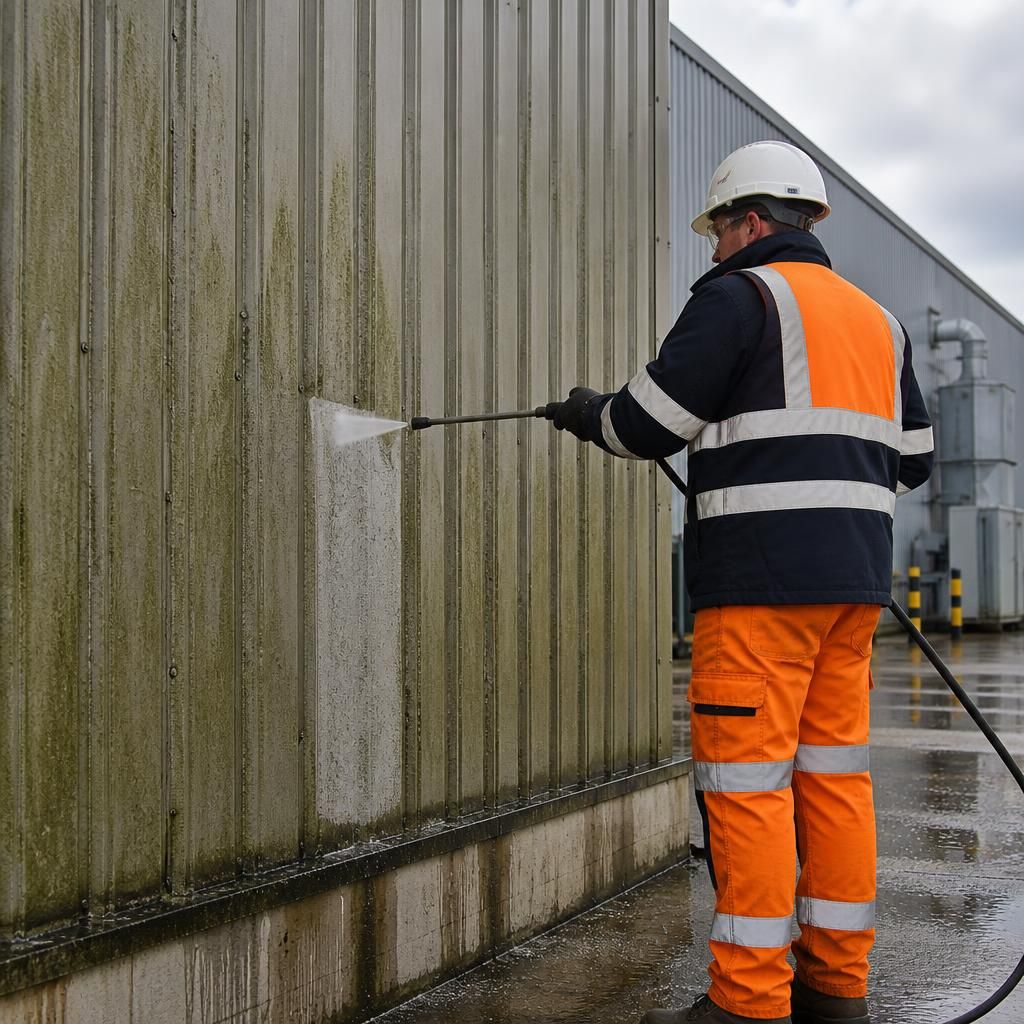
Choosing the least aggressive effective cleaning method is the safest way to protect industrial surfaces. A small test area allows the operator to assess the pressure, nozzle pattern, water temperature, cleaning product and working distance before treating the wider surface.
The test area should be inspected both immediately after cleaning and, where relevant, once the surface has dried. This helps identify coating loss, colour changes, etching, water penetration or remaining contamination that may not be visible while the substrate is wet. The method can then be adjusted without exposing the entire façade, roof or hardstanding to unnecessary risk.
- Use a broad spray and controlled pressure before considering a concentrated jet.
- Allow suitable detergents or biocidal treatments to work rather than relying on pressure alone.
- Monitor joints, edges, fixings, coatings and previously repaired areas particularly closely.
- Stop and reassess if the surface begins to erode, discolour or allow water behind its finish.
Arrange an Industrial Surface Assessment
Arrange an industrial surface assessment so we can identify the substrate, contamination and any vulnerable areas before selecting the safest effective jet washing technique. The assessment will inform the cleaning method, equipment settings, surface protection and wastewater controls for your facility.