
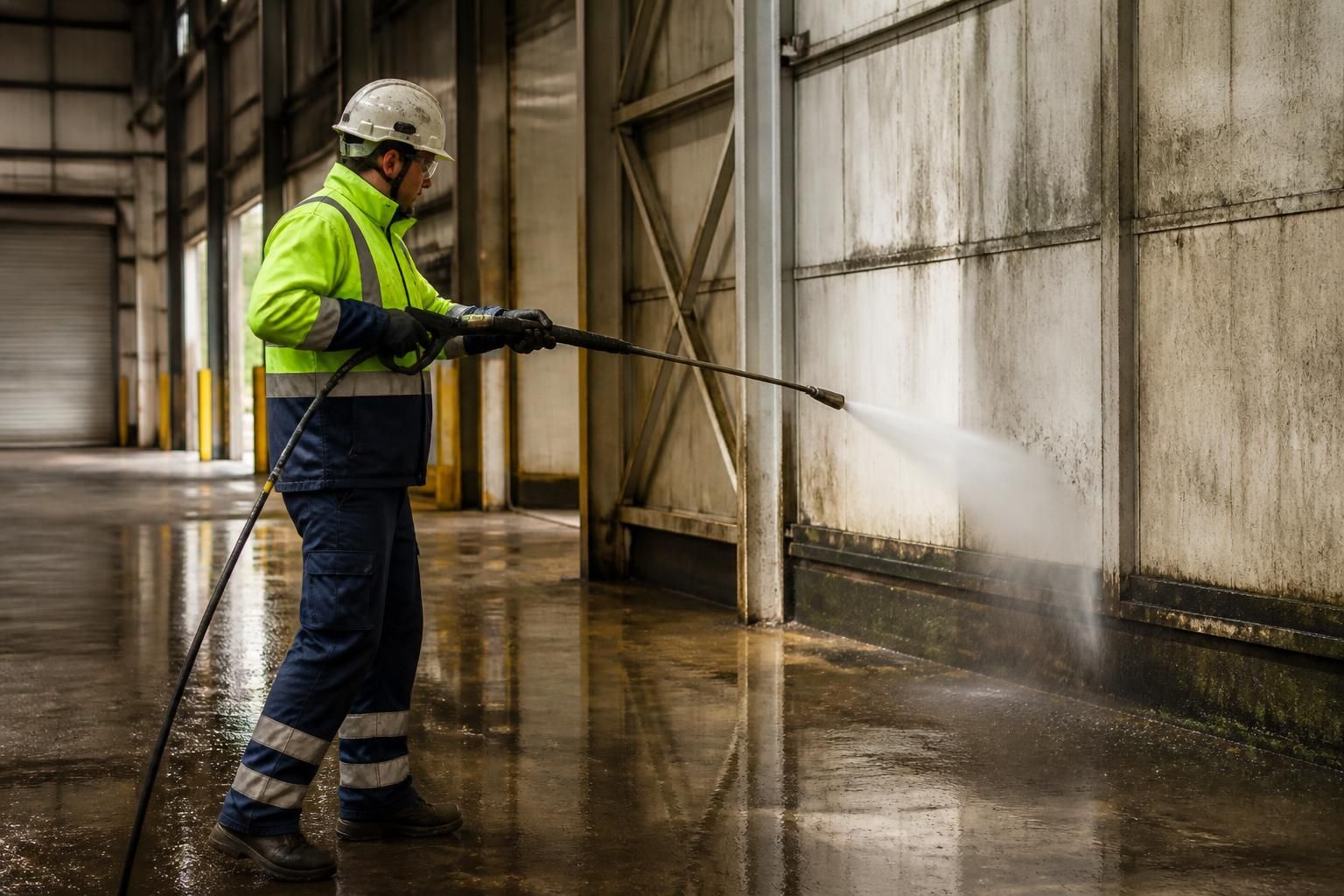
What are the most effective cleaning techniques for different types of industrial dirt and surfaces when considering industrial jet washing services?
The most effective industrial jet washing technique depends on the contaminant and surface: hot-water pressure washing cuts through oil and grease, controlled low-pressure cleaning suits cladding and masonry, and steam or specialist treatments are effective for ingrained grime, algae and graffiti. Operators should adjust pressure, temperature, nozzle selection and cleaning agents to remove the dirt without damaging concrete, roofs, façades, metalwork or coated surfaces.
The most effective industrial jet washing technique is determined by matching the water pressure, temperature, flow, nozzle, cleaning agent and access method to both the contaminant and the surface. Hot-water pressure washing is generally effective for oil and grease on hard, non-porous surfaces; controlled low-pressure cleaning is safer for cladding, masonry and coatings; and steam or specialist treatments are often better for ingrained grime, algae, biological growth and graffiti. The objective is to remove contamination thoroughly without eroding concrete, lifting coatings, forcing water into the building fabric or damaging vulnerable fixtures.
Oil, grease and fuel residues
Oil, grease, hydraulic fluid and fuel deposits respond best to hot-water pressure washing, often combined with a suitable degreasing agent. Heat softens and mobilises oily contamination, while controlled pressure removes it from concrete, loading areas, plant rooms, service yards and workshop floors. On heavily contaminated surfaces, the operator should apply the degreaser first, allow sufficient dwell time, agitate where necessary and then rinse methodically towards a controlled collection point.
Concrete can usually tolerate more aggressive cleaning than painted metal or coated surfaces, but excessive pressure can expose aggregate, create surface marking or spread contaminated water. Oil-affected concrete may also require repeated treatment because liquid can penetrate its pores. Run-off must be contained and disposed of in accordance with the site drainage arrangements and applicable environmental requirements; oily water should not be allowed to enter surface-water drains.
General dirt, dust and traffic film
Loose dust, mud, road film and everyday industrial grime can normally be removed with cold- or hot-water pressure washing, depending on how strongly the deposits have bonded. A wide fan nozzle and an even sweeping movement are suitable for broad areas such as yards, car parks, concrete aprons and access roads. Hot water is useful where traffic film contains oily residues, whereas cold water may be sufficient for loose soil and dust.
Cleaning should proceed from the least contaminated area towards the dirtiest area, with overlapping passes that avoid streaking. Operators should first remove loose debris and inspect for damaged joints, cracks, drainage defects and areas of friable concrete. This prevents the jet from driving dirt into defects or worsening existing damage.
Cladding, coated metalwork and composite panels
Cladding requires a controlled, low-pressure approach rather than the highest available pressure. The operator should identify the cladding material, coating type and condition before selecting the method. Pre-rinsing, a compatible mild detergent and soft agitation may remove dirt more safely than direct high-pressure cleaning. The final rinse should be thorough enough to prevent detergent residue drying on the surface.
Particular care is needed around panel laps, seals, vents, cable entries, service penetrations and damaged coating. The lance should not be held close to the surface or directed beneath overlaps, as this can force water behind the cladding. A test patch in an inconspicuous location helps confirm that the coating is stable and that the chosen detergent will not cause discolouration, gloss loss or bleeding.
Brickwork, masonry and façades
Brick, stone, render and other masonry surfaces need a pressure and temperature suitable for their age, porosity and condition. Sound, robust masonry may tolerate carefully controlled pressure washing, but soft brick, weathered mortar, historic stone and cracked render can be damaged by an aggressive jet. Low-pressure rinsing, steam cleaning or a specialist masonry-cleaning product may provide better control.
Biological growth, atmospheric staining and carbon deposits should not simply be blasted away without assessing the substrate. A biocide or other compatible treatment may be required to address algae, moss or organic growth at the root. Efflorescence, rust staining and atmospheric soiling each have different causes and may need separate chemical treatment. Cleaning agents should be selected for the specific material, tested first and neutralised or rinsed as required by the product instructions.
Roofs and roof-mounted equipment
Roof cleaning must account for the roof covering, waterproofing system, drainage routes and the risk of water entering the building. Metal roofing, coated sheets, roof membranes, tiles and translucent panels do not all tolerate the same pressure or temperature. Low-pressure washing, soft washing or steam cleaning may be more appropriate than a concentrated high-pressure jet, particularly where coatings are aged or seals are exposed.
Before cleaning, the operator should identify fragile panels, blocked outlets, rooflights, laps, flashings and areas of corrosion. Water should not be directed beneath sheets, into vents or towards unprotected penetrations. Moss and organic deposits may need manual removal followed by a suitable treatment, rather than forceful blasting that could loosen tiles or damage the waterproofing layer.
Algae, moss, mould and other biological growth
Biological contamination is best managed through a combination of physical removal and an appropriate treatment. Pressure washing can remove the visible growth from hard surfaces, but cleaning alone may leave spores or organic residue behind. A compatible biocidal treatment, applied under suitable site controls, can help reduce regrowth. On delicate façades, painted surfaces, roof coverings and render, low-pressure application followed by controlled rinsing is often safer than aggressive jetting.
Operators should consider nearby planting, watercourses, drainage systems and occupied areas before using any treatment. Run-off containing biocide or loosened organic matter must be managed in line with the product instructions and site environmental controls.
Graffiti, paint and adhesive residues
Graffiti removal depends on the paint type, age of the marking and the underlying surface. A specialist graffiti remover may be applied and given time to work before low- or medium-pressure rinsing. Steam cleaning can be effective on some painted and adhesive residues because heat softens the contaminant while reducing the need for highly aggressive pressure. Porous masonry may require repeated treatment or a poultice-style approach to draw pigment from the surface.
Removing graffiti from coated cladding, powder-coated metal, painted façades or plastic surfaces requires particular caution. Solvents that dissolve the graffiti may also soften the original coating. A test area should be completed before wider application, and the surface should be monitored for colour change, gloss variation and damage to the finish. The contaminated rinse water should be collected where it could enter a drainage system or affect surrounding areas.
Rust, scale, cement and construction residues
Rust staining, cement splashes, mortar residue and mineral scale often require more than water pressure alone. Mechanical agitation, steam or a surface-compatible specialist chemical may be used, depending on the substrate. Acidic products can damage concrete, natural stone, metals, jointing materials and coatings, so they should never be selected without checking compatibility and the manufacturer’s instructions.
Fresh cement and mortar deposits should be removed carefully before they harden fully, but pressure must still be controlled to avoid dislodging pointing or damaging the adjacent surface. Rust removal from metal should be followed by appropriate corrosion protection where the original finish has been compromised. Chemical residues need thorough rinsing and controlled disposal.
Machinery, plant and industrial equipment
Plant and machinery require a method that removes contamination without forcing water into bearings, electrical housings, control panels, sensors or air intakes. Hot water and a suitable degreaser are useful for external oil and grease, but sensitive components may need shielding, isolation or manual cleaning. The equipment owner should confirm shutdown, isolation and recommissioning requirements before work begins.
High pressure should not be used indiscriminately around seals, labels, connectors or moving parts. After cleaning, equipment may need drying, lubrication, inspection or an electrical safety check before it is returned to service.
How the technique should be selected
- Inspect the surface and contamination. Identify the substrate, coating, defects, drainage routes and the type, thickness and age of the dirt.
- Choose the least aggressive effective method. Start with lower pressure, a wider spray pattern or hot water before increasing intensity or introducing a stronger chemical.
- Complete a test patch. Check cleaning performance, colour stability, coating adhesion, surface texture and run-off before treating the full area.
- Control dwell time and agitation. Allow suitable cleaning products to work without letting them dry, and use brushing or soft agitation where it reduces the need for pressure.
- Rinse systematically. Work in manageable sections and direct water towards approved collection or drainage points.
- Inspect and document the result. Check for remaining stains, newly exposed defects, damaged coatings and areas requiring a further specialist treatment.
The correct industrial jet washing method is therefore a controlled combination of water, heat, pressure, chemistry and operator technique. Hard concrete and heavily soiled service yards may need hot-water degreasing, while cladding, roofs, masonry, coated metal and sensitive equipment generally benefit from lower pressure, careful testing and targeted treatments. Where contamination is hazardous, chemically resistant, deeply embedded or likely to produce polluted run-off, the method should be agreed through a site-specific risk assessment and cleaning plan before work starts.
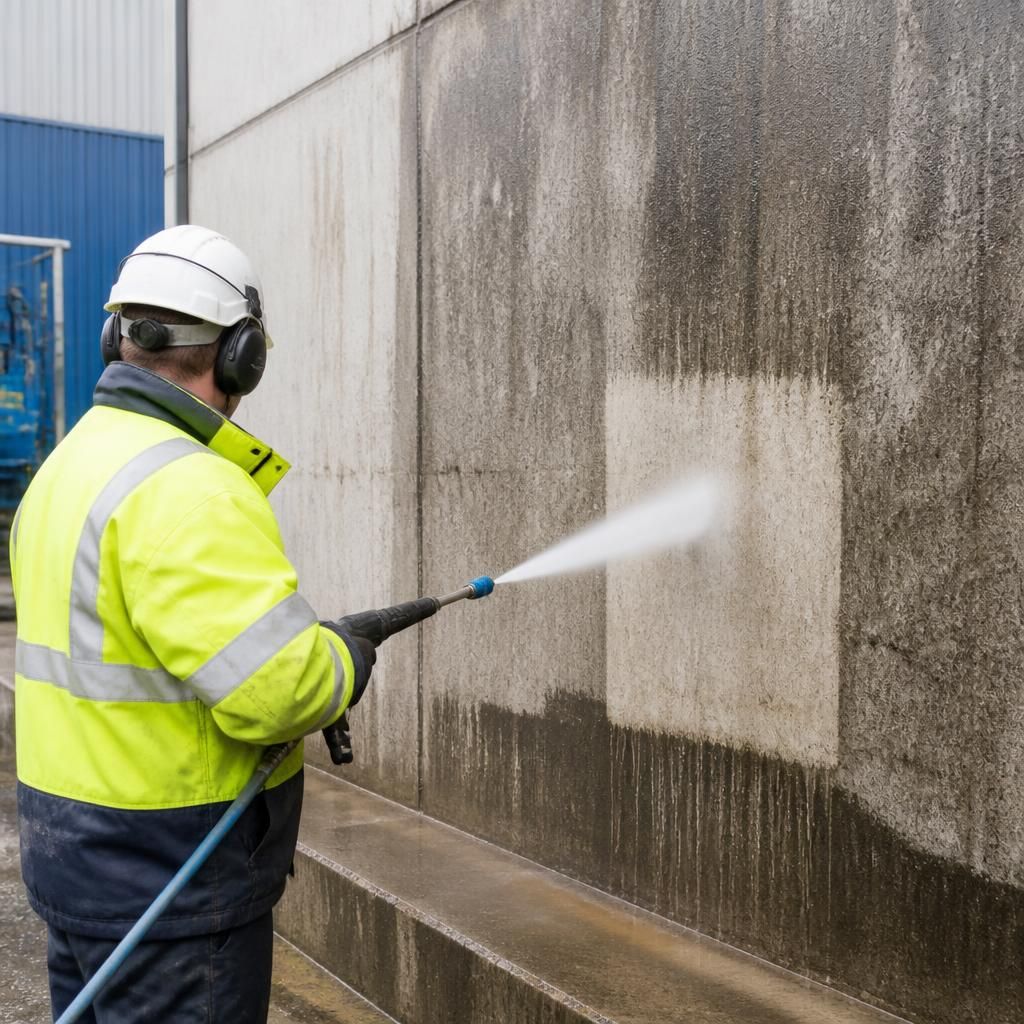
A test patch is the safest way to confirm that an industrial jet washing method will remove the contamination without damaging the surface. The operator should select an inconspicuous area and assess the result before treating the full façade, roof, cladding panel, concrete surface or item of equipment.
The test should check pressure, temperature, nozzle distance, cleaning-agent compatibility and dwell time. Inspect for coating softening, colour change, exposed aggregate, damaged pointing, water penetration or residue. If the result is unsuitable, the technique can be adjusted by reducing pressure, changing the nozzle, using a wider spray pattern or selecting a milder treatment. This controlled approach is particularly important for coated metalwork, aged masonry, roof membranes and surfaces affected by graffiti, oil or biological growth.