
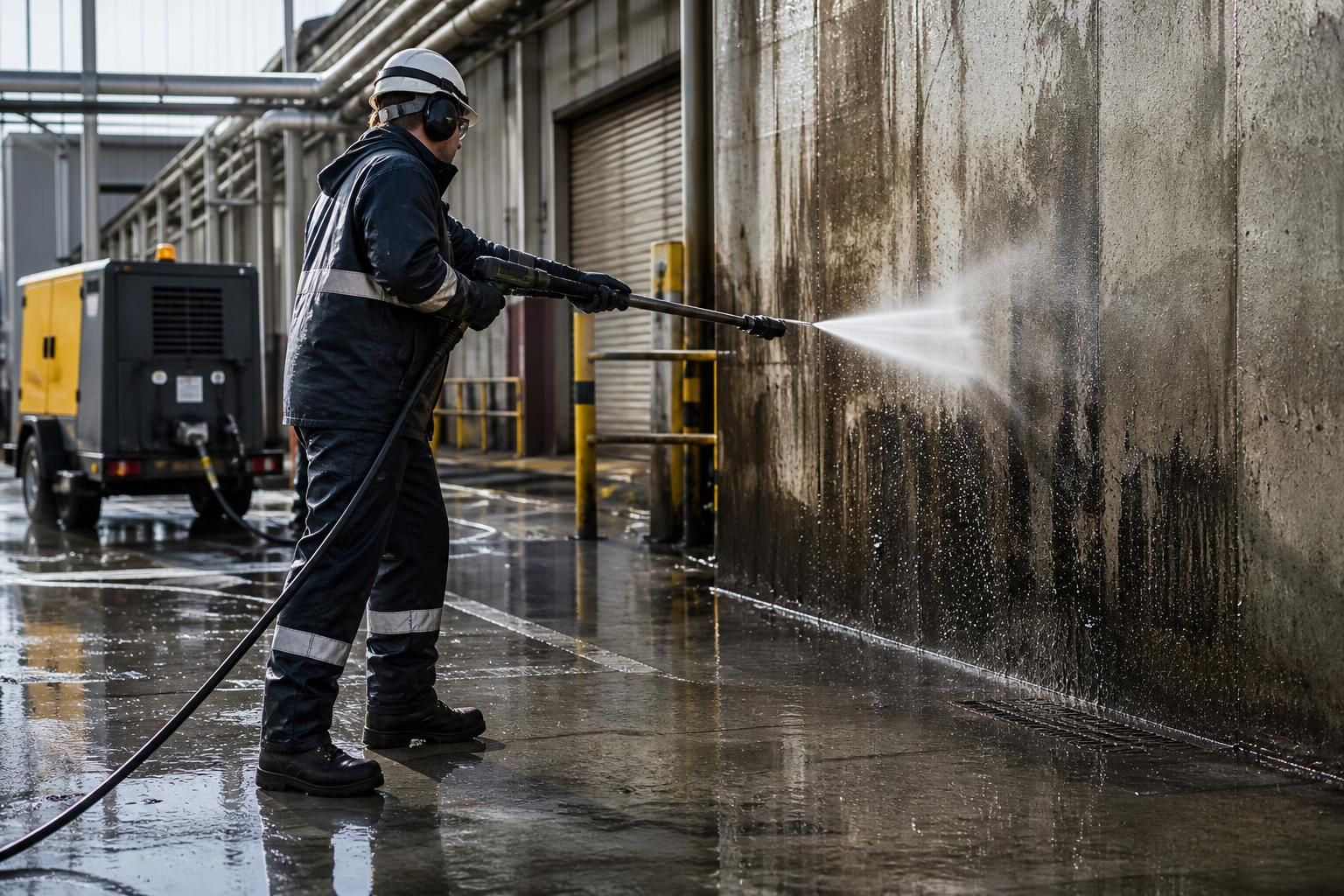
What are the benefits of using hot water systems in industrial jet washing?
Hot water systems improve industrial jet washing by softening and breaking down grease, oil, fats and other stubborn residues more quickly than cold water alone. This can deliver more efficient cleaning, support improved hygiene, reduce the need for detergents in suitable applications and help minimise disruption to industrial operations.
Hot water systems make industrial jet washing more effective where surfaces are contaminated with grease, oil, fats, food residues, traffic film, chewing gum or other heat-sensitive deposits. The heat softens and emulsifies these substances, allowing the water jet to remove them more quickly and often with less mechanical force, detergent or repeated cleaning than cold water alone.
In practice, hot water jet washing combines water temperature, pressure, flow rate and the correct nozzle or attachment. The best result does not necessarily come from using the highest available temperature or pressure. The system should be adjusted to the surface, the contamination and the drainage arrangements at the site.
Faster removal of grease and oil
Oil, grease and fats become more fluid when heated. This allows hot water to penetrate and lift deposits that may otherwise remain bonded to concrete, block paving, metalwork, machinery surrounds and loading areas. A hot water system can therefore reduce the time spent pre-treating heavily soiled surfaces or repeatedly passing over the same area.
This is particularly useful for industrial yards, workshops, food production environments, commercial kitchens, waste-handling areas, plant rooms, depots and car parks where hydrocarbons or organic residues are regularly deposited. Hot water is also effective against traffic film, which can contain a mixture of oil, rubber residue, dirt and atmospheric pollutants.
Improved cleaning performance at suitable pressure
Because heat contributes to breaking down the contamination, operators may not need to rely solely on very high pressure. This can be helpful when cleaning painted surfaces, coated metal, masonry joints, signage, cladding or other areas where excessive pressure could cause damage, force water into vulnerable gaps or remove a surface coating.
Using heat does not eliminate the need for correct pressure selection. A surface assessment remains essential, particularly where there are aged coatings, damaged pointing, loose materials, electrical components, seals or sensitive finishes. The system should be set to remove the contamination without stripping the substrate or its protective treatment.
Less reliance on detergents in appropriate applications
Heat can reduce the amount of chemical assistance needed for some oil-based and organic deposits. This may simplify the cleaning process and reduce chemical consumption, but it should not be assumed that hot water will replace detergents in every situation. Certain stains, ingrained deposits, biological growth and specialist industrial residues require an appropriate cleaning agent and sufficient dwell time.
Where detergents are used, the cleaning team should select products compatible with the surface and the site’s drainage and wastewater requirements. Any recovered water, emulsified oil or chemical residue must be managed in accordance with the site’s procedures and applicable environmental controls. Hot water can make contaminants easier to remove, but it does not remove the need for responsible wastewater handling.
Better hygiene and removal of organic residues
Hot water helps remove fats, proteins and other organic matter that can support unpleasant odours and microbial contamination. This makes it useful in food-related premises, refuse areas, wash-down zones, service yards and other locations where hygiene is an operational concern.
However, cleaning and disinfection are separate processes. Hot water jet washing removes contamination, but the temperature at the surface, contact time and coverage would need to be controlled and verified before the process could be treated as a validated disinfection procedure. Where a regulated hygiene standard applies, cleaning should be followed by the specified disinfection method and inspection regime.
Effective removal of chewing gum and sticky deposits
Heat softens chewing gum, adhesive residues, waxes and some tar-like deposits, making them easier to lift from paving, entrances, steps and hard-standing areas. This can reduce scraping and the risk of leaving a shadow or smear behind. The operator still needs to consider the paving material, jointing compound and any nearby coatings before applying heat.
Reduced disruption to industrial operations
More efficient soil removal can shorten the active cleaning period, particularly on large hard surfaces or areas with dense contamination. This may help coordinate cleaning around deliveries, production, vehicle movements and pedestrian access. Hot water can also improve the result where cold-water cleaning would require several passes or extended pre-treatment.
Planning remains important. A cleaning schedule should allow for equipment set-up, isolation of the work area, drainage checks, recovery of contaminated water and safe drying or re-opening. The quickest cleaning method is not necessarily the most suitable if it creates unmanaged runoff or requires unsafe access arrangements.
More consistent results in cold conditions
In colder weather, hot water can help maintain cleaning performance where grease becomes more viscous and difficult to shift. It may also assist with drying and reduce the likelihood that water and loosened residues remain on a surface for an extended period. This should not be confused with a general solution to frost or ice hazards: water management, weather conditions and site safety controls must still be considered.
Important limitations and safety considerations
Hot water systems use additional energy to heat the supply, so they are not automatically the most environmentally suitable choice for every task. For loose dust, light dirt or delicate surfaces, cold water or lower-impact methods may be sufficient. The appropriate approach should balance cleaning performance, energy use, chemical requirements, wastewater control and the condition of the substrate.
Heat can damage plastics, sealants, membranes, painted finishes, bituminous materials, timber, certain coatings and vulnerable masonry. It can also create a burn risk, produce steam that reduces visibility and increase the danger of slips where grease is released quickly. Trained operators should use suitable personal protective equipment, secure the work area, protect nearby equipment and services, and control the collection and disposal of contaminated water.
Before hot water jet washing begins, the cleaning plan should identify the type of contamination, confirm the surface material and coating condition, check drainage and environmental restrictions, and include a small test area where the response is uncertain. This allows the temperature, pressure, flow and cleaning product to be adjusted before work proceeds across the full area.
Overall, hot water systems are most beneficial when industrial surfaces contain grease, oil, fats, sticky residues or hygiene-sensitive organic contamination. They can improve cleaning speed and consistency while reducing the need for excessive pressure or chemical treatment in suitable circumstances. Their use should always form part of a site-specific method statement that accounts for surface protection, operator safety, wastewater management and the energy required to heat the water.
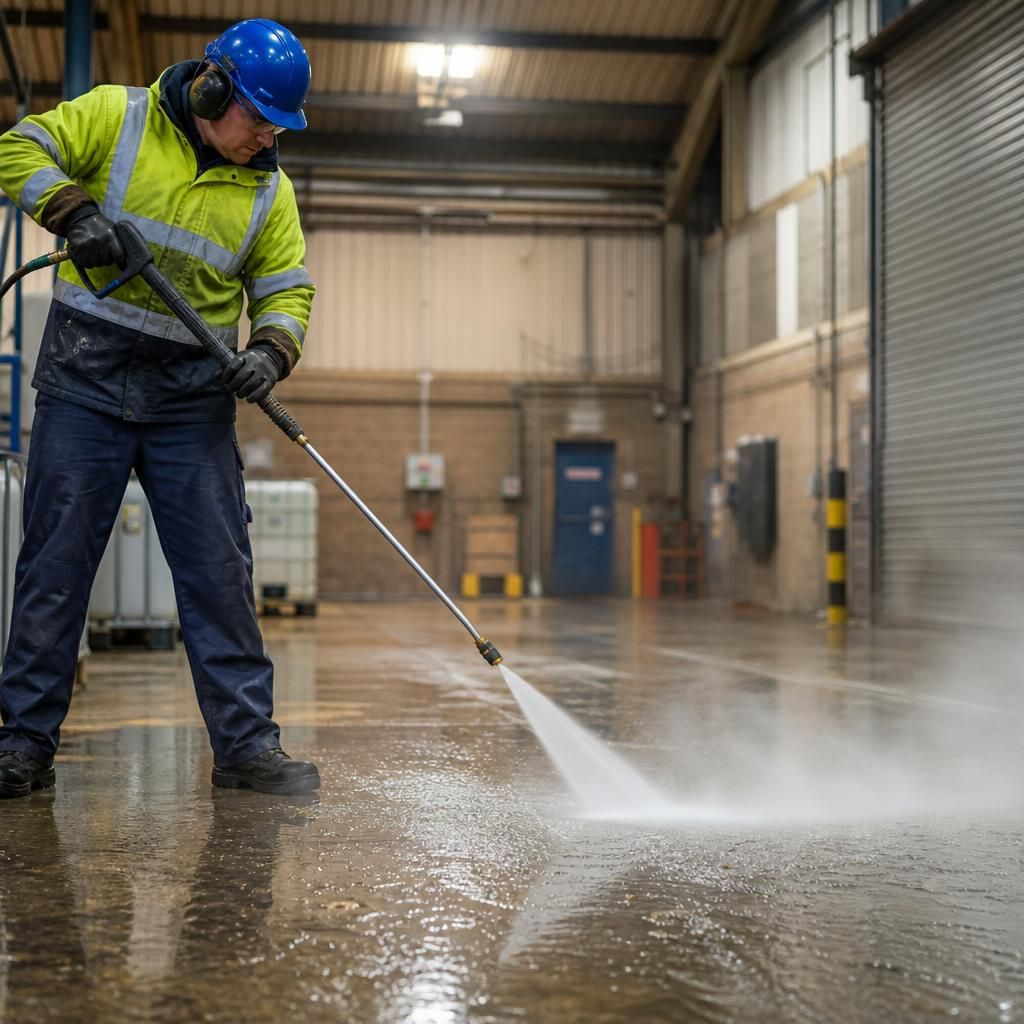
Hot water systems improve industrial jet washing by softening grease, oil, fats and other sticky residues before the water jet removes them. This can produce faster, more consistent cleaning on loading areas, workshops, food-related premises, plant rooms and vehicle depots, while reducing the need for repeated passes or excessive pressure.
Heat is not suitable for every surface or contamination. The operator must assess the material, coatings, drainage arrangements and wastewater controls before selecting the appropriate temperature, pressure and cleaning method.