
How does industrial jet washing prevent damage to the surfaces being cleaned?
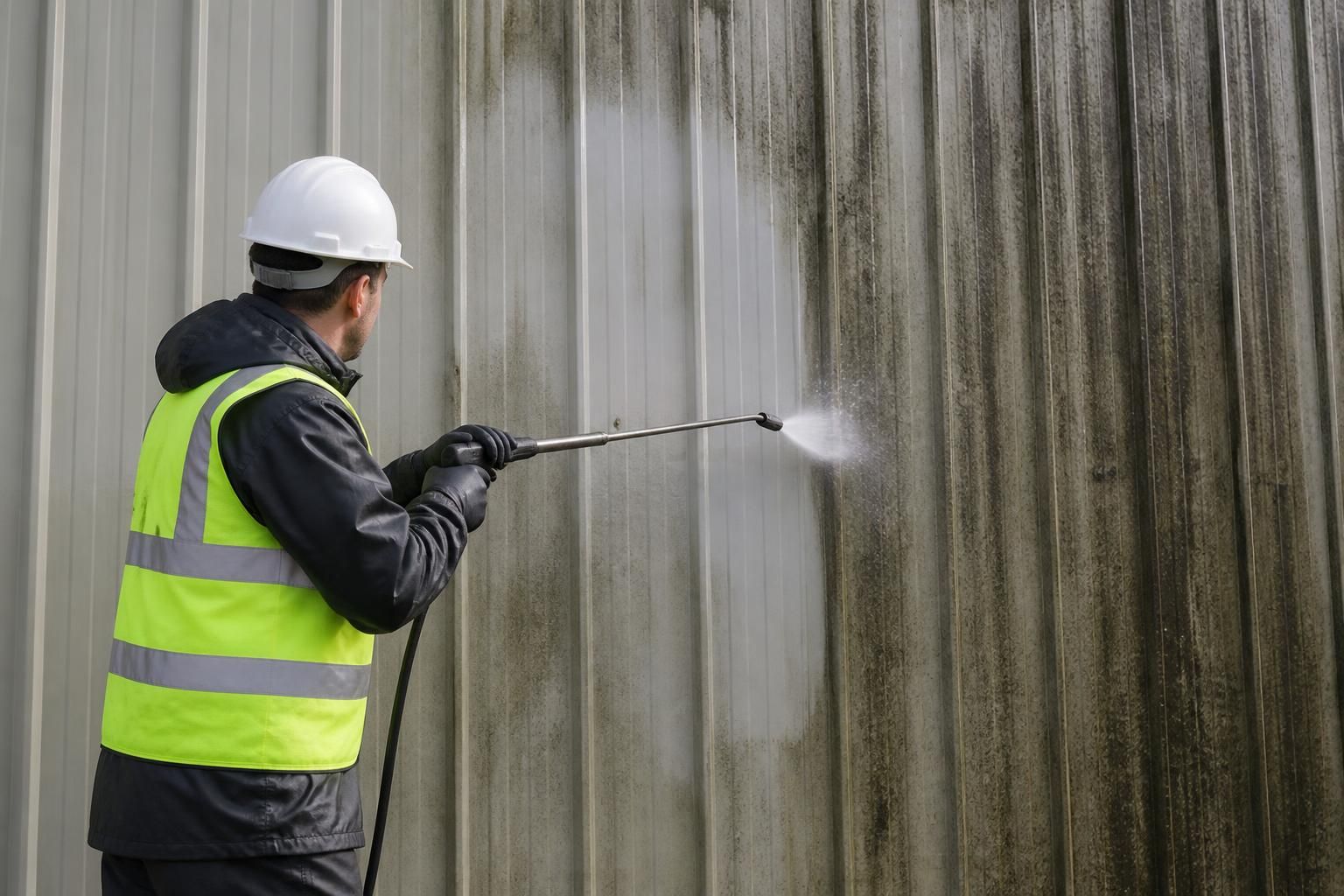
Industrial jet washing prevents surface damage by matching the water pressure, temperature, nozzle and cleaning method to the material and type of soiling. Operators also test inconspicuous areas, maintain a safe working distance and adjust the technique throughout the clean to avoid etching, erosion, water penetration or coating damage.
Industrial jet washing prevents surface damage by controlling the pressure, water temperature, flow rate, nozzle, cleaning distance and detergent used for each substrate and type of soiling. A professional operator does not use maximum pressure as a default. The method is assessed, tested and adjusted so that dirt is removed without etching, eroding, lifting coatings, forcing water into the structure or damaging joints and fittings.
Surface assessment comes first. Before cleaning, the operative considers the material, its condition, age, previous treatments and likely failure points. Concrete, brick, natural stone, metal cladding, painted surfaces, render, roofing materials and block paving all respond differently to water pressure and heat. Existing cracks, open joints, corrosion, loose coatings, failed sealant and damaged areas may require localised cleaning, a reduced-pressure method or repair before washing begins.
The type of contamination is also important. Organic growth, traffic film, oil, grease, cement residue, paint and general dust do not all require the same treatment. Removing the wrong contaminant with excessive mechanical force can cause more damage than the dirt itself. Where appropriate, a suitable detergent, degreaser, steam-cleaning process or soft-washing approach can loosen the contamination so it can be rinsed away at lower pressure.
Pressure is selected to suit the substrate rather than the equipment’s maximum capability. Robust, sound concrete may tolerate a more forceful clean, while aged brickwork, soft stone, pointing, render and painted cladding may need a gentler setting. Excessive pressure can abrade the surface, expose aggregate, remove the face of brick, widen defects or strip protective and decorative coatings. The operator reduces pressure where the substrate is friable, weathered or already compromised.
Nozzle choice and working distance provide further control. A wide fan pattern distributes the water over a larger area and is generally less aggressive than a concentrated jet. The nozzle is kept moving rather than held over one spot, and the working distance, angle and travel speed are adjusted to maintain an even clean. Directing water obliquely can help lift contamination while reducing the risk of forcing water behind cladding, into joints or beneath coatings. Rotating or highly concentrated nozzles are used only where the surface and condition make them appropriate.
Water temperature is matched to the contamination and material. Hot water can soften oils, grease and some ingrained deposits, reducing the pressure needed to remove them. However, heat is not suitable for every surface or coating. Sudden temperature changes may stress certain materials, soften sealants or affect paint and protective finishes. The operator therefore considers the substrate, existing treatments and the required rinse temperature before using a hot-water system.
Cleaning products are selected and applied with equal care. A compatible detergent can break down contamination without relying on aggressive jetting, but an unsuitable chemical may stain, bleach, corrode or weaken the surface. Product selection takes account of the substrate, nearby metals, glazing, vegetation, drainage and any trade effluent requirements. Chemicals are applied at a controlled concentration, given appropriate dwell time and rinsed thoroughly where the method requires it. They are never allowed to dry on a surface unless the product instructions specifically permit this.
Small test areas help confirm the safe method. An inconspicuous section is cleaned before full-scale work begins, particularly where the material is old, coated, repaired or unfamiliar. This allows the operator to check whether the chosen pressure, temperature, nozzle and cleaning agent remove the dirt without changing the colour, texture, gloss or integrity of the substrate. The approach can then be modified before it is applied across the wider elevation, roof, yard or façade.
Controlled rinsing is another part of damage prevention. Water is directed away from electrical equipment, vents, door thresholds, open joints and vulnerable building details. Openings are protected where necessary, and the operator avoids trapping water behind panels or beneath loose finishes. Run-off is managed so that dirty water does not spread contamination, enter unsuitable drains or remain against the base of walls and other porous materials.
Industrial jet washing also protects surfaces through planned access and movement. Using suitable access equipment allows the operative to maintain a consistent position and working distance instead of stretching, working from an unstable point or bringing the nozzle too close to the surface. The cleaning pattern is organised to prevent missed areas and repeated passes, while ongoing visual checks identify changes in the substrate as work progresses.
For sensitive or deteriorated surfaces, a lower-pressure rinse, steam cleaning or a specialist soft-washing process may be more appropriate than conventional high-pressure jetting. In some cases, cleaning must be limited to sound areas until repairs, repointing, coating replacement or sealing have been completed. A responsible method statement should identify these limitations rather than treating every part of an industrial site as suitable for the same process.
After cleaning, the surface should be inspected for residual staining, coating changes, exposed defects and areas requiring further work. Any concerns are recorded and reported rather than concealed with additional pressure. This combination of substrate assessment, test cleaning, controlled equipment settings, compatible products and careful observation is what makes industrial jet washing safe for commercial and industrial surfaces. The objective is not simply to achieve the most powerful clean, but to remove contamination while preserving the surface’s structure, finish and protective function.
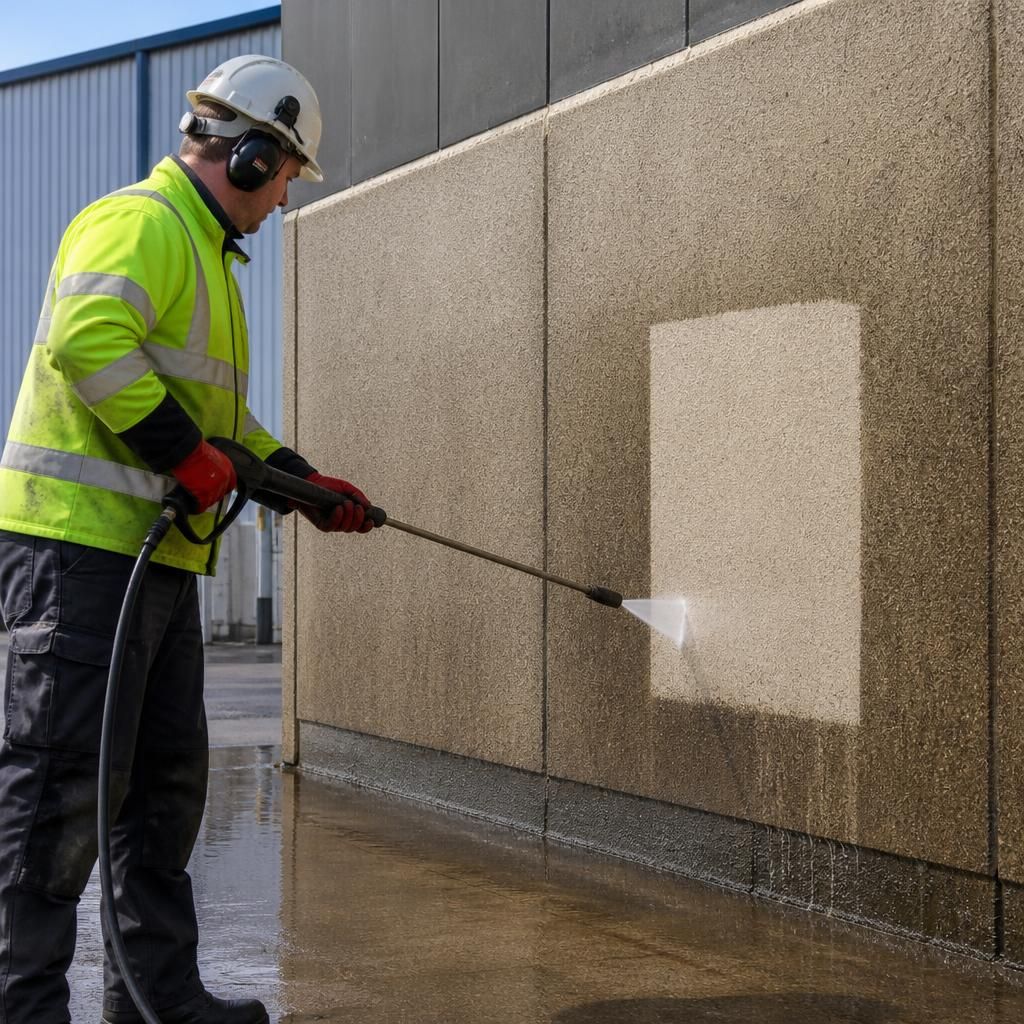
Testing an inconspicuous area is one of the most effective ways to prevent damage during industrial jet washing. The operative can assess whether the selected pressure, nozzle, temperature and cleaning product remove the contamination without changing the surface colour, texture, gloss or protective coating.
This is particularly important for aged brickwork, painted cladding, natural stone, render and previously repaired surfaces. If the test reveals etching, colour transfer, coating lift or water penetration, the method can be adjusted before cleaning the wider area. A controlled test helps ensure the final process is suited to the substrate rather than relying on the maximum power of the equipment.