
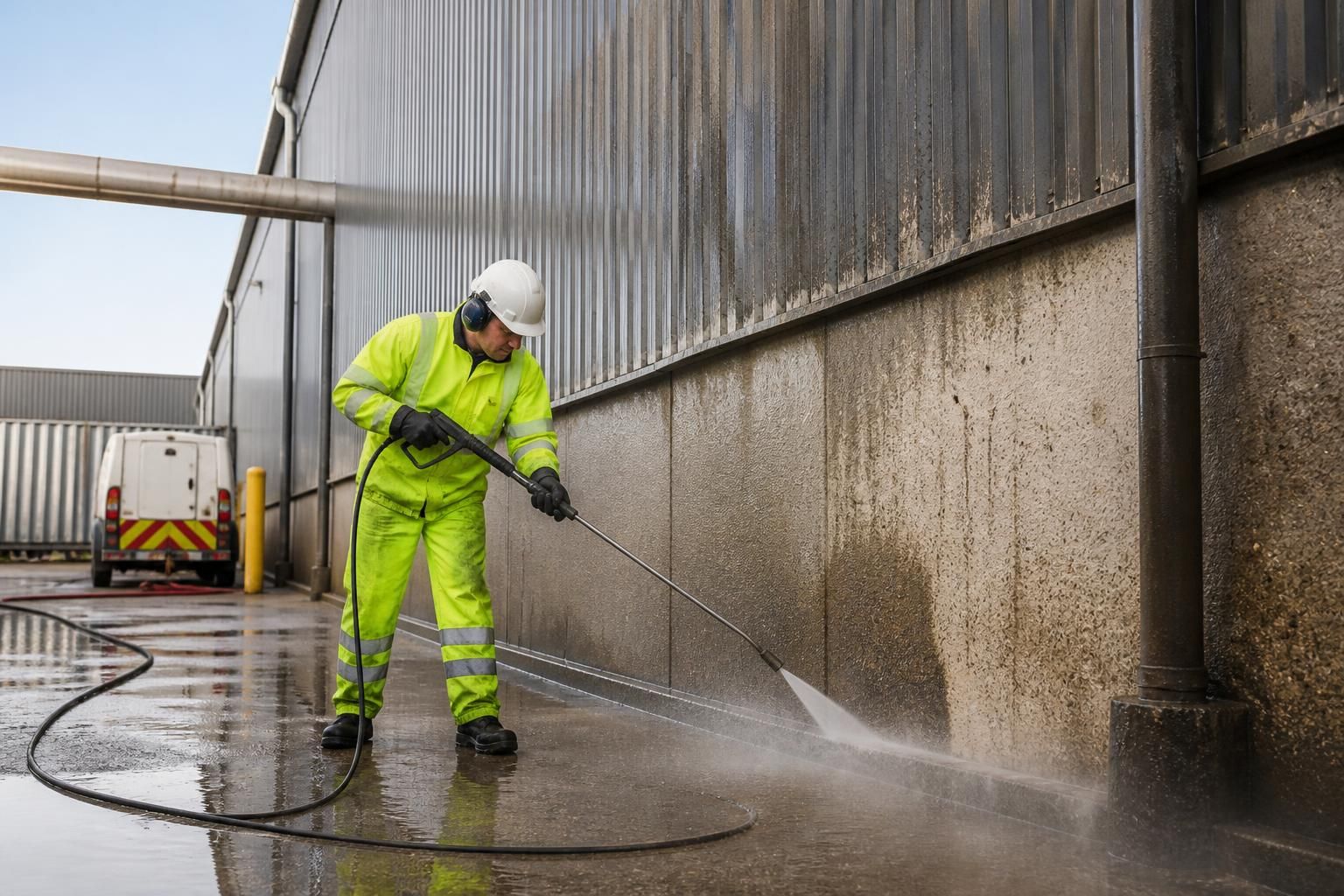
What surfaces can be cleaned using industrial jet washing?
Industrial jet washing can clean hard-wearing surfaces such as concrete, tarmac, paving, brickwork, stone, building façades, cladding, roofs, loading areas and car parks. The pressure, water temperature and cleaning method must be matched to each material to remove dirt, oil, algae, moss, paint or graffiti without damaging the surface.
Industrial jet washing can be used on many robust exterior surfaces, including concrete, tarmac, paving, brickwork, natural stone, building façades, cladding, roofs, loading areas and car parks. The cleaning method must be selected for the material and its condition: water pressure, flow rate, temperature, nozzle type and operator technique all affect the result and the risk of damage.
Concrete and reinforced concrete are commonly cleaned with industrial equipment to remove traffic film, dirt, algae, moss, oil residues and surface staining. Jet washing is suitable for paths, yards, ramps, service areas, warehouse floors and concrete façades. Sound concrete can usually tolerate powerful cleaning, but weakened, cracked or friable areas require reduced pressure and a controlled approach. Oil contamination may also need a suitable detergent and managed recovery of the resulting wastewater rather than pressure washing alone.
Tarmac and asphalt can be cleaned to remove mud, organic growth, tyre marks and general grime from roads, forecourts, access routes and parking areas. These surfaces need more care than sound concrete because excessive pressure, heat or a concentrated nozzle can loosen the surface aggregate or disturb edges and repairs. A broad spray pattern and an appropriate working distance are normally preferable, with particular caution around damaged areas and newly laid surfacing.
Block paving, concrete paving and slabs can be jet washed to remove dirt, moss, algae, weeds and accumulated debris. Cleaning can improve the appearance of pedestrian areas, courtyards, estates, terraces and commercial entrances. Joints may be eroded if the lance is held too close or used at an unsuitable angle, so the condition of the paving and jointing material should be assessed first. Re-sanding or other remedial work may be required after cleaning where joint material has been displaced.
Brickwork and masonry can often be cleaned using controlled pressure washing, particularly where the surface has accumulated atmospheric dirt, algae or loose deposits. Older, porous or weathered brick may be vulnerable to surface erosion, mortar loss and water penetration. For these surfaces, lower-pressure washing, steam cleaning or a more localised treatment may be more appropriate than maximum-pressure jetting. Paint, cement residue and heavy staining may also require a tested cleaning solution or specialist restoration method.
Natural stone, including robust paving and building stone, can be cleaned when the equipment and technique are matched to its porosity, hardness and finish. Jet washing may remove soil, organic growth and surface grime from granite, some limestone, sandstone and other external stonework. The suitability of the method cannot be judged by appearance alone: soft, delaminating or highly absorbent stone may be damaged by aggressive pressure. A discreet test area helps establish the safest pressure, nozzle and cleaning solution before the wider work begins.
Building façades may be cleaned to remove traffic film, atmospheric deposits, algae, bird fouling and other external contamination. Industrial cleaning is used on commercial premises, warehouses, retail units, public buildings and other large structures. The façade material, coatings, seals, joints and drainage details must be considered before work starts. Jet washing may be suitable for robust rendered or masonry surfaces, while delicate finishes may require steam cleaning, soft washing or another low-impact process.
Metal and coated cladding can often be washed to remove dirt, dust, algae and general environmental deposits from industrial and commercial buildings. This includes suitable steel, aluminium and composite cladding systems, subject to the manufacturer’s finish and condition. Cleaning should avoid forcing water behind laps, seals, vents, electrical fittings and damaged coatings. Corrosion, chalking, loose paint and failed sealant should be identified during the assessment because high-pressure water may worsen existing defects.
Roofs and roof coverings may be cleaned where the covering and its condition allow water-based cleaning. Industrial methods can remove moss, algae, lichen, dirt and other deposits from suitable tiles, metal roofs and some commercial roof systems. Roof cleaning requires particular control because pressure can dislodge tiles, damage protective coatings, drive water beneath overlaps or affect fragile membranes. Safe access, fall protection, drainage, nearby plant and the method of collecting contaminated runoff must be addressed as part of the work plan.
Car parks, service yards and loading areas are often cleaned as complete working surfaces rather than as isolated stains. Jet washing can remove accumulated dirt, tyre marks, algae, mud, oil residues and spill contamination from concrete, tarmac and paving. In these locations, the drainage layout and the type of contamination are important. Oil, fuel, chemicals and other pollutants may need containment, treatment and responsible disposal so that they do not enter surface-water drains or surrounding ground.
Graffiti and paint-marked surfaces can be treated on brick, concrete, stone, render, paving and some cladding. The correct approach depends on the paint type, the substrate and whether the surface has previously been coated with an anti-graffiti treatment. Jet washing may remove loose or compatible paint, but stubborn markings may require a specialist chemical system, hot water or steam cleaning. Aggressive cleaning can create a visible ‘shadow’ or remove the surrounding finish, so a test patch is important.
Other suitable applications may include boundary walls, steps, ramps, walkways, plant areas, external staircases, hardstandings and some industrial equipment exteriors. The material is not the only consideration. Operators also need to assess surface age, cracks, joint condition, existing coatings, previous repairs, contamination, nearby glazing, electrical equipment and areas where water could enter the building.
Some surfaces should not be treated with conventional high-pressure jetting without specialist assessment. These include fragile render, deteriorated historic masonry, loose coatings, weak pointing, damaged roof membranes, soft timber, unsealed surfaces and materials with concealed defects. Glass, vents, seals, electrical fittings and internal finishes can also be harmed by direct high-pressure water even when the surrounding surface is robust.
For every surface, the cleaning process should begin with a site assessment and, where appropriate, a small test area. The selected method may involve cold-water jet washing, hot-water cleaning, steam, detergent-assisted washing or a lower-pressure technique. Containment and wastewater controls should be planned for sites where oils, chemicals, paint residues or silt could be mobilised. This approach allows the surface to be cleaned effectively while protecting the material, adjacent assets, building occupants and the surrounding environment.
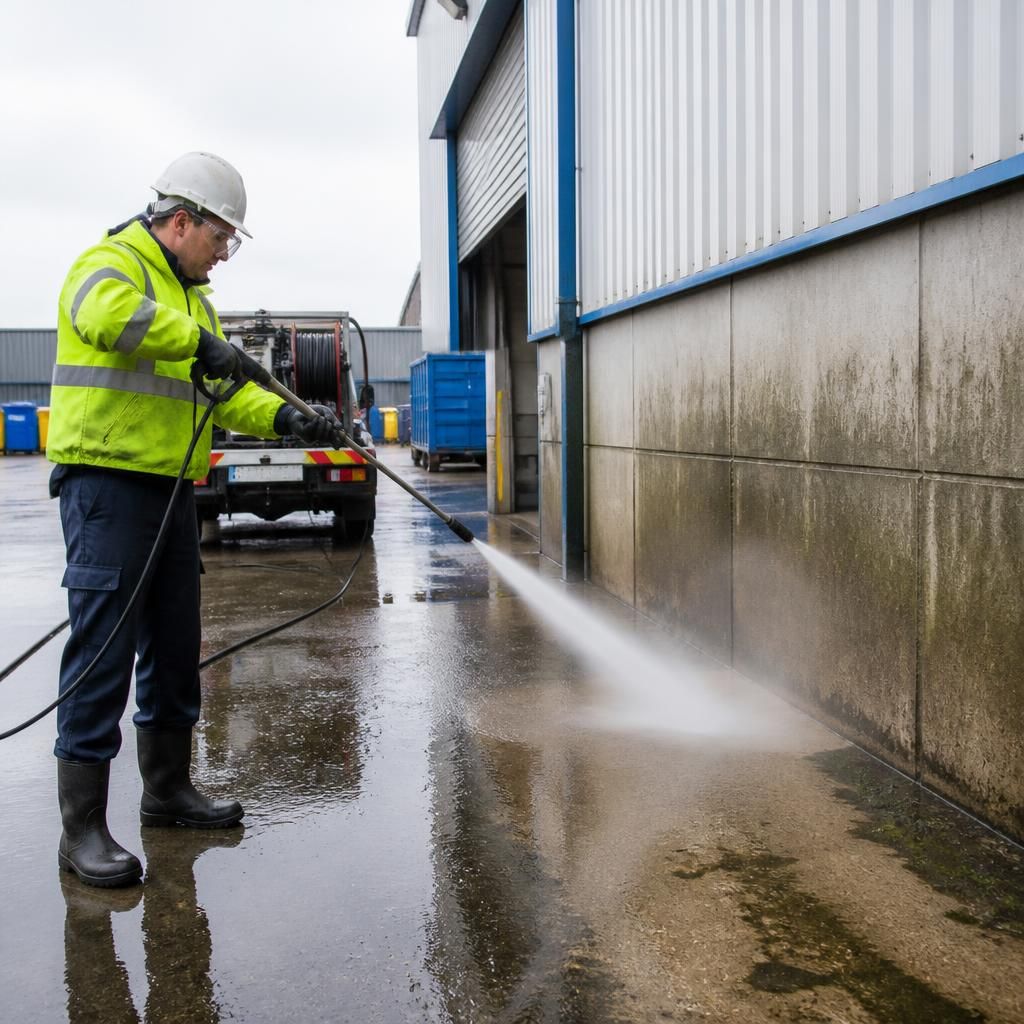
Industrial jet washing is suitable for many hard exterior surfaces, but the pressure and cleaning method must be matched to the material and its condition. Concrete, tarmac, paving, brickwork, cladding, roofs, loading areas and car parks can often be cleaned effectively, while fragile masonry, damaged coatings and weakened surfaces may require lower-pressure washing, steam cleaning or another specialist method.
A site assessment and test area help identify the safest approach. Operators check for cracks, loose pointing, failed sealant, surface coatings, drainage issues and nearby electrical or glazed features before selecting the nozzle, water temperature and working pressure. This prevents avoidable damage while removing dirt, algae, oil, moss, paint residues and other contamination.
Request an industrial jet washing assessment
Request an industrial jet washing assessment so we can evaluate your surfaces, contamination and site conditions before recommending the safest cleaning method. Contact Encanto Exterior Cleaning to arrange an assessment for your commercial or industrial premises.