
What specific types of surfaces can be cleaned using industrial jet washing?
Industrial jet washing can clean hard, durable surfaces including building façades, brickwork, concrete, stone, cladding, roofs, paving, car parks, loading areas, walls and industrial flooring. The correct pressure, water temperature and cleaning method must be selected for each material to remove dirt, algae, oil, moss, coatings and graffiti without damaging the surface.
Industrial jet washing is suitable for many hard, water-resistant surfaces, including concrete, brickwork, natural stone, paving, tarmac, building façades, cladding, roofs, car parks, loading areas and industrial flooring. The cleaning method must be matched to the material and its condition: pressure, water temperature, nozzle type, spray distance and any detergent used all affect the result and the risk of damage.
Concrete and reinforced concrete
Concrete is commonly cleaned with industrial jet washing to remove accumulated dirt, algae, moss, tyre marks, oil residues, cement staining and general traffic film. It is used on car parks, service yards, loading bays, walkways, steps, ramps, warehouse floors and structural areas. Operators need to account for cracked, spalled or poorly finished concrete, as excessive pressure can loosen the surface, expose aggregate or worsen existing defects.
Brickwork and masonry
Sound engineering brick and robust masonry can often be cleaned effectively, particularly where staining is caused by atmospheric dirt, algae, bird fouling or organic growth. Older brickwork, soft handmade brick, weak pointing and friable mortar require a gentler approach. A controlled low-pressure wash, steam cleaning or a suitable masonry treatment may be more appropriate than aggressive jetting. Cleaning should not remove the surface of the brick or force water into vulnerable joints.
Natural stone
Granite, dense sandstone, some limestone and other durable stone surfaces may be cleaned using carefully controlled jet washing. Typical applications include façades, entrance steps, paving, retaining walls and hard landscaping. Stone varies considerably in porosity, hardness and sensitivity to chemicals, so the method should be selected after assessing the particular stone. High pressure can cause etching, surface loss, staining or damage to existing sealants, especially on softer or weathered stone.
Building façades and external walls
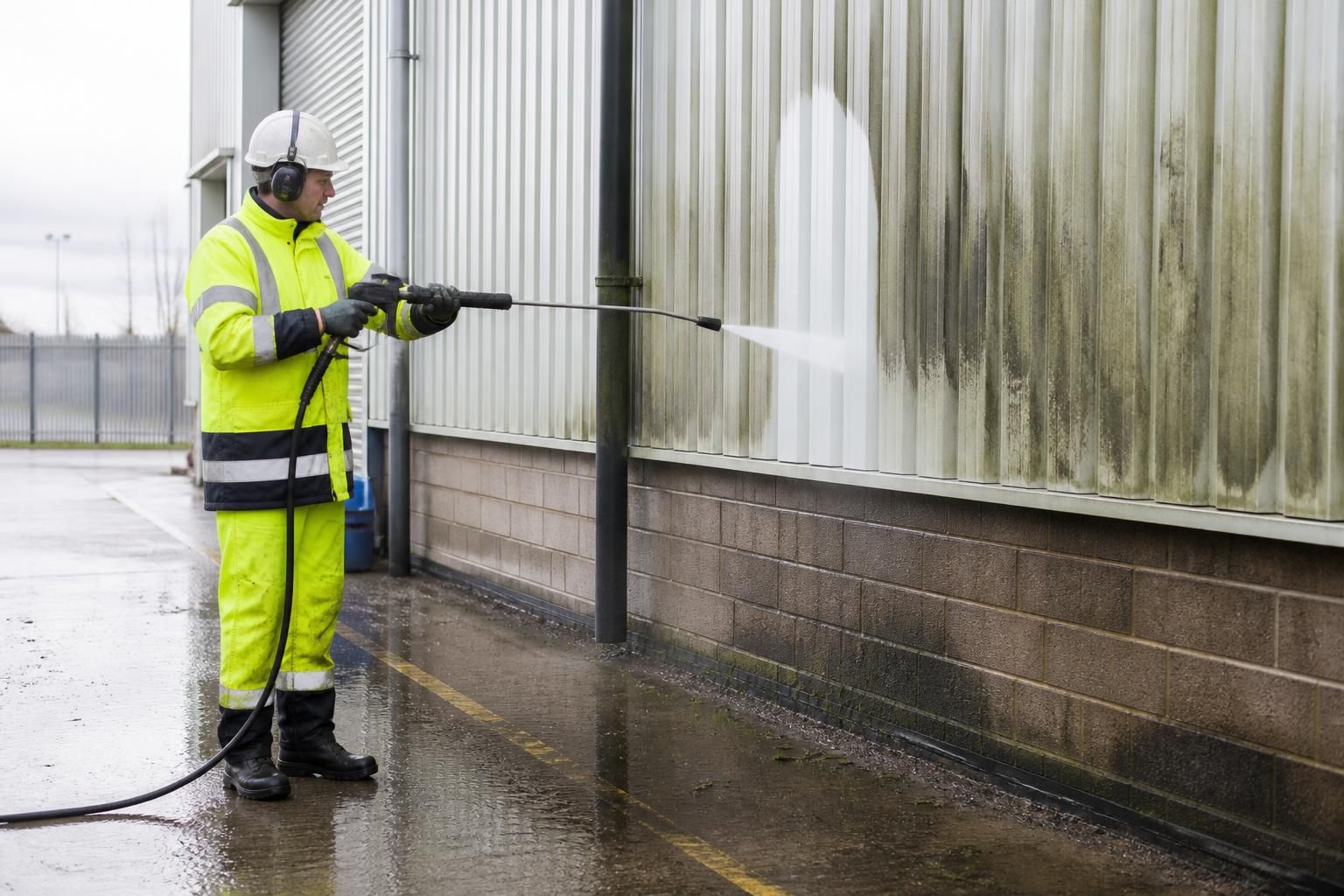
Industrial jet washing can remove traffic film, airborne pollution, algae, moss and other deposits from suitable external wall surfaces. Façade cleaning may involve brick, concrete, stone, coated panels or other cladding materials, sometimes across large commercial or industrial buildings. Windows, seals, vents, electrical fittings and vulnerable joints must be protected, and runoff must be controlled so that contaminated water does not enter buildings or drainage systems.
Metal and composite cladding
Powder-coated metal panels, profiled sheets, aluminium cladding and some composite panels can be cleaned with a carefully regulated wash. The objective is to remove dirt and biological growth without lifting coatings, driving water behind joints or damaging sealants. Jet washing is not automatically suitable for every panel system. The coating condition, panel construction and manufacturer’s guidance should be considered before work begins, with a test area used to confirm the approach.
Roofs and roof-mounted surfaces
Suitable commercial and industrial roof coverings may be cleaned to remove moss, algae, lichen, bird fouling, atmospheric dirt and loose debris. Applications can include concrete tiles, some clay tiles, coated metal roofs and other robust coverings. Roof cleaning requires particular care because pressure can dislodge tiles, strip protective coatings, damage laps and force water beneath the covering. Access, fall protection and the condition of the roof are as important as the cleaning equipment.
Paving, slabs and hard landscaping
Block paving, concrete slabs, stone paving, kerbs, steps and other hard landscaping can be cleaned to improve appearance and reduce slippery organic deposits. Jet washing can remove weeds, moss, algae, soil and general staining from pedestrian routes around offices, retail premises, public buildings and industrial sites. Jointing material may be displaced during cleaning, so joints may need to be checked and, where appropriate, reinstated after the surface has dried.
Tarmac and asphalt
Sound tarmac and asphalt can be cleaned to remove surface dirt, algae, tyre marks, mud and some oil-related contamination. These materials are more vulnerable than concrete to softening, loose aggregate and edge damage, particularly where the surface is aged or already breaking down. The cleaning pressure and water temperature should therefore be controlled, and heavily contaminated areas may need an approved degreasing process alongside mechanical washing.
Car parks, service yards and loading areas
Large paved areas are common industrial jet washing applications. Cleaning can target vehicle deposits, diesel and oil residues, rubber marks, mud, moss, litter residue and general environmental soiling. Before work starts, the operator should identify drainage points, isolate vulnerable areas and establish how wastewater will be collected or treated. Oil-contaminated runoff must not be allowed to enter surface-water drains without suitable controls.
Industrial floors and warehouse surfaces
Concrete floors, resin-coated areas and other durable industrial flooring can be cleaned to remove dust, grease, product residue, rubber deposits and tracked-in dirt. The condition and type of floor coating are important. A strong jet may damage resin, paint, line markings or deteriorated joints, so cleaning parameters should be tested and adjusted to preserve the finish. Where hygiene or operational requirements apply, the cleaning process may also include an appropriate detergent and controlled drying.
Walls, retaining structures and boundary features
Retaining walls, boundary walls, concrete barriers, planters and similar structures can generally be washed where the substrate is sound and water-resistant. This is useful for removing algae, moss, soil splash and atmospheric staining. Areas with open cracks, unstable pointing, loose coatings or signs of water ingress should be repaired or assessed before jet washing.
Surfaces that need additional assessment
Jet washing is not suitable simply because a surface is outdoors or visibly dirty. Timber, painted or rendered surfaces, historic masonry, soft stone, deteriorated asphalt, fragile coatings and surfaces containing vulnerable joints may require low-pressure cleaning, steam, soft washing or another specialist method. Materials suspected of containing asbestos must not be disturbed by jet washing; they require an appropriate specialist assessment and controlled procedure.
Before cleaning, the surface should be inspected for cracks, failed coatings, loose pointing, exposed reinforcement, damaged seals, drainage issues and previous repairs. A small test area helps confirm whether the selected pressure, temperature and cleaning agent remove the contamination without altering the substrate. For commercial and industrial sites, the assessment should also cover access, nearby vehicles and equipment, pedestrian segregation, electrical hazards and wastewater management.
Industrial jet washing is therefore best understood as a controlled cleaning process rather than a single high-pressure technique. Durable surfaces can usually be cleaned efficiently, but the safest and most effective specification depends on the material, contamination, surface condition and surrounding site constraints.
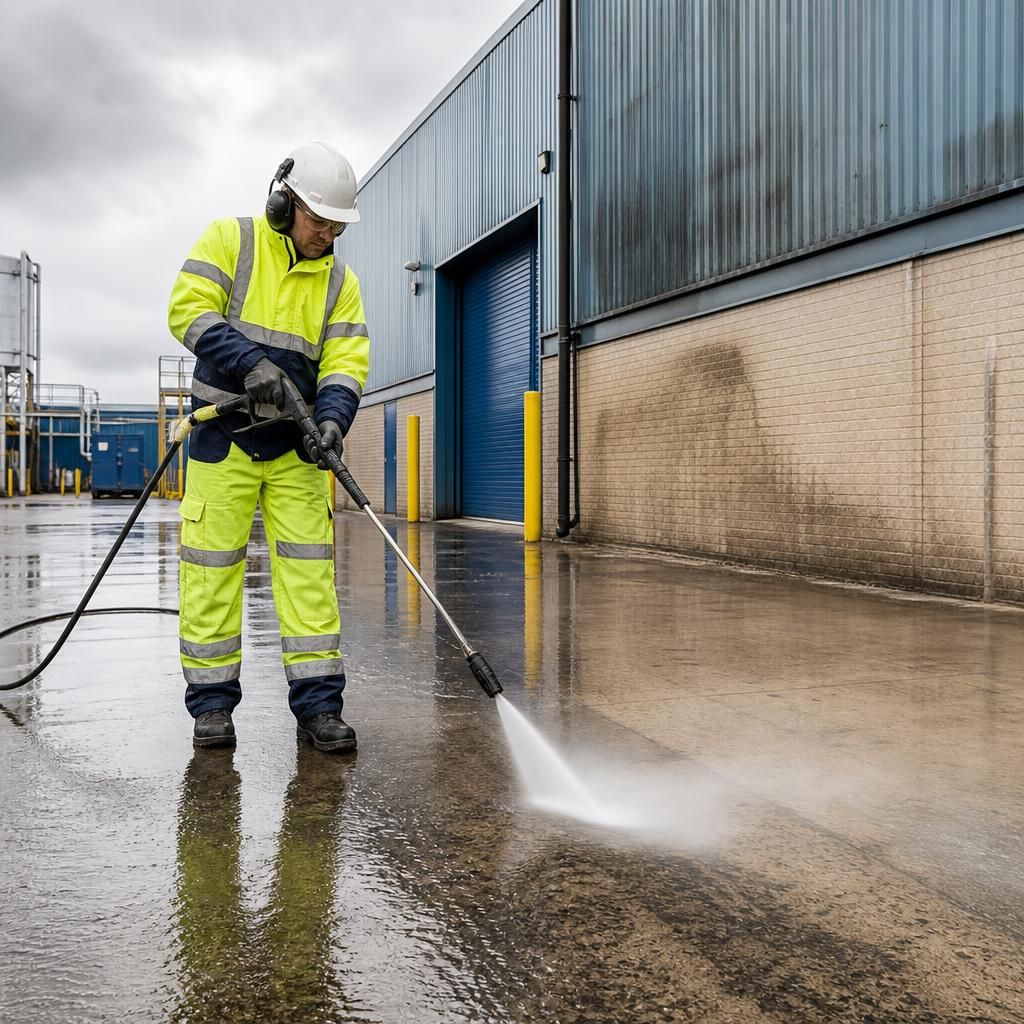
Industrial jet washing can clean many durable surfaces, but the pressure and water temperature must be matched to the material and its condition. Concrete, sound brickwork, robust stone, cladding, paving, roofs and industrial flooring may all require different settings to remove dirt, algae, oil or other deposits without stripping coatings, loosening joints or damaging the substrate.
A small test area should be checked before full cleaning, particularly on older masonry, coated panels, tarmac, resin flooring and weathered roofs. This confirms that the chosen nozzle, spray distance, pressure and cleaning solution are effective while also identifying vulnerable areas that may need steam cleaning, soft washing or another lower-impact method.