
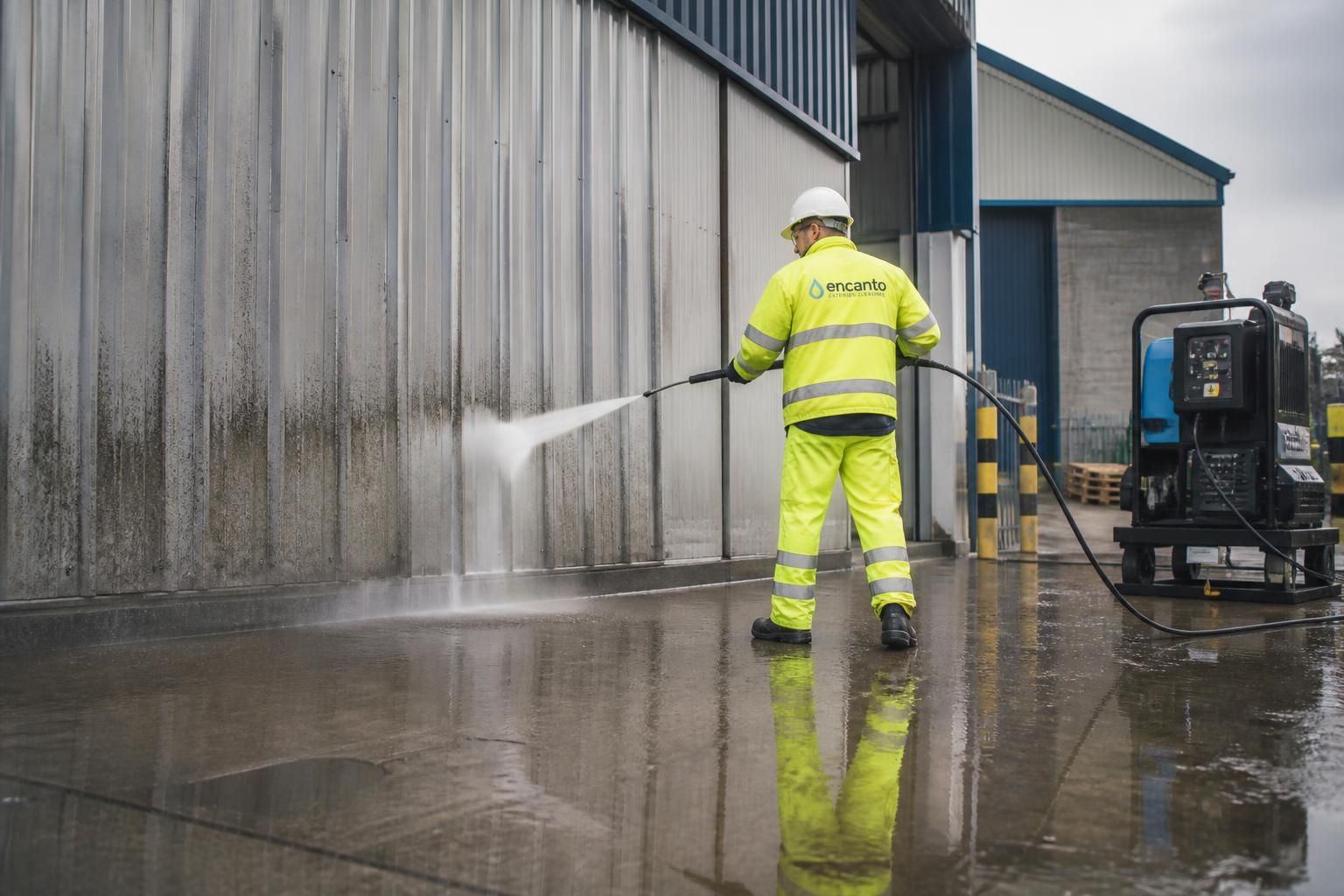
What factors influence the cost of industrial jet washing services?
The cost of industrial jet washing depends mainly on the area and surface type, the level of soiling, site access, required equipment, water and waste management, and any safety or access provisions. Complex sites, specialist cleaning methods and ongoing maintenance requirements may increase the price, so an accurate quotation normally follows a site assessment.
Industrial jet washing costs are determined by the work required at the site rather than by surface area alone. The main pricing factors are the size and condition of the area, the surface material, the type and depth of soiling, access conditions, the cleaning method and equipment needed, water and wastewater arrangements, and any safety or traffic-management provisions. A reliable quotation should therefore be based on the site’s actual requirements, normally following a survey or a detailed review of site information.
Area and project scale have a direct effect on the overall cost. Larger façades, roofs, yards, car parks and industrial floors require more labour, water, fuel and equipment time. However, the relationship is not always simply a price per square metre. A large, open hardstanding may be relatively straightforward to clean, while a smaller site with several elevations, restricted access or detailed features may take considerably longer.
The surface material and its condition influence the pressure, temperature and cleaning products that can be used. Concrete, block paving, tarmac, brick, stone, metal cladding and coated surfaces each have different tolerances and cleaning requirements. Delicate or weathered materials may need lower pressure, steam cleaning, soft washing or controlled chemical treatment rather than aggressive jetting. Extra preparation and testing may be necessary to prevent damage, remove failed coatings or protect joints, seals and drainage details.
The type and severity of contamination is another important consideration. Loose dust and general dirt can often be removed efficiently, whereas oil, grease, algae, moss, bird fouling, cement residue, tyre marks, efflorescence and embedded traffic grime may need pre-treatment, agitation or repeated passes. Graffiti, paint and construction deposits can require specialist removal methods and additional waste controls. The longer contamination has remained on a surface, the more likely it is that additional treatment or restoration work will be needed.
Site access and working conditions can significantly affect the time and resources required. Pricing may increase where operatives need to work at height, use mobile elevated work platforms, operate from a roof or reach recessed areas. Narrow entrances, low-clearance structures, busy service yards, underground car parks and sites with limited parking can restrict the equipment that can be brought to the work area. Longer hose runs, manual equipment handling, security procedures and coordination with other contractors may also add to the labour involved.
Equipment selection is matched to the surface, contamination and working environment. A standard pressure washer may be suitable for some external hard surfaces, while hot-water systems, steam equipment, rotary surface cleaners, vacuum recovery units or specialist access equipment may be more appropriate elsewhere. The cost can reflect transport, setup, fuel, operator time and the need for more than one type of equipment. Using excessive pressure is not a cost-effective solution if it risks etching, spalling, lifting coatings or forcing water into a building.
Water supply and wastewater management must be assessed as part of the quotation. Some sites provide a suitable water connection, but others require tanks, bowsers or extended hose arrangements. Run-off may contain oil, chemicals, silt, paint or other contaminants and cannot always be allowed to enter surface-water drains. Where water needs to be captured, filtered, treated, removed or disposed of through an approved route, the extra equipment and handling will affect the price.
Health and safety requirements can add to the scope of an industrial cleaning project. Depending on the location, the work may require a method statement, risk assessment, exclusion zones, personal protective equipment, fall protection, electrical precautions, traffic management or coordination with the site’s responsible person. Cleaning near pedestrians, vehicles, machinery, electrical installations or production areas may require phased working, barriers and additional supervision.
Programme and access restrictions also influence labour efficiency. Work carried out during normal operating hours may be easier to organise, but a live commercial or industrial site may only permit cleaning at specific times. Out-of-hours, weekend or phased work can involve additional labour and supervision. Conversely, planned cleaning during a site shutdown may allow equipment to be positioned more efficiently and reduce disruption.
Location and mobilisation affect the cost where specialist equipment, operators or waste facilities need to travel to the site. The relevant consideration is not simply distance, but the transport of machinery, availability of suitable parking, loading arrangements and whether several areas can be completed during the same visit. Combining related works, such as façade cleaning and hardstanding cleaning, may reduce repeated setup and mobilisation requirements.
Frequency and contract arrangements can change the cost of ongoing work. A maintenance programme can prevent heavy build-up and may make each visit more predictable. One-off restoration cleaning often requires more intensive preparation than routine maintenance. A quotation should make clear whether it covers a single clean, scheduled visits, remedial treatments, water and waste handling, access equipment, and any exclusions or follow-up work.
To obtain an accurate quotation, provide the site location, approximate areas, surface types, photographs, known contamination, access restrictions and preferred working times. It is also useful to identify drainage arrangements, water availability, height-related requirements and any areas that must remain operational. A site assessment allows the cleaning method and controls to be selected before work begins, so the quoted cost reflects the actual scope rather than an unsuitable standard rate.
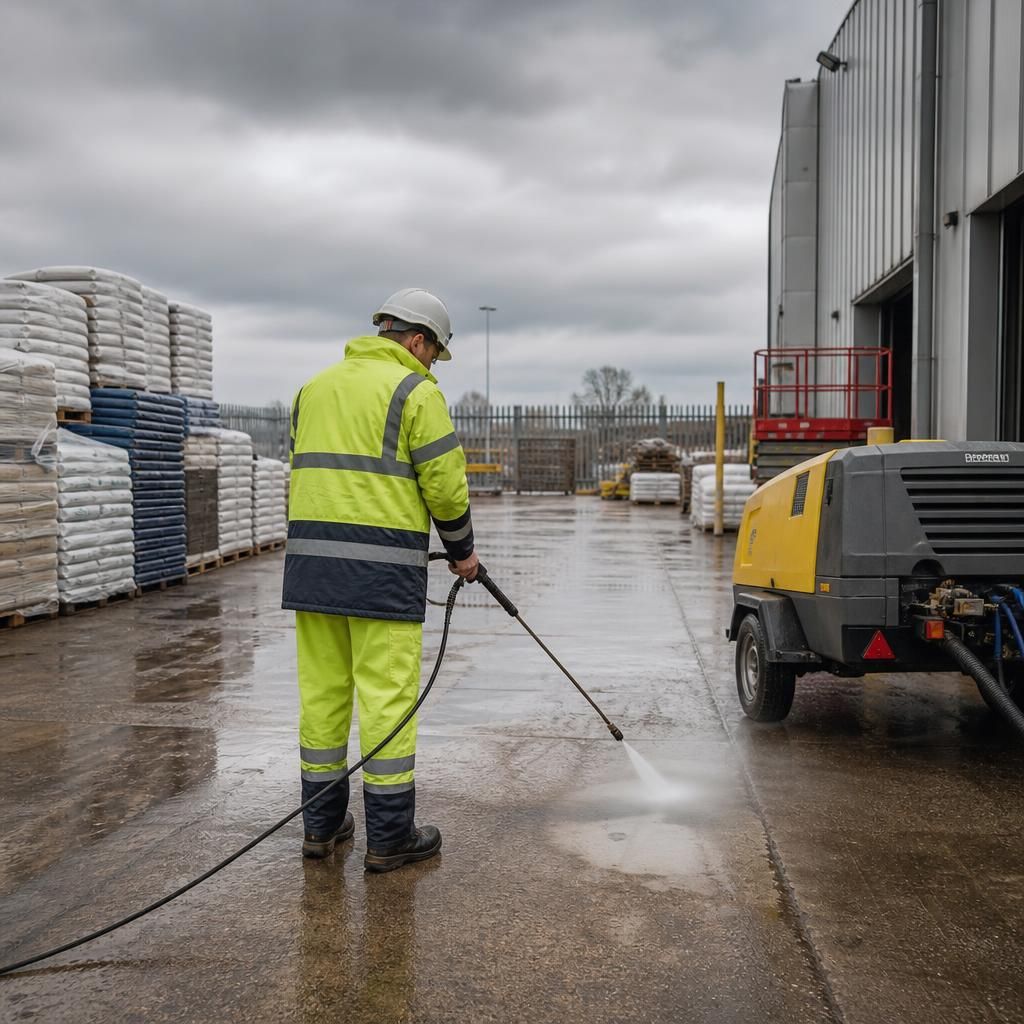
Site access is a major factor in the cost of industrial jet washing because it determines how easily equipment, water and operatives can reach the cleaning area. Open yards and accessible hardstandings are generally more efficient to clean than sites with restricted entrances, long hose runs, low clearances, busy traffic routes or areas requiring specialist access equipment.
Access arrangements should be discussed when requesting a quotation. Details such as delivery restrictions, parking, working hours, height requirements, water availability and wastewater controls help establish the labour, equipment and safety measures needed. Providing photographs or arranging a site assessment can prevent unexpected costs and ensure the proposed cleaning method is suitable for the premises.