
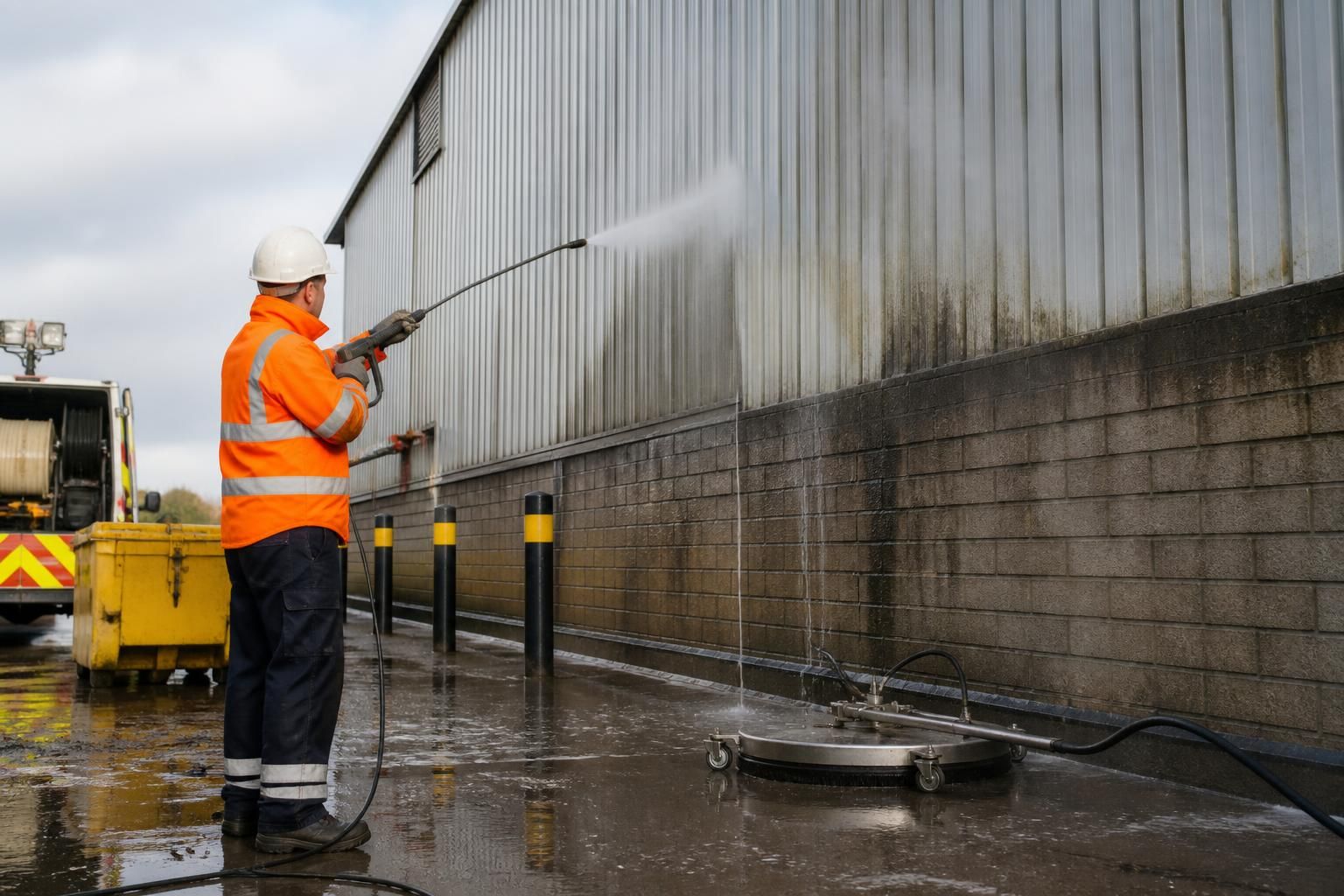
What environmental considerations should be taken into account when choosing industrial jet washing services?
When choosing industrial jet washing services, assess how the contractor manages water consumption, wastewater and contaminated runoff, including capture, treatment and lawful disposal. Also check whether they use environmentally responsible detergents, efficient equipment and methods that minimise chemical use, fuel consumption and disturbance to surrounding areas.
Environmental considerations when choosing industrial jet washing services centre on how the contractor uses water, controls contaminated runoff, selects cleaning products and disposes of waste. A responsible service should assess the site before work begins, identify environmental risks and provide a method that achieves the required standard without unnecessary water, chemicals, energy use or disturbance.
Water consumption and efficiency
Industrial jet washing can use substantial volumes of water, particularly when cleaning large façades, yards, roofs or car parks. Ask how the contractor will control consumption rather than relying solely on high flow rates. Suitable measures may include efficient pressure-washing equipment, flow-controlled nozzles, trigger-operated systems, targeted cleaning and the use of steam or low-water methods where appropriate.
Water efficiency should not compromise the cleaning result or encourage excessive pressure that could damage the surface. An experienced contractor will select pressure, temperature, flow rate and cleaning time according to the material, level of soiling and site conditions.
Runoff, drainage and wastewater control
Runoff may contain oil, grease, silt, paint residue, detergents, biological contamination, construction materials or other pollutants removed from the surface. It should not be allowed to enter surface-water drains, watercourses, soil or neighbouring property without appropriate assessment and control.
Before work starts, confirm how the contractor will identify drainage routes and prevent polluted water from escaping. Practical controls can include drain covers, bunds, temporary barriers, wet vacuums, sump pumps, collection tanks and on-site filtration. Wastewater may need to be collected for treatment or removed by an appropriately authorised waste carrier, depending on its contents and the disposal route available.
Do not assume that a nearby drain is suitable for discharge. Surface-water drainage commonly leads to the environment rather than a treatment works. Where discharge to a foul sewer is proposed, the contractor should confirm that it is permitted and that any relevant trade-effluent requirements have been addressed. Local water and environmental authorities may also impose specific conditions.
Pollution prevention and site assessment
A proper site assessment should consider the condition of the surface, nearby drains and watercourses, ground conditions, weather, adjacent land uses and the type of contamination present. Cleaning during heavy rain or strong winds may increase the risk of uncontrolled runoff, overspray or chemical dispersal. The work plan should allow for weather-related changes where necessary.
For industrial sites, petrol stations, transport yards, workshops, construction areas and waste-handling facilities, the contractor should establish whether oils, fuels, metals, cement residues or other substances are present. This information helps determine the correct containment, recovery and disposal arrangements. Any spill response procedure should be understood by the site contact before cleaning begins.
Cleaning chemicals and detergents
Ask which detergents, degreasers, biocides or other treatments will be used and whether they are genuinely necessary. The preferred approach is to use the least hazardous product that can achieve the required result, at the lowest effective concentration, with accurate application and thorough recovery or rinsing.
Products should be suitable for the surface and the surrounding environment. A contractor should be able to provide product information and explain how chemicals will be stored, handled and prevented from entering drains or soil. This is particularly important when cleaning roofs, façades, food-related premises, drainage channels or areas close to planting and watercourses. Chemical use should also be reviewed where a steam-cleaning or water-only method can achieve the same outcome.
Waste handling and disposal
Jet washing separates dirt and pollutants from the surface; it does not make those materials disappear. Sludge, collected solids, contaminated absorbents, used filters and wastewater all require appropriate handling. Ask how these materials will be segregated, stored and transferred, and whether disposal documentation will be available when required.
Where waste is classified as hazardous, it must be managed through the appropriate legal and documentation processes. A reputable contractor should use suitable waste carriers and disposal facilities and should not rely on informal tipping, unrecorded discharge or disposal into general site drains.
Equipment, fuel and energy use
Equipment choice affects environmental performance as well as cleaning effectiveness. Efficient pumps, correctly sized machinery and well-maintained engines can reduce unnecessary fuel and water consumption. Electric equipment may be suitable for some sites, particularly where power is available and emissions or noise need to be limited. In other locations, specialist diesel-powered equipment may be necessary for access, duration or cleaning power.
Consider the complete operating method rather than focusing on the equipment label alone. Poorly maintained machinery, excessive idling, repeated passes and unsuitable nozzles can increase energy use and emissions. The contractor should explain why the selected equipment is appropriate and how it will be operated efficiently.
Protection of buildings, planting and wildlife
Environmental responsibility includes preventing avoidable damage to the site and its surroundings. Overspray, heat, pressure and detergents can affect painted finishes, sealants, roof coverings, vegetation and drainage infrastructure. The work plan should identify areas requiring protection and specify suitable exclusion zones, sheeting or controlled application.
Where work is close to trees, planted areas, nesting locations, ponds or other sensitive habitats, timing and method may need to be adjusted. Moss, algae and organic growth should be removed without allowing concentrated treatment products or contaminated wash water to enter planted areas or watercourses.
Noise, air quality and disturbance
Industrial jet washing can generate noise, spray and exhaust emissions, especially when powered equipment is used for extended periods. On occupied premises or sites near homes, schools, healthcare facilities or public areas, agree suitable working times and controls in advance. Good planning can reduce idling, repeated cleaning, overspray and disruption to neighbouring operations.
The contractor should also consider pedestrian and vehicle movements, particularly where spray could reduce visibility or create slippery surfaces. Keeping the work area controlled helps prevent environmental controls from being bypassed during busy site activity.
Evidence of competence and legal compliance
When comparing contractors, request a clear method statement and risk assessment that covers water use, chemical selection, runoff, drainage, waste, spills and emergency arrangements. It is reasonable to ask for evidence of relevant training, public and employers’ liability insurance, waste-carrier arrangements and any permits, consents or site-specific approvals that may apply.
Environmental claims should be supported by practical details rather than broad terms such as “eco-friendly” or “green”. A reliable contractor can explain where wastewater will go, what products will be used, how much water the method is expected to require, what happens to recovered waste and who is responsible for checking the discharge arrangements.
Questions to ask before appointing a contractor
- How will water consumption be controlled for this particular surface and site?
- Where will wash water and contaminated sediment be captured, stored and disposed of?
- Could any runoff enter a surface-water drain, watercourse or neighbouring land, and what controls will prevent this?
- Which detergents or treatments will be used, and can the work be completed with less hazardous or water-only methods?
- How will oils, chemicals, silt and other contaminants be separated from ordinary wastewater?
- What arrangements are in place for spills, unexpected contamination or changes in weather?
- How will equipment, fuel and working hours be managed to limit noise, emissions and disturbance?
- What records or disposal documentation will be provided after the work?
The most suitable industrial jet washing service is not necessarily the one offering the highest pressure or the quickest completion. Choose a contractor that can demonstrate a controlled process from pre-cleaning assessment through to wastewater and waste disposal. For large commercial and industrial sites, documenting these arrangements in the quotation or method statement helps protect the environment, supports site compliance and gives everyone a clear basis for carrying out the work safely and responsibly.
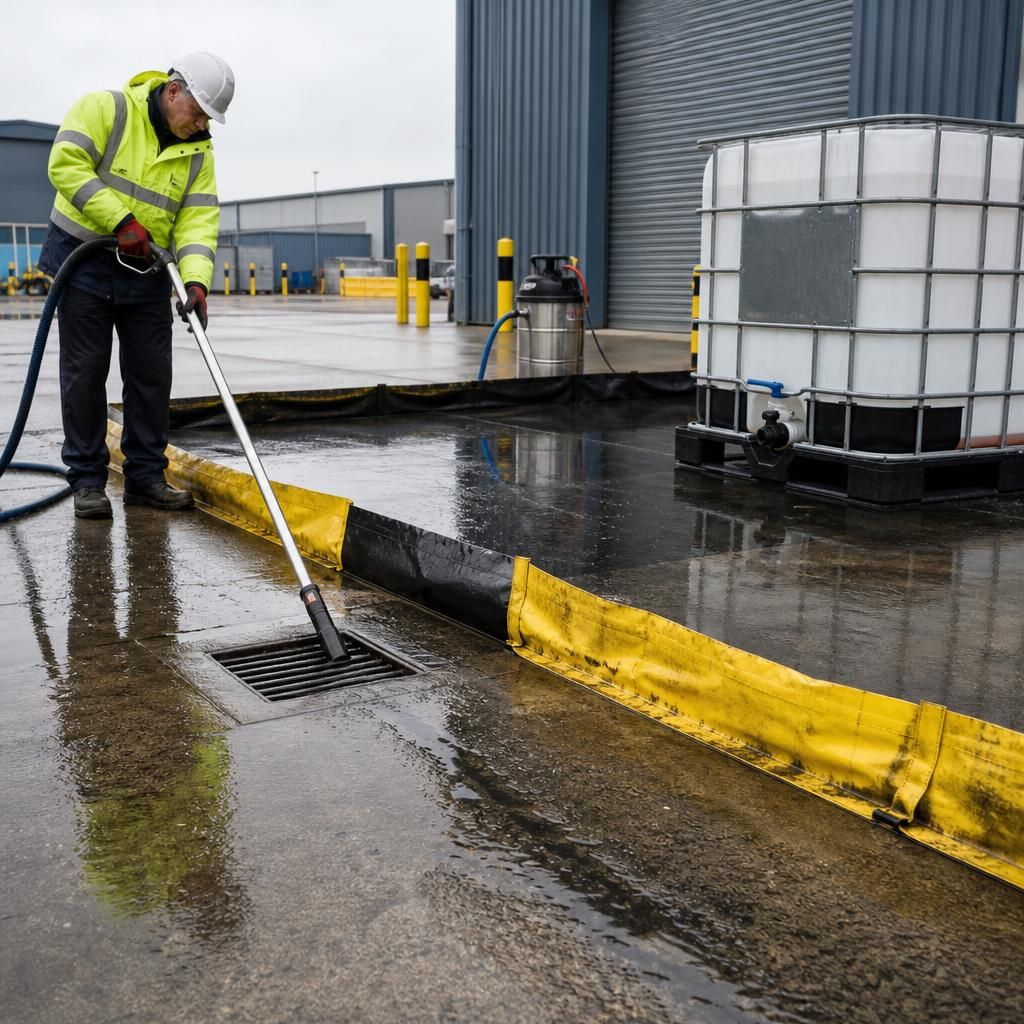
Runoff control is a key environmental consideration when choosing industrial jet washing services because wash water can carry oil, grease, silt, detergents and surface residues into drains, soil or watercourses. The contractor should inspect drainage routes before work starts and explain how contaminated water will be contained, recovered, filtered, stored and disposed of lawfully.
Suitable controls may include drain covers, temporary bunds, barriers, wet vacuums, collection tanks and spill-response equipment. Do not assume that a nearby surface-water drain is suitable for discharge. Ask for the proposed disposal route and ensure it is addressed in the method statement before cleaning begins.