
What environmental benefits does industrial jet washing offer?
Industrial jet washing can reduce environmental impact by using controlled water pressure to remove dirt, oil and other deposits with less reliance on harsh cleaning chemicals. When runoff is contained and disposed of correctly, targeted cleaning can also limit water waste and prevent pollutants entering drains, soil or waterways.
Industrial jet washing can reduce the environmental impact of exterior cleaning by using controlled water pressure to remove dirt, oil, algae, moss, traffic film and other deposits with less reliance on aggressive chemicals. The benefits depend on how the work is planned and carried out: appropriate pressure and flow settings, targeted application, responsible wastewater control and suitable disposal are all essential.
Reduced use of cleaning chemicals
Water pressure can often remove surface contamination mechanically, reducing the need for strong detergents, solvents or biocides. This is particularly useful when cleaning hard surfaces such as concrete, paving, cladding, brickwork and industrial floors. Where a chemical treatment is necessary, it should be selected for the specific contaminant, applied at the lowest effective concentration and prevented from entering surface water drains or surrounding ground.
Reducing chemical use can lower the risk of harmful residues affecting soil, vegetation, drainage systems and aquatic environments. It can also reduce the amount of chemical packaging and waste generated by the cleaning operation. Not every stain can be removed with water alone, however, so responsible contractors assess the material and contamination before deciding whether a detergent or specialist treatment is justified.
More controlled water use
Industrial equipment allows operators to adjust pressure, flow rate and nozzle selection to suit the surface and cleaning task. A targeted jet can clean a contaminated area more efficiently than uncontrolled hosing, particularly where deposits are localised. Operators can also work in sections, pre-treat heavy contamination where appropriate and avoid repeatedly washing areas that do not require cleaning.
This does not mean that jet washing is automatically low-water. Poorly selected equipment, excessive rinsing or repeated cleaning can increase consumption. Water efficiency therefore comes from proper planning, well-maintained machinery and trained operation rather than pressure alone. Where practical, recovered or non-potable water may be considered, provided its quality is suitable for the equipment and the surface being cleaned.
Better control of polluted runoff
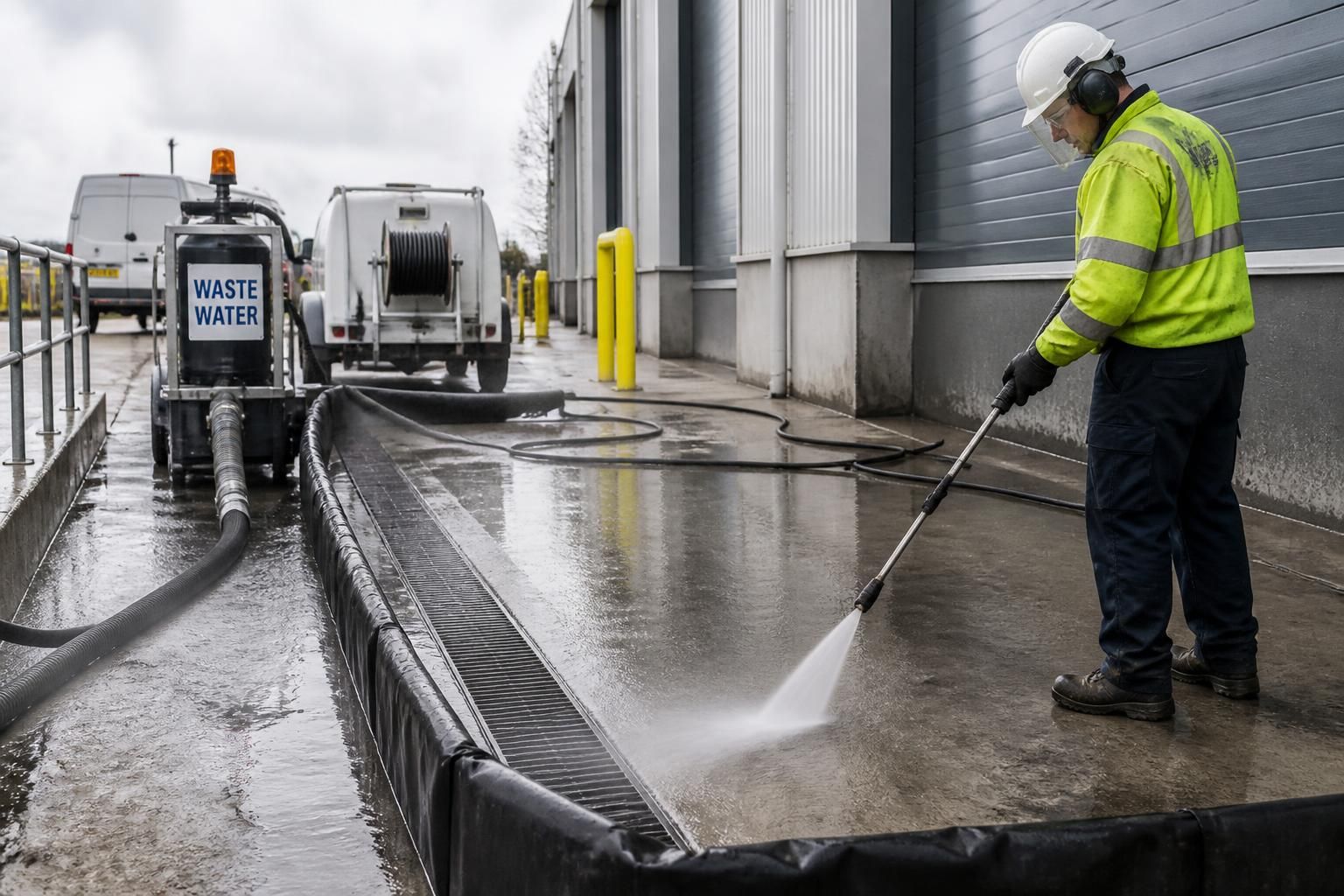
Oil, fuel residues, heavy metals, silt, faecal matter, detergents and other contaminants can be released when external surfaces are washed. Allowing this water to flow into road gullies, surface water drains or nearby watercourses can cause pollution. Professional industrial cleaning should include an assessment of drainage and runoff before work begins.
Depending on the site, controls may include drain covers, bunding, temporary barriers, wet vacuums, collection tanks, filtration or a controlled discharge route agreed with the relevant authority or water company. Collected wastewater should be assessed and disposed of through an appropriate route rather than released to the ground or a surface water system. Foul drainage may also have discharge restrictions, so it should never be used without suitable approval.
Lower risk to surrounding areas
Controlled jet washing can reduce overspray and limit the spread of dirt and cleaning products beyond the work zone. This is important around planted areas, occupied buildings, loading bays, public footways and neighbouring premises. Selecting the right nozzle, maintaining a suitable working distance and using lower pressure where necessary helps protect vegetation, painted finishes, sealants and drainage infrastructure.
Site controls should also account for wind and weather. Work may need to be adjusted or postponed if spray could travel towards sensitive receptors, pedestrians or open water. Protecting the surrounding area is both an environmental measure and a practical way to avoid creating additional cleaning or waste.
Longer service life for building materials
Removing damaging deposits can help maintain external surfaces and delay deterioration. Algae, moss, salts, oil and trapped moisture can contribute to staining, blocked drainage, corrosion or surface degradation if they are left unmanaged. Regular, correctly specified cleaning may therefore support the useful life of façades, roofs, paving, car parks and other assets, reducing the need for premature replacement.
The method must be matched to the material. Excessive pressure can remove pointing, damage coatings, erode concrete or force water into vulnerable areas. Avoiding this damage is environmentally important because repair and replacement require additional raw materials, transport and energy. In some cases, steam cleaning, soft washing or a lower-pressure method will provide a better balance between cleaning performance and surface protection.
Less waste from consumables and replacement work
Water-based cleaning can reduce dependence on abrasive media and single-use products for suitable applications. It may also minimise the need for repainting, resurfacing or replacing items that have become heavily soiled but remain structurally sound. Any sludge, sediment, contaminated absorbent material or used filters produced during the work should be contained, classified where necessary and sent for appropriate disposal or recovery.
More efficient use of equipment and energy
Industrial pressure washers, steam cleaners and recovery systems consume energy, so environmental performance also depends on equipment selection and operating practice. The most suitable machine is not necessarily the largest one. Matching output to the surface, keeping equipment maintained, avoiding unnecessary idling and planning work to reduce travel and repeat visits can help limit fuel or electricity use.
Where electricity is available, an electric machine may be suitable for some sites, while other locations may require diesel-powered equipment because of access or operating demands. The relevant choice depends on the scale of the work, water supply, drainage controls, access arrangements and the surface being cleaned. A method statement should consider the whole operation rather than focusing on pressure or cleaning speed alone.
What customers should check
- Whether the contractor has assessed the surface, contamination and nearby drainage before work starts.
- How water use will be controlled and whether suitable equipment will be used for the task.
- How chemicals will be selected, stored, applied and prevented from entering the environment.
- How dirty water, sludge and contaminated materials will be recovered, transported and disposed of.
- Whether the proposed method protects coatings, joints, vegetation, neighbouring property and watercourses.
- Whether the work plan accounts for weather, access, public safety and the requirements of the site or local authority.
Industrial jet washing is therefore most environmentally responsible when it forms part of a controlled cleaning system rather than being treated as simply high-pressure water. A site-specific assessment, proportionate water and chemical use, effective runoff recovery and correct waste handling can deliver thorough cleaning while limiting pollution, material damage and avoidable resource use.
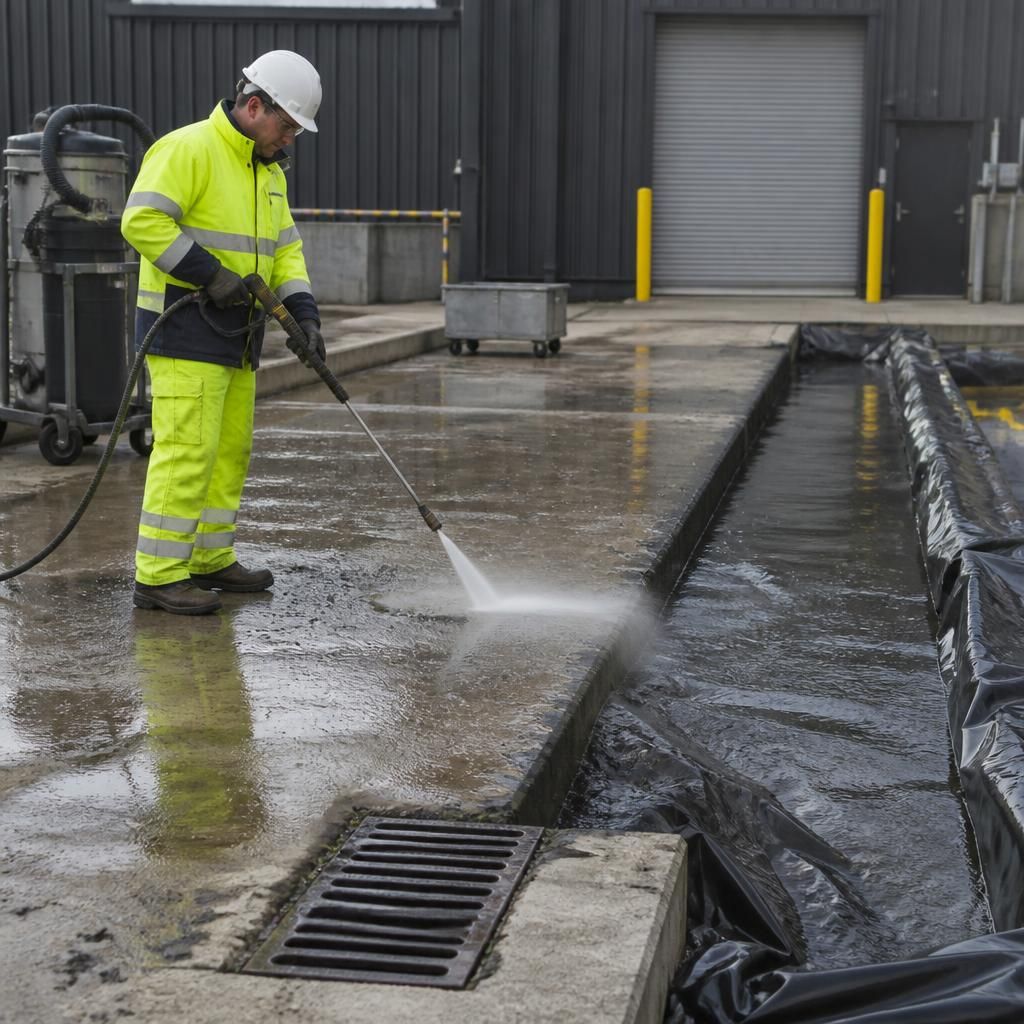
One of the main environmental benefits of industrial jet washing is the controlled removal and recovery of polluted runoff. Washing oil, fuel residues, silt, detergents or other contaminants from hard surfaces can create wastewater that must not enter surface water drains, soil or nearby watercourses.
Before cleaning begins, the drainage layout and surrounding area should be assessed. Appropriate controls may include drain covers, temporary bunding, barriers, wet vacuums and wastewater collection systems. Recovered water and sludge should then be assessed and disposed of through an approved route. This approach helps prevent pollution while allowing contaminated surfaces to be cleaned effectively.
Plan an Environmentally Responsible Jet Washing Service
Contact Encanto Exterior Cleaning to plan an industrial jet washing service with suitable water controls, runoff recovery and waste disposal for your site. We can assess the surfaces, contamination and drainage arrangements before recommending an environmentally responsible cleaning method.